
Loading, please wait...
LOT 1575
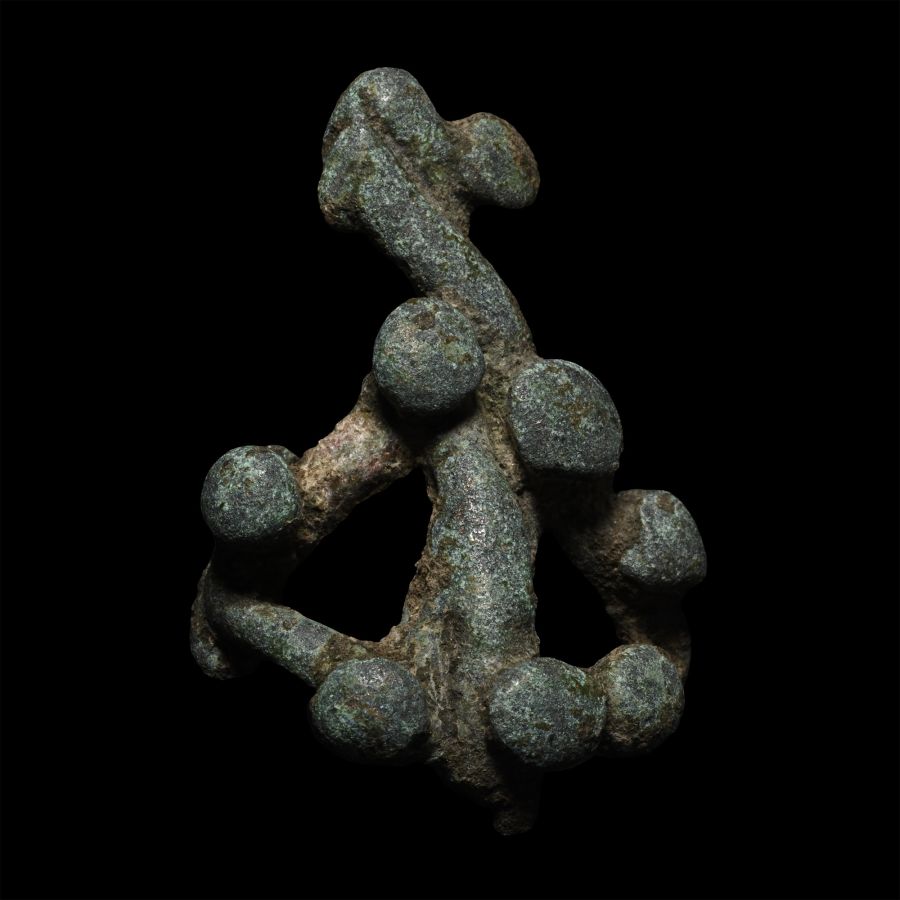
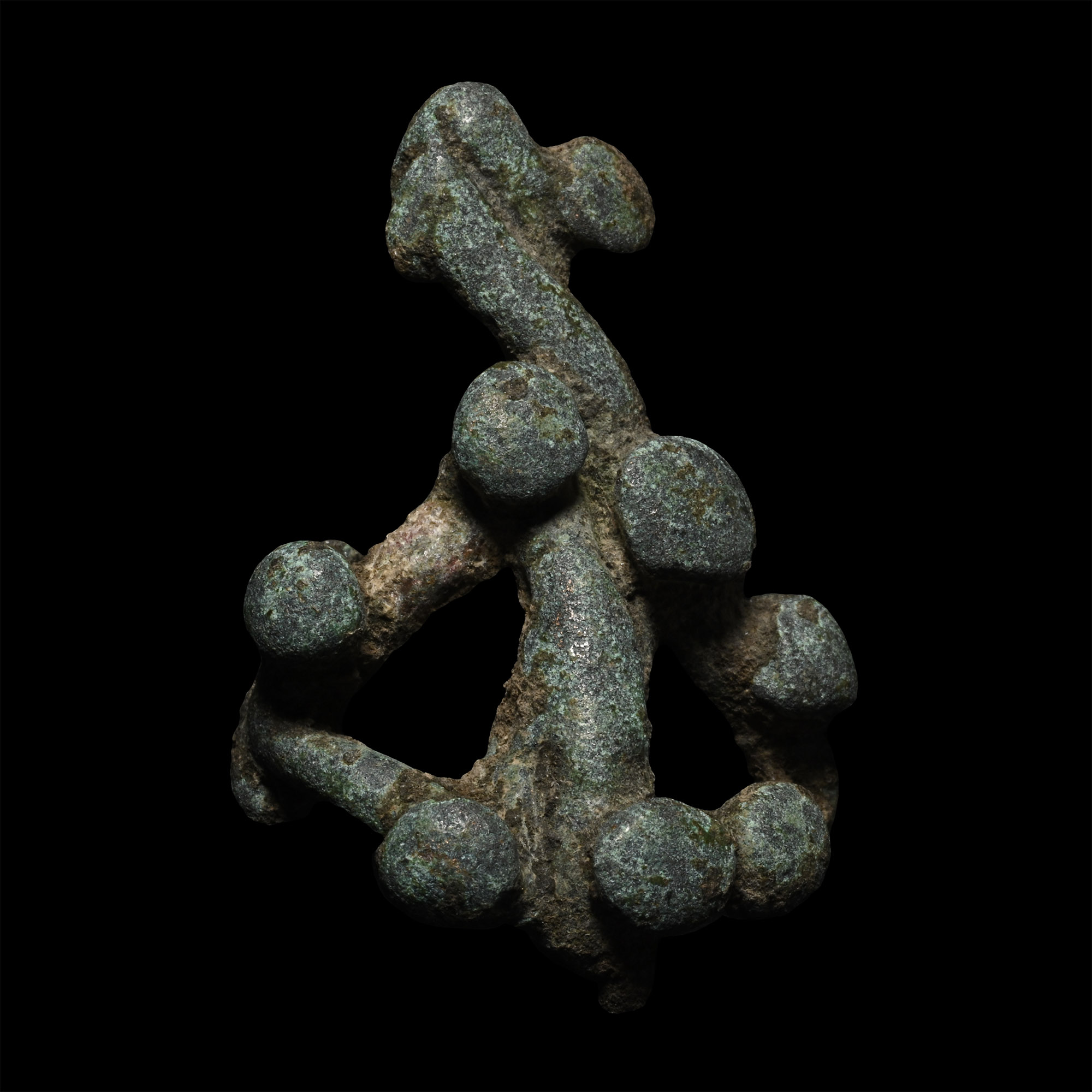
Amlash Figure Fragment
CIRCA 6TH CENTURY A.D.
1 5/8 in. (20.6 grams, 42.8 mm).
With openwork body and lug to reverse, cage-style torso. [No Reserve]
ProvenanceFrom the private collection of a European gentleman (1942-2024), formed since the 1970s.
CONDITIONTimeLine Auctions follows a vetting process to ensure the authenticity and legality of all items, reinforcing our commitment to integrity and responsible trading. Each antiquity, antique, and coin lot undergoes thorough examination by a vetting committee of at least ten external specialists, professional trade association members, scientists, and archaeologists: Our Vetting Process
AUCTIONS:
TimeLine is a leading auction house specialising in antiquities, ancient art, collectables, natural history, coins, medals, and books. Our auctions offer museums, collectors, historians, and enthusiasts the opportunity to acquire unique and historically significant pieces.
-
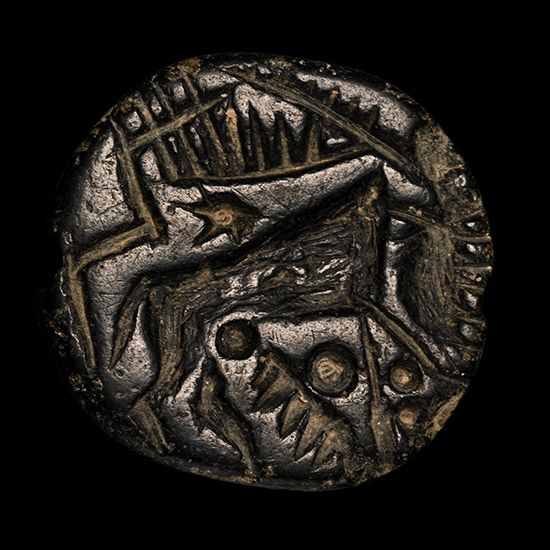
Large Anatolian Steatite Seal with Carved Bird
3rd millennium B.C.Estimate: £200 - 300 (‡+bp*)
Opening Bid: £100
Plano-convex in profile with a lightly inscribed antique legend to domed face (including Arabic name and numeral '1298'); underside with reserved figure of a bird with wings spread. 28.7 grams, 36.5 mm
With Artemis Gallery, Munich, 1980s. Acquired from Artemis Gallery, November 1992. European private collection. -
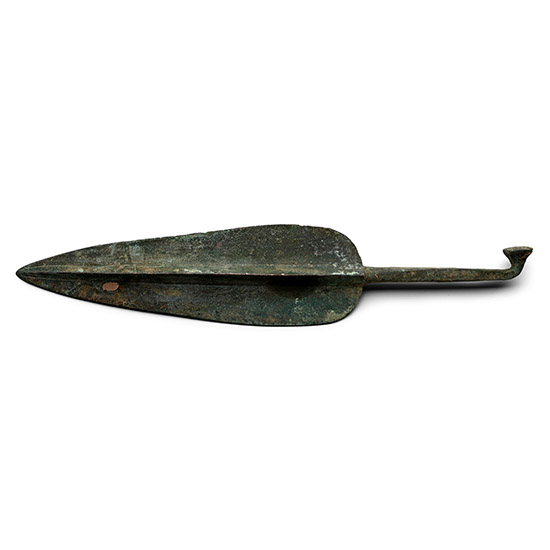
Western Asiatic Bronze Tanged Spearhead
14th-10th century B.C.Sold for (Inc. bp): £130
Leaf-shaped blade with triangular midrib and a rectangular-section tang. 213 grams, 27.1 cm
Ex Abelita family collection, 1980s-2000s.
Similar spearheads were excavated in the Marlik Royal cemetery by Dr. Negahban, see for example in tomb 47, Trench XXIIE. They were the evolution of a typology which began much earlier in Mesopotamia and the fertile crescent, the type 4 of the Stronach classification, with a straight tang and square section, usually thickened at the base with a button tang. The foliate blade was wide and exaggerated in some specimens excavated at Marlik. -
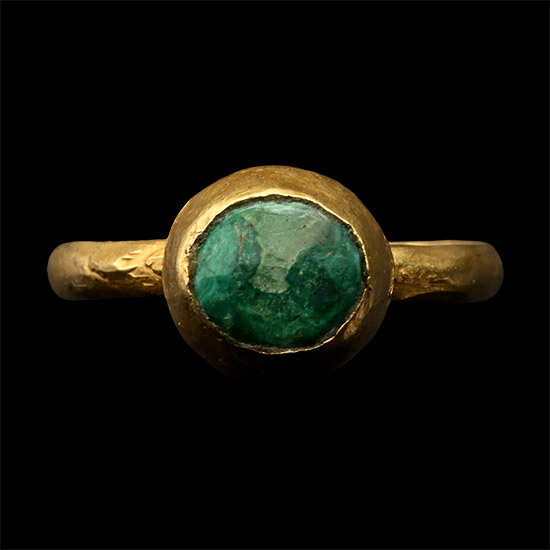
Western Asiatic Ring with Cabochon
Late 19th-20th century A.D.Sold for (Inc. bp): £124
Biconvex bezel with petal detailing to the lower body, inset facetted cabochon. 3.04 grams, 25.80 mm overall, 18.32 x 16.08mm internal diameter (approximate size British O, USA 7, Europe 14.98, Japan 14)
Acquired in the late 1980s-early 1990s. Private collection, London, UK.
