
Loading, please wait...
LOT 1419
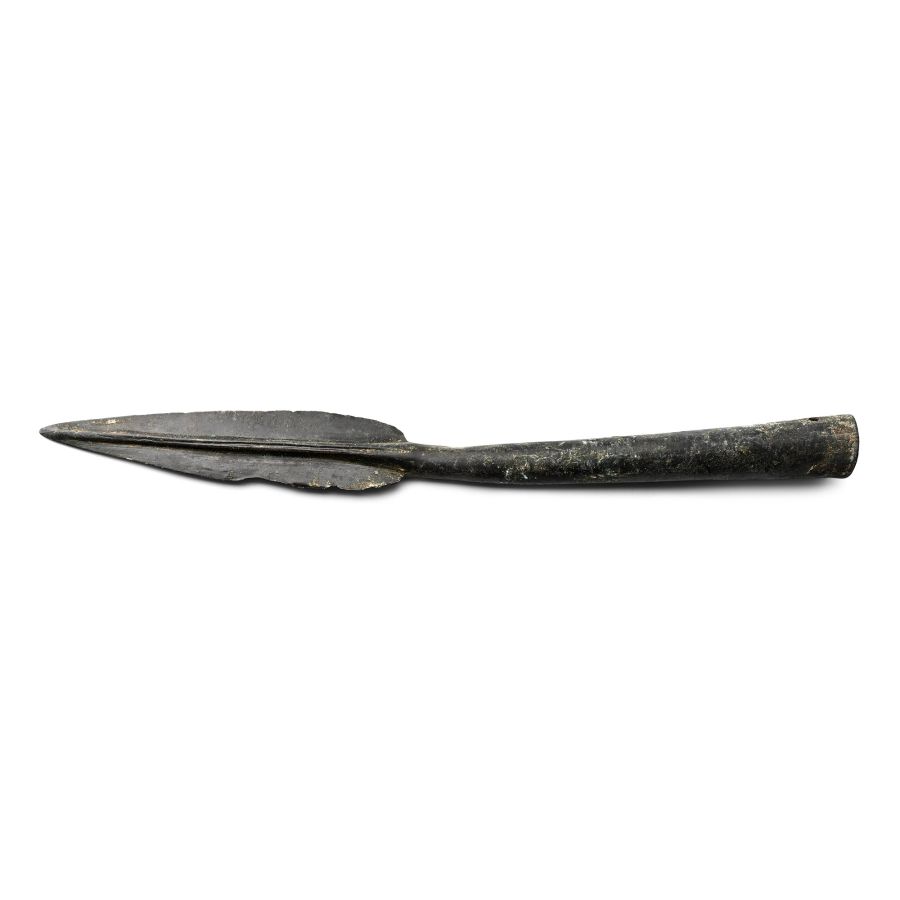
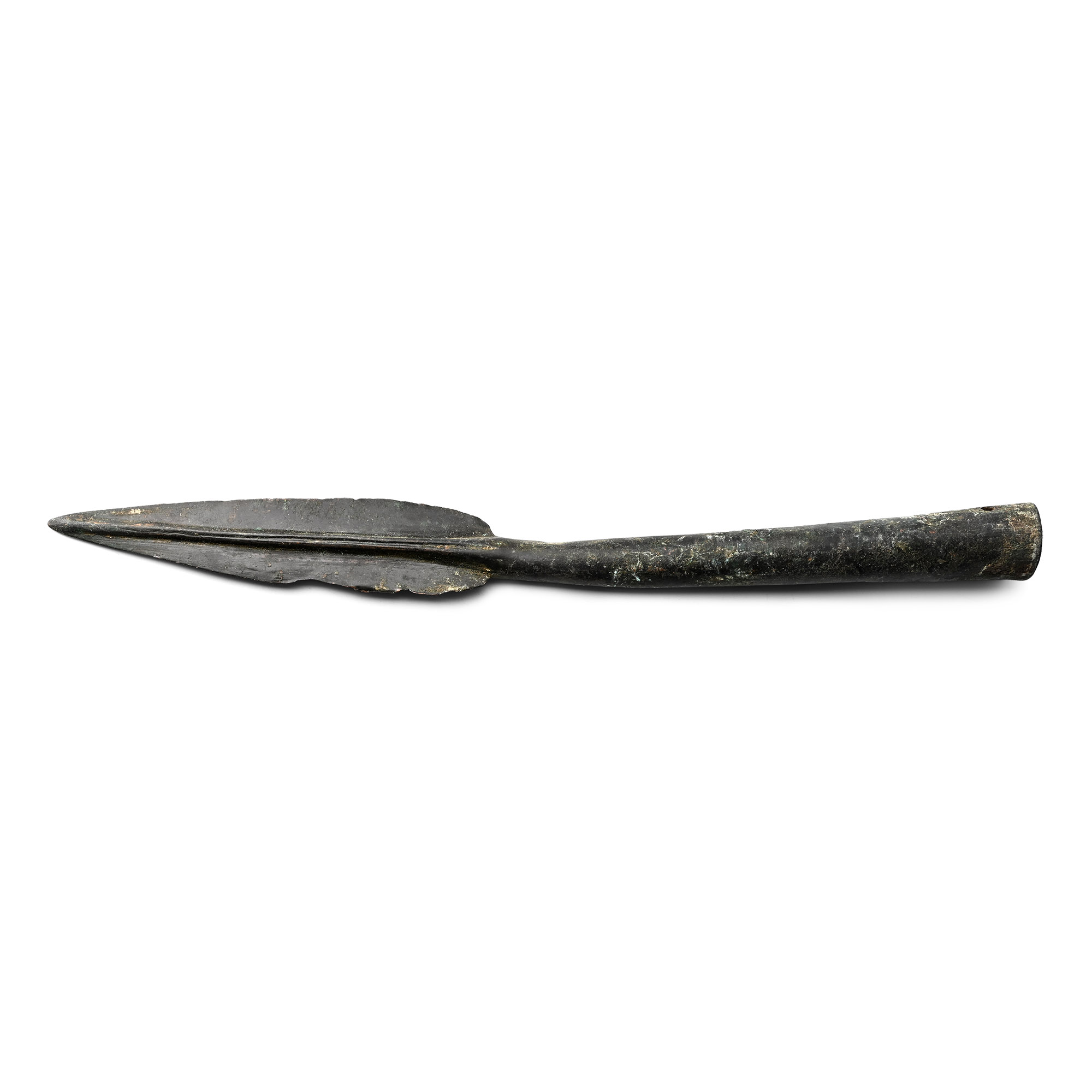
Amlash Bronze Spearhead
9TH-7TH CENTURY B.C.
12 1/4 in. (128 grams, 31 cm).
Comprising a leaf-shaped blade with a midrib and a long tapering socket.
ProvenanceEx Abelita family collection, 1980s-2000s.
LiteratureCf. Khorasani, M.M., Arms and Armour from Iran. The Bronze Age to the End of the Qajar Period, Tübingen, 2006, pp.242-243, and p.632, no.284, for similar; Overlaet, B., ‘Luristan metalwork in the Iron Age’ in Stöllner, T., Slotta, R. & Vatandoust, A. (eds.), Persiens Antike Pracht. Bergbau - Handwerk – Archäologie, Bochum, 2004, pp. 328-338, fig.7, p.335.
FootnotesThe spear, belonging to type 3 of the Khorasani classification, was used by chariot fighters to strike each other or the enemy infantry from above. Similar specimens with longer sockets were excavated by Negahban in the Amlash area. According to Moorey, sockets as long, if not longer than the blade, are a characteristic of Iranian spearheads in the late 2nd and early 1st millennium B.C. A similar spearhead from the Tappeh Sialk has been dated to the 9th-7th century B.C.
CONDITIONTimeLine Auctions follows a vetting process to ensure the authenticity and legality of all items, reinforcing our commitment to integrity and responsible trading. Each antiquity, antique, and coin lot undergoes thorough examination by a vetting committee of at least ten external specialists, professional trade association members, scientists, and archaeologists: Our Vetting Process
AUCTIONS:
TimeLine is a leading auction house specialising in antiquities, ancient art, collectables, natural history, coins, medals, and books. Our auctions offer museums, collectors, historians, and enthusiasts the opportunity to acquire unique and historically significant pieces.
-
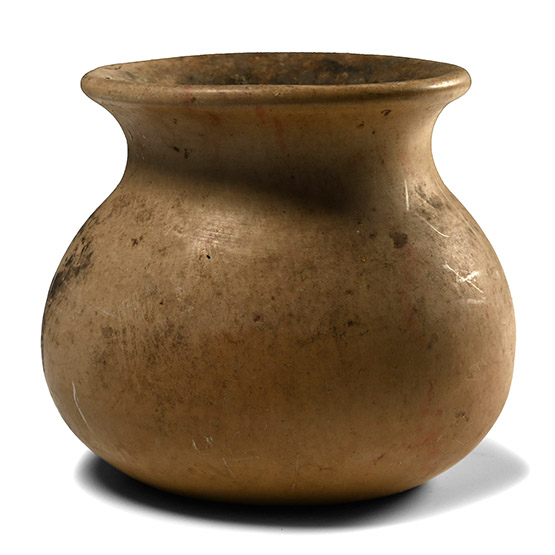
Western Asiatic Limestone Jar
1st millennium B.C.Estimate: £300 - 400 (+bp*)
Opening Bid: £167
Indurate limestone vessel with squat profile, broad flat base, carinated shoulder and broad rounded rim. 405 grams, 88 mm wide
From a London, UK, gentleman's collection of ancient pottery and artefacts, 1990s. -
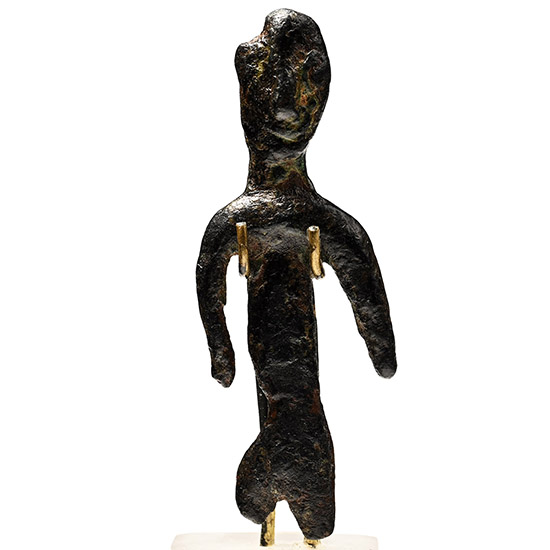
Canaanite Bronze Figure
2nd millennium B.C.Sold for (Inc. bp): £104
A slender bronze figurine of a standing male with lowered arms, piriform head with bulbous eyes and slit mouth; mounted on a custom-made stand. 18.8 grams total, 65 mm including stand
Fine condition.
From the private collection of a medical professional; formerly part of a collection formed in Toulouse, France, since 1967. From the private collection of John Meredith, acquired since the 1990s; thence by descent.
These representations in the style of figurines presumably represented household deities who were guardians of the home. In some cases figurines of this type were produced in groups of two or four. -
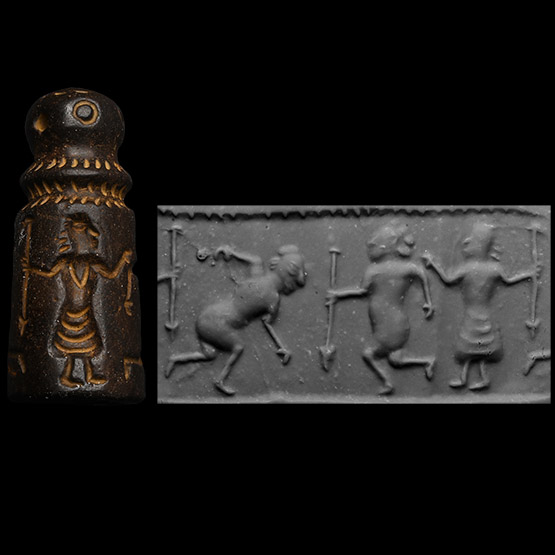
Large Mesopotamian Stone Stamp Seal with Lion and Figural Scene
Circa early 1st millennium B.C. or laterEstimate: £500 - 700 (+bp*)
Opening Bid: £250
Conical body with ribbed collar and knob finial pierced longitudinally, plaque to the underside with incuse image of reclining lion facing backwards; three figures to the outer face, two holding spears next to falling figure. 46 grams, 50 mm
Acquired on the UK art market. Private collection, England.
