
Loading, please wait...
LOT 1612
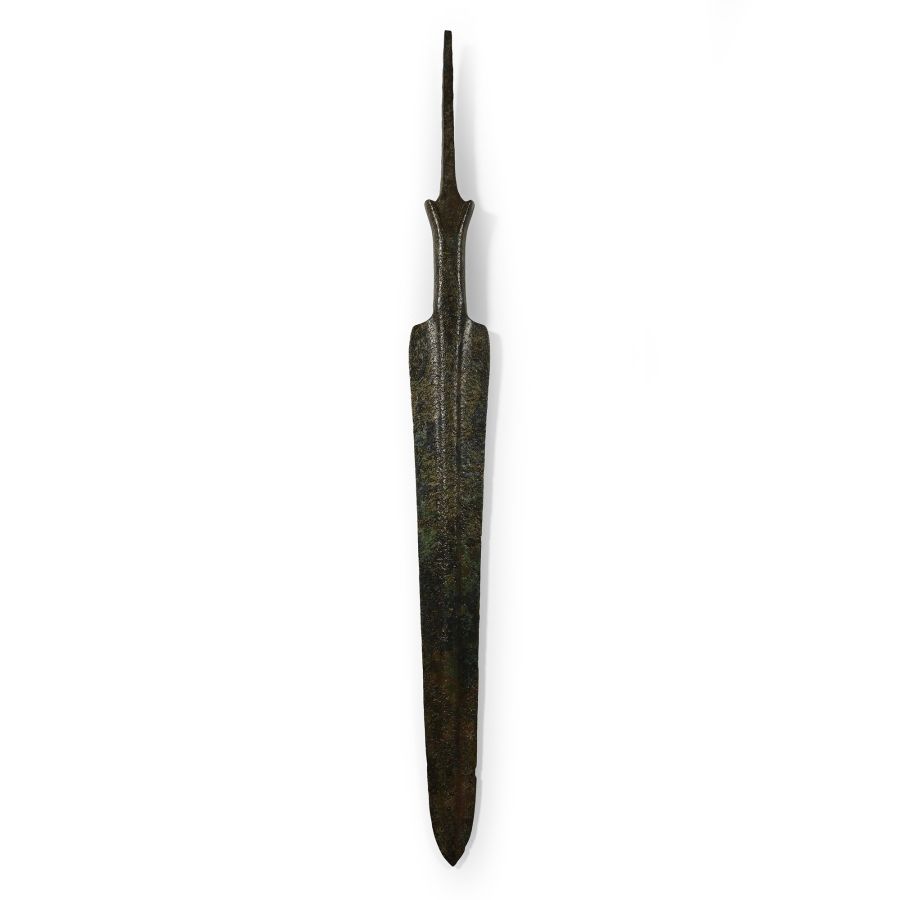
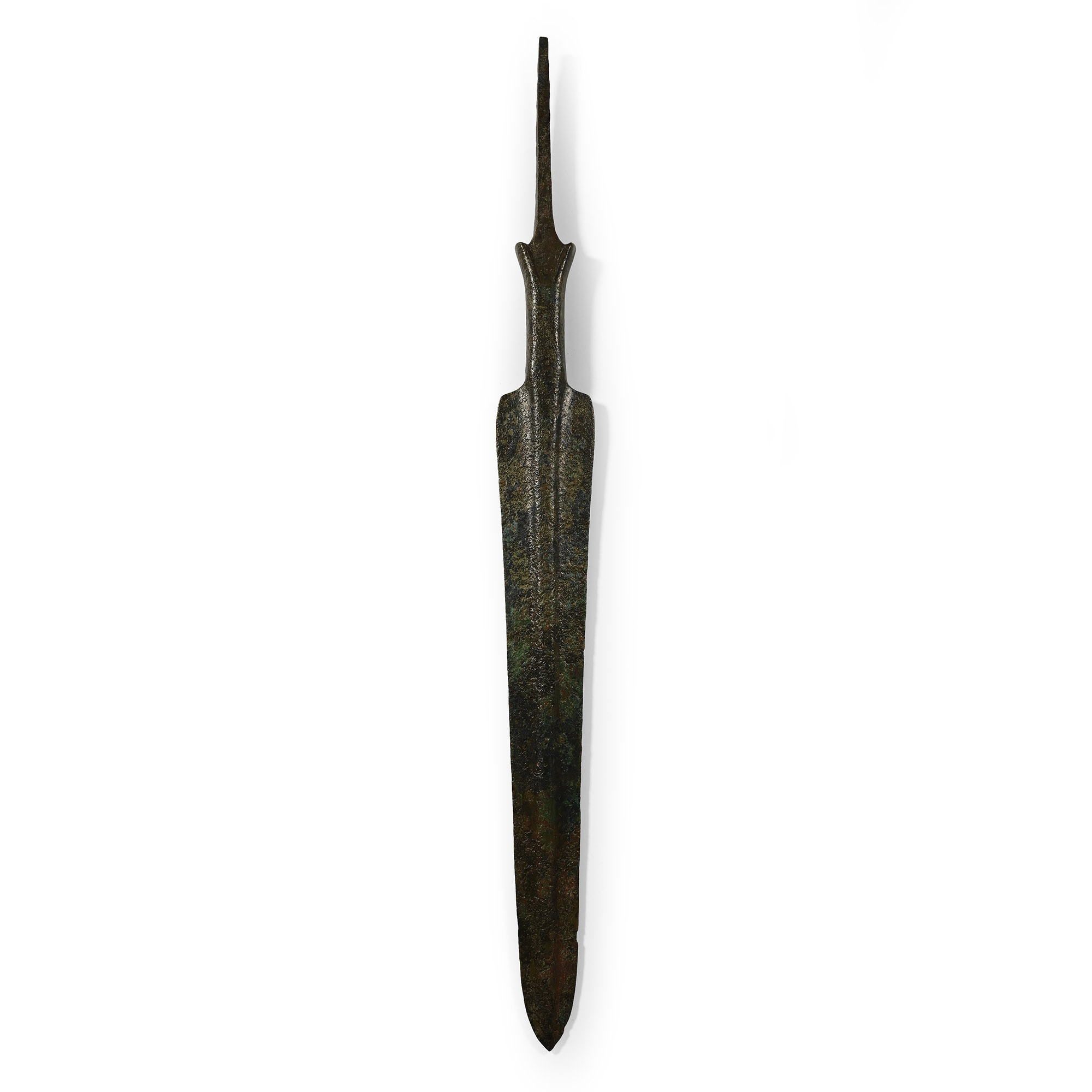
Amlash Bronze Spearhead
12TH-11TH CENTURY B.C.
17 1/8 in. (432 grams, 43.5 cm).
A foliate blade with central rib and slender shoulders, short rectangular shaft and tang.
ProvenanceAcquired 1980-2015.
Ex Abelita family collection.
This lot is accompanied by an illustrated lot declaration signed by the Head of the Antiquities Department, Dr Raffaele D’Amato.
Cf. Khorasani, M.M., Arms and Armour from Iran. The Bronze Age to the End of the Qajar Period, Tübingen, 2006, s. cat.278, 280, for type.
FootnotesThe weapon belongs to the type 1 of the spear-head classification of Khorasani, mainly originating from Marlik or Amlash areas. Similar pieces have been dated by Stutzinger to 1200-1100 B.C.
CONDITIONTimeLine Auctions follows a vetting process to ensure the authenticity and legality of all items, reinforcing our commitment to integrity and responsible trading. Each antiquity, antique, and coin lot undergoes thorough examination by a vetting committee of at least ten external specialists, professional trade association members, scientists, and archaeologists: Our Vetting Process
AUCTIONS:
TimeLine is a leading auction house specialising in antiquities, ancient art, collectables, natural history, coins, medals, and books. Our auctions offer museums, collectors, historians, and enthusiasts the opportunity to acquire unique and historically significant pieces.
LOT 1612
Amlash Bronze Spearhead
Estimate £200 - 300€230 - 350 (for guidance only)$270 - 410 (for guidance only)
-
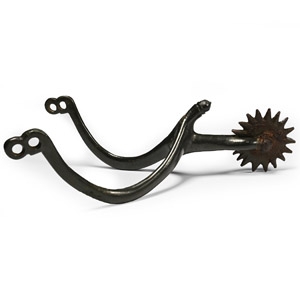
Medieval Bronze Spur with Rowel
12th-14th century A.D.Sold for (Inc. bp): £455
With D-section curved arms with figure-of-eight finials, long spur with a rowel and a shorter spur below. 126 grams, 15.4 cm
From the private collection of a London gentleman, from his grandfather's collection formed before the early 1970s. This lot is accompanied by an illustrated lot declaration signed by the Head of the Antiquities Department, Dr Raffaele D’Amato. -
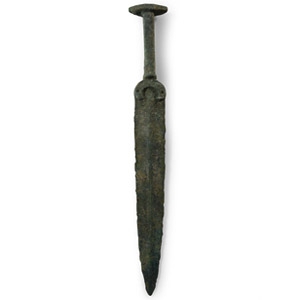
Luristan Bronze Dagger
12th century B.C.Sold for (Inc. bp): £338
The blade with raised central shallow rib and with separated crescent quillon, fitted with an integral rectangular-section lentoid pommel. 165 grams, 30.5 cm
Acquired 1980-2015. Ex Abelita family collection. This lot is accompanied by an illustrated lot declaration signed by the Head of the Antiquities Department, Dr Raffaele D’Amato.
The men who built the gravestones found in Luristan in the Middle Bronze Age, favoured offensive weaponry: bow, dagger, sword, spear, and javelin. The oldest daggers consisted of a blade and a wooden hilt. The blades were cast together with the tang and regularly featured a groove in the middle. Over time, during the Late Bronze Age, in addition to hilts filled with organic material, the daggers in which the hilt was cast in one piece with the blade developed. -
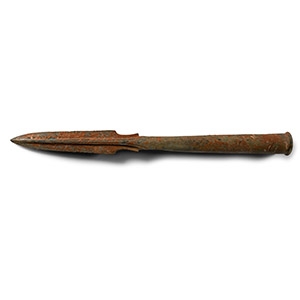
Chinese Zhou Bronze Socketted Spearhead
Zhou Dynasty, 1046-256 B.C.Estimate: £600 - 800 (‡+bp*)
Opening Bid: £300
With thick midrib, leaf-shaped blade with lateral spurs, deep tubular socket with fastening hole for the attachment to the wooden shaft. 250 grams, 32 cm
Acquired in the mid 1980s-1990s. Private collection, Switzerland, thence by descent. Private collection, since the late 1990s. This lot is accompanied by an illustrated lot declaration signed by the Head of the Antiquities Department, Dr Raffaele D’Amato.
