
Loading, please wait...
LOT 1257
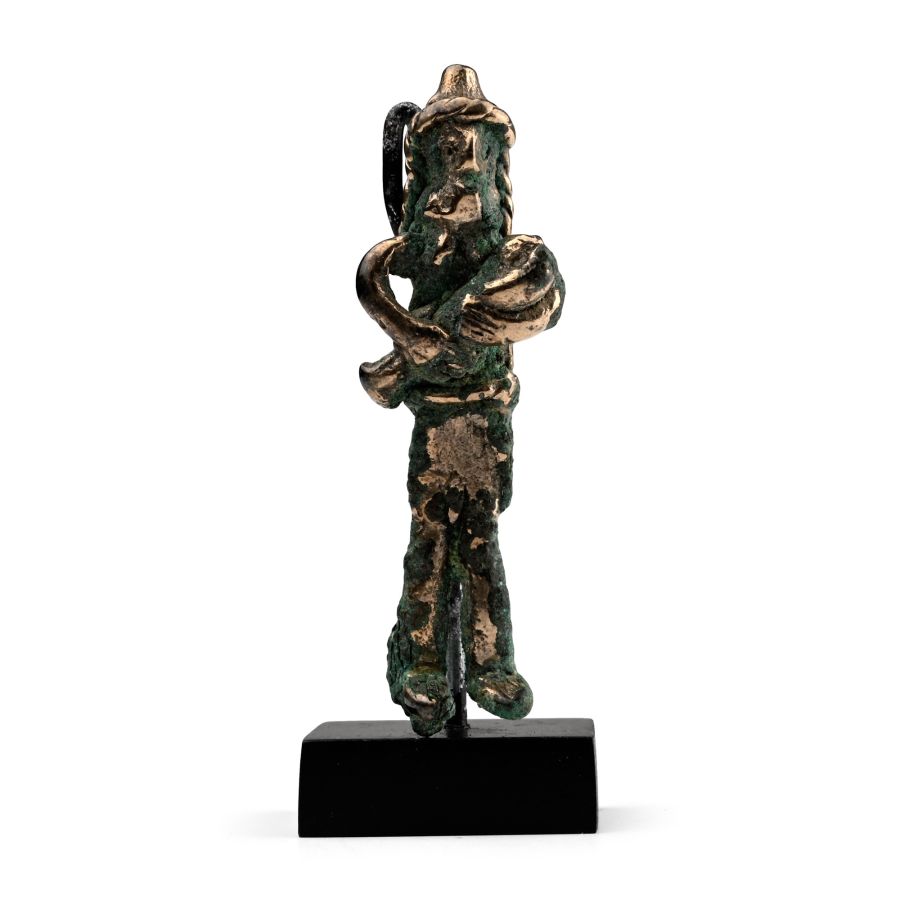
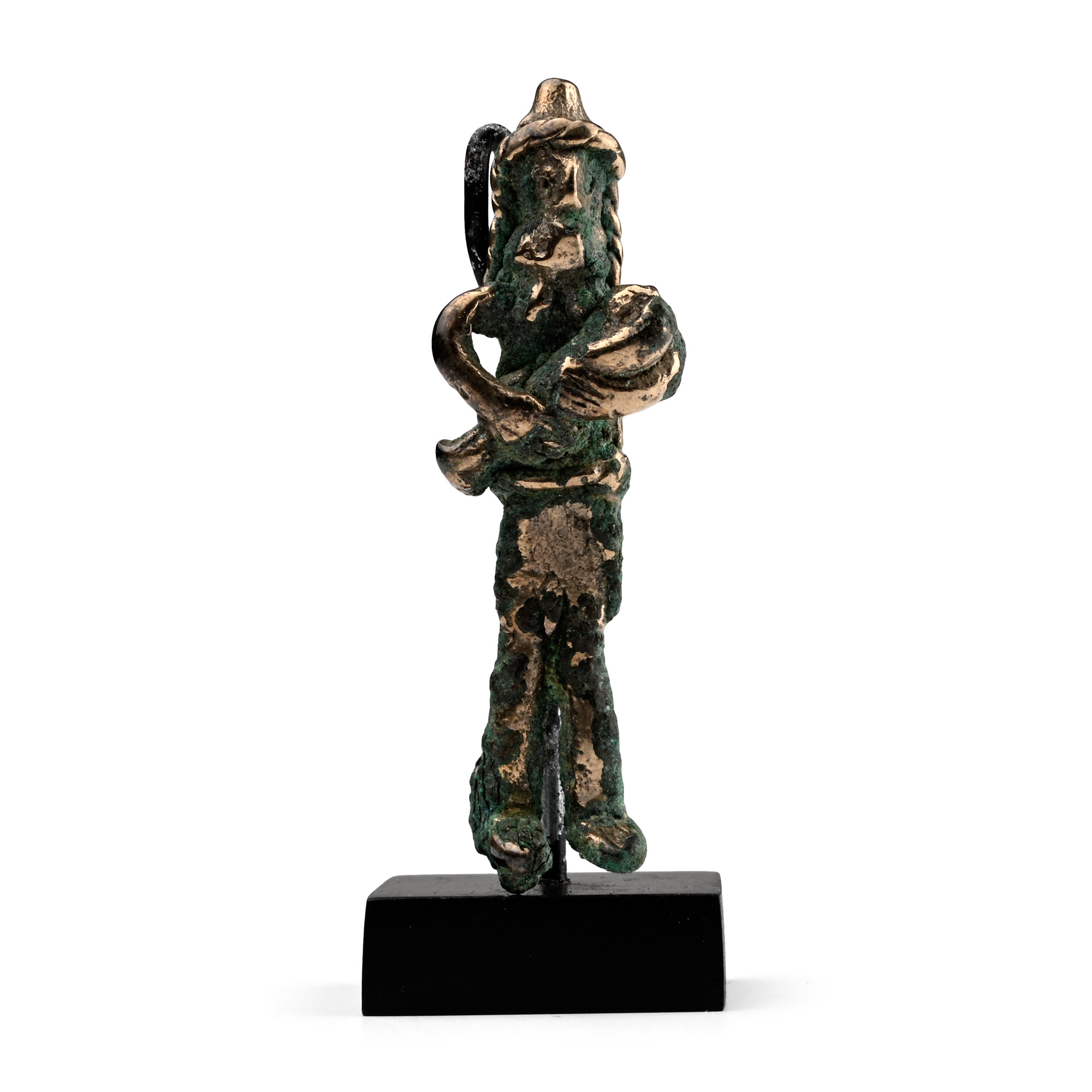
Amlash Bronze Mother and Child Figure
MID 2ND MILLENNIUM B.C.
2 5/8 in. (2 7/8 in.) (28 grams, 66 mm (39 grams total, 73 mm including stand)).
Formed as a standing figure cradling an infant, stylised facial and anatomical detailing; suspension loop to reverse; accompanied by a custom-made display stand. [No Reserve]
ProvenanceAcquired before 1983.
Ex London gallery, 1990s.
From the private collection of John Meredith, acquired since the 1990s; thence by descent.
This lot has been cleared against the Art Loss Register database, and is accompanied by an illustrated lot declaration signed by the Head of the Antiquities Department, Dr Raffaele D'Amato.
TimeLine Auctions follows a vetting process to ensure the authenticity and legality of all items, reinforcing our commitment to integrity and responsible trading. Each antiquity, antique, and coin lot undergoes thorough examination by a vetting committee of at least ten external specialists, professional trade association members, scientists, and archaeologists: Our Vetting Process
AUCTIONS:
TimeLine is a leading auction house specialising in antiquities, ancient art, collectables, natural history, coins, medals, and books. Our auctions offer museums, collectors, historians, and enthusiasts the opportunity to acquire unique and historically significant pieces.
-
.jpg)
Bactrian Style Lapis Lazuli Bead Necklace String
20th century A.D.Sold for (Inc. bp): £7
Composed mainly of multifacetted, barrel-shaped and biconical beads with long double-pierced amuletic beads and a flower-shaped bead, central feature a large tabular bead; restrung. 44.3 grams, 41 cm
Ex London art market. Property of a North London, UK, gentleman. This lot has been cleared against the Art Loss Register database, and is accompanied by an illustrated lot declaration signed by the Head of the Antiquities Department, Dr Raffaele D'Amato. -
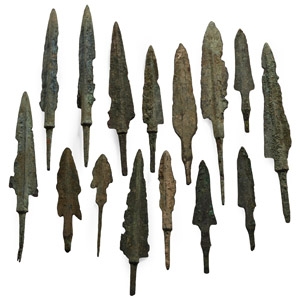
Luristan Bronze Arrowhead Collection
14th-10th century B.C.Sold for (Inc. bp): £143
Comprising: a group of large tanged arrowheads, mainly of triangular type with mid-rib; one barbed example; four foliate blades and a single arrowhead with double points with stem and tang. 325 grams total, 8.8-15.3 cm
From the London art market, 1990s. This lot has been cleared against the Art Loss Register database, and is accompanied by an illustrated lot declaration signed by the Head of the Antiquities Department, Dr Raffaele D'Amato.
The most interesting specimen of the group is certainly the double-pointed arrowhead, belonging to the type II of Khorasani's classification. These arrowheads were made in cast bronze with a double point with stem and tang, located one above the other and positioned at right angles to each other (see also Muscarella, 1988, figs.411 and 418). -
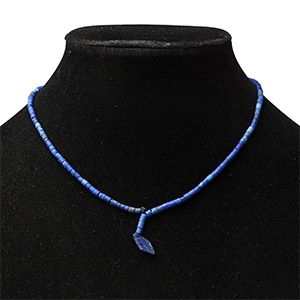
Western Asiatic Lapis Lazuli Bead Necklace String
20th century A.D.Sold for (Inc. bp): £13
Composed of short cylindrical beads with a lozengiform pendant; restrung. 5.67 grams, 31.5 cm
From the London, UK, art market in the 1990s. This lot has been cleared against the Art Loss Register database, and is accompanied by an illustrated lot declaration signed by the Head of the Antiquities Department, Dr Raffaele D'Amato.
