
Loading, please wait...
LOT 1582
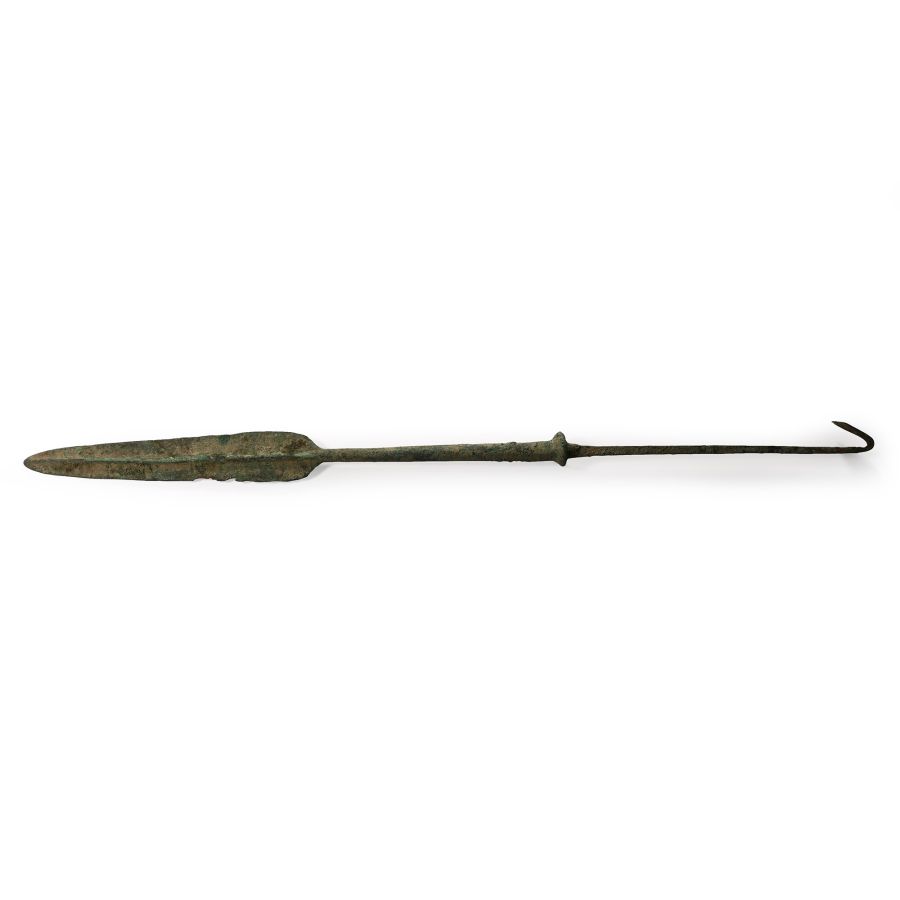
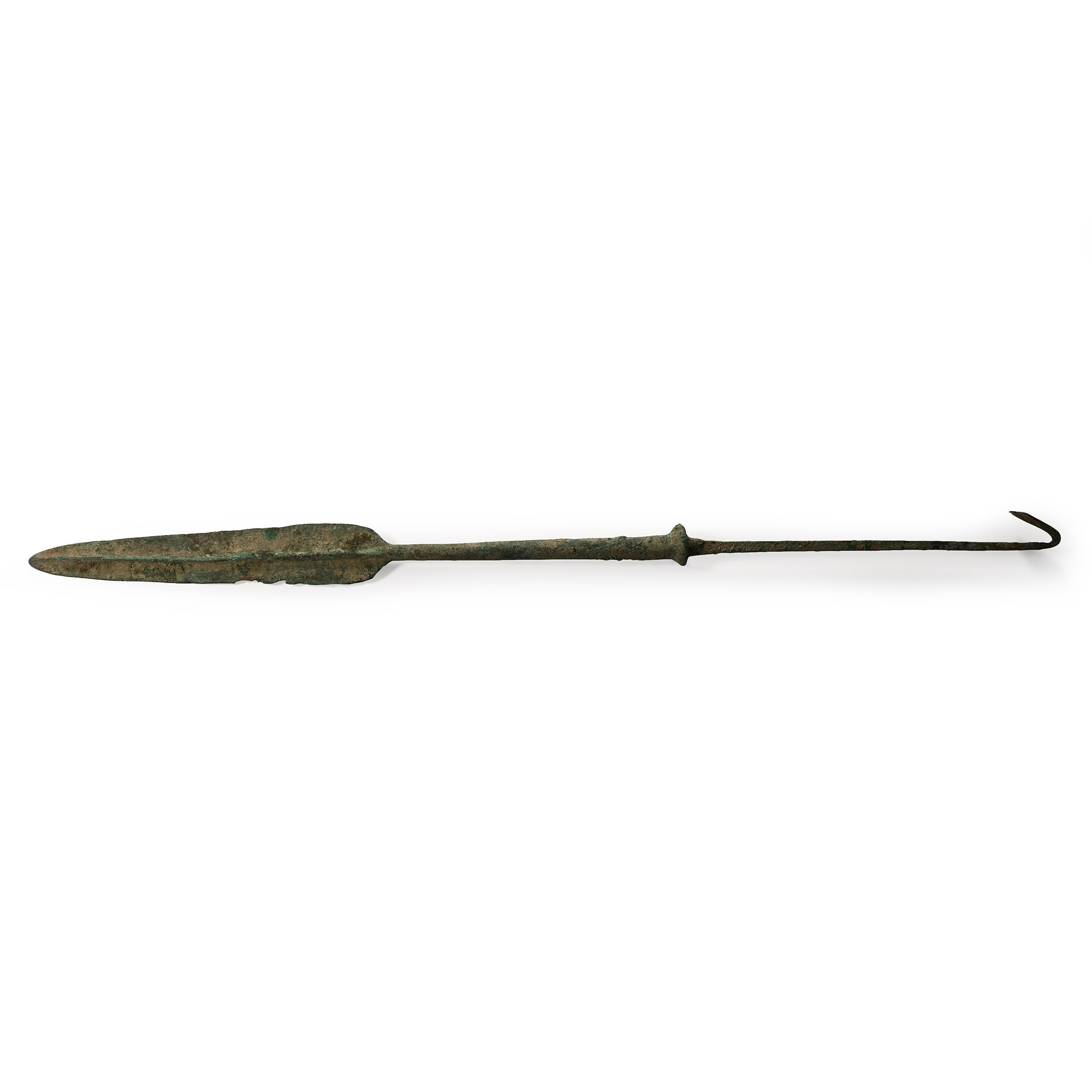
Amlash Bronze Lancehead
LATE 2ND MILLENNIUM B.C.
18 7/8 in. (190 grams, 48 cm).
With ovate blade, central rib and curved shoulders, the round-section long shaft tapering towards the flared collar, rectangular-section tang with bent tip.
ProvenanceAcquired on the UK art market before 2000.
Property of an Essex, UK, gentleman.
This lot is accompanied by an illustrated lot declaration signed by the Head of the Antiquities Department, Dr Raffaele D’Amato.
Cf. Khorasani, M.M., Arms and Armour from Iran. The Bronze Age to the End of the Qajar Period, Tübingen, 2006, item 277, p.629.
FootnotesSimilar spearheads were excavated in Marlik. Negahban stated that based upon the evidence on archaeological finds from West-North Iran, this type of spearhead may be dated to the final centuries of 2nd millennium B.C.
CONDITIONTimeLine Auctions follows a vetting process to ensure the authenticity and legality of all items, reinforcing our commitment to integrity and responsible trading. Each antiquity, antique, and coin lot undergoes thorough examination by a vetting committee of at least ten external specialists, professional trade association members, scientists, and archaeologists: Our Vetting Process
AUCTIONS:
TimeLine is a leading auction house specialising in antiquities, ancient art, collectables, natural history, coins, medals, and books. Our auctions offer museums, collectors, historians, and enthusiasts the opportunity to acquire unique and historically significant pieces.
-
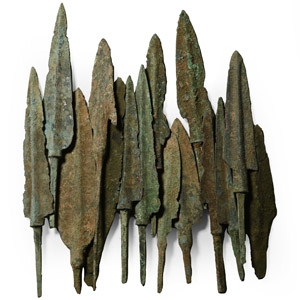
Luristan Bronze Arrowhead Group
13th-6th century B.C.Sold for (Inc. bp): £234
Comprising triangular types with thick midrib, leaf-shaped and other types. 400 grams total, 9.7-16.2 cm
Acquired 1980-2015. Ex Abelita family collection. This lot is accompanied by an illustrated lot declaration signed by the Head of the Antiquities Department, Dr Raffaele D’Amato. -
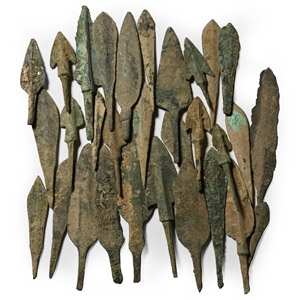
Luristan Bronze Arrowhead Group
13th-6th century B.C.Sold for (Inc. bp): £182
Including barbed-and tanged, leaf-shaped, tongue-shaped, and other types. 295 grams total, 41-91 mm
Acquired 1980-2015. Ex Abelita family collection. This lot is accompanied by an illustrated lot declaration signed by the Head of the Antiquities Department, Dr Raffaele D’Amato. -
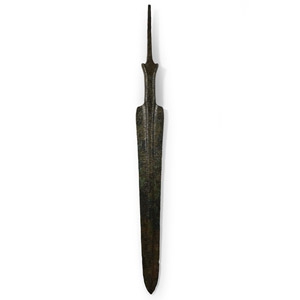
Amlash Bronze Spearhead
12th-11th century B.C.Estimate: £200 - 300 (+bp*)
Opening Bid: £100
A foliate blade with central rib and slender shoulders, short rectangular shaft and tang. 432 grams, 43.5 cm
Acquired 1980-2015. Ex Abelita family collection. This lot is accompanied by an illustrated lot declaration signed by the Head of the Antiquities Department, Dr Raffaele D’Amato.
The weapon belongs to the type 1 of the spear-head classification of Khorasani, mainly originating from Marlik or Amlash areas. Similar pieces have been dated by Stutzinger to 1200-1100 B.C.
