
Loading, please wait...
LOT 0202
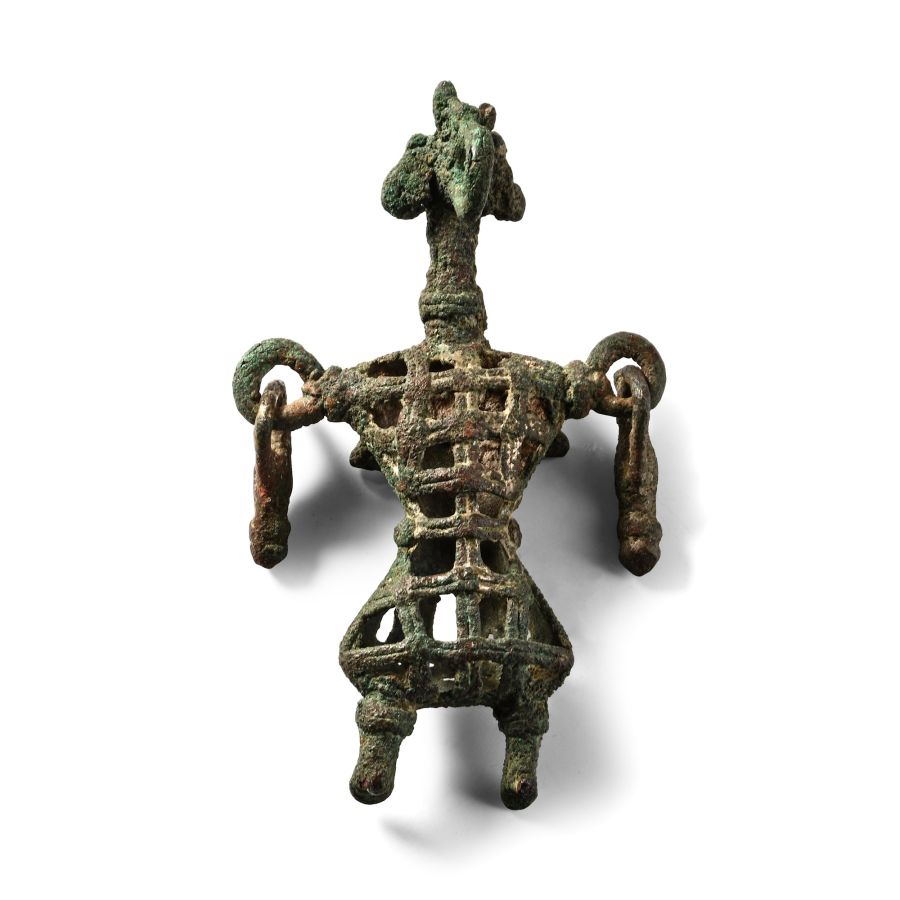
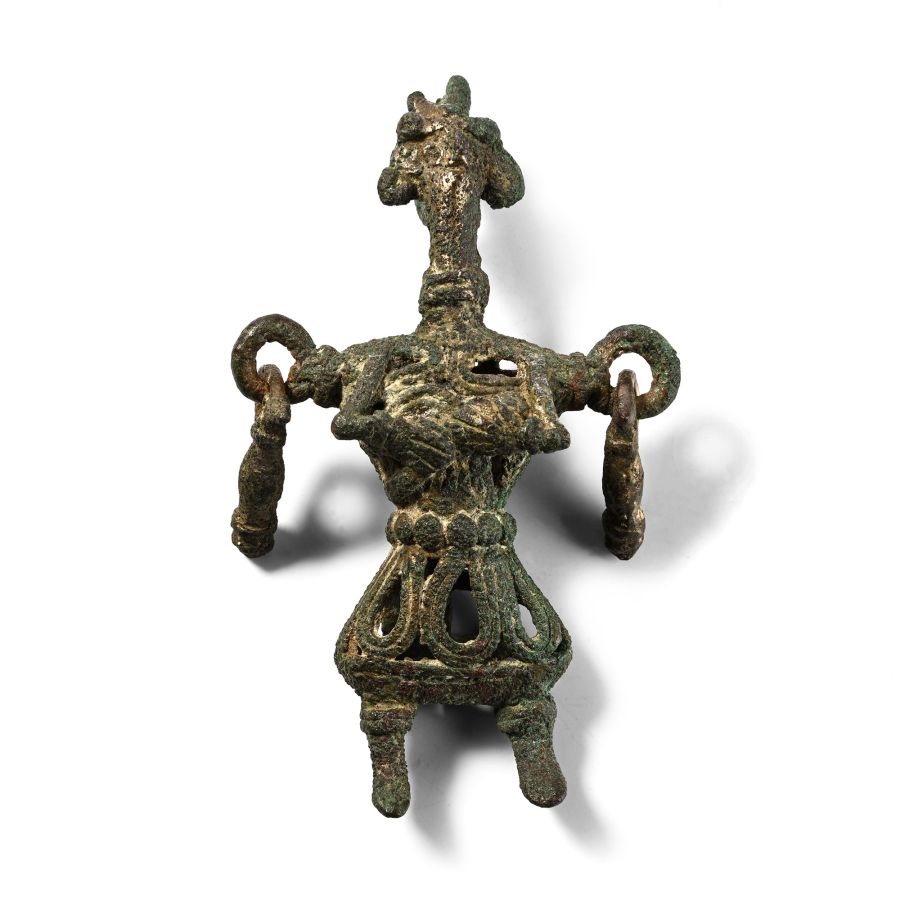
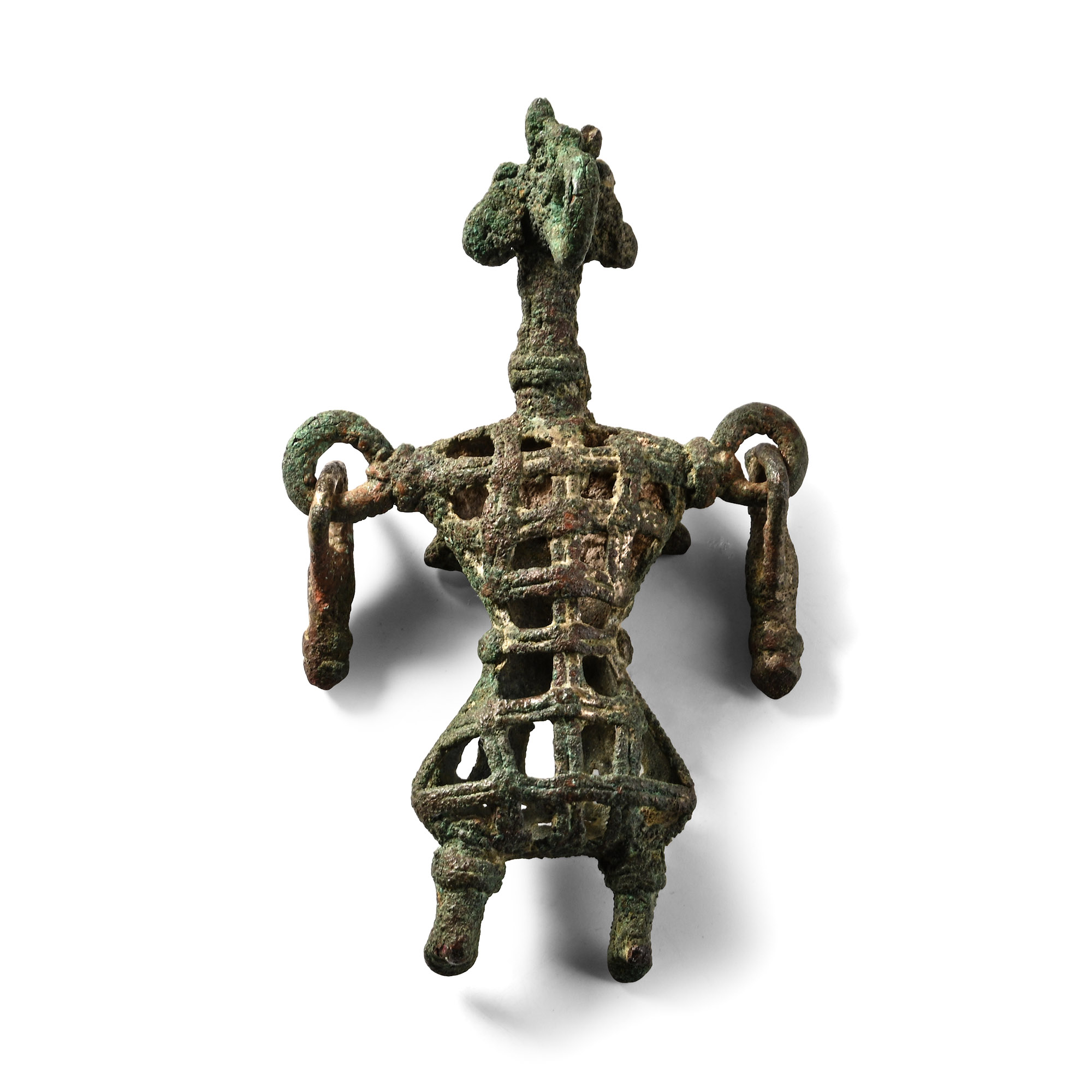
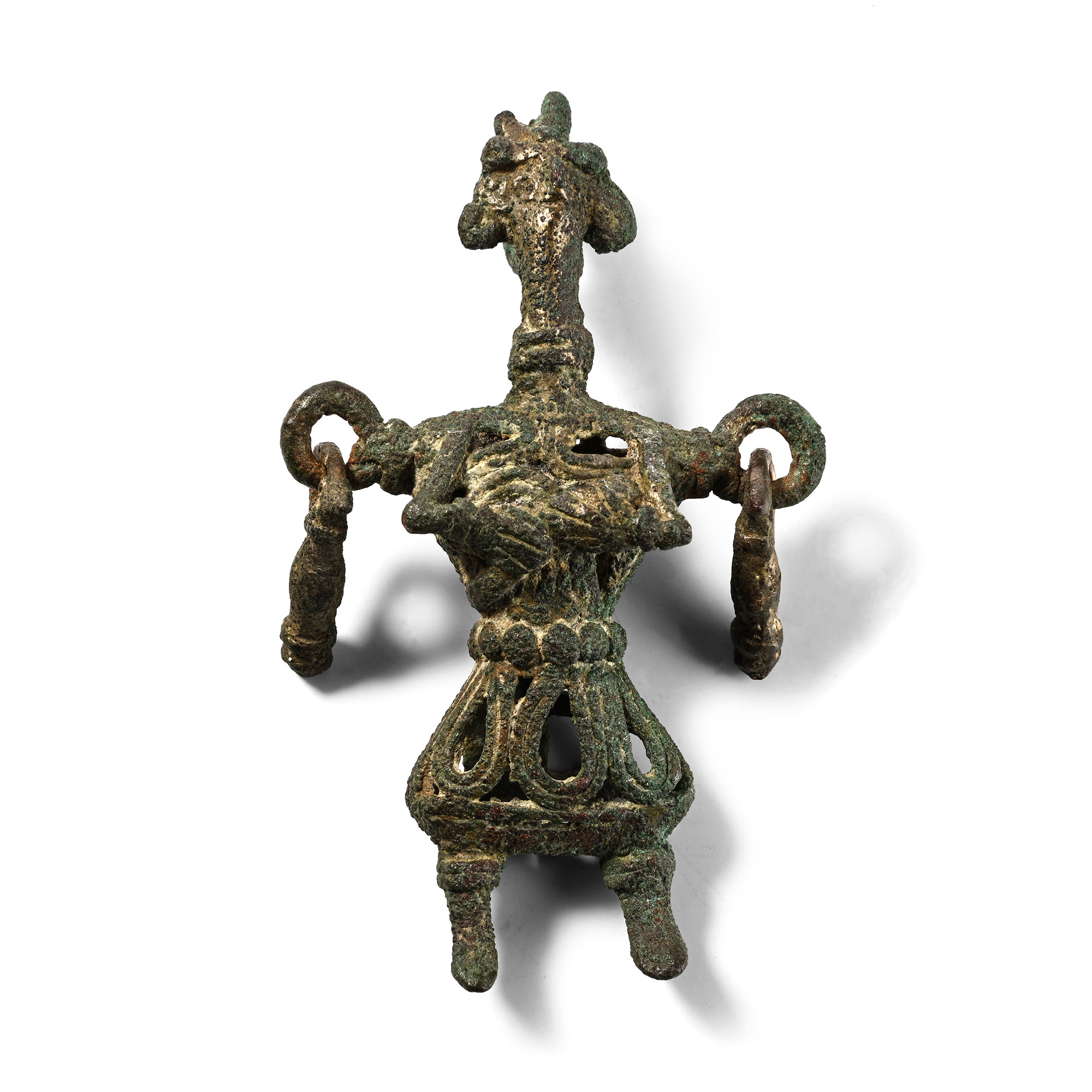
Amlash Bronze Fertility Figure with Baby
13TH-12TH CENTURY B.C.
3 5/8 in. (58.6 grams, 91 mm).
Formed as a standing figure cradling an infant; stylised facial and anatomical detailing; openwork cage structure and suspension loop to the reverse of the head.
ProvenanceEx Samuel Dubiner (1914-1993), Canada, a prominent businessman, arts patron, and one of the world's most distinguished collectors of Bronze Age and Iron Age Iranian art, including Amlash material.
Acquired by the current owner from the above, circa 1985-1995.
TimeLine Auctions follows a vetting process to ensure the authenticity and legality of all items, reinforcing our commitment to integrity and responsible trading. Each antiquity, antique, and coin lot undergoes thorough examination by a vetting committee of at least ten external specialists, professional trade association members, scientists, and archaeologists: Our Vetting Process
AUCTIONS:
TimeLine is a leading auction house specialising in antiquities, ancient art, collectables, natural history, coins, medals, and books. Our auctions offer museums, collectors, historians, and enthusiasts the opportunity to acquire unique and historically significant pieces.
-
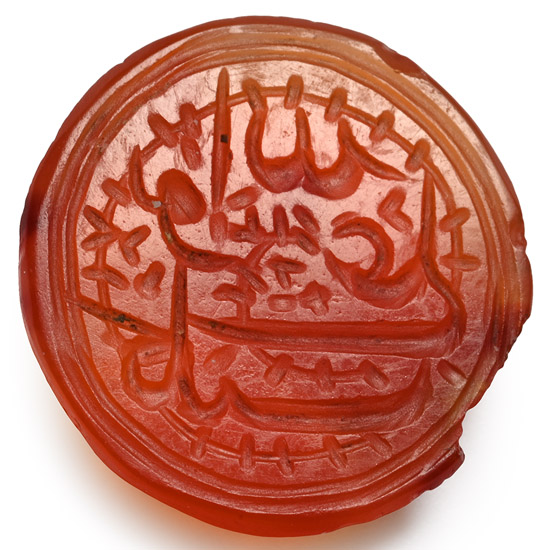
Western Asiatic Engraved Carnelian Calligraphic Intaglio
Late 19th-20th century A.D.Sold for (Inc. bp): £26
A circular intaglio with an inscription within a border; supplied with a museum-quality impression. 1.41 grams, 15 mm
Acquired in the late 1980s-early 1990s. Private collection, London. -
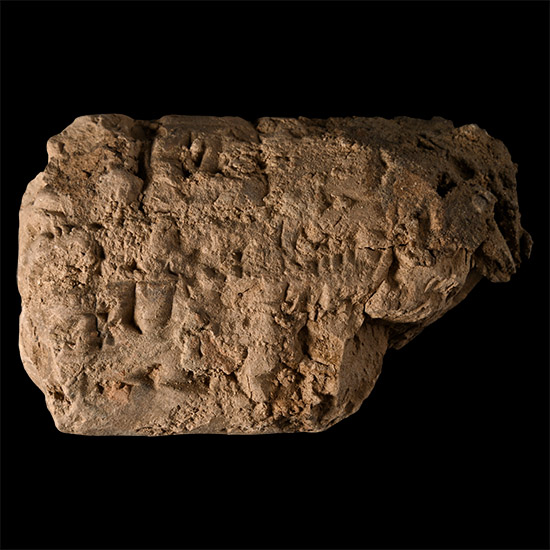
Mesopotamian Terracotta Cuneiform Tablet
Early 2nd millennium B.C.Sold for (Inc. bp): £104
Large fragment of a pillow-shaped tablet with impressed text on one face. 83 grams, 70 mm
Specialised collection of cuneiform texts, the property of a London gentleman and housed in London before 1992. Thence by descent to family members. Examined by Professor Wilfrid George Lambert FBA (1926-2011), historian, archaeologist, and specialist in Assyriology and Near Eastern archaeology, in the late 1980s and early 1990s. This small collection is exceptional for the variety of types, including some very rare and well-preserved examples. -
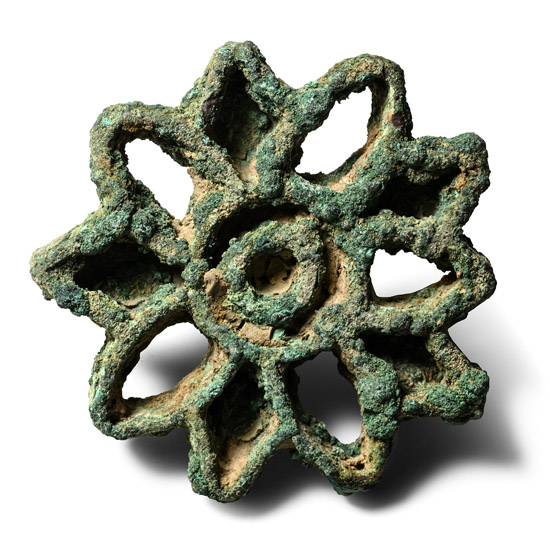
Large West Central Asian Bronze Star-Shaped Rosette Seal Matrix
Circa 2300-2000 B.C.Sold for (Inc. bp): £130
Openwork seal with a triangular loop on the reverse, accompanied by an old scholarly note, typed and signed by W.G. Lambert, late Professor of Assyriology, University of Birmingham, 1970-1993, which states: 'Stamp Seal of Bronze, 52 x 51 x 22 mm. This is round, with flat face and flat back, on which a large handle of inverted V-shape is mounted. The design is both compartmented and open-work. It consists of a rosette, with inner circle, band around that, and ten 'petals' from this circle, giving the shape of the piece. This comes from west central Asia and dates to c. 2300-2000 B.C. It is covered with incrustation, which could be removed. The metal beneath appears to be in good condition, as is the piece generally.' 42.3 grams, 51 mm
Acquired in the late 1980s-early 1990s. Ex property of a West London businessman. Academically researched and catalogued by the late Professor Lambert in the early 1990s. Accompanied by a copy of a scholarly report, numbered R-517, typed and signed by Professor Wilfrid George Lambert.
