
Loading, please wait...
LOT 1486
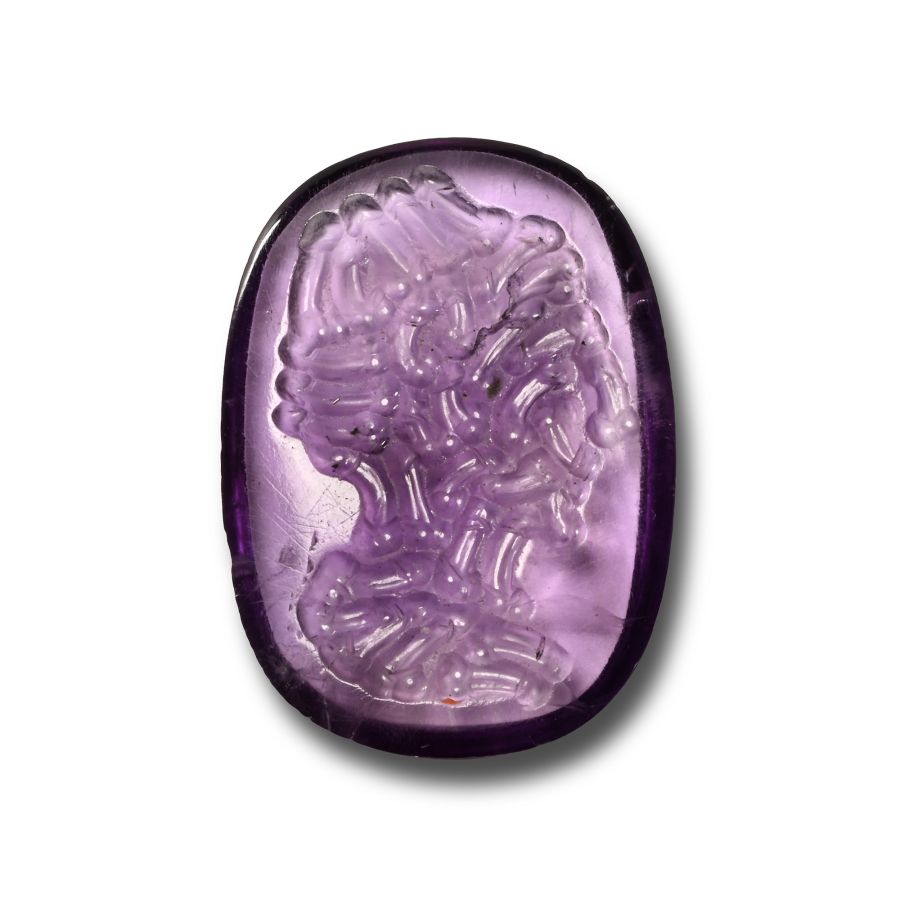
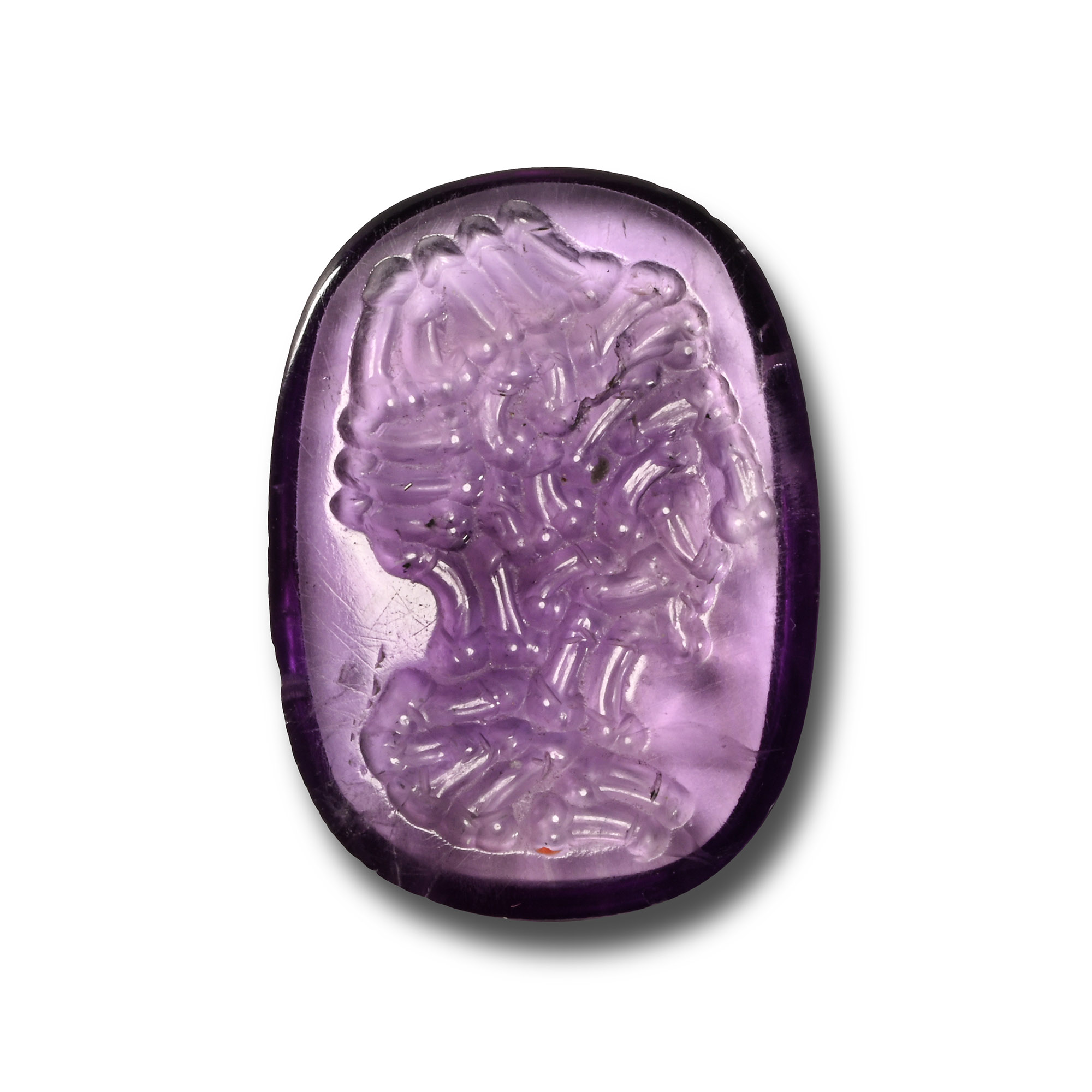
Amethyst Portrait Gemstone in Phallic Form
LATE 18TH-EARLY 19TH CENTURY A.D.
1 in. (2.58 grams, 25 mm).
Polished amethyst gemstone with intaglio profile male bust created by the lateral drilling (rather than sculpting) technique creating a series of phalloi.
ProvenanceOld English collection.
Acquired on the London art market.
TimeLine Auctions follows a vetting process to ensure the authenticity and legality of all items, reinforcing our commitment to integrity and responsible trading. Each antiquity, antique, and coin lot undergoes thorough examination by a vetting committee of at least ten external specialists, professional trade association members, scientists, and archaeologists: Our Vetting Process
AUCTIONS:
TimeLine is a leading auction house specialising in antiquities, ancient art, collectables, natural history, coins, medals, and books. Our auctions offer museums, collectors, historians, and enthusiasts the opportunity to acquire unique and historically significant pieces.
-
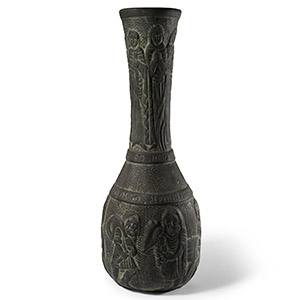
Large Ceramic Vase with Representation of the Months
20th century A.D.Sold for (Inc. bp): £39
With flared mouth and bulbous body, low-relief frieze of workers and labourers undertaking appropriate agricultural tasks, horizontal bands with the corresponding names of the months. 4.2 kg, 54 cm high
Acquired London, UK. Property of a Harwich gentleman. -
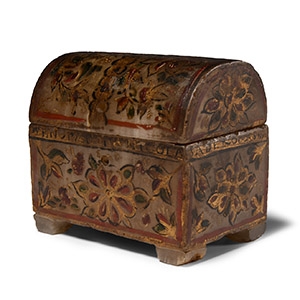
Post Medieval Painted Miniature Alabaster Casket
Circa 17th century A.D.Sold for (Inc. bp): £377
With D-section lid and four stub feet, painted panels of rosettes and foliage in red and green with liquide gold detailing; upper edge of base with legend 'SIrVOAMI / SENOr[A] DOrA NICOLA / SADERO[B]AS'. 336 grams, 83 mm wide
From a Blackheath, London, UK, deceased estate. Property of a Suffolk, UK, gentleman.
The text reads in part as a personal name 'Senora Dora Nicola ... de Robas', Spanish or Catalan. -
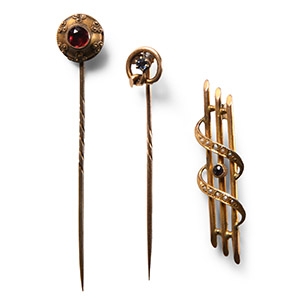
Jewelled Gold Tie Pin Group
19th century A.D.Sold for (Inc. bp): £52
Comprising a gold pin with facetted blue gem in a loose loop and a conical cell with granules around a cell with facetted red glass stud; offered with another gilt example of three staggered bars and scrolls with facetted red glass gem. 6.05 grams total, 45-67 mm
Acquired London, UK. Property of a Harwich gentleman.
