
Loading, please wait...
_900x900.jpg "Amethyst Gemstone with Portrait of Constantine the Great")
_200x200.jpg "Amethyst Gemstone with Portrait of Constantine the Great")
.jpg "Amethyst Gemstone with Portrait of Constantine the Great")
LOT 0156
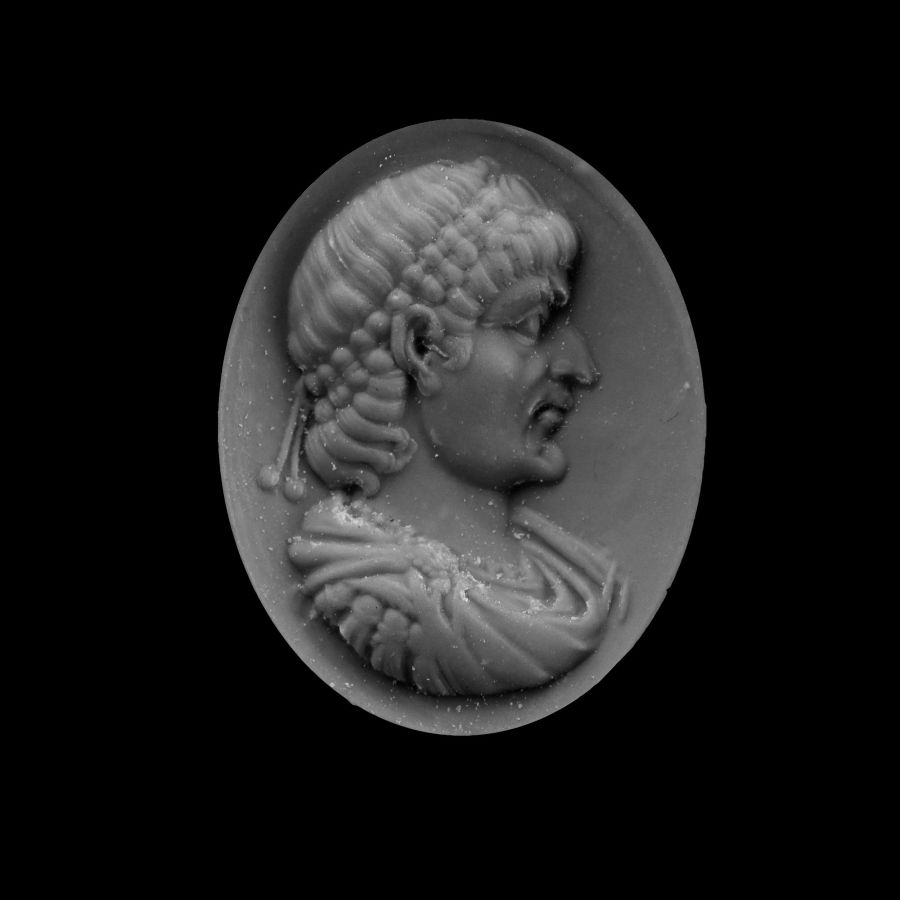
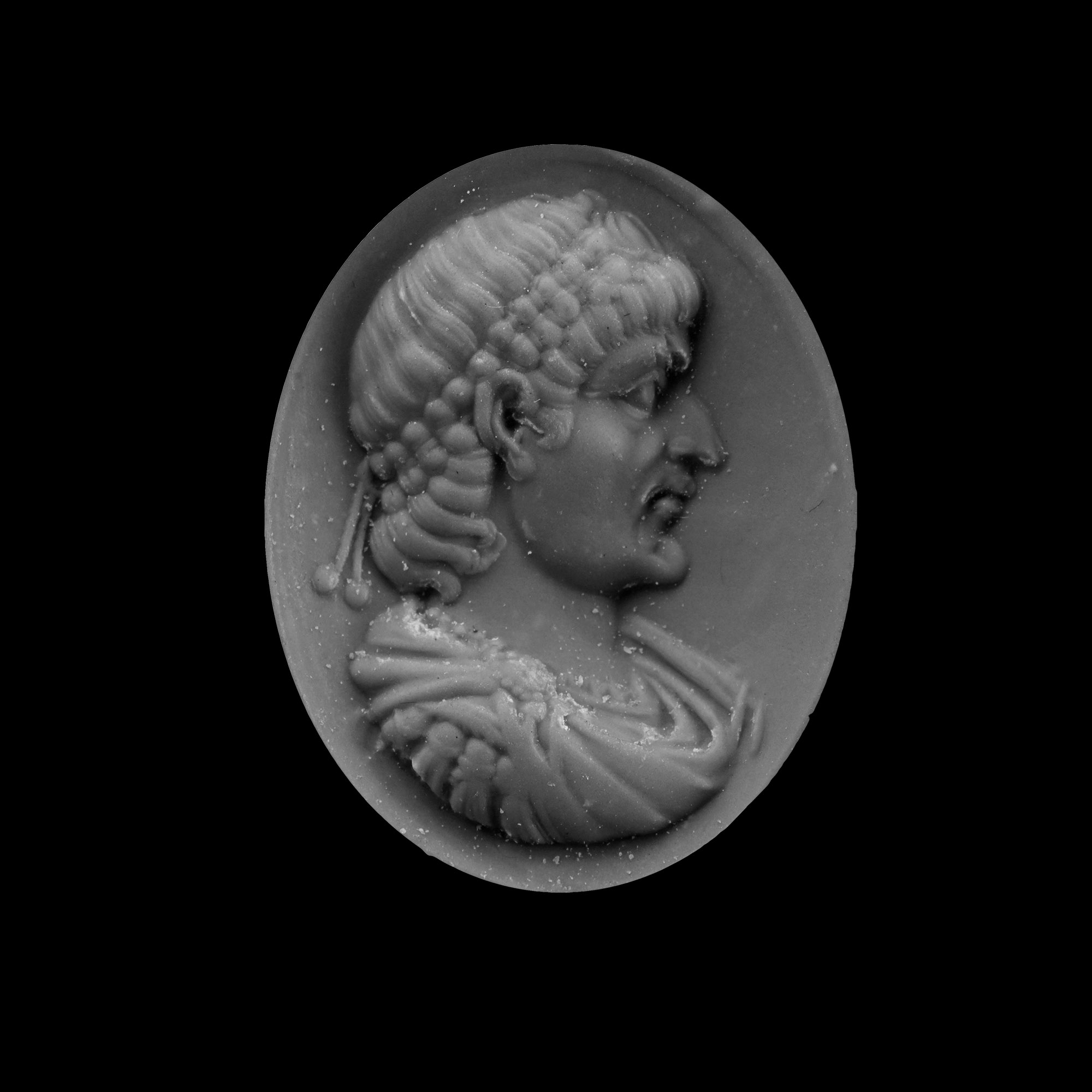
Amethyst Gemstone with Portrait of Constantine the Great
ROMAN, 4TH CENTURY A.D. OR LATER
1 in. (5.36 grams, 26 mm).
With intaglio profile bust of Constantine with pteruges and cloak clasped at the shoulder; supplied with a museum-quality impression.
ProvenanceAcquired in the late 1970s.
Property of a London, UK, private collector.
From an old London, UK, collection.
This lot has been checked against the Interpol Database of stolen works of art and is accompanied by search certificate number no.12806-241223.
This lot has been cleared against the Art Loss Register database, and is accompanied by an illustrated lot declaration signed by the Head of the Antiquities Department, Dr Raffaele D'Amato.
Cf. Donati, A., Gentili, G., Costantino Il Grande, la civilta' Antica al bivio fra Occidente ed Oriente, Milano, 2005, p.223, no.31, for near identical portrait in amethyst.
CONDITIONTimeLine Auctions follows a vetting process to ensure the authenticity and legality of all items, reinforcing our commitment to integrity and responsible trading. Each antiquity, antique, and coin lot undergoes thorough examination by a vetting committee of at least ten external specialists, professional trade association members, scientists, and archaeologists: Our Vetting Process
AUCTIONS:
TimeLine is a leading auction house specialising in antiquities, ancient art, collectables, natural history, coins, medals, and books. Our auctions offer museums, collectors, historians, and enthusiasts the opportunity to acquire unique and historically significant pieces.
LOT 0156
Amethyst Gemstone with Portrait of Constantine the Great
Sold for (Inc. bp): £10,400
-
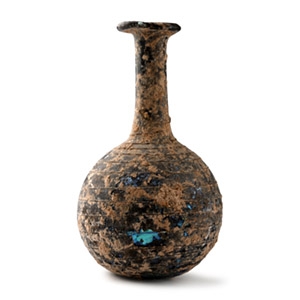
Roman Iridescent Glass Flask with Trailing
1st century A.D.Estimate: £400 - 600 (+bp*)
Opening Bid: £190
An iridescent glass unguentarium with spherical body, tubular neck with everted rolled rim; applied trails across the body. 19 grams, 10 cm
Ex Mayfair, London, UK, gallery, 1990s-2000s. From an important collection of glass, the property of a London gentleman. This lot is accompanied by an illustrated lot declaration signed by the Head of the Antiquities Department, Dr Raffaele D'Amato. -
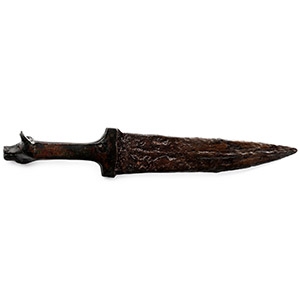
Roman Sacrificial Iron Dagger with Bronze Bull-Headed Hilt
1st-2nd century A.D.Sold for (Inc. bp): £1,105
Comprising a single-edged triangular blade, with midrib; integral baluster and grip with bull-head finial; the blade tip restored. 218 grams, 28 cm
Ex German art market, 2000s. Acquired from an EU collector living in London. From the collection of a Surrey, UK, gentleman. This lot is accompanied by an illustrated lot declaration signed by the Head of the Antiquities Department, Dr Raffaele D'Amato. -
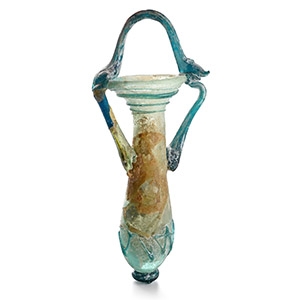
Roman Pale-Blue Glass Handled Unguentarium with Trail
3rd-5th century A.D.Estimate: £400 - 600 (+bp*)
Opening Bid: £200
Comprising a piriform body and flared mouth with applied trails; strap handle above extending to two lateral loops; applied zigzag to lower body and applied foot. 67 grams, 15.5 cm
Acquired on the European art market in the early 2000s. with Galerie Rhéa, Zurich, Switzerland. This lot is accompanied by an illustrated lot declaration signed by the Head of the Antiquities Department, Dr Raffaele D'Amato.
