
Loading, please wait...
LOT 0294
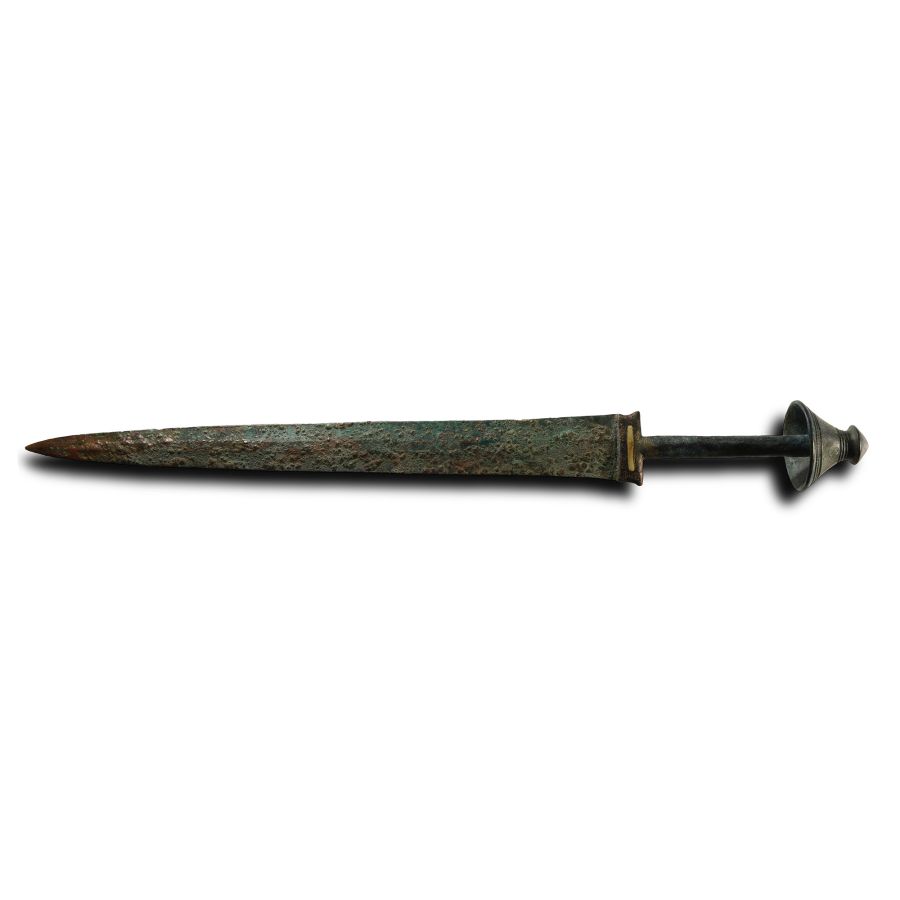
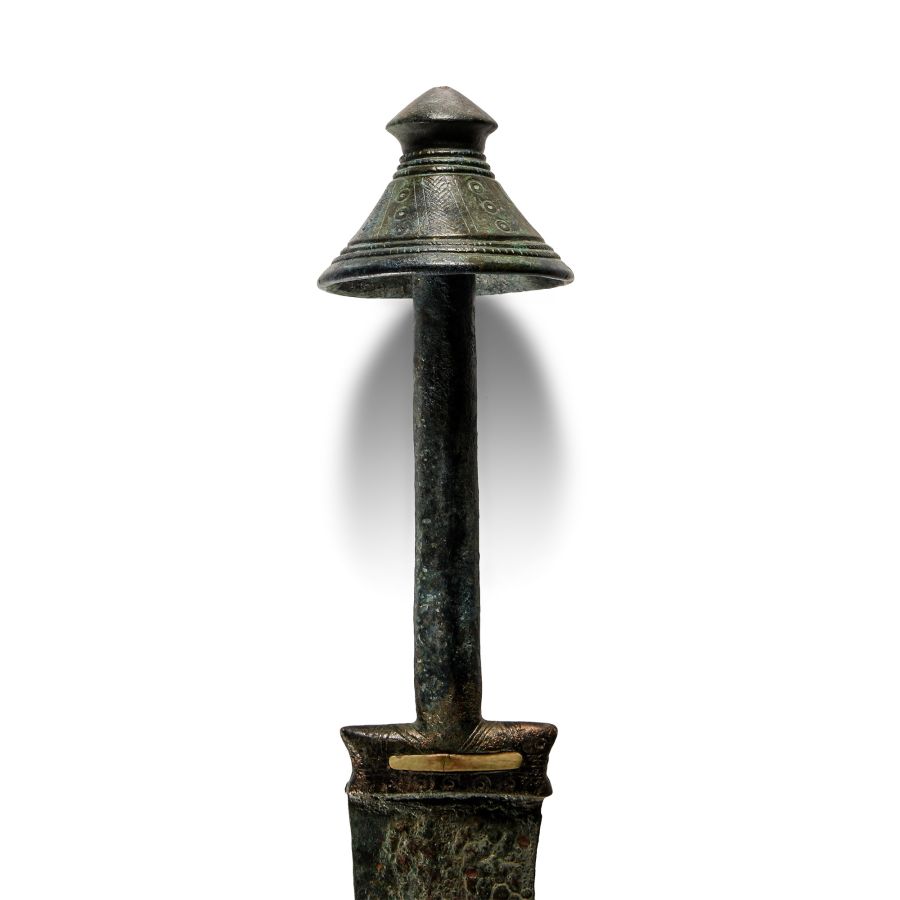
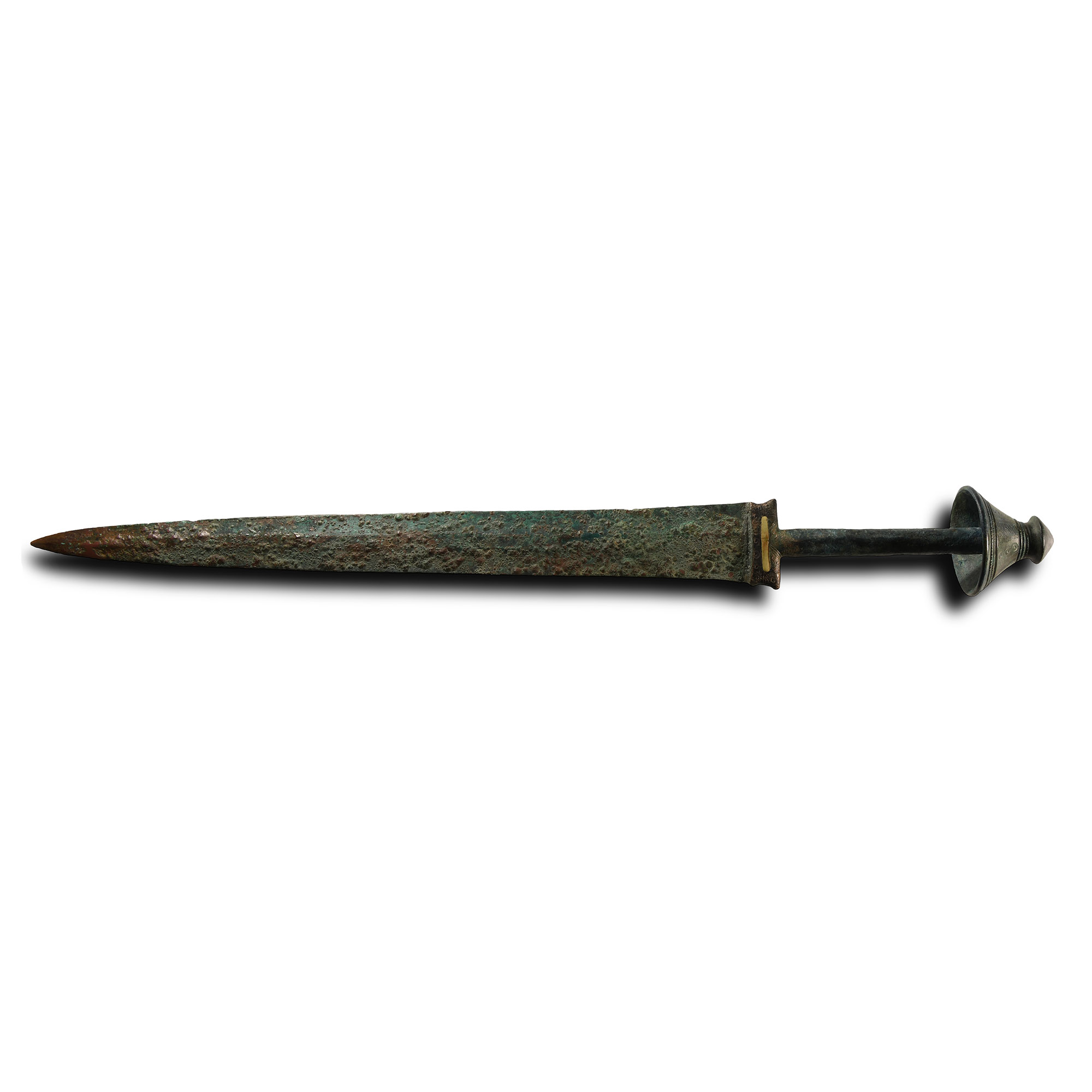
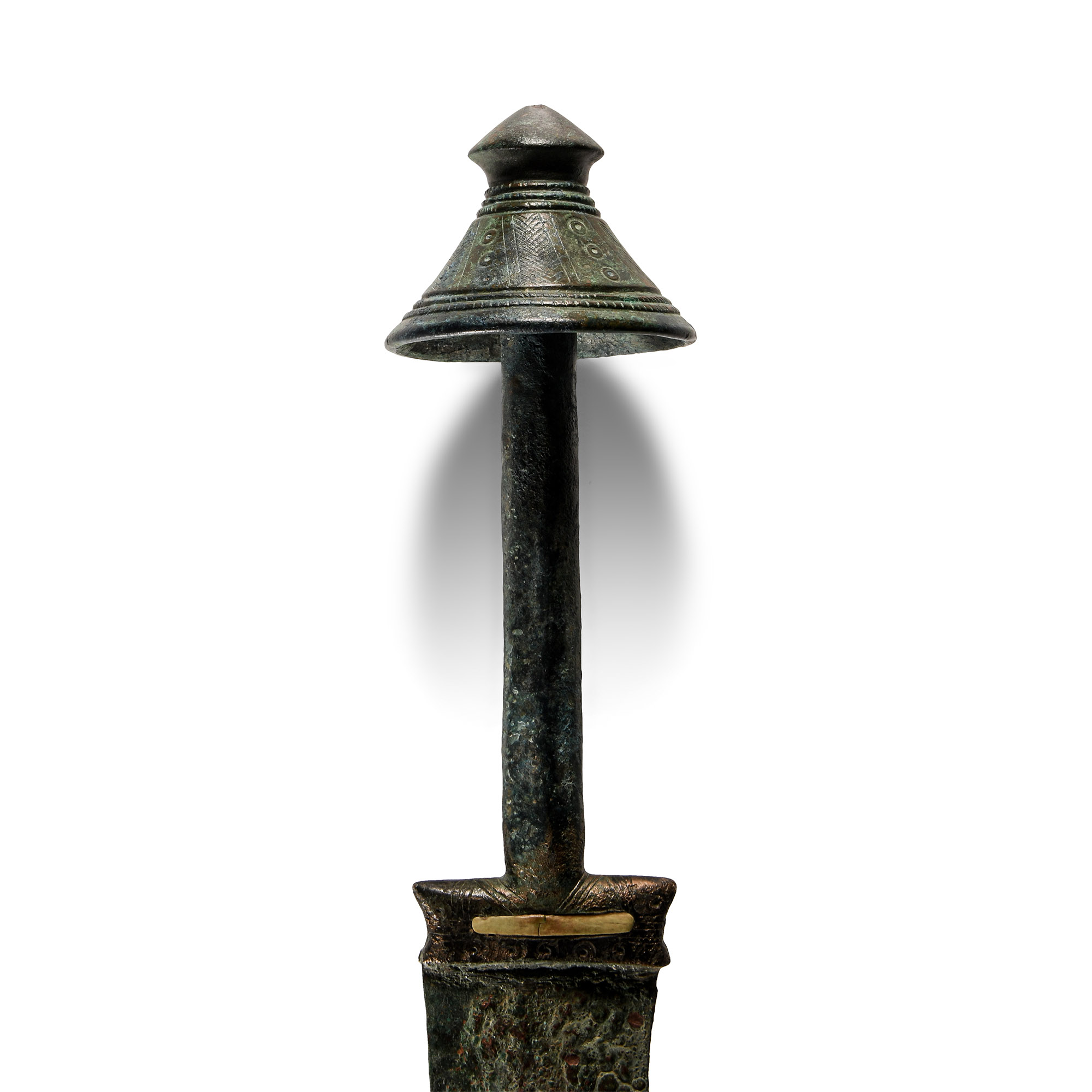
Amarlu Bronze Dagger with Bell-shaped Pommel
LATE 2ND MILLENNIUM B.C.
20 1/2 in. (505 grams, 52 cm).
With solid cast hilt, straight horizontal guard with turquoise inlay; plain narrow grip with conical hollow cast mushroom pommel decorated with dots and lines; wide shallow midrib on the blade tapering to a sharp tip.
ProvenanceEx old English collection.
London art market, pre 2000.
Property of a London, UK, gentleman.
Cf. Khorasani, M.M., Arms and Armour from Iran. The Bronze Age to the End of the Qajar Period, Tübingen, 2006, s.cat 36, for type.
FootnotesMoorey and Khorasani dated swords with mushroom pommels to the end of the second millennium B.C. The weapon belongs to Category IX of the Khorasani classification, the ones with a mushroom or bell-shaped pommel. A similar example is in the National Museum of Iran, Tehran.
CONDITIONTimeLine Auctions follows a vetting process to ensure the authenticity and legality of all items, reinforcing our commitment to integrity and responsible trading. Each antiquity, antique, and coin lot undergoes thorough examination by a vetting committee of at least ten external specialists, professional trade association members, scientists, and archaeologists: Our Vetting Process
AUCTIONS:
TimeLine is a leading auction house specialising in antiquities, ancient art, collectables, natural history, coins, medals, and books. Our auctions offer museums, collectors, historians, and enthusiasts the opportunity to acquire unique and historically significant pieces.
-
Medieval Iron Anti-Cavalry Caltrop Group
13th-15th century A.D.Sold for (Inc. bp): £221
Comprising eight caltrops, hand-forged with square-section spikes. 398 grams total, 76-95 mm
From the private collection of a London gentleman, from his grandfather's collection formed before the early 1970s. -
Western Asiatic Tanged Bronze Spearhead
Late 3rd millennium B.C.Estimate: £100 - 140 (+bp*)
Opening Bid: £50
Having foliate blade with central rib and slender shoulders, cylindrical short shaft encasing a rectangular tang with a bent end. 151 grams, 26.5 cm
Acquired 1980-2015. Ex Abelita family collection.
This variant is characterised by a blade of rhomboidal or swollen section, an intermediate part often short widened so as to form a clear stop and a curved bristle at its end, sometimes finished in a button. Most lances are of medium dimensions (23 cm to 36 cm), others are very elongated (more than 50 cm). The best parallels come from Tepe Hissar. Elements of handles found nearby the spearheads in the excavations have made it possible to reconstruct the total length of the weapon (1.40 m). -
.jpg)
North Western Bronze Short Sword
2nd-1st millennium B.C.Sold for (Inc. bp): £1,885
Of fine quality, showing an open cast crescentic pommel with raised midrib and two parallel shallow lines across the top; pommel open on both sides to reveal the tip of the blade, tang rising from the grip; the solid cylindrical grip decorated with fourteen circumferential ribs, angular guard and triangular blade with strong midrib. 1.05 kg, 58 cm
Ex P.A., Hertfordshire, UK, specialist collection of Greek art, 1980-1990s.
The dirk has its hilt cast onto the blade. Moorey published a very similar piece with fourteen encircling ribs on the grip and attributed similar pieces to the North-West, also based upon examples of similar dirks from the Iranian and Russian Talesh region. He dated these pieces to the late 2nd millennium B.C. Similar examples were excavated at Marlik. Stutzinger attributed these types with a wider dating (13th-9th century A.D.)
