
Loading, please wait...
LOT 0278
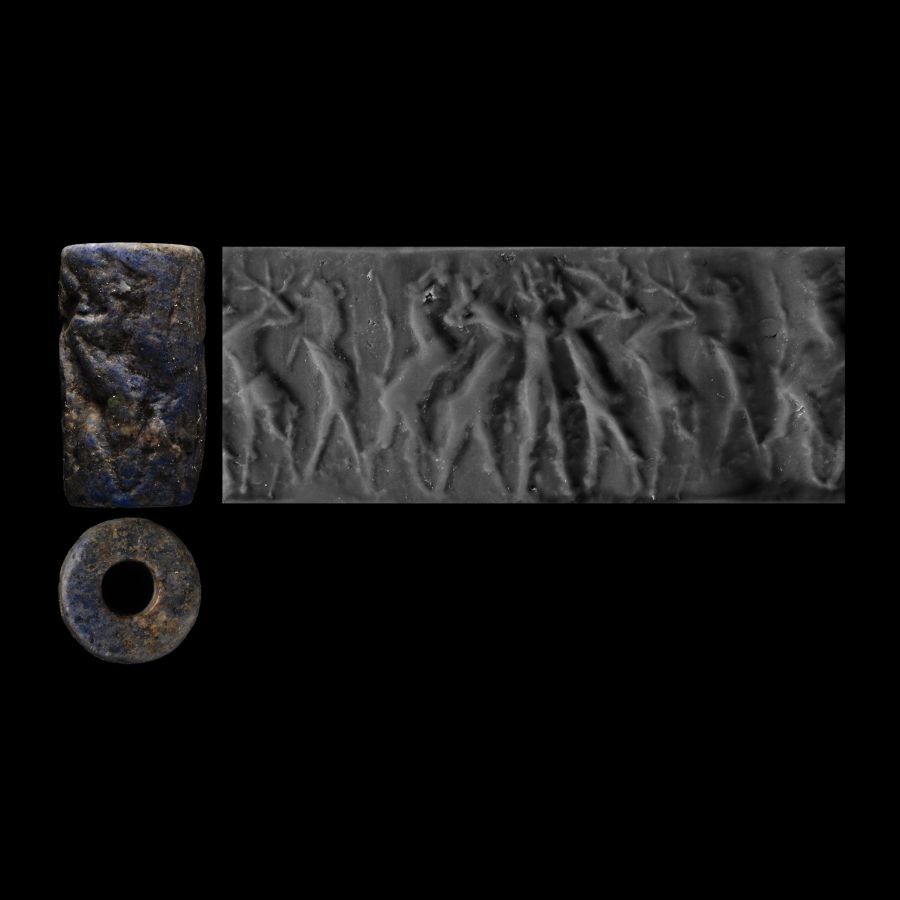
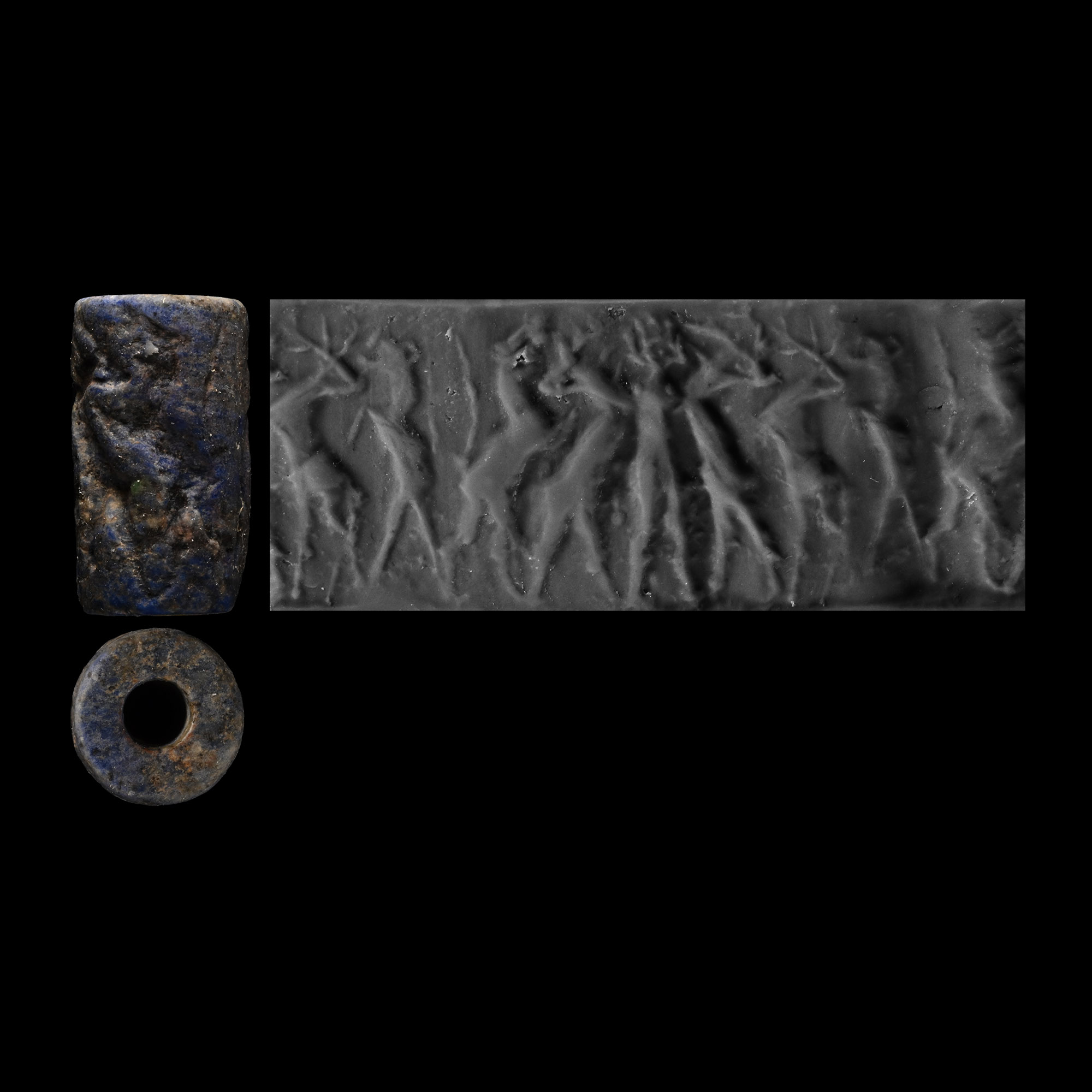
Akkadian Lapis Lazuli Master of Animals Type Cylinder Seal
2ND MILLENNIUM B.C.
3/4 in. (4.19 grams, 18 mm).
With incuse design including an advancing human figure and two rampant stags; old collector's tag.
ProvenanceEx 'S' collection, London, UK.
Examined by Professor Wilfrid George Lambert FBA (1926-2011), historian, archaeologist, and specialist in Assyriology and Near Eastern archaeology, in the late 1980s and early 1990s.
TimeLine Auctions follows a vetting process to ensure the authenticity and legality of all items, reinforcing our commitment to integrity and responsible trading. Each antiquity, antique, and coin lot undergoes thorough examination by a vetting committee of at least ten external specialists, professional trade association members, scientists, and archaeologists: Our Vetting Process
AUCTIONS:
TimeLine is a leading auction house specialising in antiquities, ancient art, collectables, natural history, coins, medals, and books. Our auctions offer museums, collectors, historians, and enthusiasts the opportunity to acquire unique and historically significant pieces.
LOT 0278
Akkadian Lapis Lazuli Master of Animals Type Cylinder Seal
Estimate £600 - 800€700 - 930 (for guidance only)$810 - 1,080 (for guidance only)
-
Western Asiatic Stone Idol and Other Artefact Group
1st millennium B.C. and laterSold for (Inc. bp): £104
Including phallus, heads, fusiform bead and other items, some on a ceramic base. 586 grams total, 48-94 mm including stand
From a collection acquired on the UK art market from various auction houses and collections mostly before 2000. From an important Cambridgeshire estate; thence by descent. -
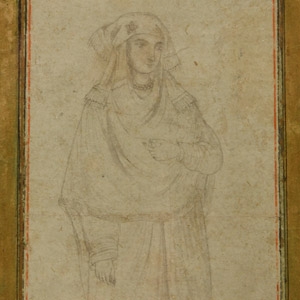
Safavid Drawing of a Western Pilgrim
Circa 1680 A.D.Sold for (Inc. bp): £182
Ink on paper; drawing of a Western noblewoman or pilgrim; mounted with dark blue reveal in a Victorian gilt ornate frame and later illuminated border with decorative gold and red paint. 2.3 kg, 36 x 49 cm including frame
Acquired from the UK art market. Private Scottish collection.
The headgear may suggest that the subject is Portuguese, if it depicts the traditional 'capote e capelo' hood. -
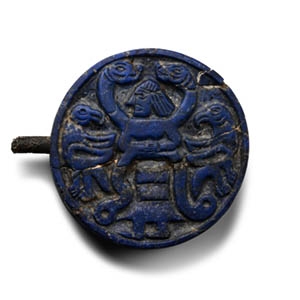
Bactrian Lapis Lazuli Pin Head with Figures
3rd millennium B.C.Sold for (Inc. bp): £2,600
Drum-shaped in profile with running guilloche to the rim, obverse with low-relief figure of a crouching man between addorsed gryphons; reverse with crouching anguiped between lion-heads and regardant birds. 43.6 grams, 50 mm
with Gallery Rosen Ancient Art, Tel Aviv, 1968. with a London, UK gallery, 1971-early 2000s. Accompanied by a copy of the original 1968 invoice. This lot has been checked against the Interpol Database of stolen works of art and is accompanied by a search certificate number no.12407-225342.
