
Loading, please wait...
LOT 2160
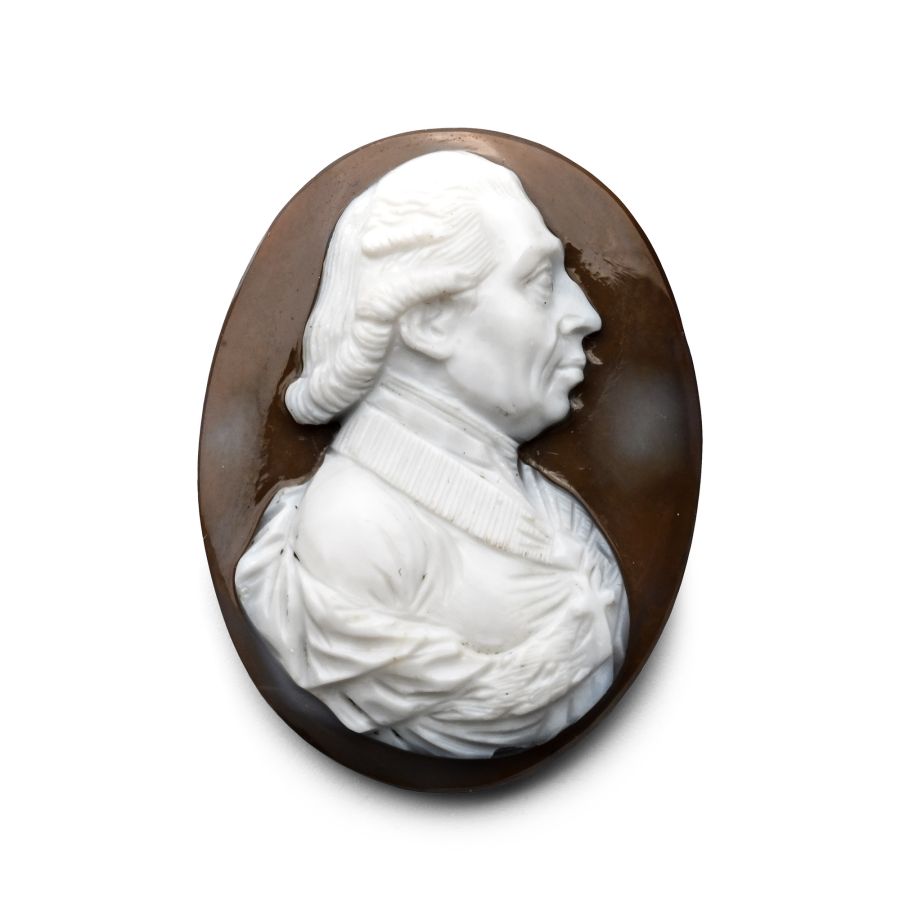
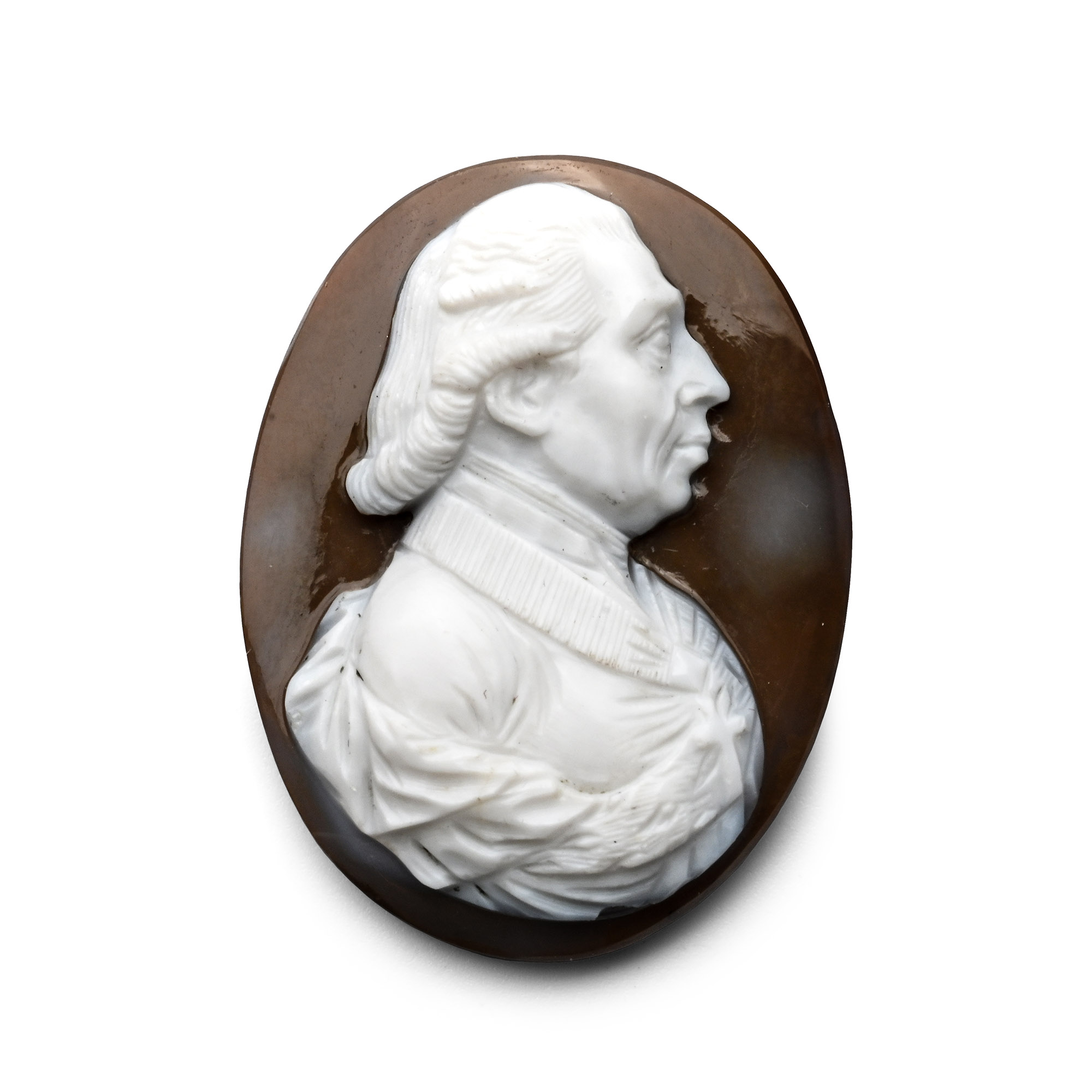
Agate Cameo of Karl Theodor Anton Maria Von Dalberg
GERMANY, 19TH CENTURY A.D.
1 in. (3.52 grams, 25 mm).
Ellipsoid with reserved profile of Karl Theodor Anton Maria Von Dalberg facing left, attributed to Johann Martin Bückle (1742-1811).
ProvenancePrivate collection, Europe.
Acquired on the English art market.
Karl Theodor Anton Maria von Dalberg (February 8, 1744 – February 10, 1817) was a Catholic German bishop and statesman. Throughout his career, he held various significant positions, including Prince-Archbishop of Regensburg, Arch-Chancellor of the Holy Roman Empire, Bishop of Constance and Worms, Prince-Primate of the Confederation of the Rhine, and Grand Duke of Frankfurt.
CONDITIONTimeLine Auctions follows a vetting process to ensure the authenticity and legality of all items, reinforcing our commitment to integrity and responsible trading. Each antiquity, antique, and coin lot undergoes thorough examination by a vetting committee of at least ten external specialists, professional trade association members, scientists, and archaeologists: Our Vetting Process
AUCTIONS:
TimeLine is a leading auction house specialising in antiquities, ancient art, collectables, natural history, coins, medals, and books. Our auctions offer museums, collectors, historians, and enthusiasts the opportunity to acquire unique and historically significant pieces.
LOT 2160
Agate Cameo of Karl Theodor Anton Maria Von Dalberg
Estimate £400 - 600€460 - 700 (for guidance only)$540 - 810 (for guidance only)
-
Gilt Framed Set of Historical Prints
19th century A.D.Sold for (Inc. bp): £13
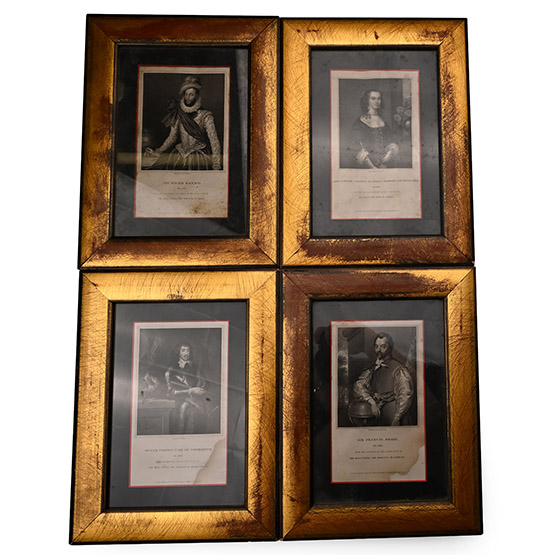
A set of four framed and glazed historical prints: Sir Francis Drake, engraved by S. Freeman, published London, 1829, by Harding & Lepard; Sir Walter Raleigh, engraved by H. Robinson, published London, 1829, by Harding & Lepard; Spencer Compton, engraved by H. Robinson, published London, 1834, by Harding & Lepard; Anne Clifford, Countess of Dorset, engraved by H.T. Ryall, published London, 1830, by Harding & Lepard. 2.3 kg total, 32.5 x 24.5 cm each
Fair to fine condition.
Property of a North London, UK, gentleman. From the private collection of John Meredith, acquired since the 1990s; thence by descent. -
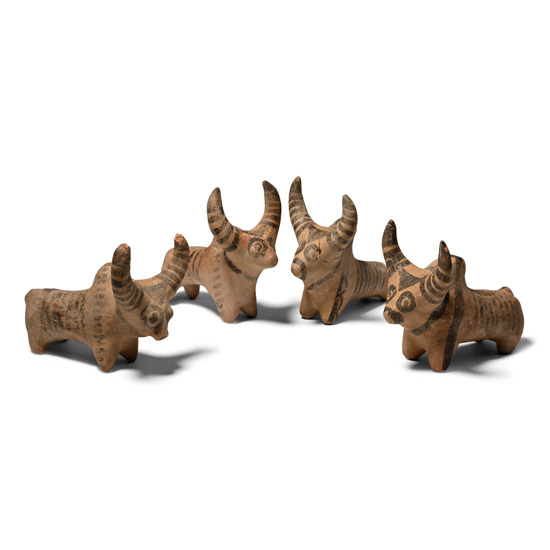
Indus Valley Style Terracotta Bull Group
20th century A.D.Sold for (Inc. bp): £33
A group of four zebu bulls, each with painted details. 406 grams total, 90-94 mm
Very fine condition.
Ex Lockdales, Suffolk, UK, auction 153, no.637; 156, no.908; 159, no.1509; and 163, no.814. From the private collection of John Meredith, acquired since the 1990s; thence by descent. -
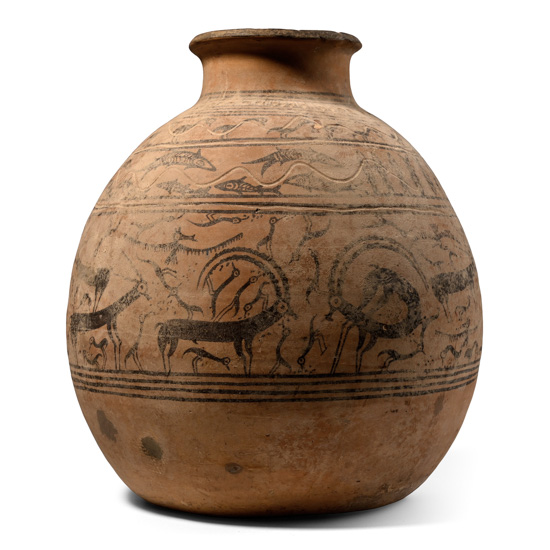
Large Indus Valley Style Terracotta Vessel
20th century A.D.Sold for (Inc. bp): £72
With everted chamfered rim, tiered bands of painted decoration including horses, fish, birds, ibexes and other creatures. 5.2 kg, 28.5 cm
Fine condition, rim chipped.
Property of a London gentleman; acquired before 2000. From the private collection of John Meredith, acquired since the 1990s; thence by descent.
