
Loading, please wait...
LOT 2030
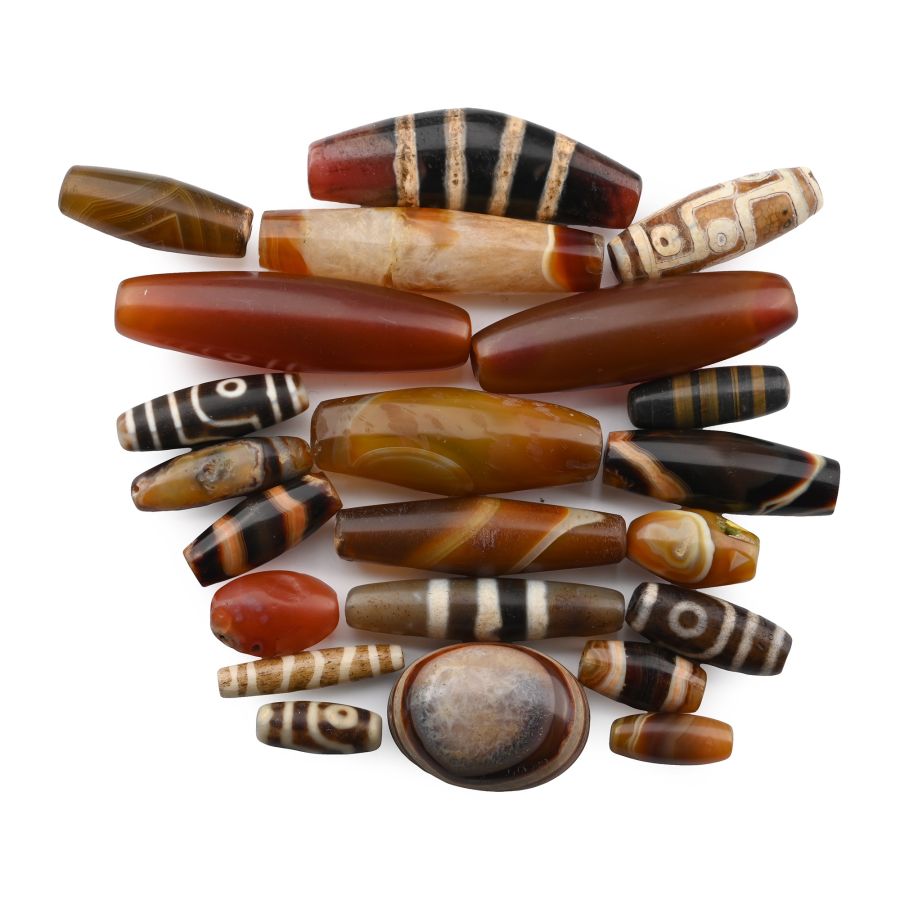
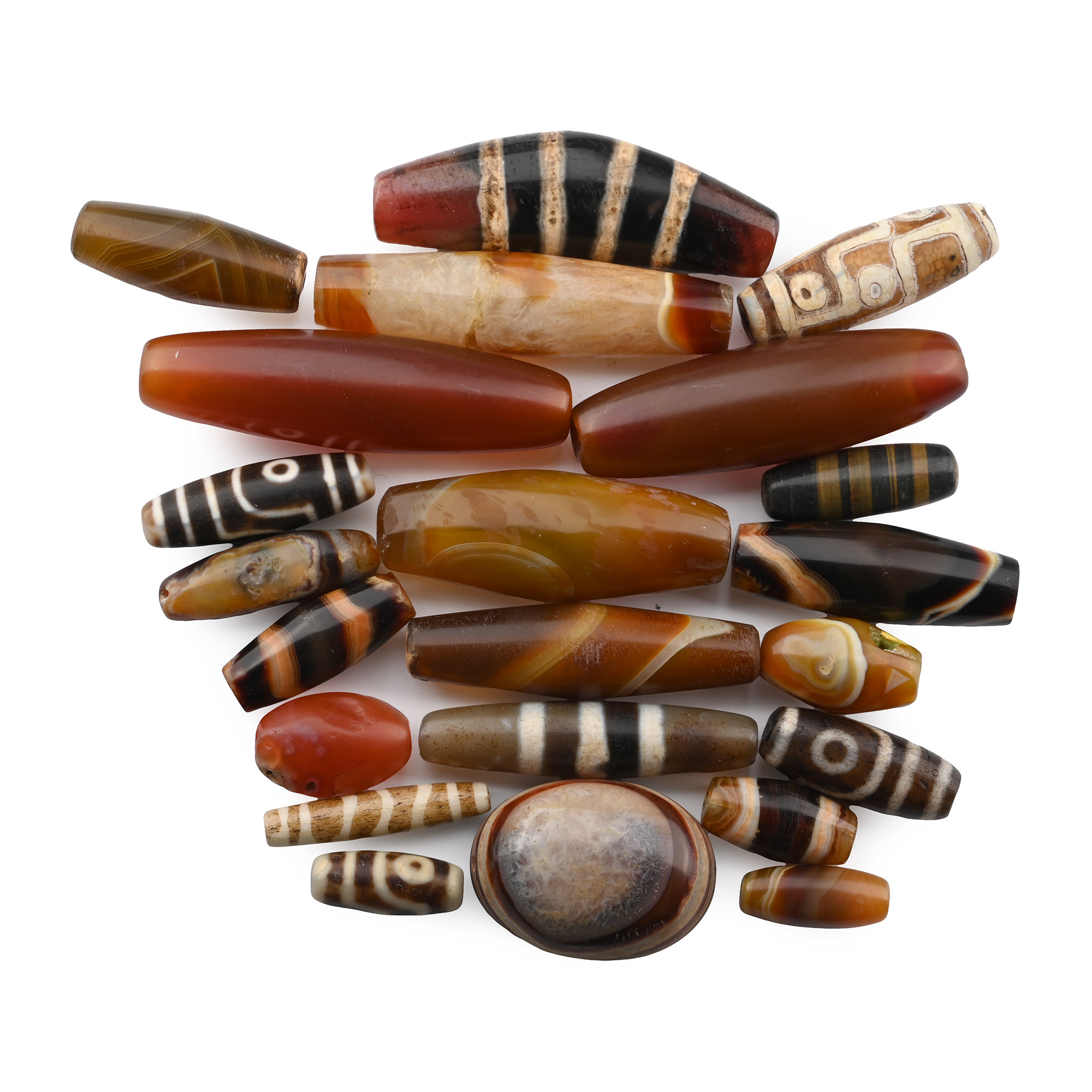
Agate and Glass Bead Collection
20TH CENTURY A.D.
1 - 2 3/4 in. (356 grams total, 24-70 mm).
Including crescentic, biconvex, plano-convex and other types, some with etched Zi patterns. [22, No Reserve]
ProvenancePrivate collection, UK.
CONDITIONTimeLine Auctions follows a vetting process to ensure the authenticity and legality of all items, reinforcing our commitment to integrity and responsible trading. Each antiquity, antique, and coin lot undergoes thorough examination by a vetting committee of at least ten external specialists, professional trade association members, scientists, and archaeologists: Our Vetting Process
AUCTIONS:
TimeLine is a leading auction house specialising in antiquities, ancient art, collectables, natural history, coins, medals, and books. Our auctions offer museums, collectors, historians, and enthusiasts the opportunity to acquire unique and historically significant pieces.
-
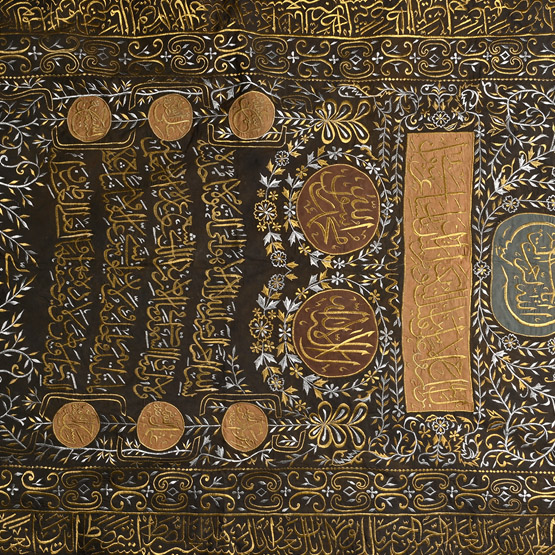
Western Asiatic Gilt and Silvered Wire Calligraphic Bed or Table Cover
20th century A.D.Sold for (Inc. bp): £1,820
Rectangular fabric cover with embroidered calligraphic text, bands of flowers and tendrils and other detailing, executed in gold- and silver-coloured threads. 470 grams, 98 x 159 cm
Private collection, UK. -
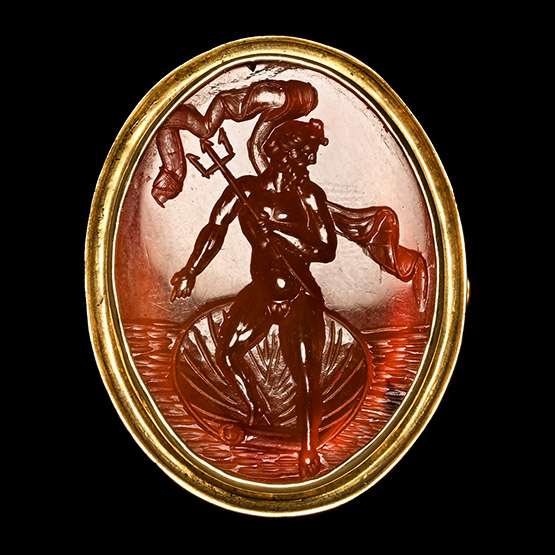
Post Medieval Gold Ring with Carnelian Gemstone Depicting the Roman God Neptune
Italy, 19th century A.D.Sold for (Inc. bp): £2,340
Depicting Neptune advancing nude from a scallop shell, holding a trident in one hand and pointing with the other; billowing banner to his rear; supplied with a museum-quality impression. 15.19 grams, 31.43 mm overall, 19.60 mm internal diameter (approximate size British R, USA 8 1/2, Europe 18 3/4, Japan 18)
Private collection, Europe. Acquired on the English art market. This lot has been checked against the Interpol Database of stolen works of art and is accompanied by search certificate number no.13053-248373.
Throughout Europe, and far beyond, talented gem-cutters were at work in the 19th century. Neptune was appreciated by Neoclassical cutters, as shown by a carnelian gemstone with the profile of Neptune, his face serene amidst a storm, by the American engraver George Hewitt Cushman (1814-1876). -
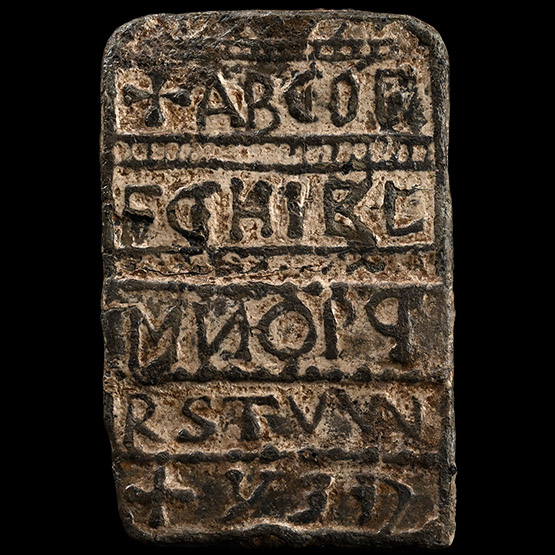
Tudor Period Lead 'Horn Book' Teaching Aid
1600-1633 A.D.Sold for (Inc. bp): £3,510
A rare complete and undamaged rectangular plaque bearing raised, moulded text on the obverse; with hatched three horizontal bars and two pelletted between five registers, framing the letters of the alphabet '+ABCDE / FGHIKL / MN[reversed]OPq / RSTVW / +Y[Z]'; tree with berries on a hatched field to the reverse. 26.8 grams, 53 mm
Found whilst searching with a metal detector near Kniveton, Derbyshire Dales, UK. Accompanied by a copy of the British Museum's Portable Antiquities Scheme (PAS) report no.WMID-341C6A.
The letter 'U' has been omitted from the alphabet, as is common with such objects, as has the letter 'J', suggesting that the book was produced prior to the publication of Charles Butler's English Grammar (1633), which first distinguished between I and J. The letter Z is reversed. Hornbooks were employed as learning aids and commonly made from paper mounted onto wood, together with a transparent sheet of horn. Smaller, more portable lead-alloy examples such as this one are generally believed to have been mass-produced, whilst still falling within the genre of 'hornbooks'.
