
Loading, please wait...
LOT 1708
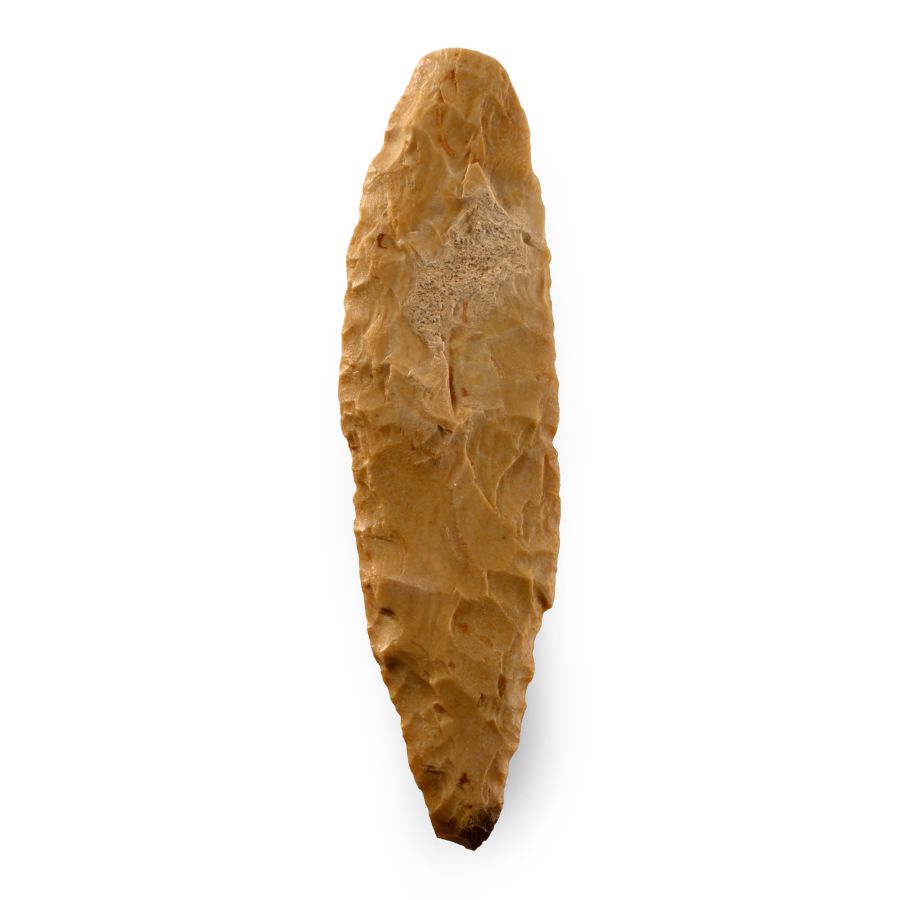
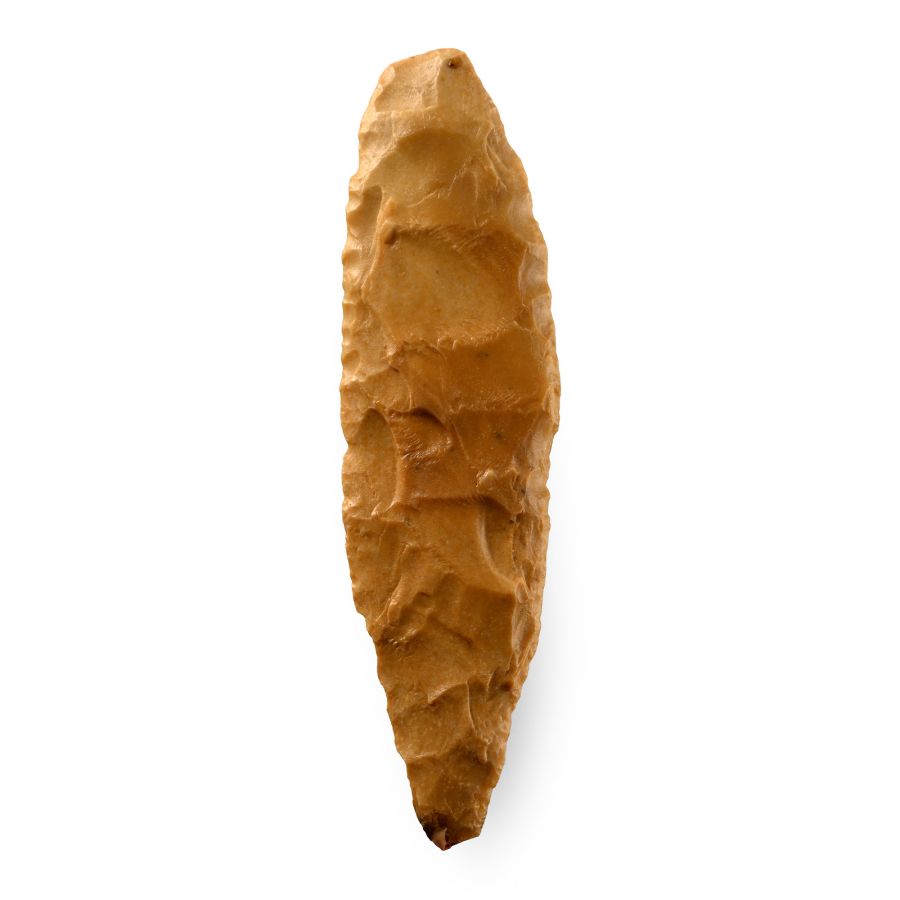
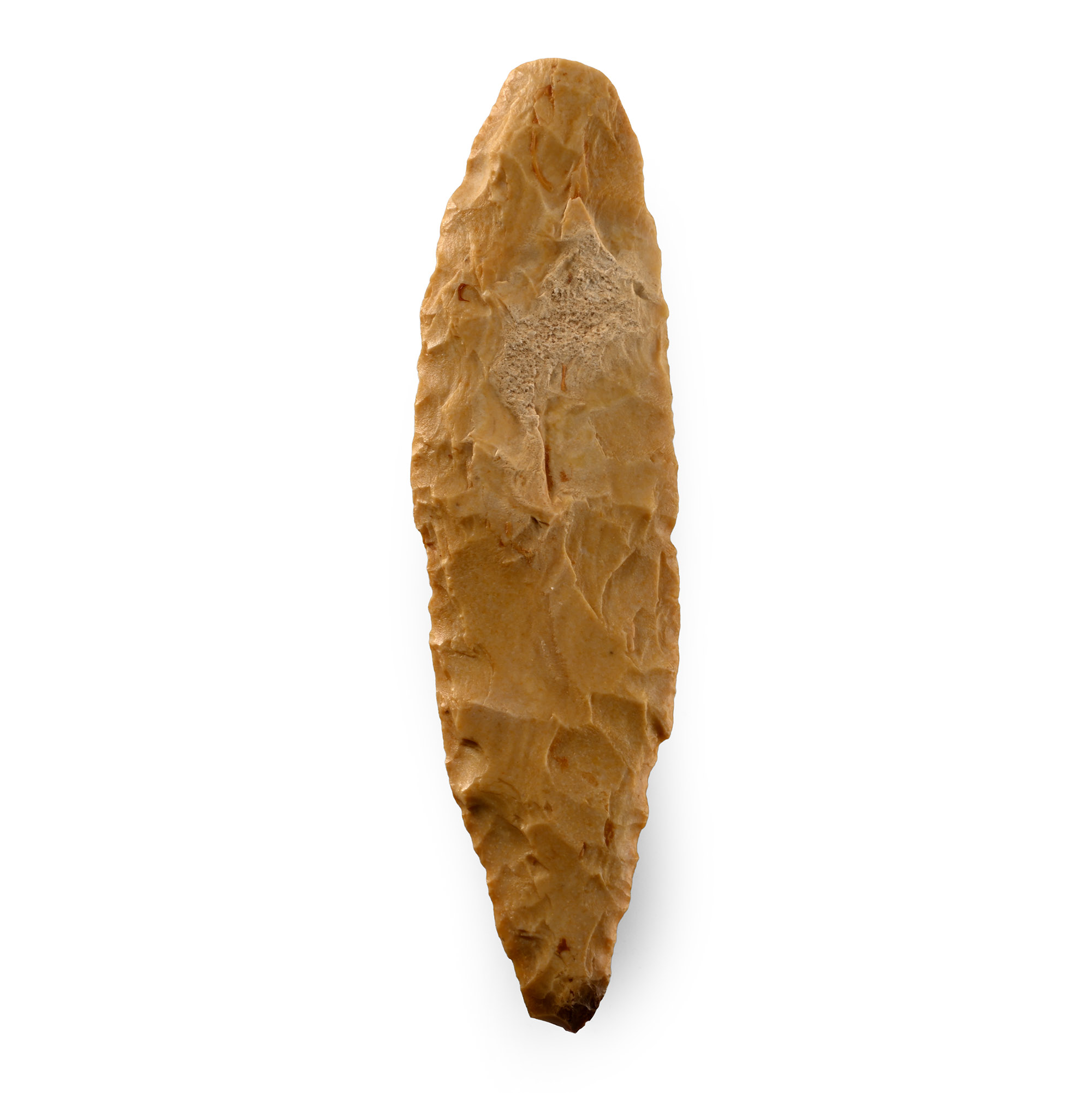
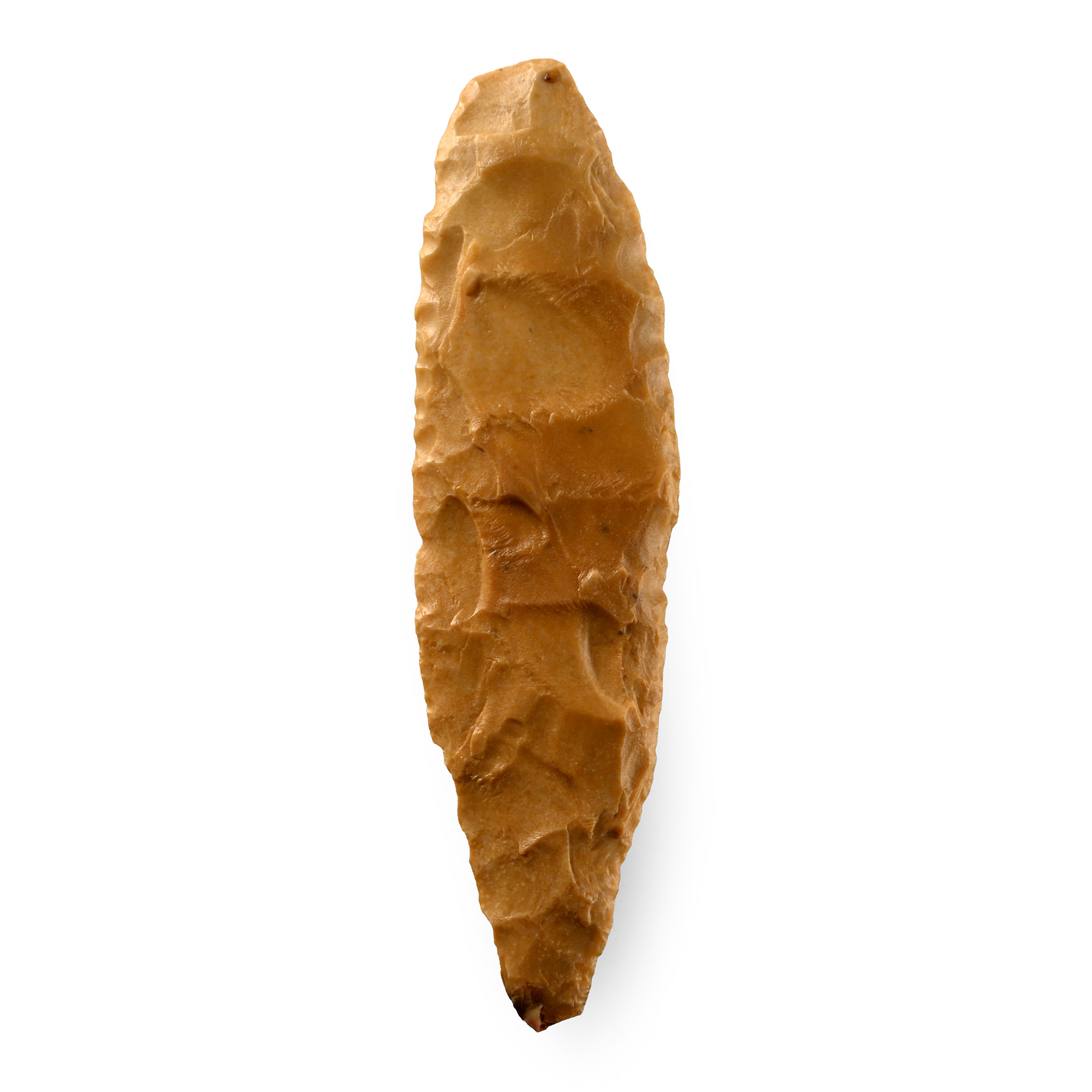
African Stone Age Knapped Knife
NEOLITHIC PERIOD, CIRCA 6000 B.P.
4 1/4 in. (25.5 grams, 10.7 cm).
Parallel-sided lanceolate blade with sharply tapering point. [No Reserve]
ProvenanceFrom El Golea, Africa.
Ex old German collection formed in the 1970s by Dr J Fehkhaber.
Acquired on the European art market.
TimeLine Auctions follows a vetting process to ensure the authenticity and legality of all items, reinforcing our commitment to integrity and responsible trading. Each antiquity, antique, and coin lot undergoes thorough examination by a vetting committee of at least ten external specialists, professional trade association members, scientists, and archaeologists: Our Vetting Process
AUCTIONS:
TimeLine is a leading auction house specialising in antiquities, ancient art, collectables, natural history, coins, medals, and books. Our auctions offer museums, collectors, historians, and enthusiasts the opportunity to acquire unique and historically significant pieces.
-
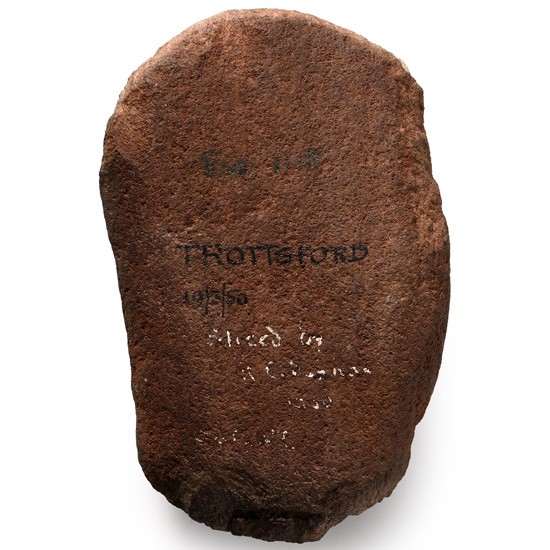
Norfolk Stone Age Polished Cherty Sandstone Tool
Neolithic Period, circa 6,000 B.P.Sold for (Inc. bp): £390
Hammerstone with rounded ends; old typed label 'ENQ:III5, Cherty sand-stone. 1950', 'Trottsford 19/3/50' and others mainly effaced. 310 grams, 11.4 cm
Found Trottsford, Norfolk, UK, on 19th March 1950. From the collection of Haselmere Parish Priest, Charles Borelli (c.1914-2000) of Farnham; who was part of the Borelli family from Italy who emigrated from Lake Como in 1828 to set up the Borelli family watch and jewellery business; thence by family descent to his nephew. -
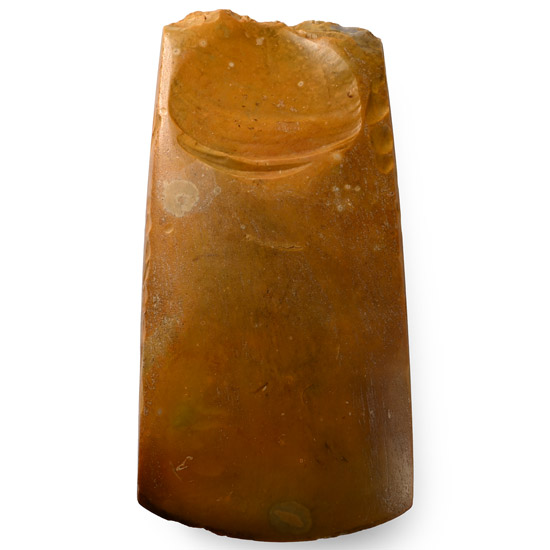
Danish Neolithic Polished Axe
Neolithic Period, circa 3500-3000 B.P.Sold for (Inc. bp): £117
Rectangular in section, with squared butt and slightly curved edge; polished on all four faces with superb orange patina. 560 grams, 14.7 cm
From the estate of artist Holger Karlsson, Trollhatte, Sweden. Acquired in Stockholm, Sweden. Accompanied by a copy of a Swedish National Heritage Board export permit. -
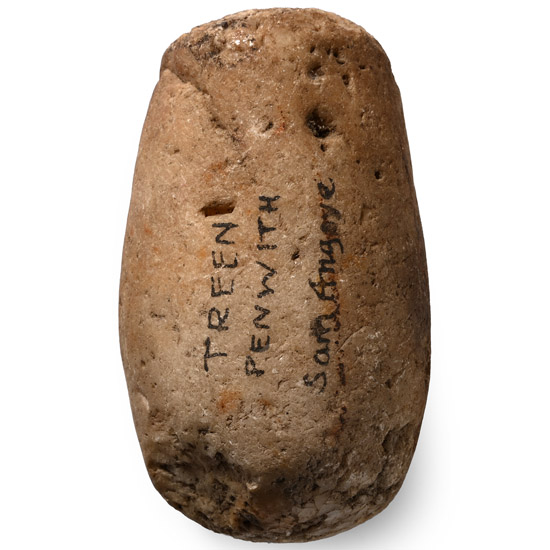
Treen Stone Age Polished Grinding Tool
Neolithic Period, circa 6,000 B.P.Sold for (Inc. bp): £442
Round-section pestle with polished butt; inked legend 'Treen / Penwith / Sam Angoye'. 218 grams, 76 mm
Found Treen, Penwith, UK. From the collection of Haselmere Parish Priest, Charles Borelli (c.1914-2000) of Farnham; who was part of the Borelli family from Italy who emigrated from Lake Como in 1828 to set up the Borelli family watch and jewellery business; thence by family descent to his nephew.
