
Loading, please wait...


LOT 1716
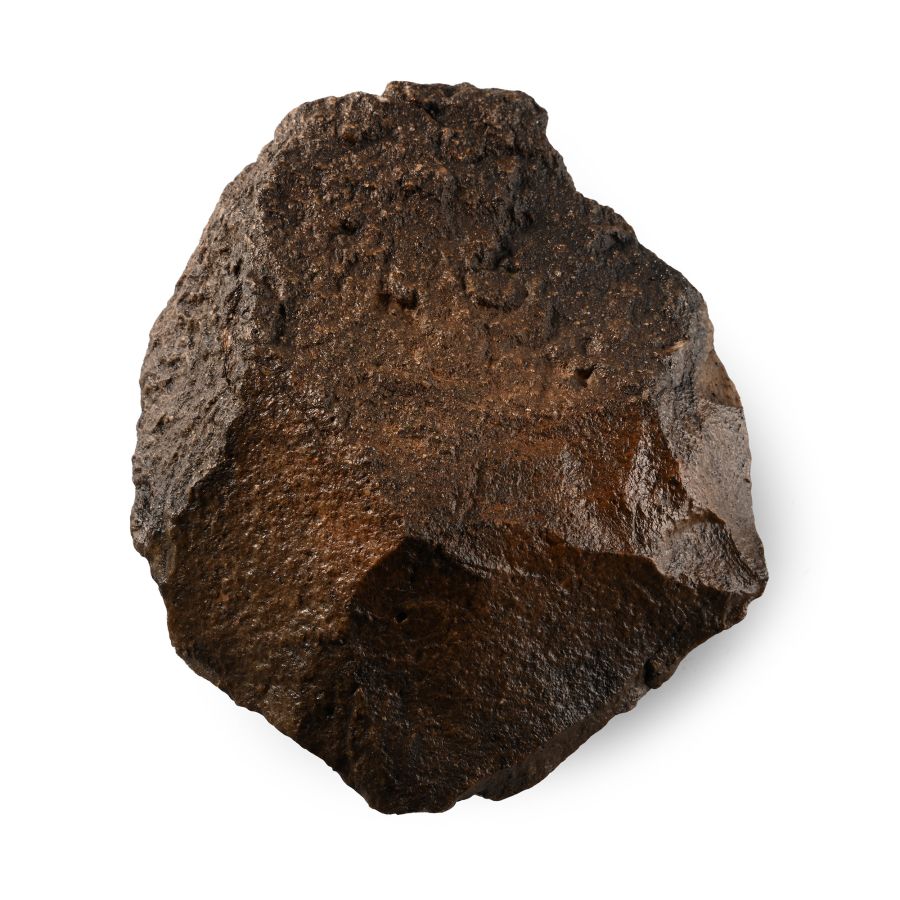
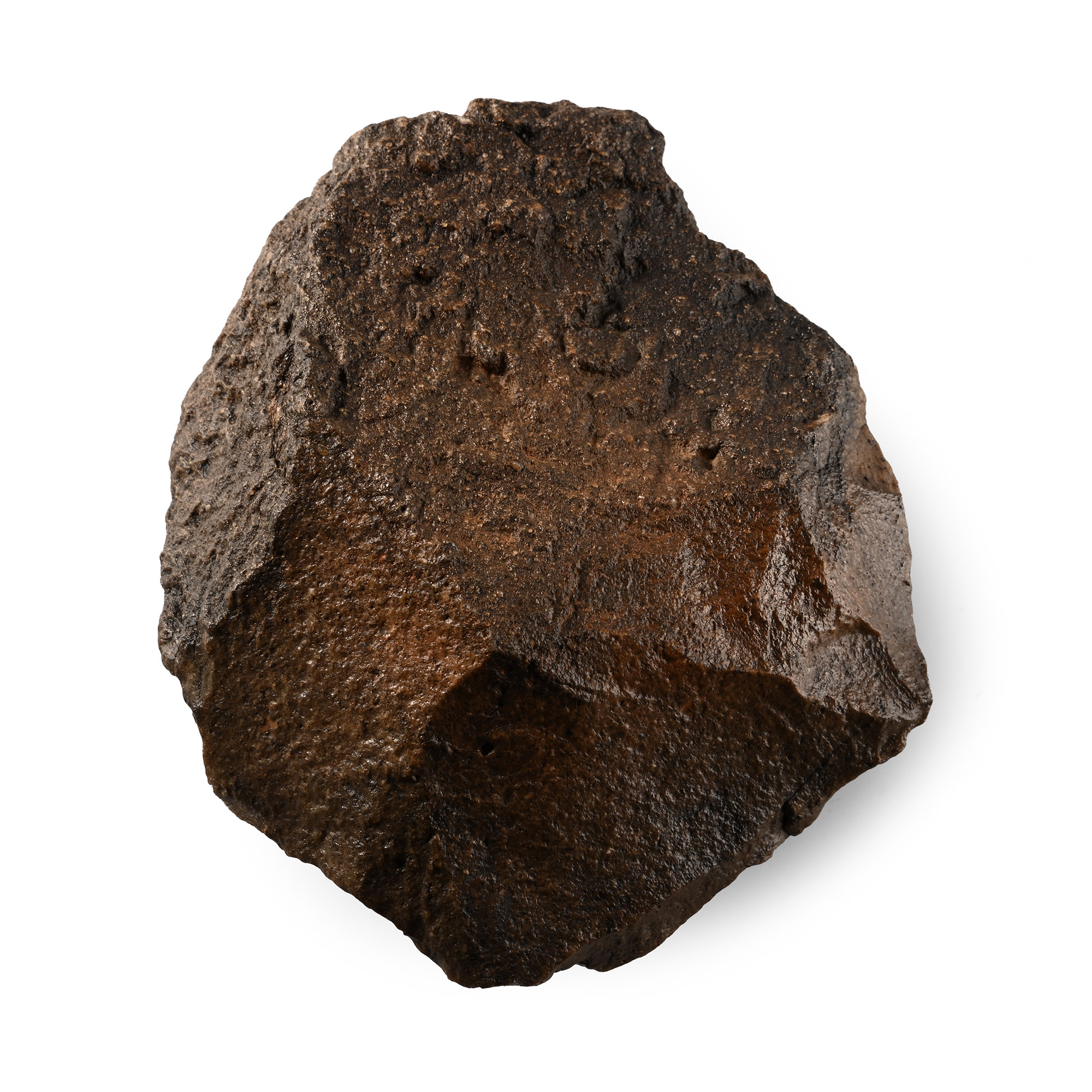
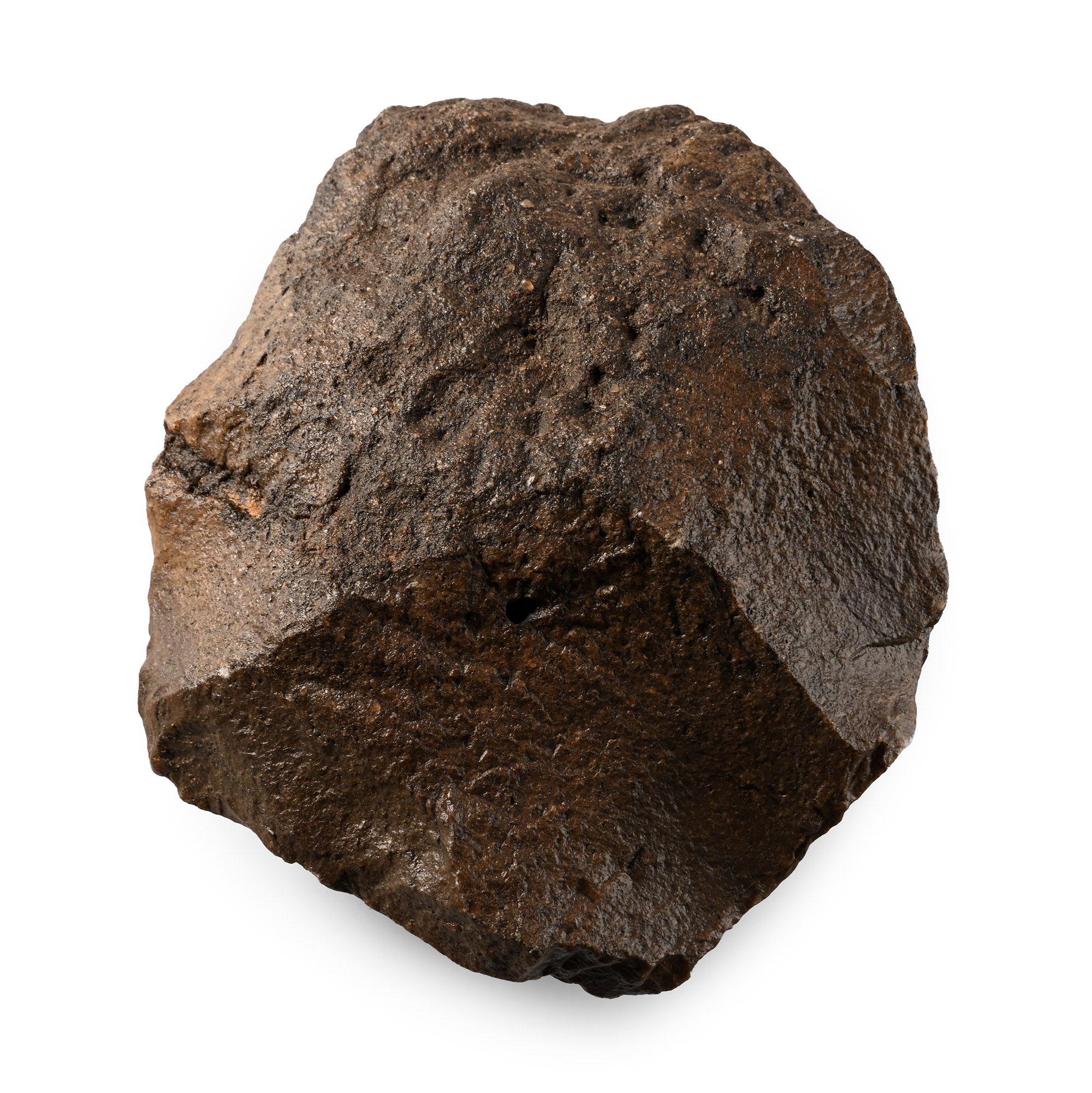
African Stone Age Homo Erectus Knapped Cleaver Type Handaxe
LOWER PALAEOLITHIC PERIOD, CIRCA 1,000,000-500,000 B.P.
4 7/8 in. (674 grams, 12.3 cm).
Cordate type in dark red quartzite with broad edge. [No Reserve]
ProvenanceFrom the Northern Sahara, North Africa.
From a collection formed during the 1970s and 1980s, having been acquired on the British art market; thence by descent to the current owner in 1998.
TimeLine Auctions follows a vetting process to ensure the authenticity and legality of all items, reinforcing our commitment to integrity and responsible trading. Each antiquity, antique, and coin lot undergoes thorough examination by a vetting committee of at least ten external specialists, professional trade association members, scientists, and archaeologists: Our Vetting Process
AUCTIONS:
TimeLine is a leading auction house specialising in antiquities, ancient art, collectables, natural history, coins, medals, and books. Our auctions offer museums, collectors, historians, and enthusiasts the opportunity to acquire unique and historically significant pieces.
LOT 1716
African Stone Age Homo Erectus Knapped Cleaver Type Handaxe
Sold for (Inc. bp): £221
-
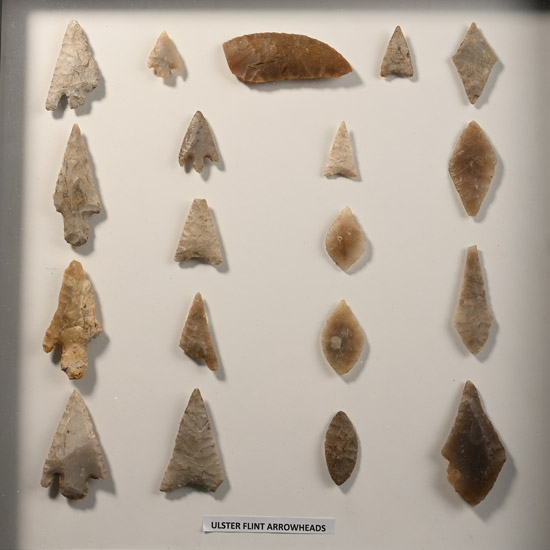
Framed Northern Ireland Stone Age Knapped Arrowhead and Tool Collection
Neolithic-Bronze Age Period, circa 6,000-4,000 B.P.Sold for (Inc. bp): £910
Mixed group of various types, including barbed, tanged, lozenge-shaped, a curved dagger, and others; set in a glazed box frame. 1.1 kg total, 35.5 x 35.5 cm includimg frame
Found Northern Ireland, UK. From the collection of Martin Doyle, Leverstock, UK, 1980s-2000s. -
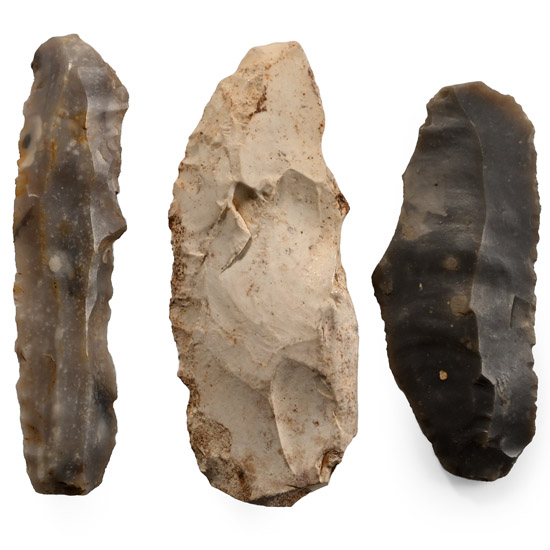
British Stone Age Knapped Flint Blade Collection
Neolithic Period, circa 6,000 B.P.Sold for (Inc. bp): £91
Comprising three knapped blades, each with a find location. 23 grams total, 50-58 mm
Found Bradon, Cavesham, and Coteshill, Suffolk, UK. From the collection of Martin Doyle, Leverstock, UK, 1980s-2000s. -
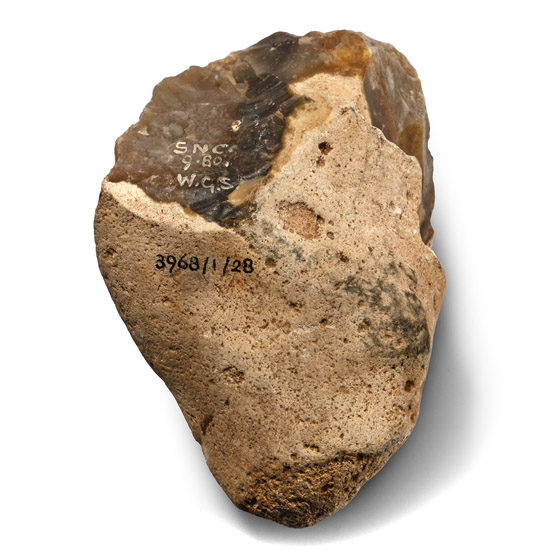
Stone Age Clactonian Flint Chopper
Lower Palaeolithic Period, circa 700,000-300,000 B.P.Sold for (Inc. bp): £91
Rounded blade and cortex-covered butt, old inked collection numbers 'SNC 9.60 W.G.S' and 3968/1/28', and a pencilled note '150.9' to the other side. 152 grams, 79 mm
Previously in several old Stone Age tool collections, having been annotated with three different accession numbers. Acquired from an Oxfordshire, UK, auction house. From the private collection of a West Midlands lady collector.
