
Loading, please wait...
LOT 1798
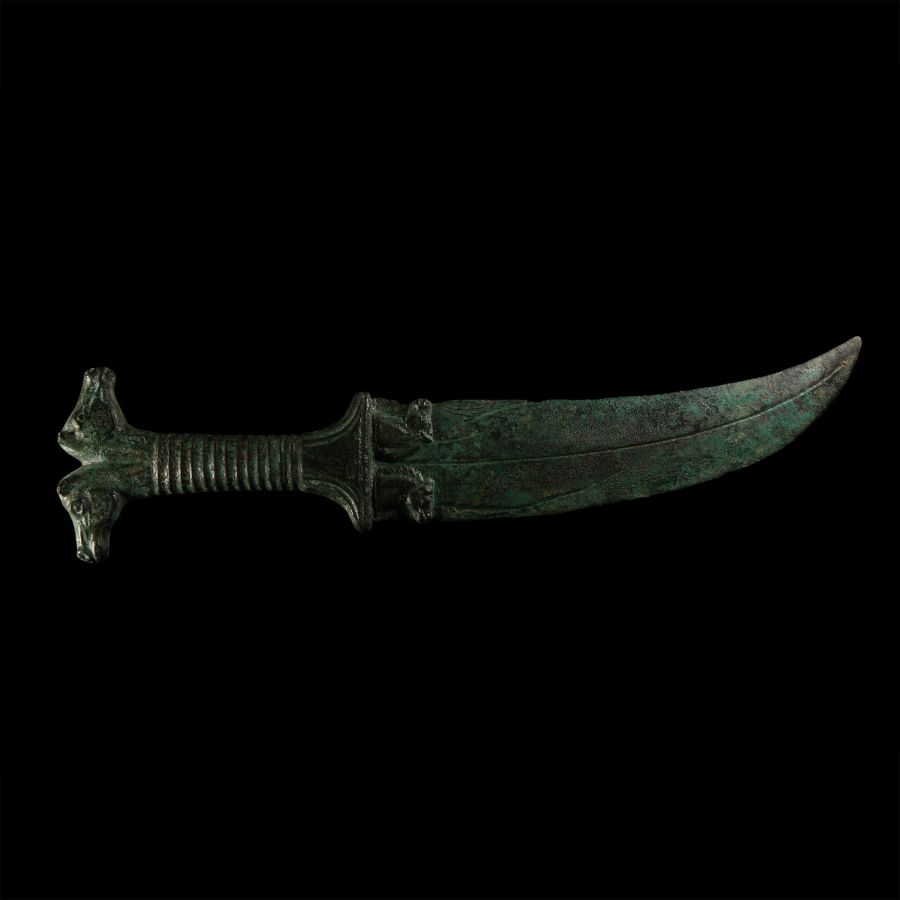
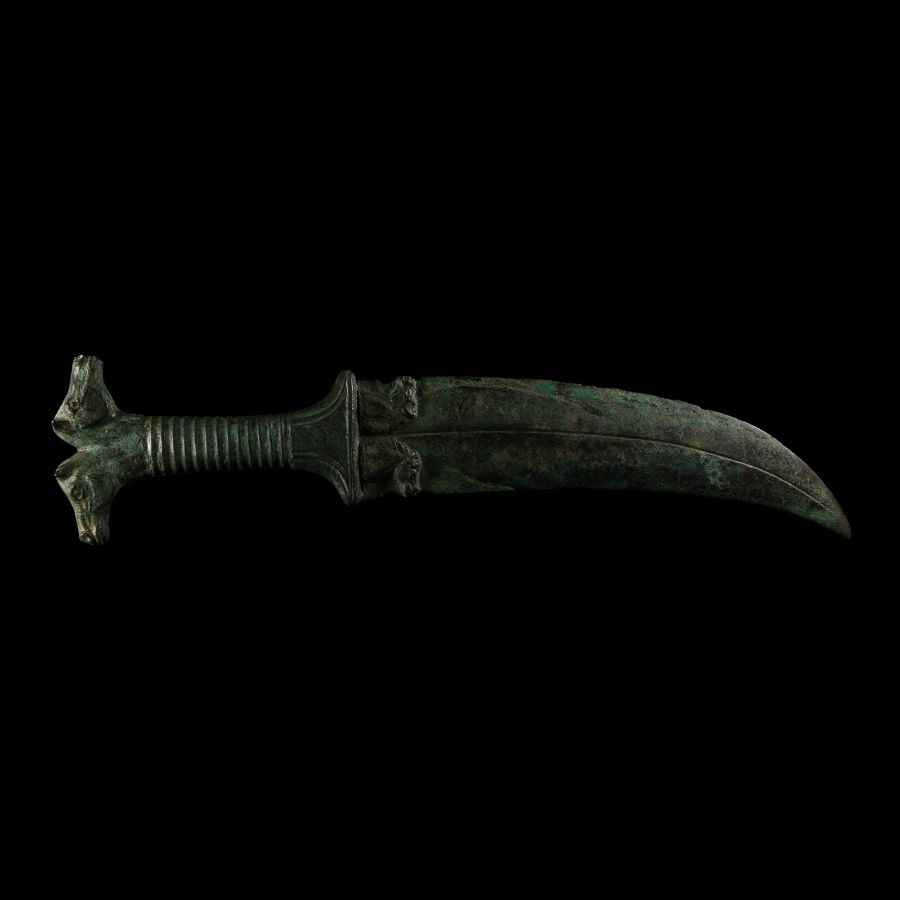
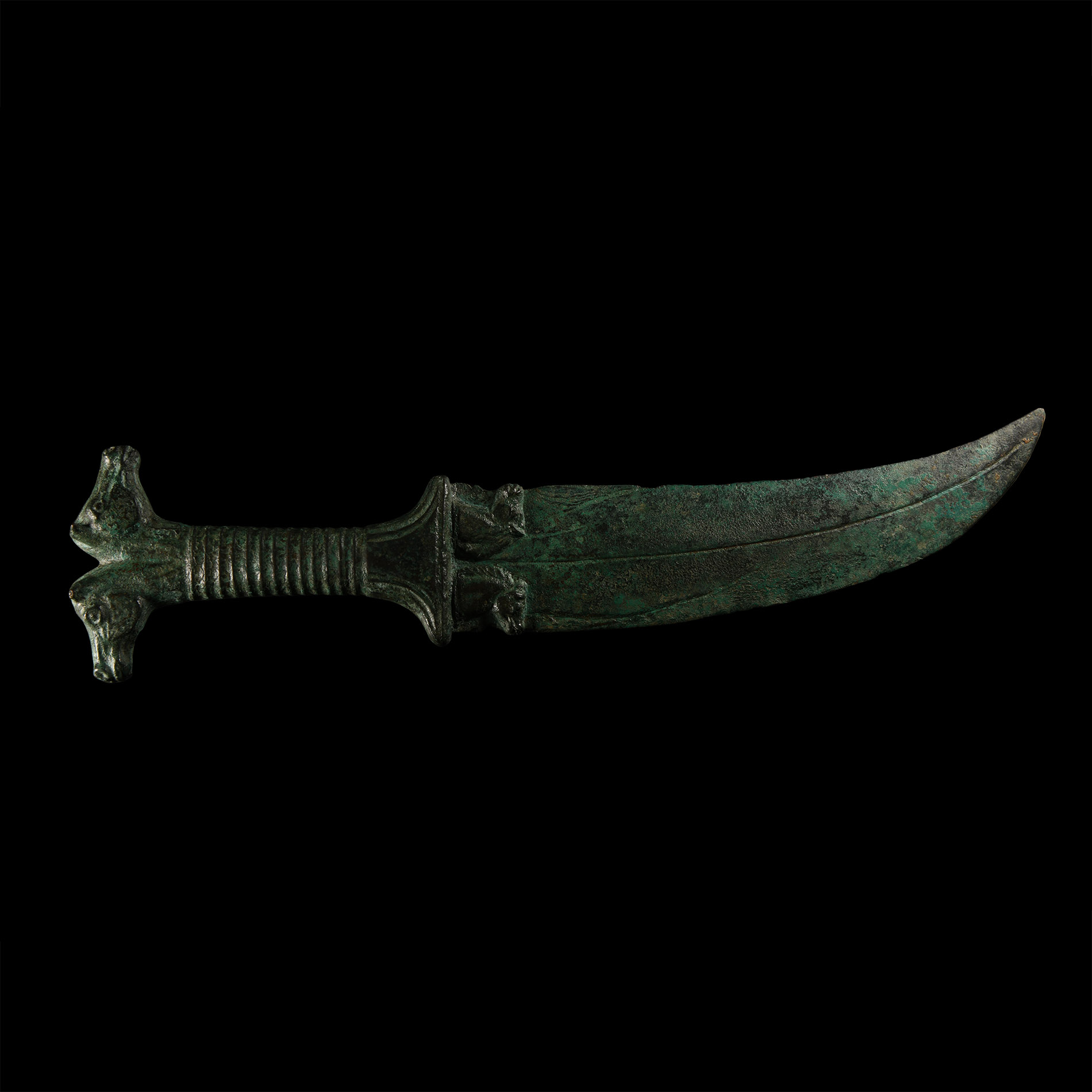
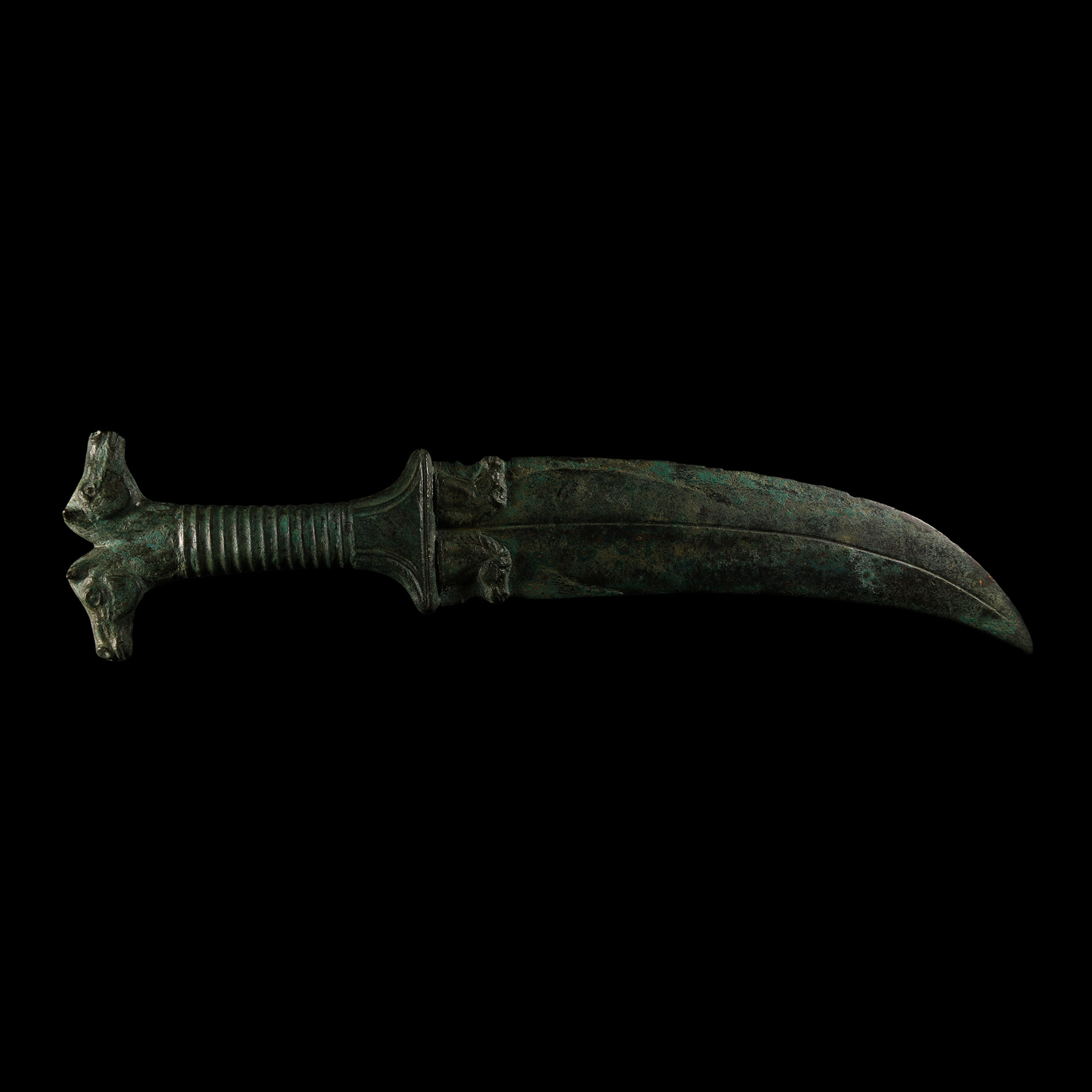
Achaemenid Style Bronze Dagger with Animal Hilt
20TH CENTURY A.D.
15 3/8 in. (765 grams, 39 cm).
Addorsed horse heads below the cross-guard, blade curving gently towards the tip, ribbed grip terminating in addorsed horse heads pommel, modelled in the round with semi-naturalistic detailing. [No Reserve]
ProvenancePrivate UK collection, 1991.
CONDITIONTimeLine Auctions follows a vetting process to ensure the authenticity and legality of all items, reinforcing our commitment to integrity and responsible trading. Each antiquity, antique, and coin lot undergoes thorough examination by a vetting committee of at least ten external specialists, professional trade association members, scientists, and archaeologists: Our Vetting Process
AUCTIONS:
TimeLine is a leading auction house specialising in antiquities, ancient art, collectables, natural history, coins, medals, and books. Our auctions offer museums, collectors, historians, and enthusiasts the opportunity to acquire unique and historically significant pieces.
-
Medieval Stained Glass Panel of a Bird
Netherlands, circa 1580 A.D.Sold for (Inc. bp): £351
Rectangular, with remains of lead came frame; painted scene of a heraldic swan with wings spread perching atop a column with attached chain, scrolled tendril below. 99 grams, 16 cm
De Baecque Vente aux encheres, 5 March 2022, lot 40 (part). Ex central London gallery. -
Post Medieval Gold 'x The sight of thee doth comfort me' Posy Ring
18th century A.D.Sold for (Inc. bp): £1,430
The slender band with a convex outer face, inscription to the hoop interior in cursive lettering: 'x The sight of thee doth comfort me'. 1.49 grams, 19.04 mm overall, 16.89 mm internal diameter (approximate size British M, USA 6, Europe 12.46, Japan 12)
Acquired in the early 1990s. Property of a Berkshire, UK, gentleman. -
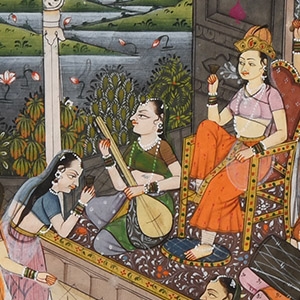
Framed Watercolour Painting
India, 20th century A.D.Estimate: £80 - 100 (+bp*)
Opening Bid: £40
With a vibrant watercolour scene of female musicians and dancers performing for a noblewoman, seated beneath an ornate pavilion, a river meandering through a hilly landscape towards grand buildings beyond, panels of text above and below; set in a reveal within a glazed wooden frame. 782 grams, 37.5 x 26.2cm
Fine condition.
Acquired on the UK art market, 1980s-1990s. The Woodbridge collection of Indo-Persian art.
