
Loading, please wait...
LOT 0184
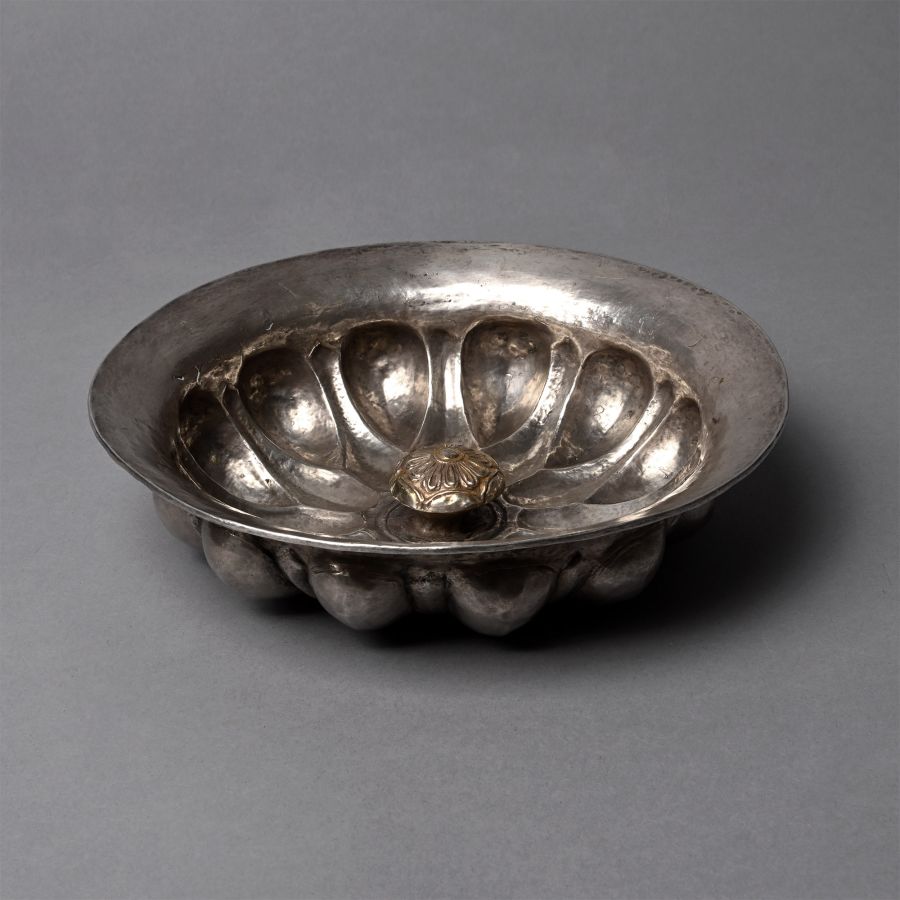
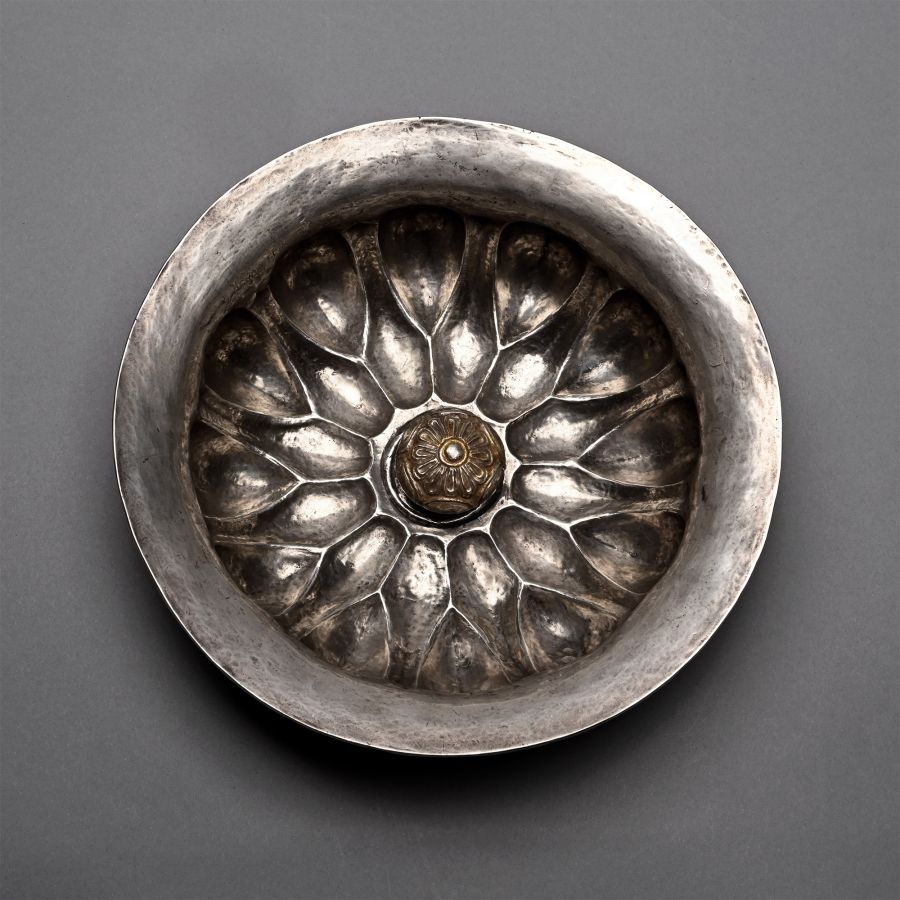
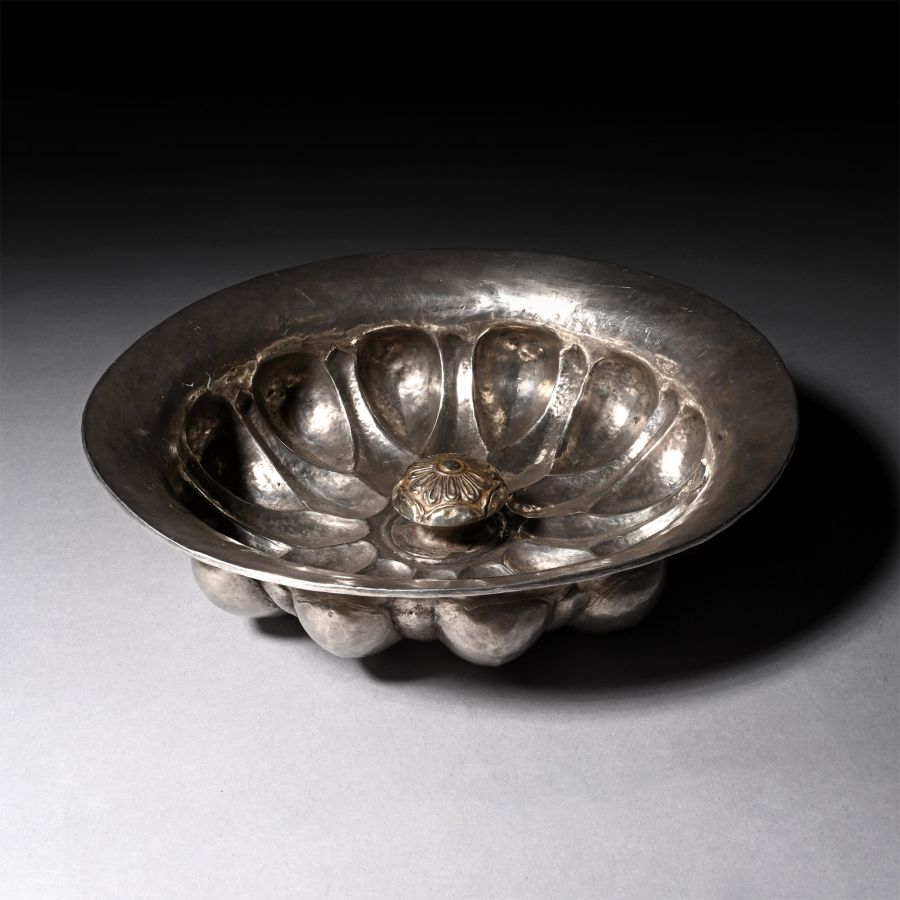
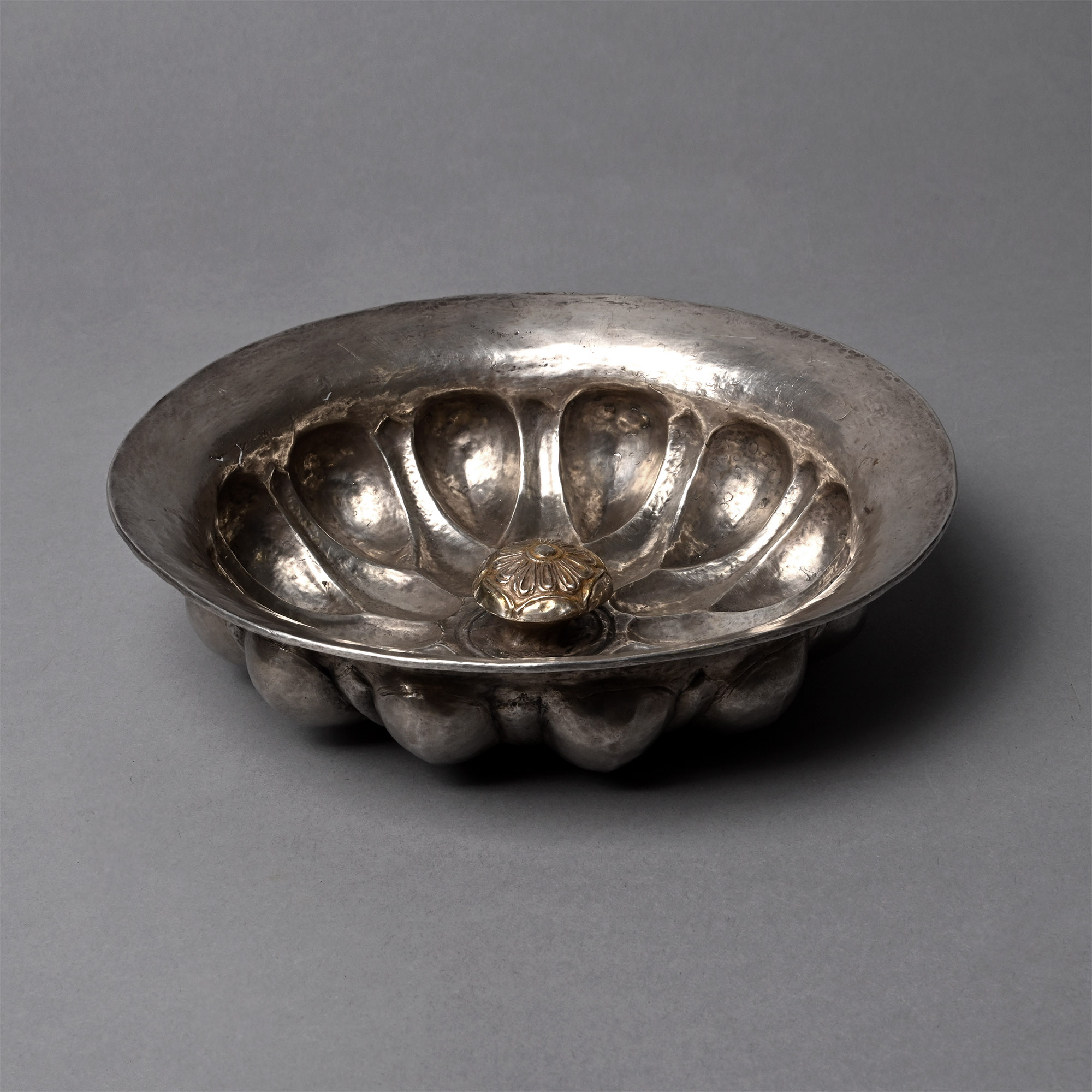
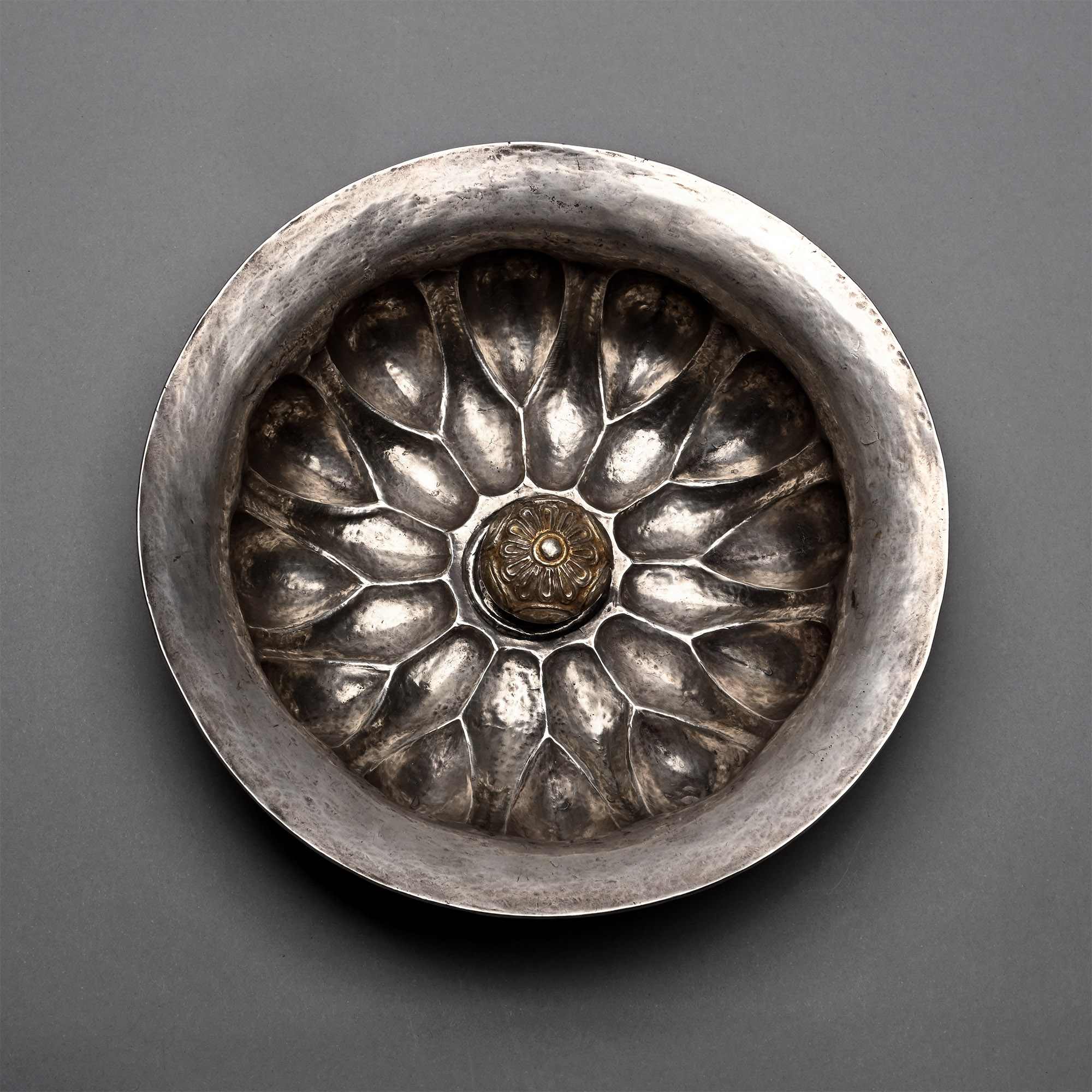
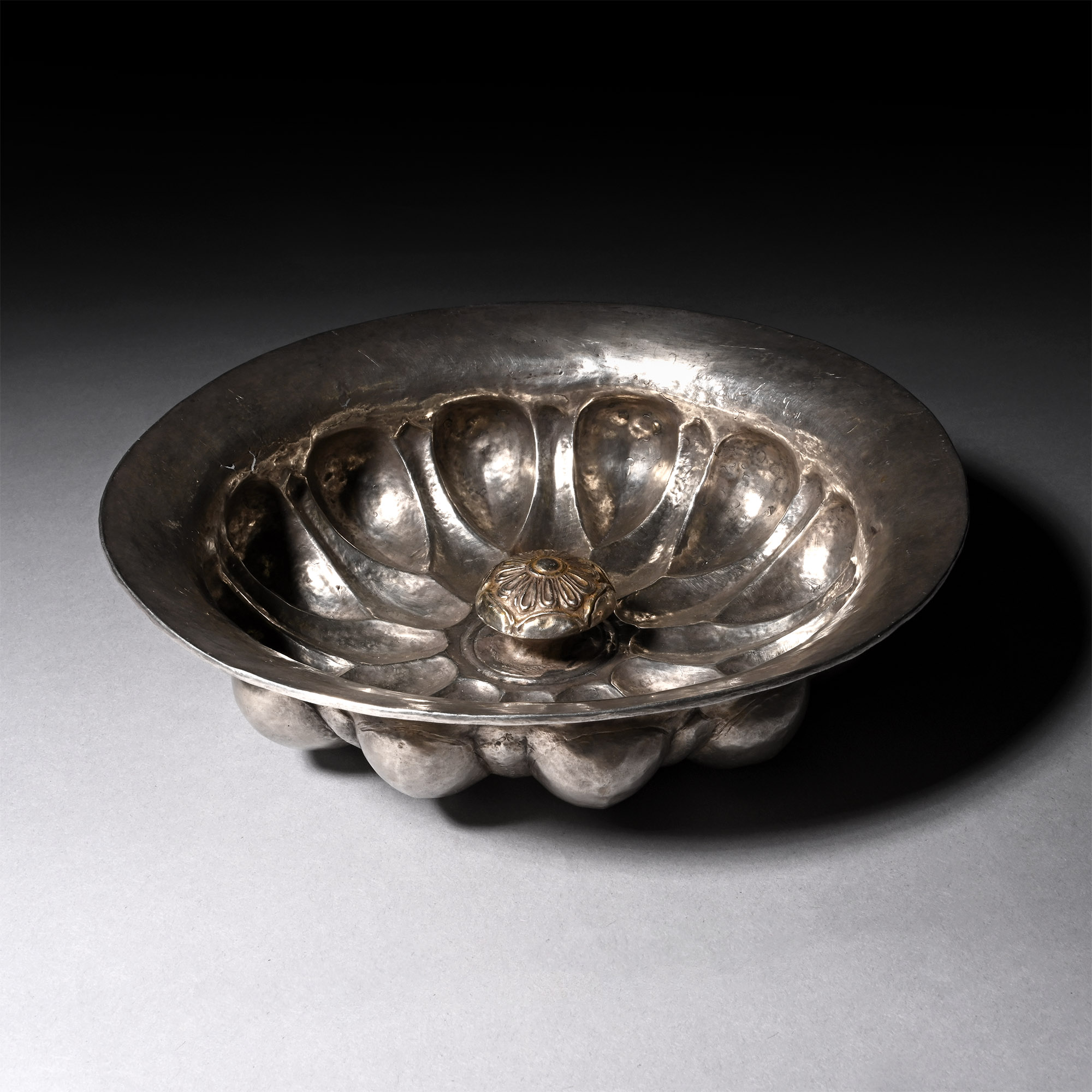
Achaemenid Silver Phiale with Central Rosette
5TH CENTURY B.C.
8 1/8 in. (283 grams, 20.7 cm wide).
Squat lotiform bowl with wide everted rim, central domed mesomphalos with rosette detailing, traces of gilding.
ProvenanceEnglish private collection, formed 1940s.
Private collection, UK.
This lot has been checked against the Interpol Database of stolen works of art and is accompanied by a search certificate number no.12795-241325.
This lot has been cleared against the Art Loss Register database, and is accompanied by an illustrated lot declaration signed by the Head of the Antiquities Department, Dr Raffaele D'Amato.
Cf. Mahboubian, Art of Ancient Iran: Copper and Bronze, London, 1997, no.321, p.247; cf. also similar vessel in MET, inventory no.47.100.84, in Colburn, H.P., ‘Ernst Herzfeld, Joseph Upton, and the Artaxerxes Phialai’ in Metropolitan Museum Journal 55, New York, 2020, pp.113-119, fig.1.
FootnotesThis bowl is possibly part of a set of nearly identical vessels, probably used at the table of royal Satrapes. Persian governors used banquets to display their wealth and power by imitating the royal banquets. It was a greater honour for them to receive a drinking vessel such as this as a gift from the King of the Kings – establishing one’s status as a royal dinner guest. No doubt it took practice to drink adeptly from a vessel like this: however the omphalos in the base would have made it easier to hold with one hand, with the middle finger hooked inside the indentation and the thumb stretched out to grip the vessel at or near the rim.
CONDITIONTimeLine Auctions follows a vetting process to ensure the authenticity and legality of all items, reinforcing our commitment to integrity and responsible trading. Each antiquity, antique, and coin lot undergoes thorough examination by a vetting committee of at least ten external specialists, professional trade association members, scientists, and archaeologists: Our Vetting Process
AUCTIONS:
TimeLine is a leading auction house specialising in antiquities, ancient art, collectables, natural history, coins, medals, and books. Our auctions offer museums, collectors, historians, and enthusiasts the opportunity to acquire unique and historically significant pieces.
-
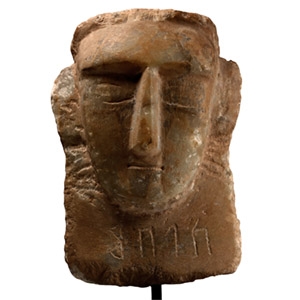
South Arabian Alabaster Sculpture of a Man with Inscription
3rd-1st century B.C.Sold for (Inc. bp): £910
On a rectangular background, shallow sockets and grooved eyebrows, elongated nose and face, mouth faintly indicated by a straight incised line, large, protruding ears; traces of beard under the chin, vertical lines representing hair; name engraved in Arabian letters beneath the chin; mounted on a custom-made display stand. 3.62 kg total, 27.1 cm including stand
UK collection, 1990s. Acquired on the UK art market, before 2000. Private collection, Mr M.V., a London-based businessman. This lot has been cleared against the Art Loss Register database, and is accompanied by an illustrated lot declaration signed by the Head of the Antiquities Department, Dr Raffaele D'Amato.
Within South Arabia, there was a well-developed ancient tradition of carving funerary sculptures from a calcite-alabaster stone. The eyes and eyebrows of the heads were usually inlaid or (like probably here) highlighted with red or black pigment. The figure is inscribed on the base with the name of the dedicant, or with the personal name of the dead person. -
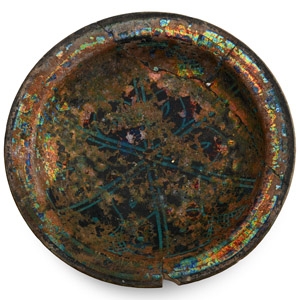
Seljuk Glazed Bowl with Fine Iridescence
12th century A.D.Sold for (Inc. bp): £247
Shallow with flat everted rim and raised low foot; turquoise glaze with black foliage and geometric decoration, fine iridescence; repaired. 303 grams, 18.4 cm
From the private family collection of Ersula Barter-Hemmerich, the longest serving member of staff working at the United Nations, her private collection formed in the 1950s and 1960s; thence by descent to her grandson. This lot has been cleared against the Art Loss Register database, and is accompanied by an illustrated lot declaration signed by the Head of the Antiquities Department, Dr Raffaele D'Amato. -
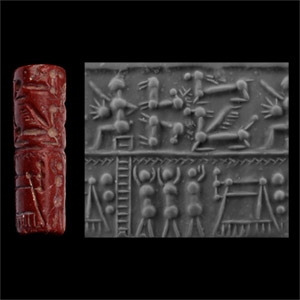
Levantine Style Red Jasper Cylinder Seal with Recumbent Quadrupeds
1500-1000 B.C.Sold for (Inc. bp): £468
With two rows of human and animal figures, restrung pair of red stone beads, old handwritten label '1544'; accompanied by a copy of an old scholarly note, typed and signed by W.G. Lambert, late Professor of Assyriology, University of Birmingham, 1970-1993, which states: 'Description of Cylinder Seal of Red Jasper, 37 x 12 mm. The upper register shows a seated figure with one arm raised, the other resting on the waist, a human hand(?) between knees and raised arm; two recumbent quadrupeds one above the other, one winged; two standing stags sideways, with heads turned back. The lower register shows, in a scene marked off by a ladder pattern, three standing humans with both hands raised before a tent-like structure with some object affixed to its upper front, two dots behind the structure. The registers are separated by a line with a row of simple crosses beneath it. This is in a rare Levantine style of c. 1500-1000 B.C. The lower register seems to show an act of worship. The condition is almost fine save for a little chipping at the bottom'; accompanied by a museum-quality impression. 10.2 grams, 37 mm
UK private collection, acquired 1980-1983. Accompanied by a copy of a scholarly note, typed and signed by Professor Wilfrid George Lambert in 1987. This lot has been cleared against the Art Loss Register database, and is accompanied by an illustrated lot declaration signed by the Head of the Antiquities Department, Dr Raffaele D'Amato.
