
Loading, please wait...
_900x900.jpg "Achaemenid Silver Lion Brooch Pair")
_200x200.jpg "Achaemenid Silver Lion Brooch Pair")
.jpg "Achaemenid Silver Lion Brooch Pair")
LOT 0224
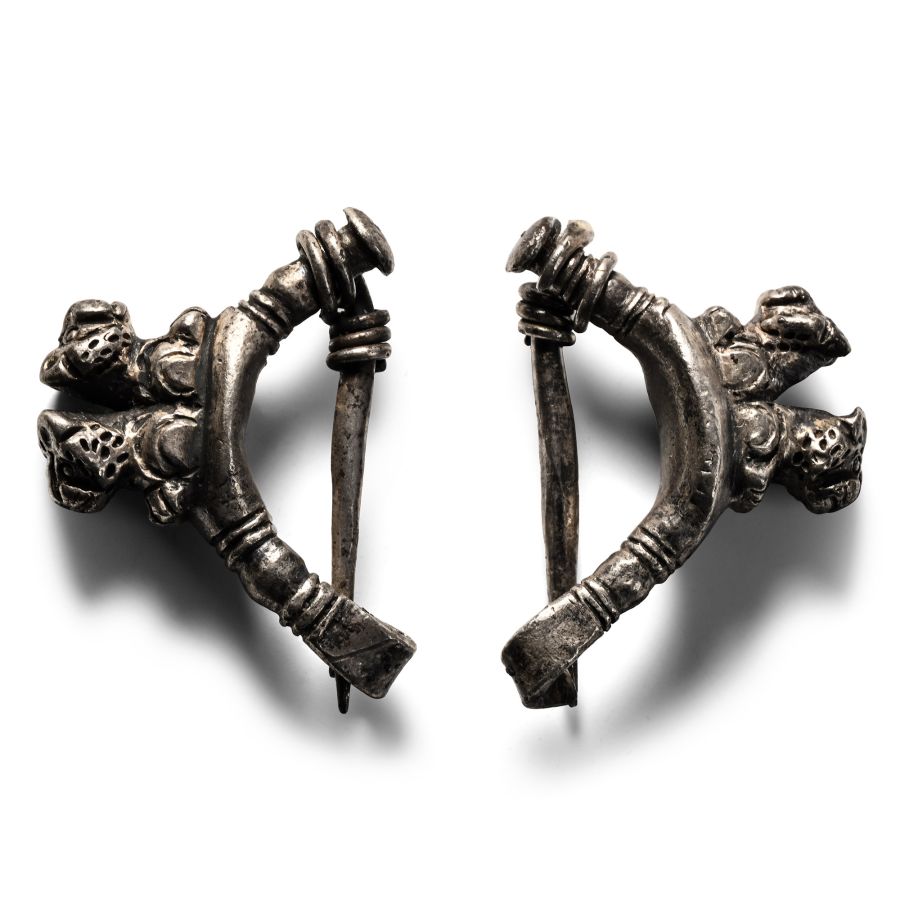
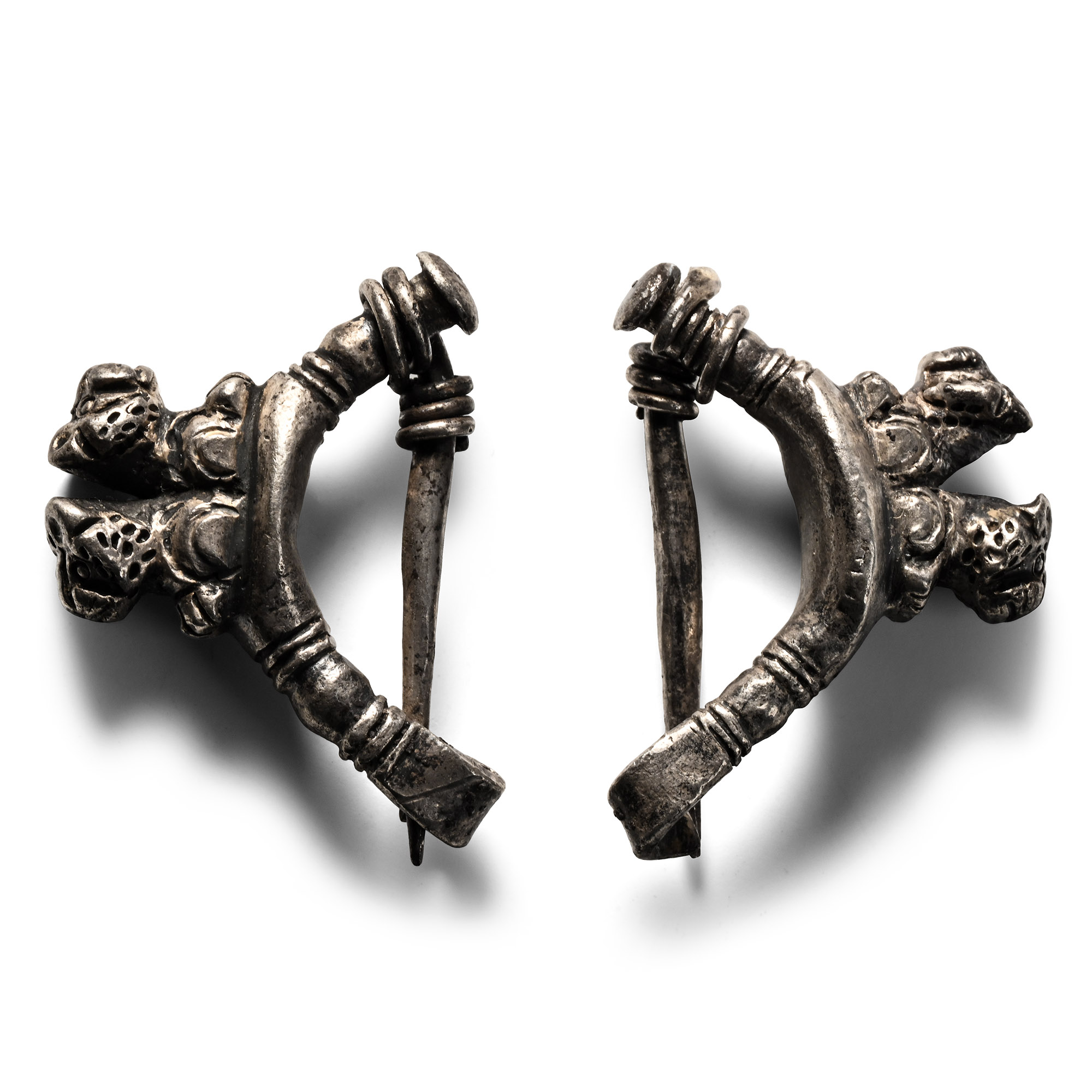
Achaemenid Silver Lion Brooch Pair
6TH-4TH CENTURY B.C.
1 1/8 in. (22.3 grams total, 30 mm each).
Each a bow with balustered arms ending in a knop finial and curved catchplate; round-section pin with coiled wire collar; apex of each bow with the addorsed forequarters of two felines with stylised markings and facial features. [2]
ProvenanceAcquired before 1983.
Ex London gallery, 1990s.
Private collection, London, UK.
Cf. Hattatt, R., Iron Age and Roman Brooches, Oxford, 1985, item 718, for type.
CONDITIONTimeLine Auctions follows a vetting process to ensure the authenticity and legality of all items, reinforcing our commitment to integrity and responsible trading. Each antiquity, antique, and coin lot undergoes thorough examination by a vetting committee of at least ten external specialists, professional trade association members, scientists, and archaeologists: Our Vetting Process
AUCTIONS:
TimeLine is a leading auction house specialising in antiquities, ancient art, collectables, natural history, coins, medals, and books. Our auctions offer museums, collectors, historians, and enthusiasts the opportunity to acquire unique and historically significant pieces.
-
.jpg)
Neo-Babylonian Chalcedony Stamp Seal with Animal
6th-4th century B.C.Estimate: £500 - 700 (‡+bp*)
Opening Bid: £275
Tongue-shaped in profile with incuse image of an advancing ram beneath a crescent moon, arrow in the field. 4.40 grams, 18.46 mm
Acquired in the mid 1980s-1990s. Private collection, Switzerland, thence by descent. Private collection, since the late 1990s. -
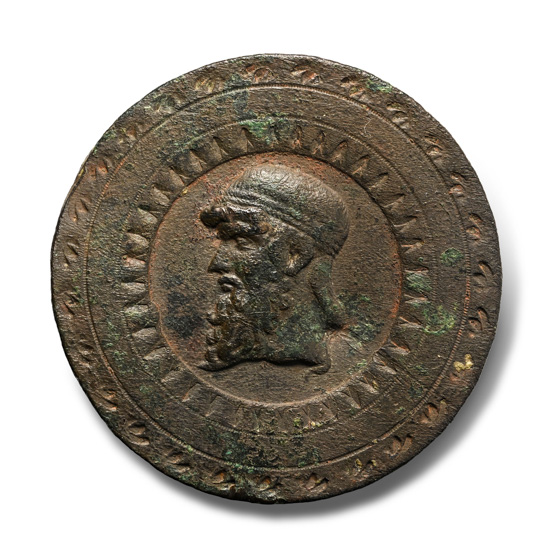
Parthian Bronze Medallion with a Bearded Man
150-100 B.C.Sold for (Inc. bp): £455
From the time Mithradates I of Parthia, discoid in plan with concentric bands of punched geometric motifs surrounding a profile male bust in low-relief; loop to reverse. 8.42 grams, 36 mm
Acquired by a Swiss family in the mid-1980s to late 1990s, thence by descent. Private collection, Switzerland, since the late 1990s. -
.jpg)
Old Babylonian Haematite Cylinder Seal with God Amurru
1900-1700 B.C.Sold for (Inc. bp): £468
Showing three standing figures dressed in long robes, two columns of cuneiform inscription; accompanied by a copy of an old scholarly note, typed and signed by W.G. Lambert, late Professor of Assyriology, University of Birmingham, 1970-1993, which states: 'Description of Cylinder Seal of hematite, 28 x 13 mm. The engraving consists of a scene of three figures (unfinished) and a finished inscription of two lines. The figures are (from right to left), a god with arm lowered and extended (probably meant to be the sun god, Shamash), a central figures probably also meant as a deity, and another deity with one hand raised. A shepherd's crook appears between the figure on the left and the one in the centre, and two symbols have been begun in the sky byt cannot be identified. The inscription reads: ᵈAN-mar-dú dumu an-na, Amurru son of Anum. Amurru was the god of shepherding worshipped by the Babylonians, and the presence of the shepherds' crook in the design could mean that one of the unidentified gods is Amurru, since the crook is the symbol of Amurru. The seal is very clearly of Old Babylonian date, c. 1900-1700 B.C. and comes from ancient Babylonia or one of the closely adjacent regions. It is a standard type, but is interesting in that, being half finished, it shows the way in which Old Babylonian seal cutters set about their work. Hematite is a harder stone than any regularly used before the Old Babylonian period, and the semi-mechanical method of cutting stone used by the ancients enable hard stone to be but more easily than with simple, hand-held tools. Thus the three figures have been begun with the drill and the cutting wheel. Later, had the seal been finished the craftsman would have completed the task with hand-held tools to give a life-like impression to the figures.'; accompanied by a museum quality impression and a of pair of red stone beads. 11.06 grams, 27 mm
1 1/8 in.
Private collection, London, UK. Accompanied by a copy of an old scholarly note, typed and signed by W.G. Lambert, late Professor of Assyriology, University of Birmingham, 1970-1993.
