
Loading, please wait...
_900x900.jpg "Achaemenid Ram-Headed Bronze Bracelet Pair")
_200x200.jpg "Achaemenid Ram-Headed Bronze Bracelet Pair")
.jpg "Achaemenid Ram-Headed Bronze Bracelet Pair")
LOT 1182
Achaemenid Ram-Headed Bronze Bracelet Pair
CIRCA 4TH CENTURY B.C.
2 3/4 - 3 in. (59 grams total, 69-74 mm).
Each comprising a round-section penannular shank and opposed ram-head finials. [2, No Reserve]
ProvenanceUK private collection before 2000.
Acquired on the UK art market.
Property of a London gentleman.
TimeLine Auctions follows a vetting process to ensure the authenticity and legality of all items, reinforcing our commitment to integrity and responsible trading. Each antiquity, antique, and coin lot undergoes thorough examination by a vetting committee of at least ten external specialists, professional trade association members, scientists, and archaeologists: Our Vetting Process
AUCTIONS:
TimeLine is a leading auction house specialising in antiquities, ancient art, collectables, natural history, coins, medals, and books. Our auctions offer museums, collectors, historians, and enthusiasts the opportunity to acquire unique and historically significant pieces.
-
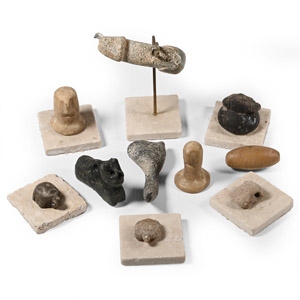
Western Asiatic Stone Idol and Other Artefact Group
1st millennium B.C. and laterSold for (Inc. bp): £104
Including phallus, heads, fusiform bead and other items, some on a ceramic base. 586 grams total, 48-94 mm including stand
From a collection acquired on the UK art market from various auction houses and collections mostly before 2000. From an important Cambridgeshire estate; thence by descent. -
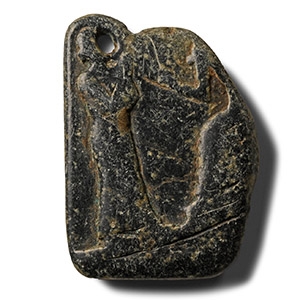
Old Babylonian Plaque with King and Offerant
Early 2nd millennium B.C.Sold for (Inc. bp): £286
Polished stone fragment with frieze depicting a seated ruler wearing a floor-length robe, one arm raised and bent towards a standing figure with tight-fitting ankle-length garment; pierced at the upper edge; re-used as a pendant or amulet(?). 10.5 grams, 38 mm
From the collection of Mr S.M., London, UK, formed from 1979-1999. -
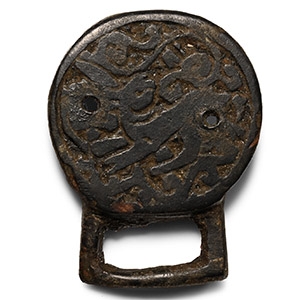
Seljuk Bronze Belt Fitting with Lion
12th-13th century A.D.Sold for (Inc. bp): £33
With rectangular loop below, slot to rear to accept the belt, two holes for attachment pins; reserved lion image. 16.7 grams, 34 mm
UK private collection before 2000. Acquired on the UK art market. Property of a London gentleman.
