
Loading, please wait...


LOT 0310
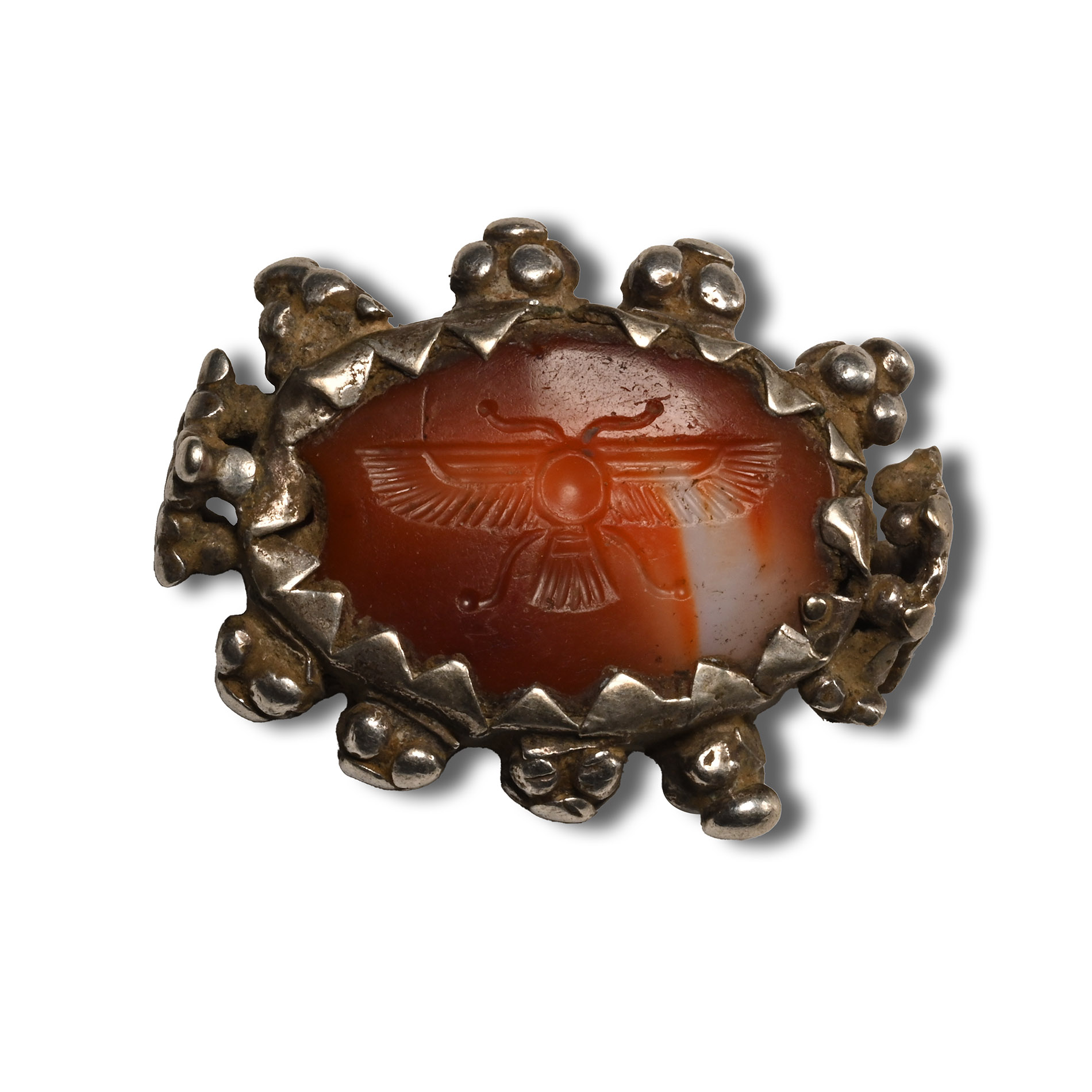
Achaemenid-Phoenician Silver Framed Banded Agate Scaraboid
500-300 B.C.
1 3/4 in. (16.4 grams, 34 mm).
Biconvex in profile with incised winged-scarab motif to upper face; pierced longitudinally for stringing; later silver mount with granule clusters.
ProvenanceFrom the collection of a late London gentleman; by descent 1970 onwards.
This lot has been checked against the Interpol Database of stolen works of art and is accompanied by a search certificate number no.12425-225392.
Cf. Moscati, S., I Fenici, p.377, for similar; a finger ring in the British Museum under accession no. 1872,0604.25 features a similar but more ornate scarab in a plainer setting.
CONDITIONTimeLine Auctions follows a vetting process to ensure the authenticity and legality of all items, reinforcing our commitment to integrity and responsible trading. Each antiquity, antique, and coin lot undergoes thorough examination by a vetting committee of at least ten external specialists, professional trade association members, scientists, and archaeologists: Our Vetting Process
AUCTIONS:
TimeLine is a leading auction house specialising in antiquities, ancient art, collectables, natural history, coins, medals, and books. Our auctions offer museums, collectors, historians, and enthusiasts the opportunity to acquire unique and historically significant pieces.
LOT 0310
Achaemenid-Phoenician Silver Framed Banded Agate Scaraboid
Sold for (Inc. bp): £2,990
-
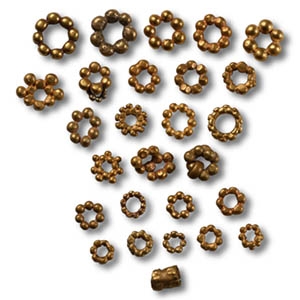
Western Asiatic Mixed Gold Bead Group
1st millennium B.C.Estimate: £400 - 600 (+bp*)
Opening Bid: £190
Mainly granule clusters in rings. 4.94 grams total, 3-6 mm
Ex property of a late Japanese collector, 1970-2000s. -
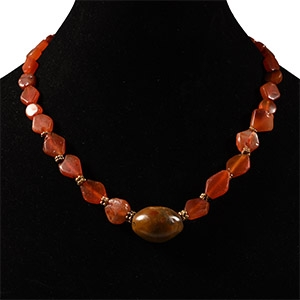
Western Asiatic Gold and Carnelian Bead Necklace
1st millennium B.C. and laterEstimate: £500 - 700 (+bp*)
Opening Bid: £250
Comprising a graduated group of tabular carnelian beads with interstitial collars of gold granulation and some moulded glass hexagonal tabular-shaped beads; centrepiece a biconvex oval with speckled surface; restrung. 56.8 grams, 42.5 cm long
Ex property of the late Mr S.M., London, UK, 1970-1990s, thence by descent. Accompanied by a previous cataloguing card. -
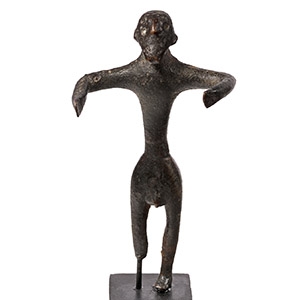
Western Asiatic Bronze Standing Idol
Early 1st millennium B.C.Sold for (Inc. bp): £2,340
Modelled standing erect with the arms bent forwards, head tilted upwards, with incised lines for the belt; the head pear-shaped with square chin; mounted on a custom-made stand. 58.6 grams, 10 cm including stand
From a collection acquired on the UK art market from various auction houses and collections mostly before 2000. From an important Cambridgeshire estate; thence by descent.
