
Loading, please wait...
_900x900.jpg "Achaemenid Multi-Formed Stone Seal")
_200x200.jpg "Achaemenid Multi-Formed Stone Seal")
.jpg "Achaemenid Multi-Formed Stone Seal")
LOT 0235
Achaemenid Multi-Formed Stone Seal
CIRCA 5TH CENTURY B.C.
1 1/8 in. (13.3 grams, 29 mm).
Discoid in plan with zoomorphic handle; underside with contest scene of two opposed gryphons with forelegs raised standing on the corpse of a boar; faravahar above.
ProvenanceFrom the 'S' collection, acquired 1970-1990s.
The collection was seen and studied by W.G.Lambert, late Professor of Assyriology at the University of Birmingham, 1970-1993.
This lot has been checked against the Interpol Database of stolen works of art and is accompanied by a search certificate number no.12542-231458.
This lot has been cleared against the Art Loss Register database, and is accompanied by an illustrated lot declaration signed by the Head of the Antiquities Department, Dr Raffaele D'Amato.
TimeLine Auctions follows a vetting process to ensure the authenticity and legality of all items, reinforcing our commitment to integrity and responsible trading. Each antiquity, antique, and coin lot undergoes thorough examination by a vetting committee of at least ten external specialists, professional trade association members, scientists, and archaeologists: Our Vetting Process
AUCTIONS:
TimeLine is a leading auction house specialising in antiquities, ancient art, collectables, natural history, coins, medals, and books. Our auctions offer museums, collectors, historians, and enthusiasts the opportunity to acquire unique and historically significant pieces.
-
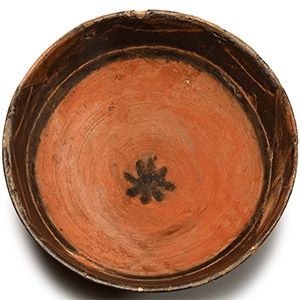
Western Asiatic Painted Terracotta Bowl
3rd millennium B.C.Estimate: £200 - 300 (+bp*)
Opening Bid: £100
With broad mouth and narrow dished base; painted bands with reserved swags to the inner rim, starburst to the centre. 468 grams, 19 cm wide
Ex London, UK, gallery, 1971-early 2000s. London, UK, collection. This lot has been cleared against the Art Loss Register database, and is accompanied by an illustrated lot declaration signed by the Head of the Antiquities Department, Dr Raffaele D'Amato. -
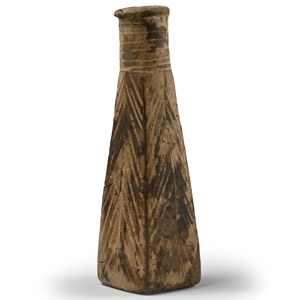
Western Asiatic Terracotta Flask with Incised Decoration
1st millennium B.C.Sold for (Inc. bp): £72
With an almost square base, sloping walls and circular mouth; incised encircling lines on the neck and herringbone-pattern on the walls. 38 grams, 73 mm
with Dorotheum Auction, Vienna, 13 December 2000, no.61. This lot has been cleared against the Art Loss Register database, and is accompanied by an illustrated lot declaration signed by the Head of the Antiquities Department, Dr Raffaele D'Amato.
Various materials were used in Antiquity to manufacture containers for expensive perfume extracts. Clay was one of the most common materials before glass containers were invented. The clay containers were easy to make and blocked sunlight, protecting the perfume. -
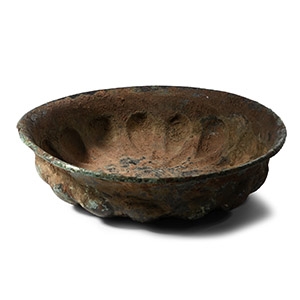
Achaemenid Bronze Phiale with Boss
7th-5th century B.C.Estimate: £600 - 800 (‡+bp*)
Opening Bid: £300
Broad lotiform bowl with everted and turned rim, domed mesomphalos. 298 grams, 16.5 cm
Acquired in the mid 1980s-1990s. Private collection, Switzerland, thence by descent. Private collection, since the late 1990s. This lot has been cleared against the Art Loss Register database, and is accompanied by an illustrated lot declaration signed by the Head of the Antiquities Department, Dr Raffaele D'Amato.
