
Loading, please wait...
LOT 0272
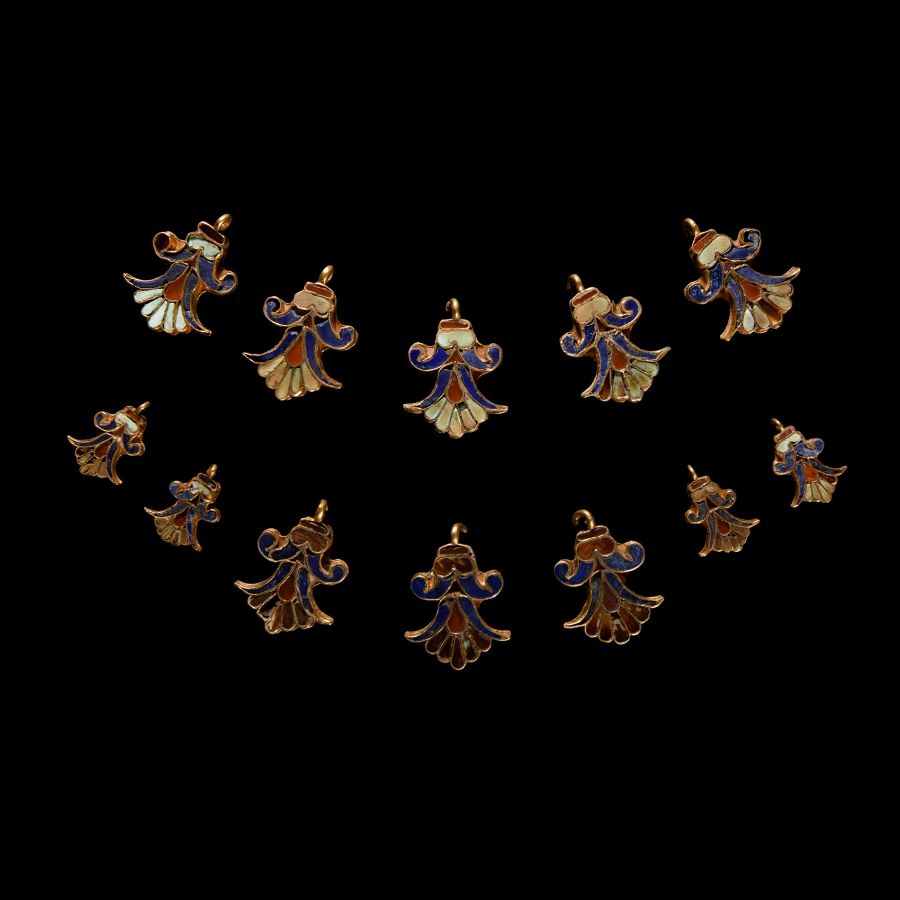
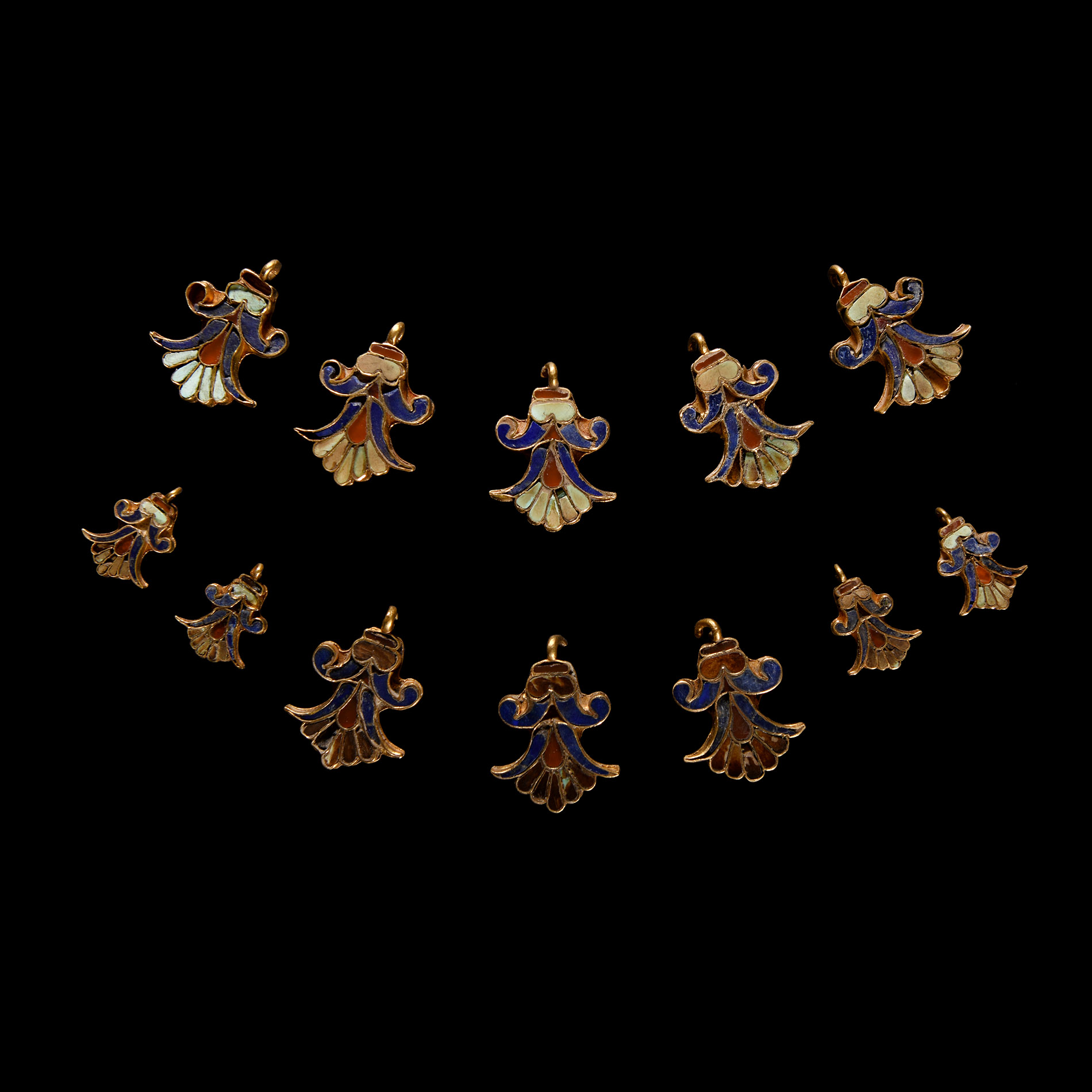
Achaemenid Gold Inlaid Lotus Flower Pendant Set
5TH-4TH CENTURY B.C.
3/4 - 1 in. (10 7/8 x 11 in.) (36.60 grams total, 18-26 mm (case: 1 kg total, 27.5 x 28 cm)).
Comprising twelve pendants, each formed as an open lotus blossom with the parts of the flower inlaid with different semiprecious stones: the pistil in red carnelian, stamens and the base of the flower in turquoise, and the outer petals in lapis lazuli; accompanied by a custom-made velvet-lined display case. [12]
Provenancewith a London, UK gallery, 1971-early 2000s.
Accompanied by an academic report by Dr Raffaele D’Amato.
This lot has been checked against the Interpol Database of stolen works of art and is accompanied by search certificate number no.12170-220647.
Cf. Carter, M.L., Goldstein, S., Harper, P.O., Kawami, T.S., Meyers, P., Splendors of the Ancient East, Antiquities from the al-Sabah collection, London, 2013, for a pendant in shape of a gold button in similar style; Kantor, J., Journal of Near Eastern Studies, vol.16, no.1, Jan.1957, pp.1-23, for a general discussion on Achaemenid jewellery.
FootnotesThe wealth of the Persian Empire of the Achaemenids was proclaimed by the ancient writers: the Greeks described the fabulous riches known by hearsay to be in the royal treasures, and described the gold furniture, vessels and jewellery often seen during Hellenic contacts with this Eastern Empire. These elegant lotus-shaped pendants with their multicoloured stone inlays give us some idea of the personal ornamentation carried by the aristocratic Persian women.
CONDITIONTimeLine Auctions follows a vetting process to ensure the authenticity and legality of all items, reinforcing our commitment to integrity and responsible trading. Each antiquity, antique, and coin lot undergoes thorough examination by a vetting committee of at least ten external specialists, professional trade association members, scientists, and archaeologists: Our Vetting Process
AUCTIONS:
TimeLine is a leading auction house specialising in antiquities, ancient art, collectables, natural history, coins, medals, and books. Our auctions offer museums, collectors, historians, and enthusiasts the opportunity to acquire unique and historically significant pieces.
LOT 0272
Achaemenid Gold Inlaid Lotus Flower Pendant Set
Estimate £30,000 - 40,000€34,800 - 46,400 (for guidance only)$40,500 - 54,000 (for guidance only)
-
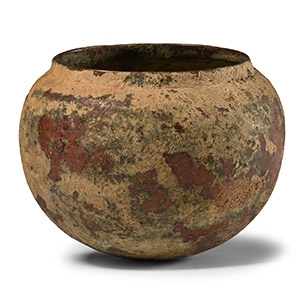
Western Asiatic Bronze Bulbous Bowl
2nd-1st millennium B.C.Sold for (Inc. bp): £39
With slightly everted rim to the mouth, rounded underside. 148 grams total, 91 mm
Acquired 1980-2015. Ex Abelita family collection. -
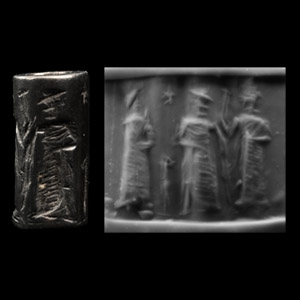
Old Babylonian Haematite Cylinder Seal
Early 2nd millennium B.C.Estimate: £300 - 400 (+bp*)
Opening Bid: £150
With frieze of three standing figures wearing floor-length robes with starburst and post between. 1.98 grams, 14 mm
Acquired 1980-2015. Ex Abelita family collection. -
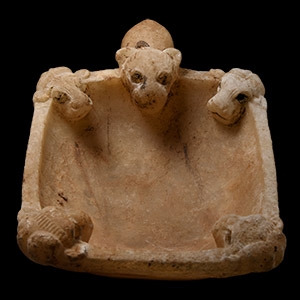
Mesopotamian Alabaster Offering Dish with Lion Handle
2nd-early 1st millennium B.C.Estimate: £18,000 - 24,000 (+bp*)
Opening Bid: £10,000
An Aramean rectangular dish with sloping sides, an inward-facing goat-head at each corner; handle formed as a recumbent lion biting the rim; each beast with recessed eyes to accept inserts; ropework band to the underside. 698 grams, 22 cm
Windermere Collection, Germany, 1960s. American collection, Phillips, 1960s-1980s. with Fortuna Fine Arts, 2012. From the S.M. collection, 2012-2016. From an important London collection, 2016. Private collection. Accompanied by a copy of an Art Loss Register certificate no.S00118561. Accompanied by an academic report by Dr Raffaele D’Amato. This lot has been checked against the Interpol Database of stolen works of art and is accompanied by search certificate number no.12164-218579.
The Aramean civilisation produced superb specimens of vessels, in which the lion, symbol of royal power, was one of the most relevant decorative motifs. Vessels of this typology are already known from the Anatolian culture of Kültepe, the first Hittite capital, since the Middle Bronze Age. Also the culture of Ugarit (Ras Shamarra) produced cups with similar lion heads, in a period of 1500 and 1300 B.C.
