
Loading, please wait...
LOT 0226
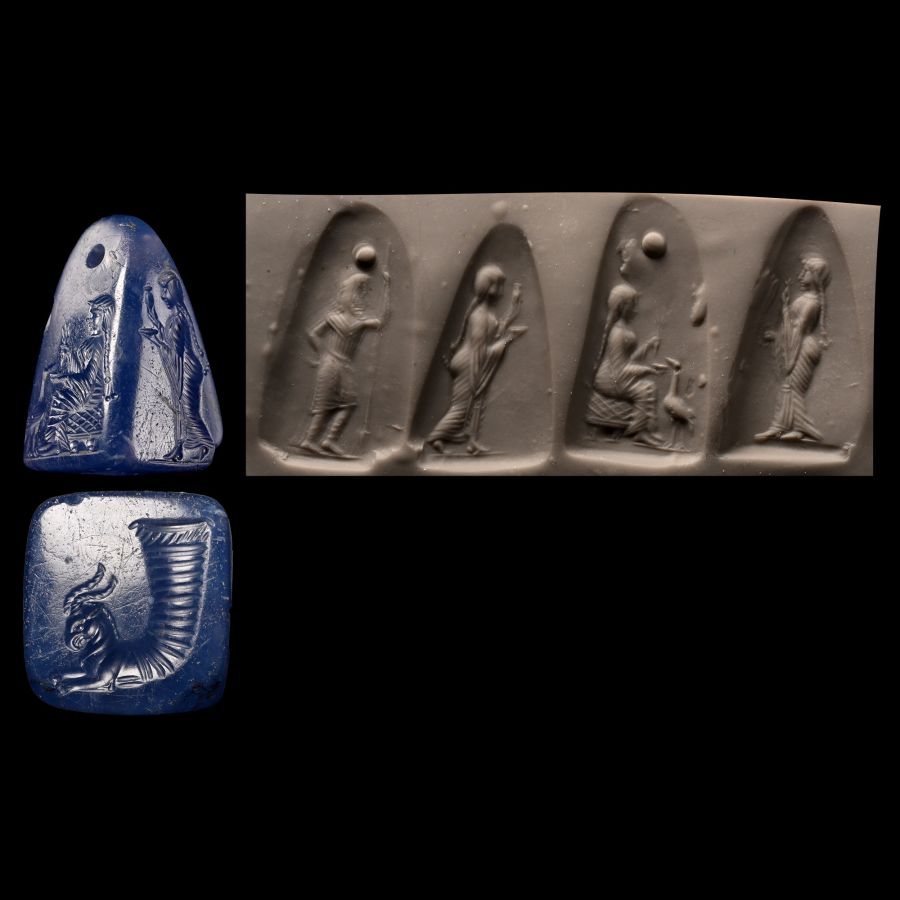
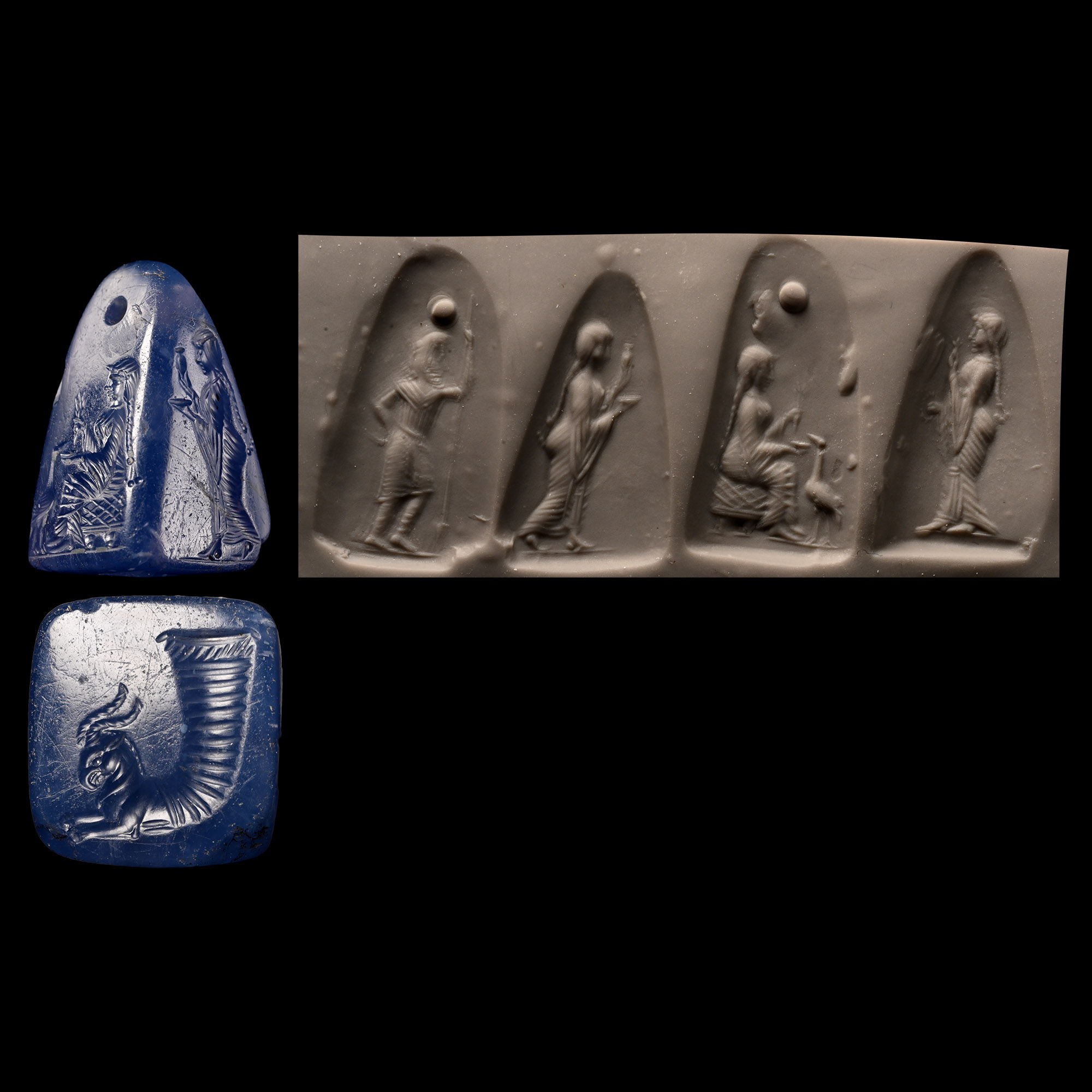
Achaemenid Columnar Seal with Figures
CIRCA 500 B.C.
1 in. (9.8 grams, 25 mm).
Square in section, sides tapering to the pierced apex; sequence of four intaglio figures: female on a hatched seat offering food to a goose; advancing female with hair in a single braid to the rear, holding a bowl and alabastron; male in knee-length tunic with lion-skin hood, holding an inverted spear; advancing female with hair in a single braid to the rear, holding a wreath and flower; rhyton to the underside.
ProvenanceAcquired 1970-1999.
London collection of the late Mr S.M., thence by descent.
This lot has been checked against the Interpol Database of stolen works of art and is accompanied by a search certificate number no.12540-231460.
This lot has been cleared against the Art Loss Register database, and is accompanied by an illustrated lot declaration signed by the Head of the Antiquities Department, Dr Raffaele D'Amato.
TimeLine Auctions follows a vetting process to ensure the authenticity and legality of all items, reinforcing our commitment to integrity and responsible trading. Each antiquity, antique, and coin lot undergoes thorough examination by a vetting committee of at least ten external specialists, professional trade association members, scientists, and archaeologists: Our Vetting Process
AUCTIONS:
TimeLine is a leading auction house specialising in antiquities, ancient art, collectables, natural history, coins, medals, and books. Our auctions offer museums, collectors, historians, and enthusiasts the opportunity to acquire unique and historically significant pieces.
-
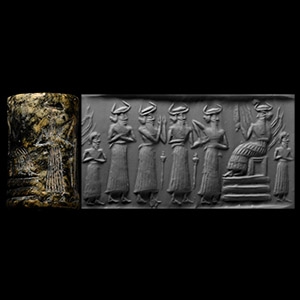
Akkadian Black Stone Cylinder Seal of the Sun God Shamash and Worshipping Parade
Circa 2334-2279 B.C.Estimate: £3,000 - 4,000 (+bp*)
Opening Bid: £1,500
Finely engraved with a religious scene, sun god Shamash seated on a throne with his feet resting on a padded stand, holding a scimitar in his raised left hand and wearing a horned headdress; four bearded deities and a smaller, clean-shaven young male worshipper before him, each of the deities wearing a horned headdress and a pleated garment; accompanied by a museum-quality impression. 49.1 grams, 40 mm
From the 'S' collection, acquired 1970-1990s. The collection was seen and studied by W.G. Lambert, late Professor of Assyriology at the University of Birmingham, 1970-1993. Accompanied by a copy of a report from Assyriologist Hui Li. This lot has been checked against the Interpol Database of stolen works of art and is accompanied by a search certificate number no.12539-231427. This lot has been cleared against the Art Loss Register database, and is accompanied by an illustrated lot declaration signed by the Head of the Antiquities Department, Dr Raffaele D'Amato.
The seal's excellent glyptic techniques, naturalistic depictions of the facial features, and the presented religious scene suggest that this seal might have belonged to a high official. -

Sasanian High Tin Bronze Bowl
3rd-7th century A.D.Sold for (Inc. bp): £104
With rounded body and raised boss to the centre. 225 grams, 12.9 cm
Acquired 1980-2015. Ex Abelita family collection. This lot has been cleared against the Art Loss Register database, and is accompanied by an illustrated lot declaration signed by the Head of the Antiquities Department, Dr Raffaele D'Amato. -
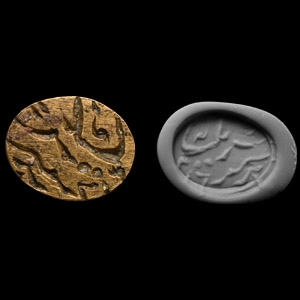
Western Asiatic Bronze Fob Seal
17th-18th century A.D.Sold for (Inc. bp): £26
With ellipsoid body bearing incised Nastaliq(?) inscription, openwork stem and suspension loop to the top. 3.34 grams, 24 mm
Ex H. Barker collection, UK. Property of a North London, UK, gentleman. This lot has been cleared against the Art Loss Register database, and is accompanied by an illustrated lot declaration signed by the Head of the Antiquities Department, Dr Raffaele D'Amato.
The Nastaʿlīq is one of the most important and widespread calligraphic styles used to write Farsi and was developed in Iran in the 8th and 9th centuries.
