
Loading, please wait...
LOT 0257
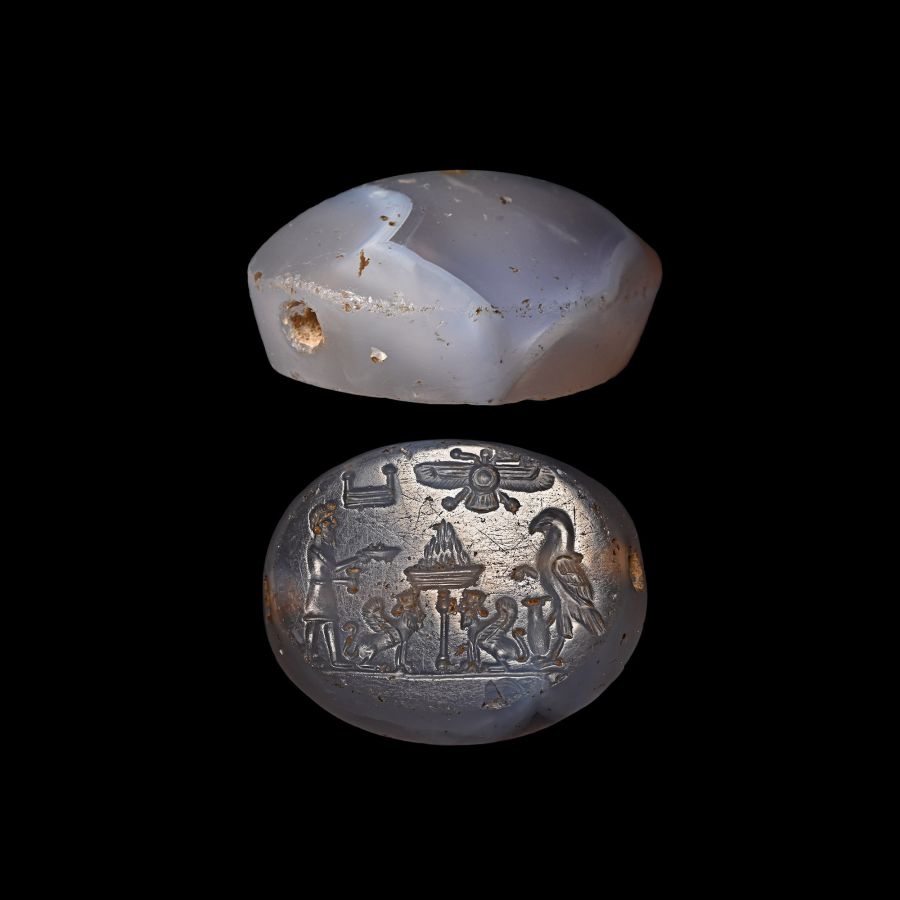
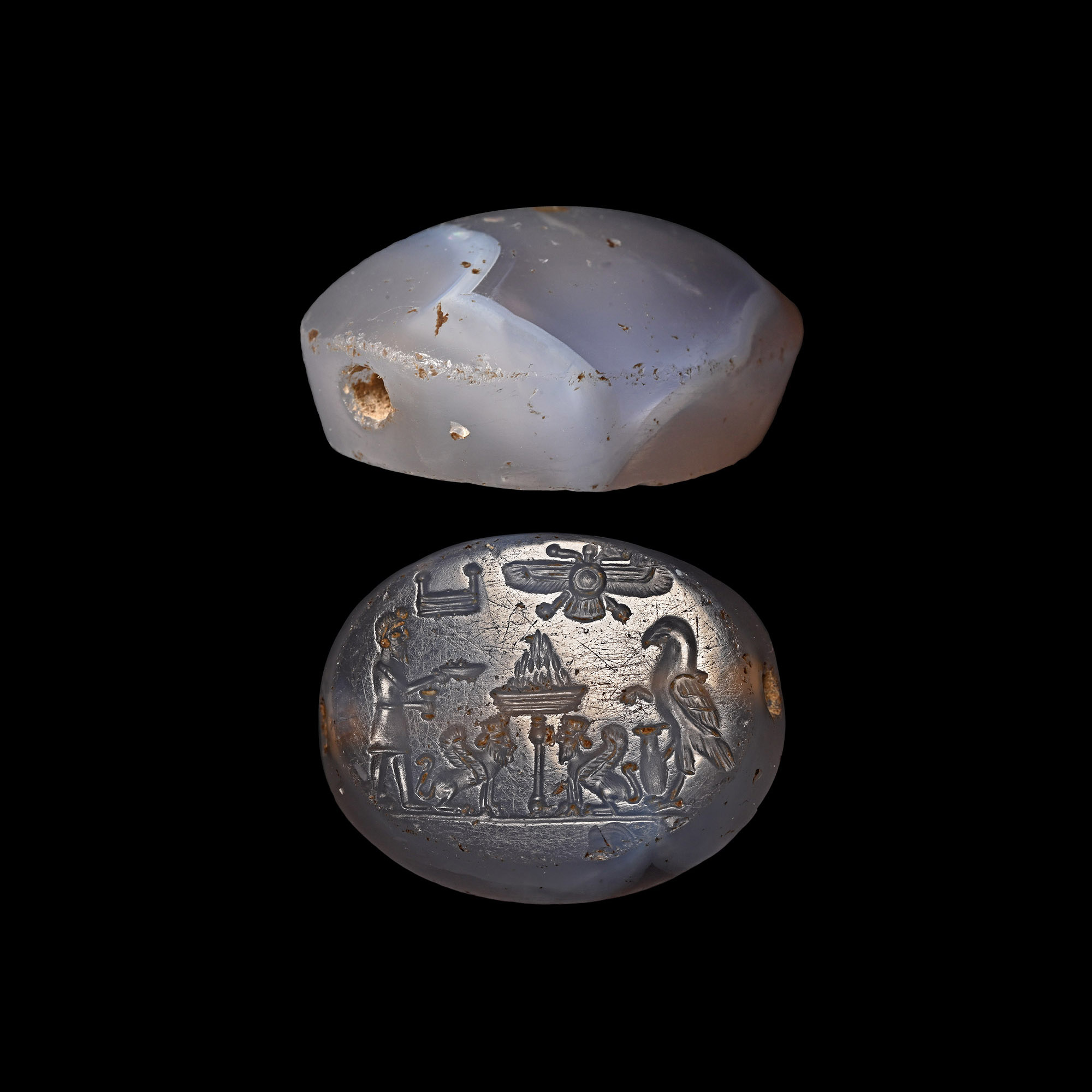
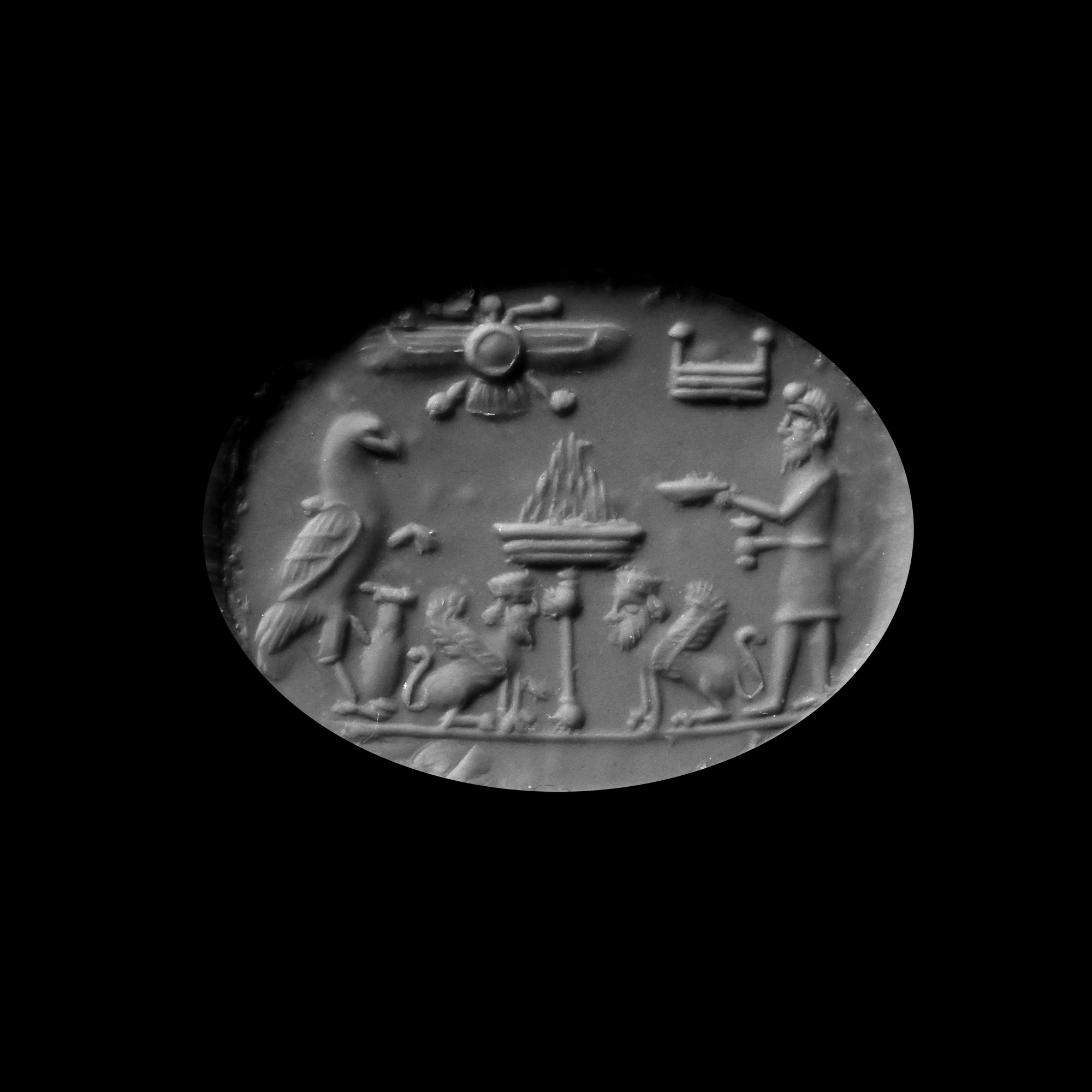
Achaemenid Chalcedony Stamp Seal
CIRCA 530 B.C.
1 1/4 in. (18.4 grams, 32 mm).
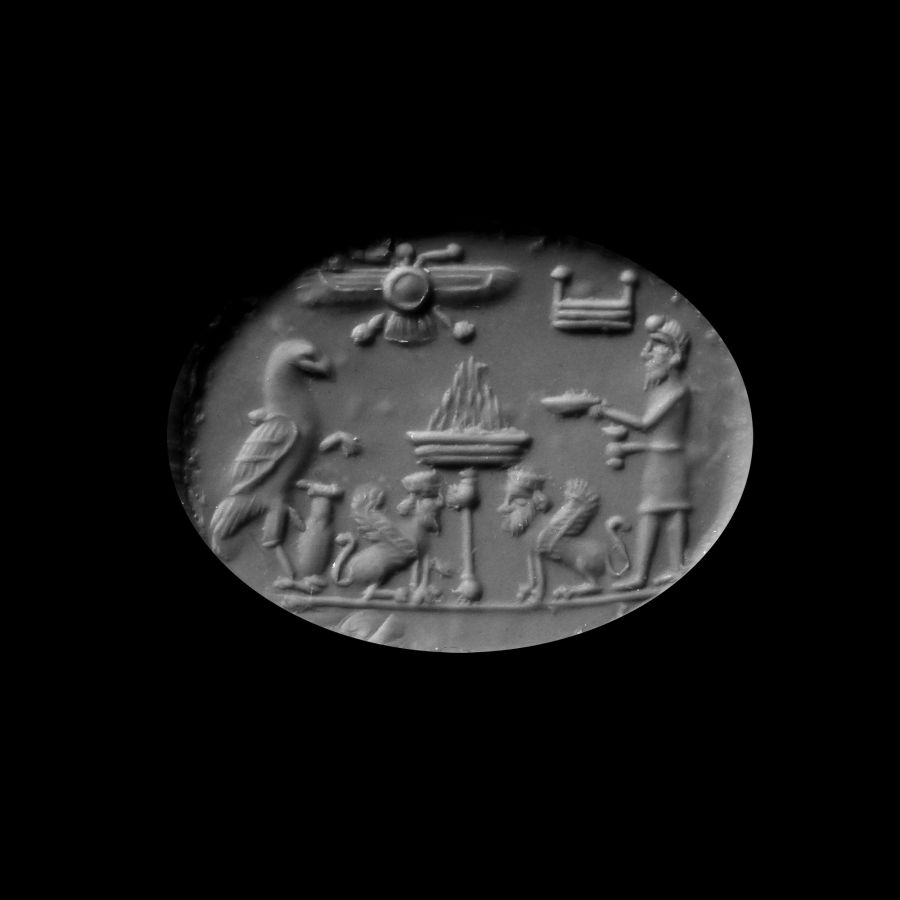
Ellipsoid in plan and plano-convex in section, reverse with invocation scene: on a baseline a kilted figure advancing towards an altar with flames, holding a cup and a plate; altar flanked by two crouching winged bulls with human heads; perching eagle to right with amphora; above a winged sun-disc and rectangular object; supplied with a museum-quality impression.
ProvenanceFrom the Fadel family collection, London, UK, 1970s.
This lot has been checked against the Interpol Database of stolen works of art and is accompanied by search certificate number no.12769-237265.
This lot has been cleared against the Art Loss Register database, and is accompanied by an illustrated lot declaration signed by the Head of the Antiquities Department, Dr Raffaele D'Amato.
Cf. a seal with similar characters in Median clothes offering sacrifices to a fire altar in Abdullaev, K., ‘Symbols associated with temples and altars in the Middle East and Iran’ in Parthica, culture del Mondo Antico, Roma, 2019, pp.11-42, fig.14, p.20.
FootnotesThe seal shows elements belonging to the period of the Achaemenid dynasty: the winged solar disc, symbol of the supreme god, Ormadz; the fire altar in the centre, a typically Zoroastrian element. The costume of the offerant is also decidedly Persian, with a short tunic at the knees and trousers of the saravara type.
CONDITIONTimeLine Auctions follows a vetting process to ensure the authenticity and legality of all items, reinforcing our commitment to integrity and responsible trading. Each antiquity, antique, and coin lot undergoes thorough examination by a vetting committee of at least ten external specialists, professional trade association members, scientists, and archaeologists: Our Vetting Process
AUCTIONS:
TimeLine is a leading auction house specialising in antiquities, ancient art, collectables, natural history, coins, medals, and books. Our auctions offer museums, collectors, historians, and enthusiasts the opportunity to acquire unique and historically significant pieces.
-
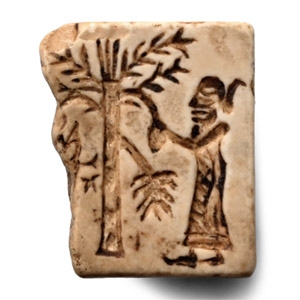
Babylonian Faience Frog Amulet
750-332 B.C.Estimate: £500 - 700 (‡+bp*)
Opening Bid: £250
Modelled in the round on a rectangular plaque with incuse image to underside: figure in ankle-length robe plucking a fruit from a tree. 3.28 grams, 18 mm
Old private French collection. Anonymous Sale, Beaussant Lefevre, Paris, 2015. Private European collection, acquired in 2015. This lot has been cleared against the Art Loss Register database, and is accompanied by an illustrated lot declaration signed by the Head of the Antiquities Department, Dr Raffaele D'Amato. -
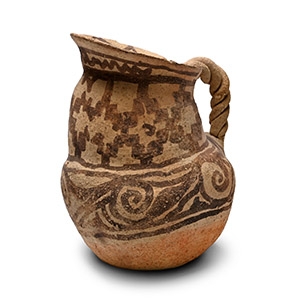
Western Asiatic Terracotta Spouted Vessel
8th-9th century A.D.Sold for (Inc. bp): £234
Squat in profile with braided strap handle and broad spout; painted bands of stepped rectangular and scrolled patterns. 270 grams, 11.5 cm
UK collection, 1990s. Acquired on the UK art market, before 2000. Private collection, Mr M.V., a London-based businessman. This lot has been cleared against the Art Loss Register database, and is accompanied by an illustrated lot declaration signed by the Head of the Antiquities Department, Dr Raffaele D'Amato. -
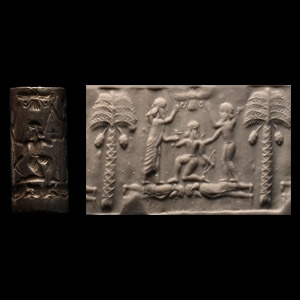
Achaemenid Silver Cylinder Seal Case with Battle Scene
5th century B.C.Estimate: £2,500 - 3,500 (+bp*)
Opening Bid: £1,250
Depicting a combat scene comprising of a standing richly dressed royal figure with a bow-case, one hand holding wrist and other piercing shoulder of a kneeling soldier; standing helmetted archer holding his other shoulder; two bearded men lying face down beneath; winged sun disc above and date palm behind; supplied with a museum-quality impression. 17.4 grams, 32 mm
From the collection of the late S, London, UK, 1970-2000. Examined by Professor Wilfrid George Lambert FBA (1926-2011), historian, archaeologist, and specialist in Assyriology and Near Eastern archaeology, in the 1990s. This lot has been checked against the Interpol Database of stolen works of art and is accompanied by search certificate number no.12821-240845. This lot has been cleared against the Art Loss Register database, and is accompanied by an illustrated lot declaration signed by the Head of the Antiquities Department, Dr Raffaele D'Amato.
