
Loading, please wait...
LOT 1309
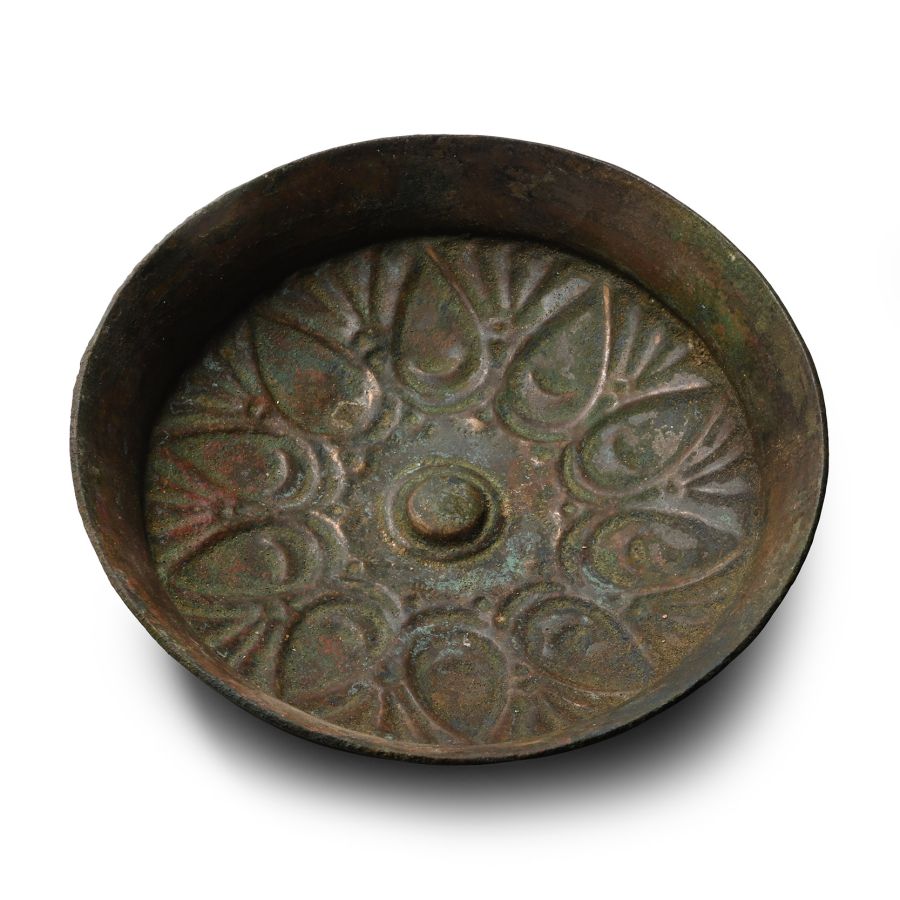
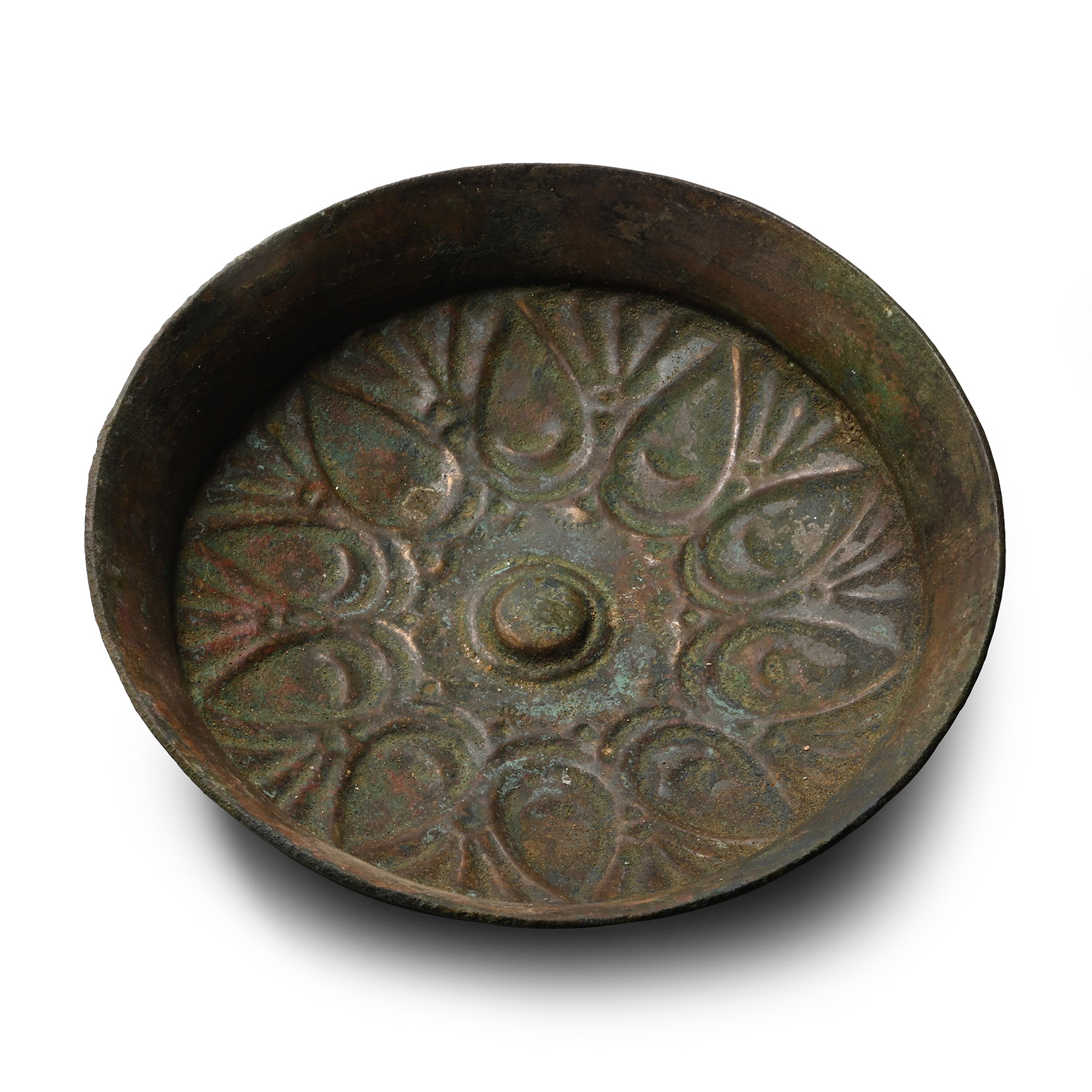
Achaemenid Bronze Phiale Mesomphalos
6TH-4TH CENTURY B.C.
6 1/2 in. (167 grams, 16.5 cm).
With flanged rim, central mesomphalos boss surrounded by radiating lotus petals.
ProvenanceAcquired 1980-2015.
Ex Abelita family collection.
This lot has been cleared against the Art Loss Register database, and is accompanied by an illustrated lot declaration signed by the Head of the Antiquities Department, Dr Raffaele D'Amato.
See Godard, F., The Art of Iran, London, 1965, for discussion.
FootnotesPhiale mesomphalos (literally: bowl with central boss) were the most popular form of vessel and were produced in a number of materials, including clay, bronze, silver and gold. They are a distinctive type of Achaemenid tableware, made by hammering or raising sheet metal, with decoration added in repoussé. They were used in banquets held by the nobility and for pouring libations at religious festivals. Phiales of this kind were a common gift from the Achaemenid king to the nobility which helped cement alliances among the different tribes of the Empire. The central boss to the underside allowed the user to secure their fingers and ensure a solid grip whilst drinking or pouring.
CONDITIONTimeLine Auctions follows a vetting process to ensure the authenticity and legality of all items, reinforcing our commitment to integrity and responsible trading. Each antiquity, antique, and coin lot undergoes thorough examination by a vetting committee of at least ten external specialists, professional trade association members, scientists, and archaeologists: Our Vetting Process
AUCTIONS:
TimeLine is a leading auction house specialising in antiquities, ancient art, collectables, natural history, coins, medals, and books. Our auctions offer museums, collectors, historians, and enthusiasts the opportunity to acquire unique and historically significant pieces.
-
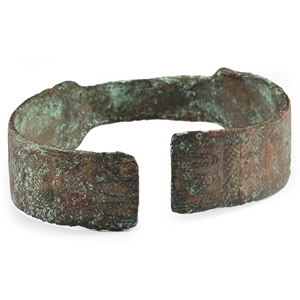
Western Asiatic Bronze Decorated Bracelet
1st millennium B.C.Sold for (Inc. bp): £98
Penannular in form with low-relief hatched panels and other ornament. 47 grams, 72 mm
UK private collection before 2000. Acquired on the UK art market. Property of a London, UK, gentleman. This lot has been cleared against the Art Loss Register database, and is accompanied by an illustrated lot declaration signed by the Head of the Antiquities Department, Dr Raffaele D'Amato. -
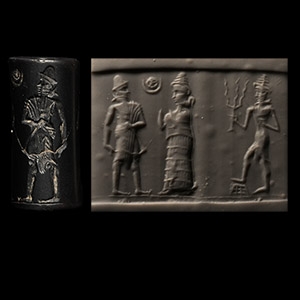
Old Babylonian Haematite Cylinder Seal
2000-1800 B.C.Estimate: £3,000 - 4,000 (‡+bp*)
Opening Bid: £1,500
Columnar in form with frieze depicting a standing Lamma goddess in flounced robe facing towards a god wearing a pleated garment and holding a mace at his hip; disc-and-crescent motif above; behind, the storm-god Adad with one foot on a mound, wielding a lightning bolt in his raised hand. 11 grams, 25 mm
Private collection, Europe. with Bonham's, London, 22 April 1999, no.538. Acquired by the present owner from the above. Accompanied by copies of the relevant Bonhams catalogue pages. This lot has been checked against the Interpol Database of stolen works of art and is accompanied by a search certificate number no.12538-232100. This lot has been cleared against the Art Loss Register database, and is accompanied by an illustrated lot declaration signed by the Head of the Antiquities Department, Dr Raffaele D'Amato. -

Mesopotamian Cuneiform Tablet Fragment
Early 2nd millennium B.C.Sold for (Inc. bp): £416
Bifacial, pillow-shaped with cuneiform text to both broad faces; two corners absent. 122 grams, 77 mm
Specialised collection of cuneiform texts, the property of a London gentleman and housed in London before 1992. Thence by descent to family members. Examined by Professor Wilfrid George Lambert FBA (1926-2011), historian, archaeologist, and specialist in Assyriology and Near Eastern archaeology, in the late 1980s and early 1990s. This small collection is exceptional for the variety of types, including some very rare and well preserved examples. This lot has been cleared against the Art Loss Register database, and is accompanied by an illustrated lot declaration signed by the Head of the Antiquities Department, Dr Raffaele D'Amato.
