
Loading, please wait...
LOT 1271
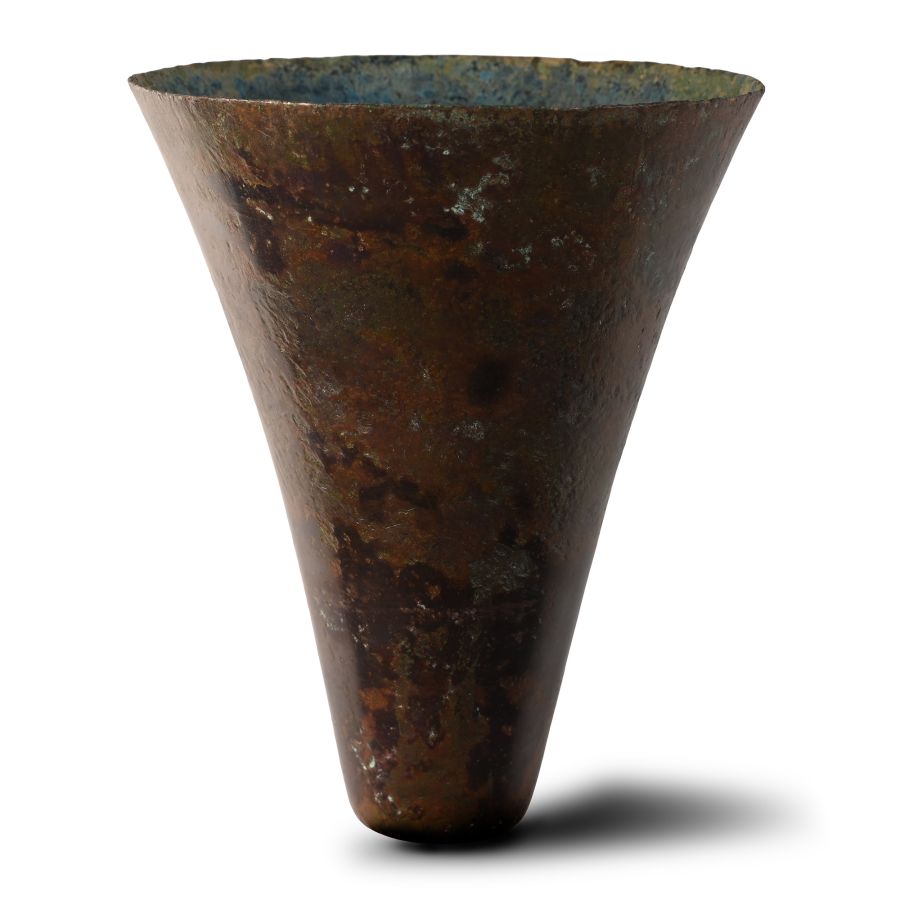
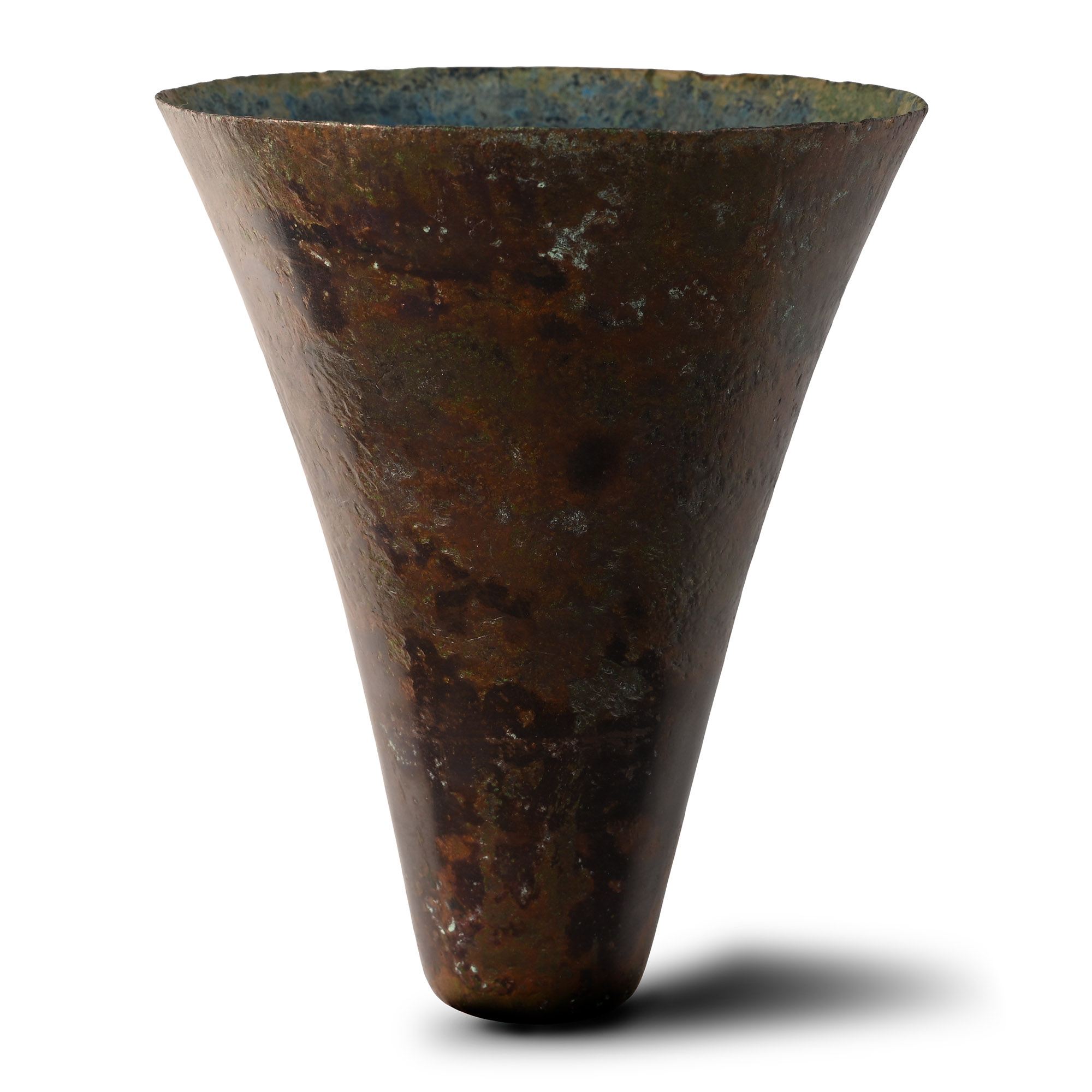
Achaemenid Bronze Cup
6TH-4TH CENTURY B.C.
5 in. (156 grams, 12.5 cm).
Conical in profile with low disc to the foot.
ProvenanceEx property of a London, UK, gentleman, Mayfair gallery, 1990s.
CONDITIONTimeLine Auctions follows a vetting process to ensure the authenticity and legality of all items, reinforcing our commitment to integrity and responsible trading. Each antiquity, antique, and coin lot undergoes thorough examination by a vetting committee of at least ten external specialists, professional trade association members, scientists, and archaeologists: Our Vetting Process
AUCTIONS:
TimeLine is a leading auction house specialising in antiquities, ancient art, collectables, natural history, coins, medals, and books. Our auctions offer museums, collectors, historians, and enthusiasts the opportunity to acquire unique and historically significant pieces.
-

Mesopotamian Haematite Cylinder Seal with Standing Figures
1900-1600 B.C.Sold for (Inc. bp): £546
Cylinder with standing figures and animals, with red stone bead; accompanied by a copy of an old scholarly note, typed and signed by W.G. Lambert, late Professor of Assyriology, University of Birmingham, 1970-1993, which states: 'Cylinder Seal of Hematite, 16 x 8.5 mm. The scene consists of four standing figures. Two face each other: a god in a short kilt and holding a mace at his waist while wearing a Gudea-type hat. Facing him is another god in a long robe raising one hand and extending the other. The other two figures both have frontal faces. The one, nude save for a double-stranded belt, holds both hands at the waist. The other wears a loin-cloth with hanging-down end and grasps a stick in one hand. There are three fillers: monkey, human head, and bird. This seal is from North-Western Mesopotamia, c. 1900-1600 B.C., and is a rare type. The state of preservation is good.'; accompanied by a museum quality impression. 3.30 grams, 16 mm
Anonymous French sale. Private collection, London, UK. Accompanied by a copy of an old scholarly note, typed and signed by W.G. Lambert, late Professor of Assyriology, University of Birmingham, 1970-1993. -
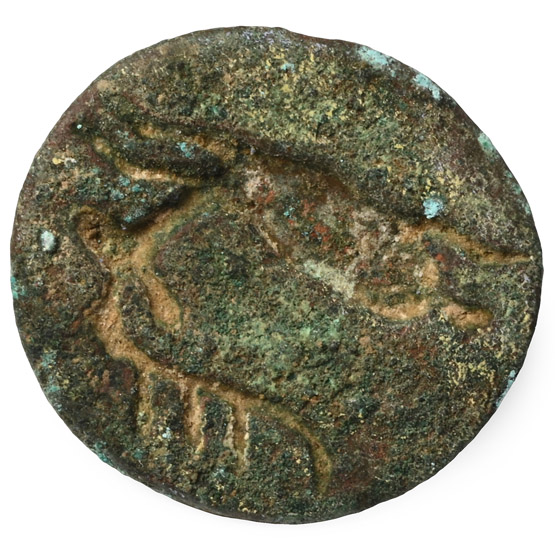
Large Central Asian Floral Backed Bronze Floral Seal
3rd-1st century B.C.Estimate: £100 - 140 (+bp*)
Opening Bid: £50
Discoid seal with incuse design; accompanied by an old scholarly note, typed and signed by W.G. Lambert, late Professor of Assyriology, University of Birmingham, 1970-1993, which states: 'Stamp Seal of Bronze 23 x 24 x 10 mm This is a flat disc with a loop handle. pierced, from the same sheet metal attached to the back. The face shows a deeply engraved stag in a flying gallop. This is reported to have come from west-central Asia, and it fits the area and date c. 300-1 B.C.[sic] It has some incrustation on the surface which could be removed, but is in very good condition.' 6.06 grams, 24 mm
Ex 'S' collection, 1970s-1990s. -
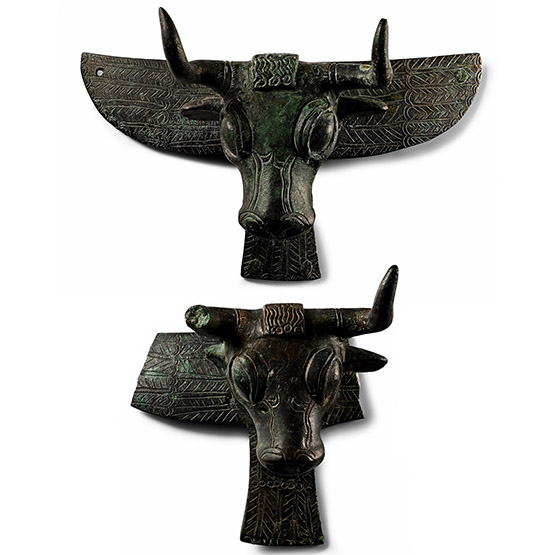
Urartu Bull-Headed Bronze Cauldron Applique Pair
8th century B.C.Estimate: £15,000 - 20,000 (‡+bp*)
Opening Bid: £7,500
Matched pair of bovine-head mounts, each formed as a pair of D-shaped wings and a tail with low-relief feather detailing and holes to accept rivets; central head and neck of a bull with prominent horns, bands of curly hair to the pate and throat, large scaphoid eyes, incised contour detailing to muzzle, socket to reverse. 790 grams total, 8-13 cm wide
From the warehouse of Lane Hope Ltd, London, UK, 1980s (company dissolved December 1991). Private collection, UK; anonymous sale, Gorny & Mosch, Munich, Auction 206, 20 June 2012, no.85. European private collection, acquired at Gorny & Mosch, 2012. Accompanied by a copy of an Art Loss Register certificate, no.6210.AM. Accompanied by a copy of the relevant Gorny & Mosch catalogue pages. This lot has been checked against the Interpol Database of stolen works of art and is accompanied by a search certificate number no.12696-234610.
The fitting would have been one of four to the rim of a large bronze cauldron. Urartu was centered in eastern Anatolia, around Lake Van; the capital, Tushpa, was located on the eastern shore of the lake, situated on a high and elongated rock outcrop. Most sites boasted a well-built temple situated at the highest point, as well as a number of large storage rooms containing rows of large vessels for storing oil and grains, and massive well-built fortification walls.
