
Loading, please wait...
LOT 1348
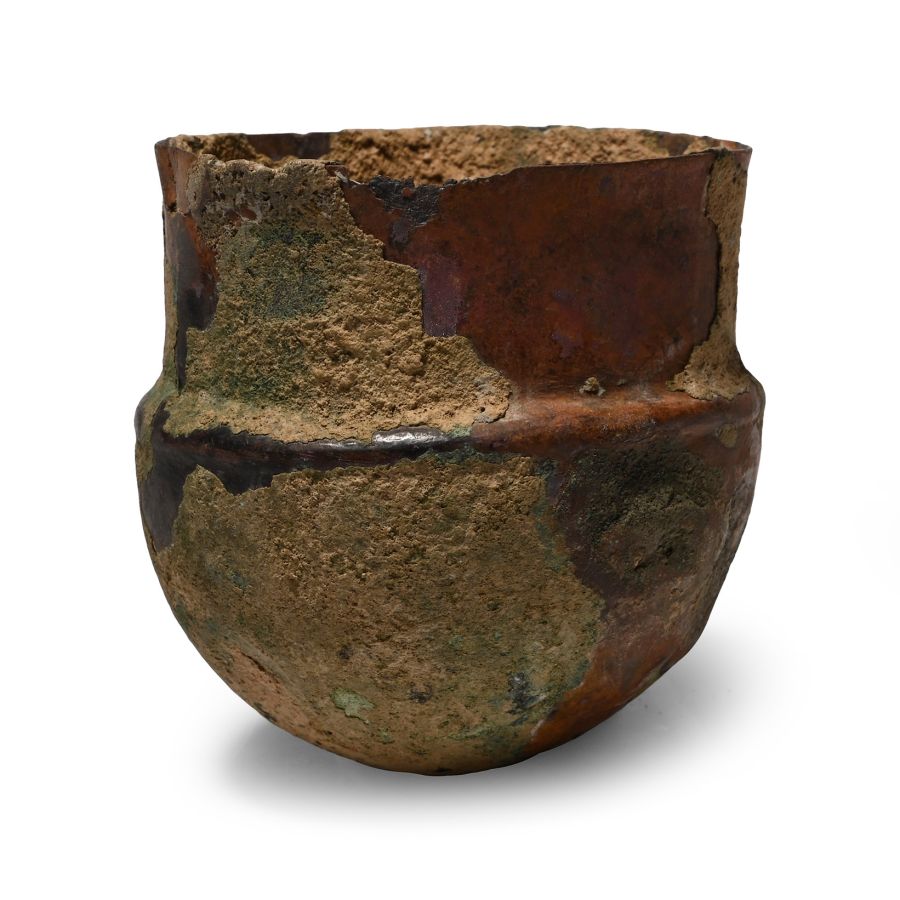
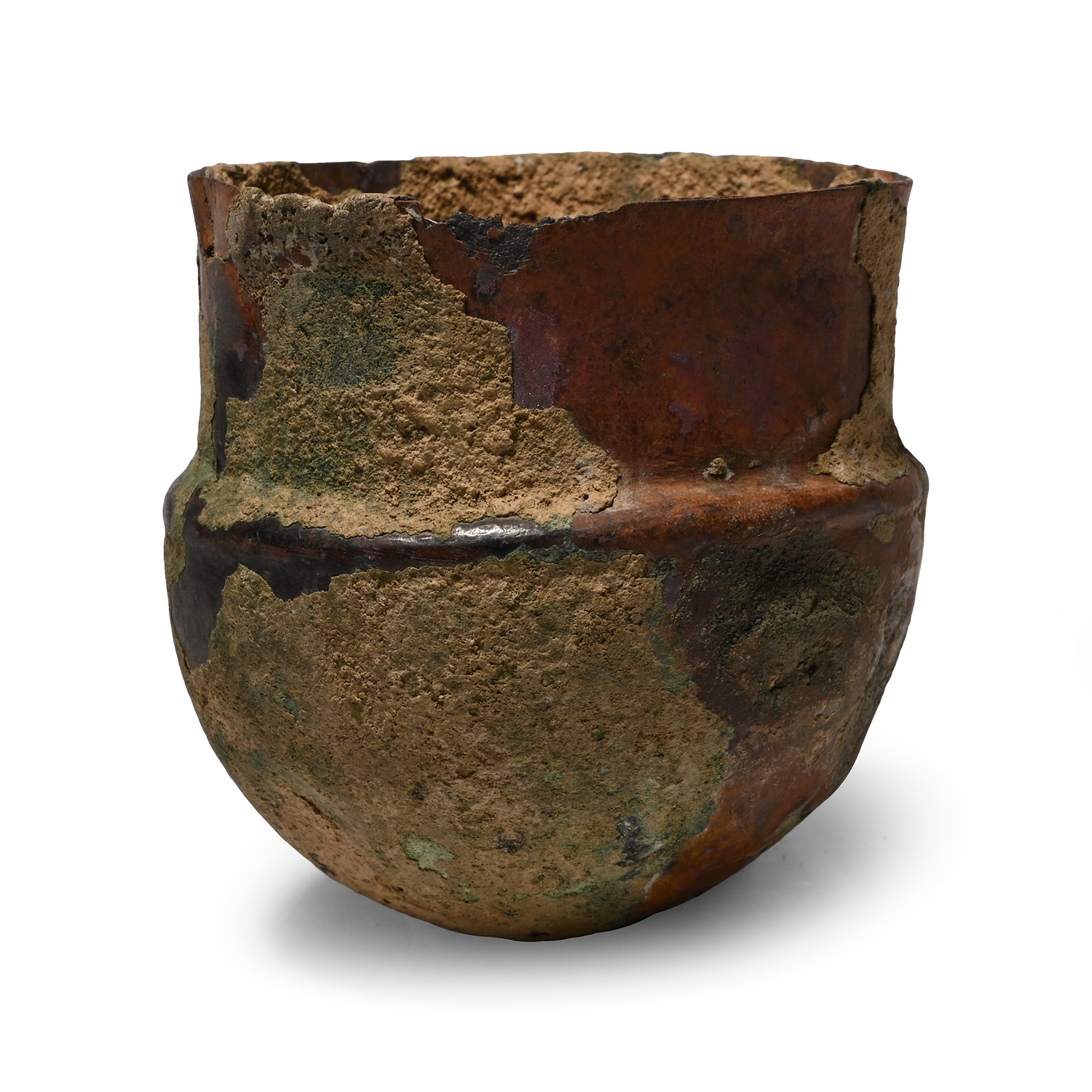
Achaemenid Bronze Cup
6TH-4TH CENTURY B.C.
3 in. (80 grams, 77 mm).
Bulbous body and carinated shoulder extending to a cylindrical mouth.
ProvenanceAcquired 1980-2015.
Ex Abelita family collection.
This lot has been cleared against the Art Loss Register database, and is accompanied by an illustrated lot declaration signed by the Head of the Antiquities Department, Dr Raffaele D'Amato.
TimeLine Auctions follows a vetting process to ensure the authenticity and legality of all items, reinforcing our commitment to integrity and responsible trading. Each antiquity, antique, and coin lot undergoes thorough examination by a vetting committee of at least ten external specialists, professional trade association members, scientists, and archaeologists: Our Vetting Process
AUCTIONS:
TimeLine is a leading auction house specialising in antiquities, ancient art, collectables, natural history, coins, medals, and books. Our auctions offer museums, collectors, historians, and enthusiasts the opportunity to acquire unique and historically significant pieces.
-
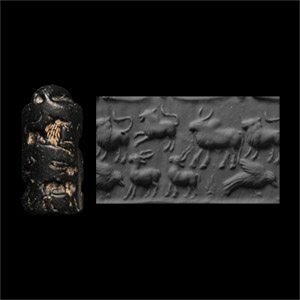
Mesopotamian Black Stone Pendant
3rd-2nd millennium B.C.Sold for (Inc. bp): £364
Cylinder-shaped with pierced transverse lug at the apex, frieze depicting ibexes, a zebu, perching bird and two lions in two registers; supplied with a museum-quality impression. 23.6 grams, 38 mm
UK private collection before 2000. Acquired on the UK art market. Property of a London gentleman. This lot has been cleared against the Art Loss Register database, and is accompanied by an illustrated lot declaration signed by the Head of the Antiquities Department, Dr Raffaele D'Amato. -
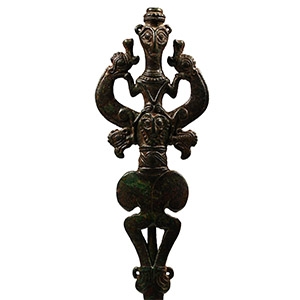
Luristan Bronze 'Master of Animals' Finial
8th-7th century B.C.Sold for (Inc. bp): £2,470
A bifacial sceptre head formed as a Master of Animals atop a collared tubular stem with flared foot; the finial composed of two addorsed birds standing on their backs looking up towards two birds' heads facing down and joined to slender crescentic arms representing slender beasts with ridged backs and roaring mouths, each in the grip of the Master standing crowned between them; the Master with tubular body, animal-like ears, prominent nose above a small mouth and wearing collars, neck rings and tiered headdress; waisted socket below; mounted on a display stand. 399 grams, 32.3 cm (526 grams total, 34.5 cm including stand)
Acquired between 1965-2020. Private collection, London. This lot has been cleared against the Art Loss Register database, and is accompanied by an illustrated lot declaration signed by the Head of the Antiquities Department, Dr Raffaele D'Amato.
The small head belongs to the tubular idols with protomes of second type of ‘Master of Animals’, probably being a finial standard. This type, according to Chausidis, came to be with the gradual transformation of the ‘zoomorphic standards with a human head, whereby the front legs of the animals became integrated into the tubular pillar of the standards. It gradually began to be cast with the other elements, representing the neck and torso of the central anthropomorphic character that retained the two-faced feature of the previous type. The necks and heads of the animal pair separated from the rest of their bodies, which, in turn, gradually lost their original form and acquired new meanings. -
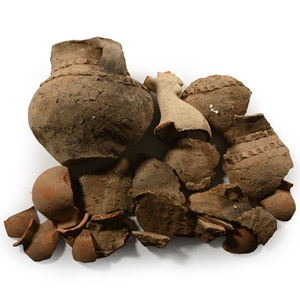
Western Asiatic Ancient Pottery Sherds Including an Animal Fragment
Early 1st millennium A.D.Sold for (Inc. bp): £33
Mixed group including a squat jug with strap handle and applied rouletting, a spout shaped like a cockerel and other fragments. 1.29 kg total, 2.5-13.5 cm
From a London, UK, collection, 1990s. This lot has been cleared against the Art Loss Register database, and is accompanied by an illustrated lot declaration signed by the Head of the Antiquities Department, Dr Raffaele D'Amato.
