
Loading, please wait...
LOT 1141
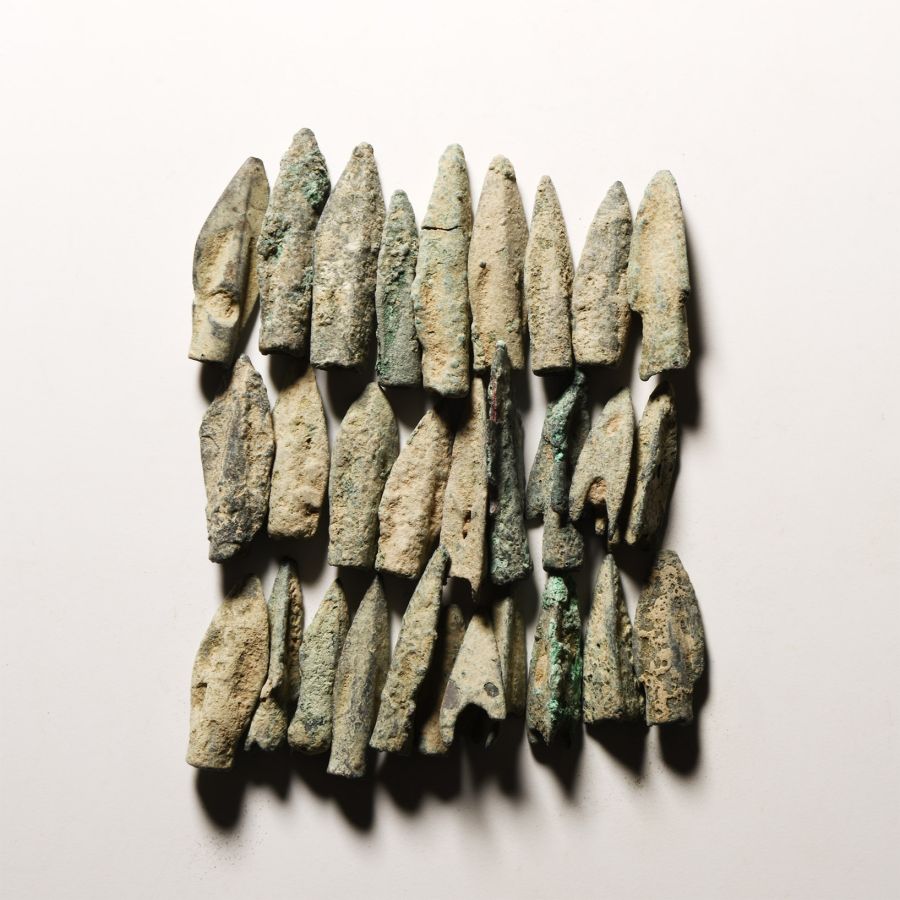
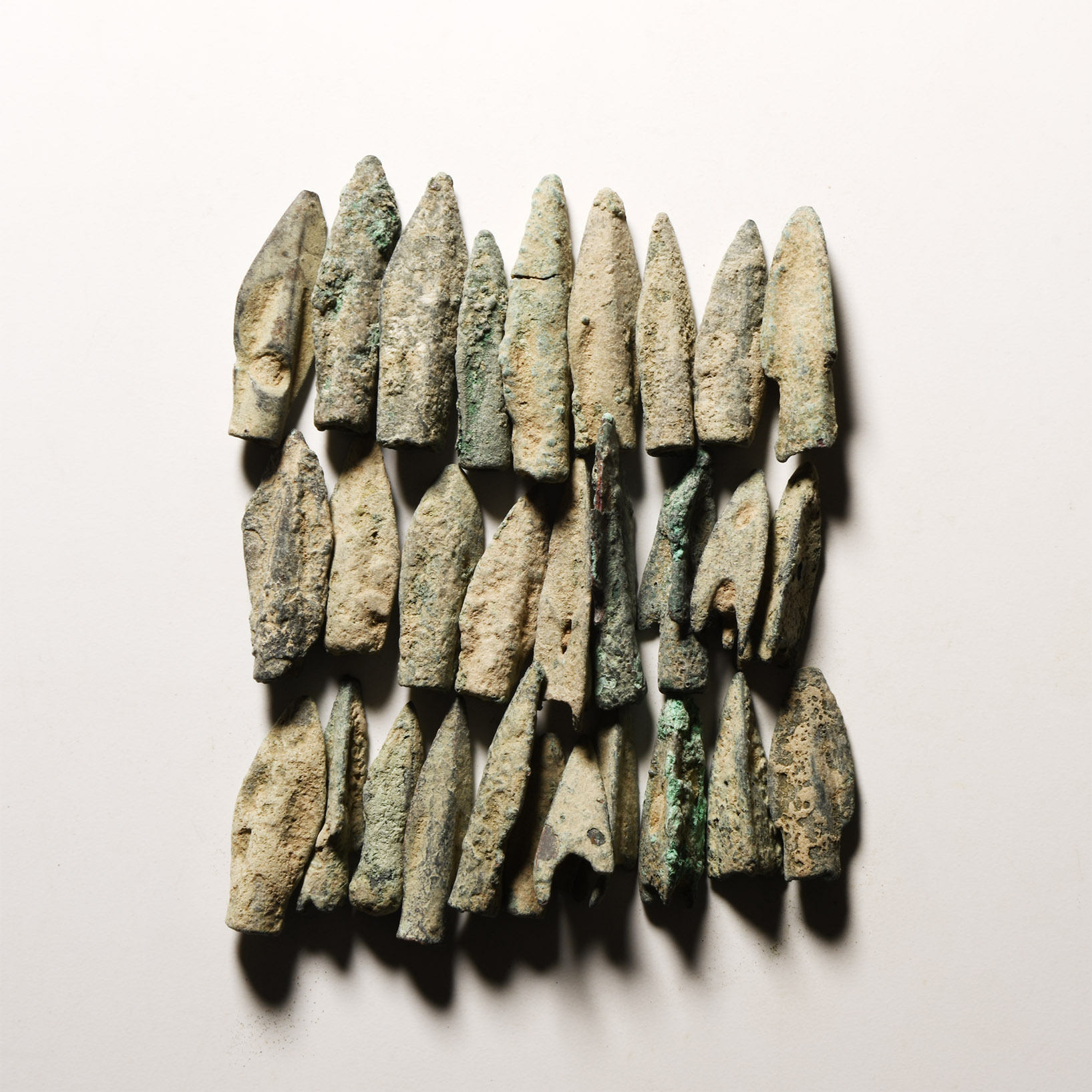
Achaemenid Bronze Arrowhead Group
6TH-4TH CENTURY B.C.
7/8 - 1 3/8 in. (108 grams total, 23-36 mm).
Comprising 29 shafted trilobate and pyramidal points, some with barbs. [29]
ProvenanceAcquired 1980-2015.
Ex Abelita family collection.
See Head, D., The Achaemenid Persian Army, Stockport, 1992, fig.13, nos.h-m, for similar; Khorasani, M.M., Arms and Armour from Iran. The Bronze Age to the End of the Qajar Period, Tübingen, 2006, figures 472-474, for the typology.
FootnotesThe Persians used the bow to forge their empire. They would have used bronze or iron arrows of various types which varied in length from three to four centimetres. Many were trilobite in shape, varying from the simple triangular head, the leaf-shaped head or the triangular head with square-section, tang and directional plumes. The old types, created by the Luristan armourers, were still in use in the Achaemenid period.
CONDITIONTimeLine Auctions follows a vetting process to ensure the authenticity and legality of all items, reinforcing our commitment to integrity and responsible trading. Each antiquity, antique, and coin lot undergoes thorough examination by a vetting committee of at least ten external specialists, professional trade association members, scientists, and archaeologists: Our Vetting Process
AUCTIONS:
TimeLine is a leading auction house specialising in antiquities, ancient art, collectables, natural history, coins, medals, and books. Our auctions offer museums, collectors, historians, and enthusiasts the opportunity to acquire unique and historically significant pieces.
LOT 1141
Achaemenid Bronze Arrowhead Group
Estimate £100 - 140€120 - 160 (for guidance only)$140 - 190 (for guidance only)
-
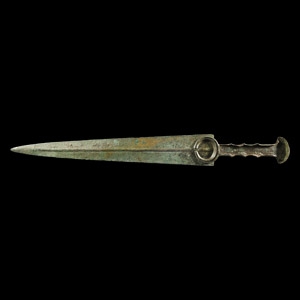
Luristan Bronze Short Sword
Circa 1000 B.C.Estimate: £400 - 600 (+bp*)
Opening Bid: £210
The blade with a tapering profile, triangular in overall form, with square shoulders, penannular guard with strong midrib, flanged hilt with crenellated grip, widening slightly into a fan-shaped pommel; tip repaired. 383 grams, 44 cm long
Acquired 1980-2015. Ex Abelita family collection.
These types of short sword or dirks were usually cast in one piece, and the penannular rib in relief was cast on at the same time with the handle of the blade. In some cases, however, the penannular rib was later cast on the dagger, possibly to strengthen a weak point at the junction of hilt and blade. The flanged hilt was originally filled with organic material like bone. -
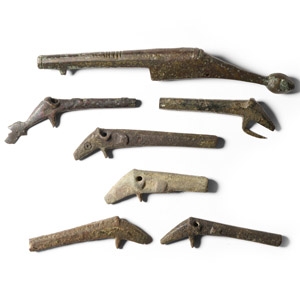
Elizabethan and Later 'Essex' Bronze Petronel Collection
Late 16th-early 17th century A.D.Sold for (Inc. bp): £169
Exhibiting a range of petronel types, including example with ring-and-dot detailing. 106 grams total, 4.8-12 cm
Found Essex, UK. -
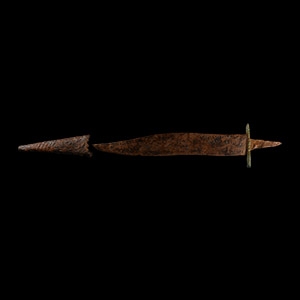
Medieval Iron Knife with Chape
Circa 14th-16th century A.D.Sold for (Inc. bp): £130
The undulating blade with a single cutting edge, guard and tang, together with a chape (belonging) with decorative incising. 159 grams, 26 cm
Acquired on the UK art market. Property of a Ruislip, UK, gentleman, by inheritance.
