
Loading, please wait...
LOT 1574
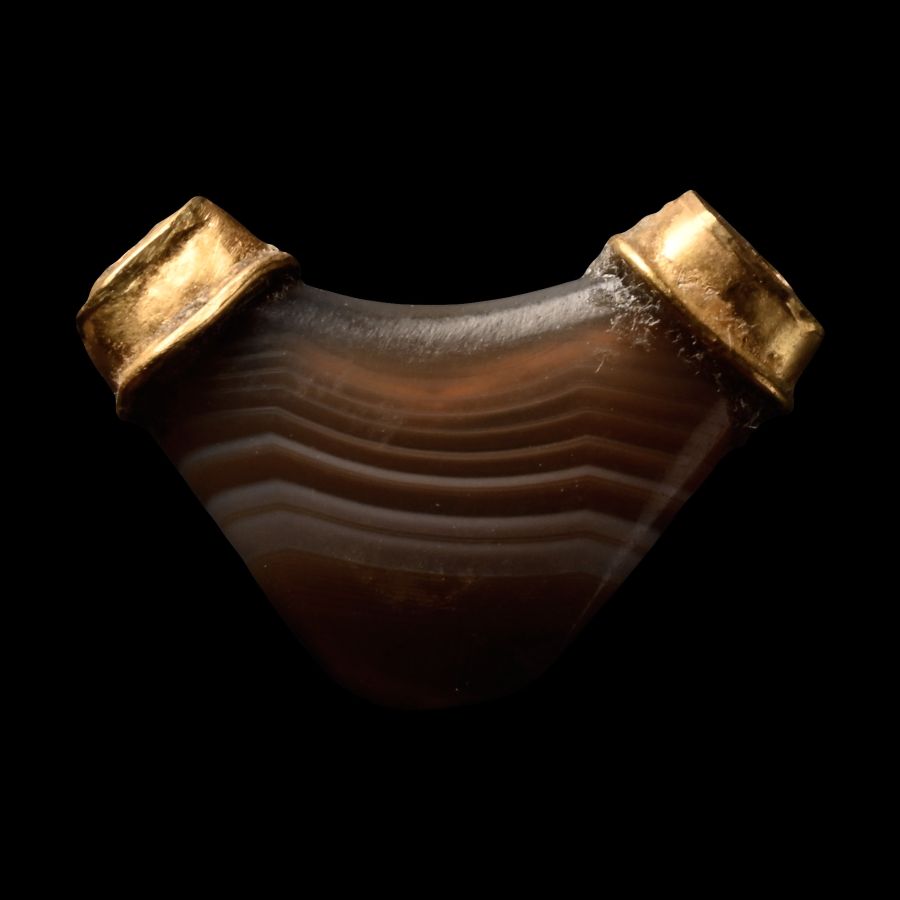
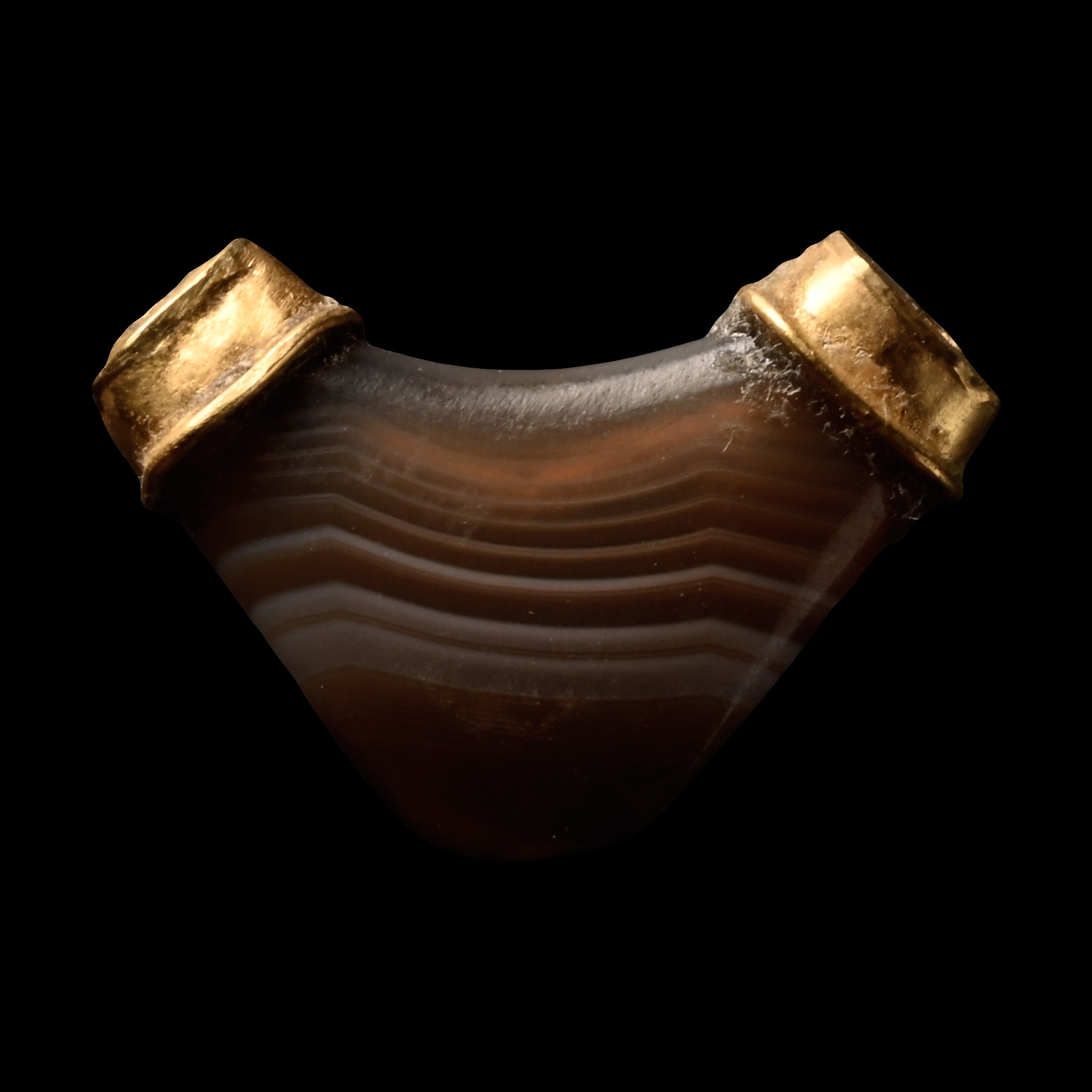
Achaemenid Banded Agate Elbow Bead
6TH-4TH CENTURY B.C.
3/4 in. (1.26 grams, 19 mm).
With an ellipsoid gold cap to each finial.
ProvenanceFrom the collection of a late Japanese gentleman, 1970s onwards.
CONDITIONTimeLine Auctions follows a vetting process to ensure the authenticity and legality of all items, reinforcing our commitment to integrity and responsible trading. Each antiquity, antique, and coin lot undergoes thorough examination by a vetting committee of at least ten external specialists, professional trade association members, scientists, and archaeologists: Our Vetting Process
AUCTIONS:
TimeLine is a leading auction house specialising in antiquities, ancient art, collectables, natural history, coins, medals, and books. Our auctions offer museums, collectors, historians, and enthusiasts the opportunity to acquire unique and historically significant pieces.
LOT 1574
Achaemenid Banded Agate Elbow Bead
Estimate £250 - 350€290 - 410 (for guidance only)$340 - 470 (for guidance only)
-
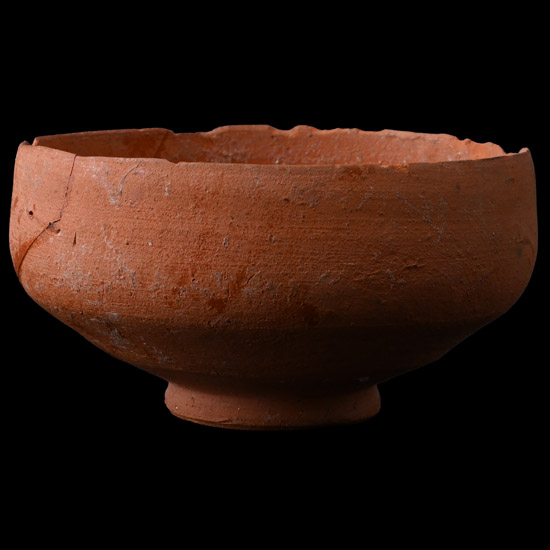
Nabataean Red Terracotta 'Eggshell' Bowl
Circa 1st century B.C.-1st century A.D.Sold for (Inc. bp): £20
A wide bowl with slightly inturned rim and low foot; repaired. 38.6 grams, 76 mm
From the collection of a Yorkshire, UK gentleman, items collected in the Holy Land in the 1960s. -
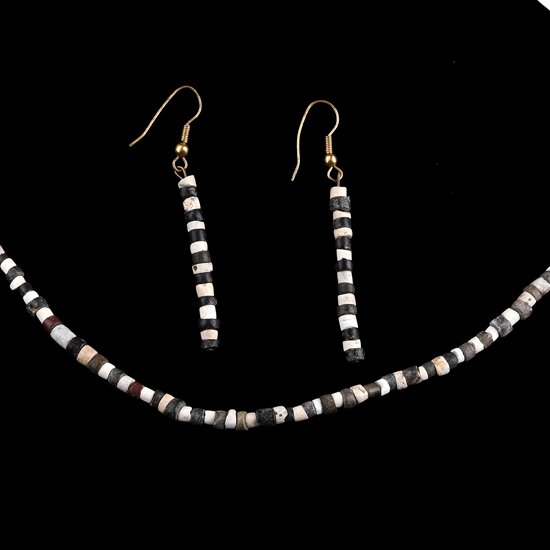
Western Asiatic Stone Bead Necklace and Earring Set
Sumerian, circa 3,000 B.C. and laterSold for (Inc. bp): £78
A matched set formed of alternating white and dark annular beads; restrung with a modern clasp and earring hooks. 15 grams total, 6.3-48 cm
Acquired from Ancient Art, London, UK. From the collection of a Nottingham, UK, collector, established from the early 2000s. Accompanied by the original Ancient Art certificate of authenticity. -
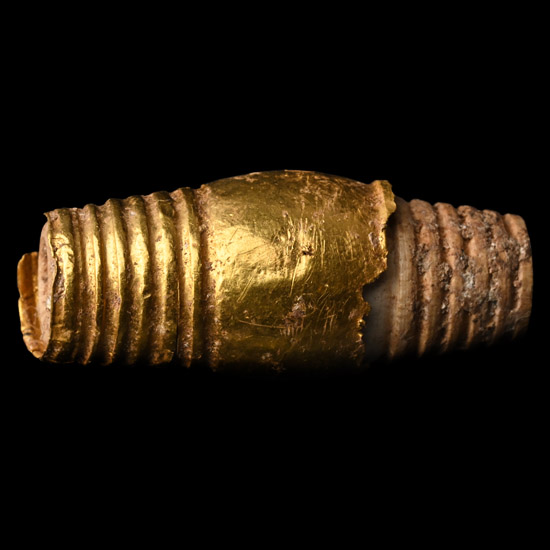
Western Asiatic Bead with Remains of Gold Foil
Early 1st millennium A.D.Sold for (Inc. bp): £59
A cylindrical bead with ribbed collars, partially clad in sheet gold. 1.33 grams, 21.6 mm
From the private collection of a European gentleman (1942-2024), formed since the 1970s.
