
![Group of Ten [10] AE Roman Imperial Coins.](https://timelineauctions.com/upload/images/items/225139b.jpg "Group of Ten [10] AE Roman Imperial Coins.")
![Group of Ten [10] AE Roman Imperial Coins.](https://timelineauctions.com/upload/images/items/225139.jpg "Group of Ten [10] AE Roman Imperial Coins.")
LOT 3187
Group of Ten [10] AE Roman Imperial Coins. 3rd-4th century AD.
Various emperors. Fine to Good Very Fine.(19.75gr total.). [10]
ProvenanceFrom the collection of a London antiquarian, formed since the 1980s.
TimeLine Auctions follows a vetting process to ensure the authenticity and legality of all items, reinforcing our commitment to integrity and responsible trading. Each antiquity, antique, and coin lot undergoes thorough examination by a vetting committee of at least ten external specialists, professional trade association members, scientists, and archaeologists: Our Vetting Process
AUCTIONS:
TimeLine is a leading auction house specialising in antiquities, ancient art, collectables, natural history, coins, medals, and books. Our auctions offer museums, collectors, historians, and enthusiasts the opportunity to acquire unique and historically significant pieces.
-
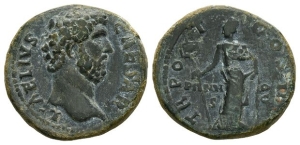
Aelius, Caesar AE As. AD 136-138.
Estimate: £200 - 300 (+bp*)
Opening Bid: £100
Rome mint; struck under Hadrian, AD 137. L • AELIVS CAESAR, bare head to right / TR POT COS II, Pannonia standing facing, head left, holding vexillum upright on ground, gathering up dress with right hand; S C beneath PANN-O across fields. RIC II.3 2661 (PANNONIA). 14.16gr, 21mm, 6h.
Very Fine.
Ex UK private collection. -
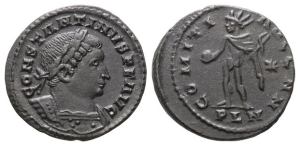
Constantine I 'the Great' BI Nummus. AD 309-337.
Sold for (Inc. bp): £23
London mint; struck AD 311-312. 1st officina. CONSTANTINVS P F AVG, laureate and cuirassed bust to right / COMITI AVGG NN, Sol standing facing, head to left, holding globe with extended right hand and whip with left; star in right field, PLN in exergue. RIC VI 153; C&T 7.03.006; RML 307. 4.58gr, 23mm, 7h.
Near Extremely Fine.
From a London, UK, collection, 1990s. -
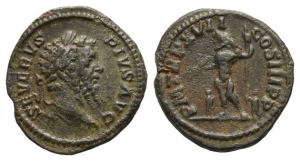
Septimius Severus 'Limes Denarius'. AD 193-211.
Sold for (Inc. bp): £20
Uncertain mint. SEVERVS PIVS AVG, laureate head to right / P M TR P XVIII COS III P P, Jupiter standing facing, head to left, holding thunderbolt and sceptre, two children below. RIC IV 226; BMCRE 1; RSC 525. 2.66gr, 19mm, 7h.
Very Fine.
Found Lincolnshire, UK.
'Limes Denarii' (misnomer) are more or less faithful bronze copies of silver Denarii, minted on the fringes of the empire out of necessity. Perhaps they may be officially sanctioned issues for use in regions where political unrest made it hazardous to ship large amounts of silver. These low value issues could have served troops on the front and been redeemable for good coinage when they returned to the stable regions. Were they a form of military scrip meant to keep large quantities of precious metal from falling into enemy hands in the event of a defeat?
