
Ancient Art, Antiquities, Books, Natural History, Stamps & Coins

-
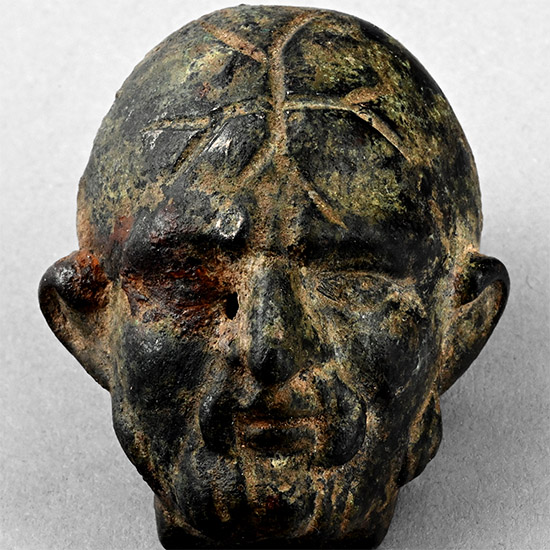
Roman Bronze Head with Cross Fourchee
4th century A.D.Estimate: £1,800 - 2,400 (‡+bp*)
Opening Bid: £950
Hollow-formed model male head with aperture to underside used as a 'money box'; with short beard and incised expanding-arm cross to the brow. 89 grams, 54 mm
German private collection, 1980s. with Artemis Gallery, 1990s. Private collection, acquired in 1999. This lot has been checked against the Interpol Database of stolen works of art and is accompanied by a search certificate number no.12866-241640.
Money boxes in the Roman Empire, particularly in the 4th century A.D., were used as practical containers for storing coins in everyday life. They were often made from pottery or metal, and while many examples had to be broken open, others were made with small doors or openings to allow access to the contents. -
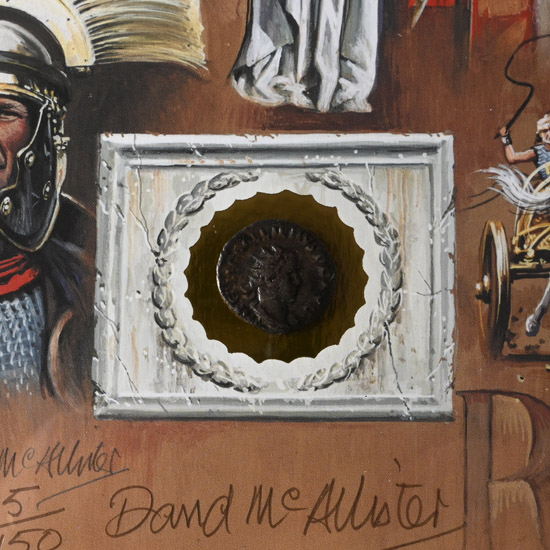
Silver Billon Roman Coin and Framed Limited Edition Print
3rd century A.D. and laterEstimate: £40 - 60 (+bp*)
Bids: 1 | Current Bid: £5
The coin with radiate crown mounted on 22 carat gold foil, framed with an art print signed by the artist David McAllister, depicting scenes of Roman military activity; limited edition number 5/1150. 1.26 kg, 49.5 x 37.5 cm
UK gallery, early 2000s. Accompanied by a previous numbered certificate of authenticity.
David McAllister's exciting design is a 'one of a kind' work that portrays the might and riches of the Roman civilisation. This limited edition print is a celebration of the award-winning artist's lifetime dedication to historical paintings of the ancient world. To enhance appreciation of this rare and historic work, each print is signed and numbered by the artist. -
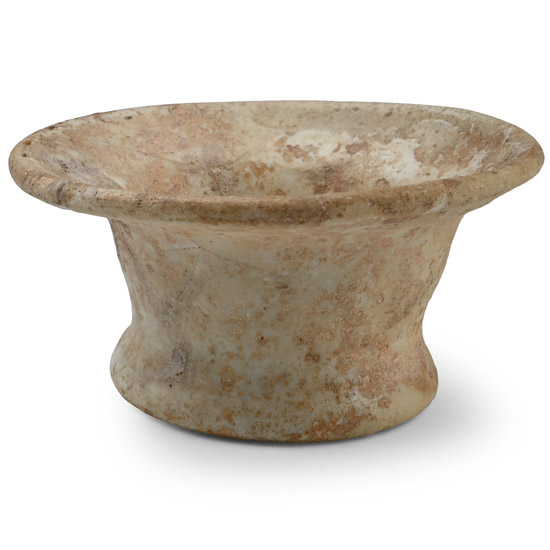
Roman Opaque White Glass Patera Bowl
1st-2nd century A.D.Estimate: £500 - 700 (+bp*)
Opening Bid: £250
Cylindrical body perched on a wide, slightly concave foot; the shoulders splayed outwards, leading to a thick trumpet-style rim gently curving upwards. 32 grams, 66 mm wide
Ex S.M. collection, London, UK, 1970-1999. Roman glass from an important London collection, acquired from the early 1980s. Accompanied by a typed previous catalogue information page with provenance.
The shape of this small cup derives from metal vessels of the Early Empire period or from ‘terra sigillata’ earthenware. Similar vessels were found throughout the Empire during the 1st and 2nd centuries A.D. Vessels similar to this one have been discovered in the necropolis at Kourion, Cyprus (dating to the first half of the 1st century A.D.), in 1st-century finds from Gaul, and in Egypt, though the specific find spot and date in the latter case remain undetermined. -
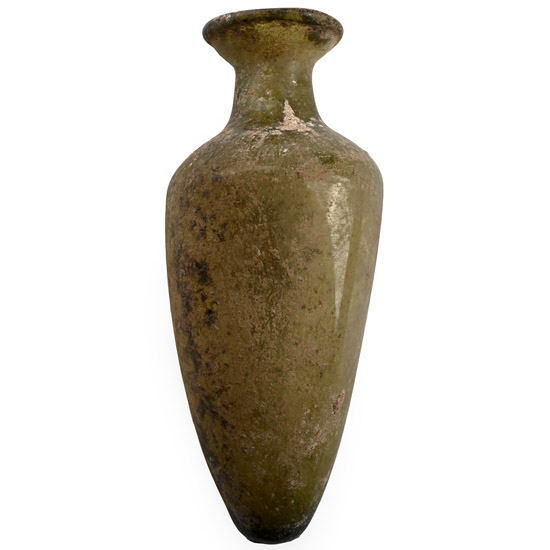
Large Roman Green Glass Amphora
Circa 3rd century A.D.Estimate: £150 - 200 (+bp*)
Opening Bid: £75
Piriform body with a narrow, rounded base, funicular neck with an inward-rolled rim. 60 grams, 16.5 cm
Roman glass from an important London collection, acquired from the early 1980s. -
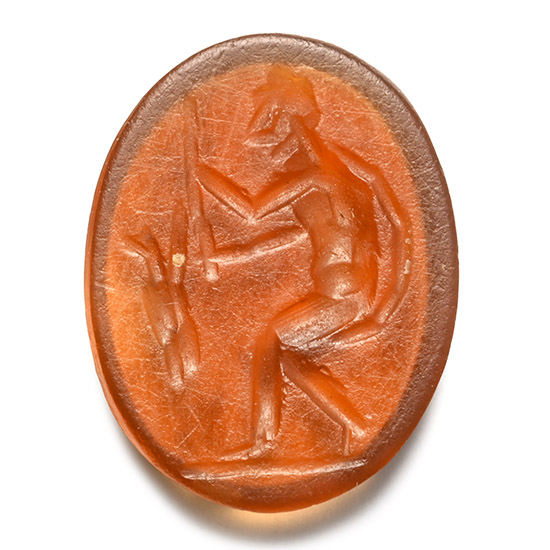
Roman Carnelian Gemstone with Fisherman
2nd-3rd century A.D.Estimate: £180 - 240 (‡+bp*)
Opening Bid: £90
Translucent oval intaglio with an engraved image of a crouching man on a baseline holding a stick with fish(?). 0.26 grams, 11 mm
Ex L. Hohl, Biel, Switzerland, circa 1960-1980. -
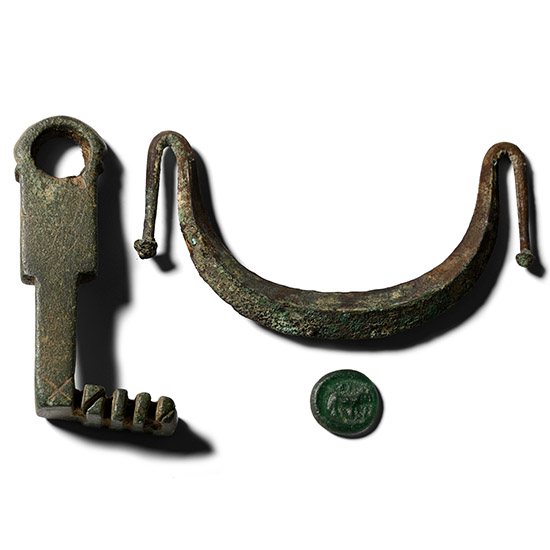
Roman Bronze Artefact Group
Circa 1st-4th century A.D.Estimate: £40 - 60 (+bp*)
Opening Bid: £5
Comprising: a key with a looped handle and a lozenge-section carrying handle with curved terminals. 52.44 grams total, 12-72 mm
From the private collection of Peter Clayton, FCILIP, Dip, Arch, FSA, FRNS, Hemel Hempstead, Hertfordshire, UK; formed since the late 1950s. -
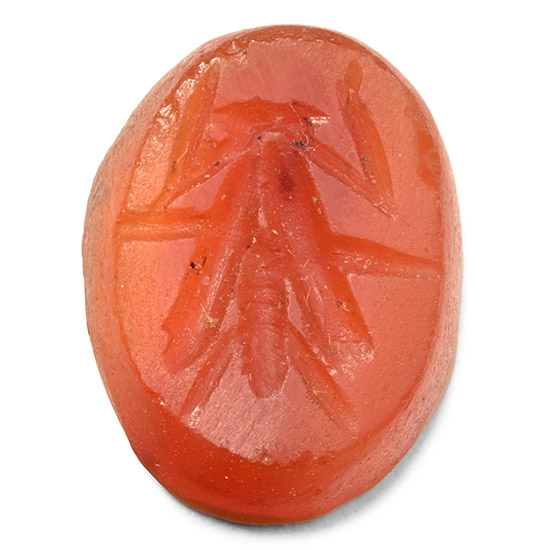
Roman Carnelian Gemstone with Fly
2nd-3rd century A.D.Estimate: £60 - 80 (+bp*)
Opening Bid: £5
Oval intaglio with a fly or another flying insect with detailed eyes and wings, and two pairs of legs. 0.50 grams, 11 mm
From the estate of a late collector, Woodbury, Connecticut, USA. From a private collection acquired in 2006. -
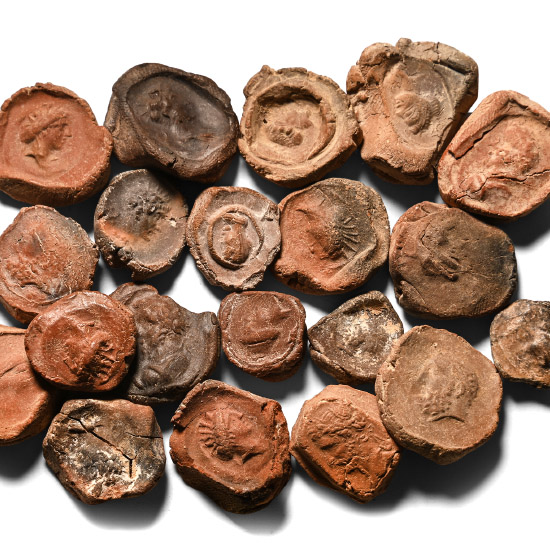
Roman Terracotta Bullae, Tesserae or Token Group
3rd century B.C.-1st century A.D.Estimate: £100 - 140 (+bp*)
Opening Bid: £5
A mixed group of ceramic bullae, tesserae or theatre tokens bearing low-relief motifs, mainly consisting of profile busts of deities. 34.2 grams total, 15-23 mm
From the private collection of a European gentleman (1942-2024), formed since the 1970s.
The term 'tessera' was used in Roman times to convey the Greek term σύμβολον (token). Small tiles are known as tokens, often shaped like coins, made of metal (copper, lead, iron), clay, bone, wood, or glass, stamped as well as engraved. The tokens, however, are not exclusively coin-shaped, as the Latin term 'tessera' suggests by etymologically referring to a square or at least a four-sided shape and confirmed in several cases by material remains of the past. Tokens and tesserae seem to have been used both in Athens and Rome for the distribution of goods. According to written sources, the term token is identified with credentials of the official authorities. They have also been interpreted as tokens of identity, as entrance tickets to theatre performances, tribunals or assemblies of citizens, archival material of seal engraving, as pawns in games, Charon’s obols and even as amulets. -
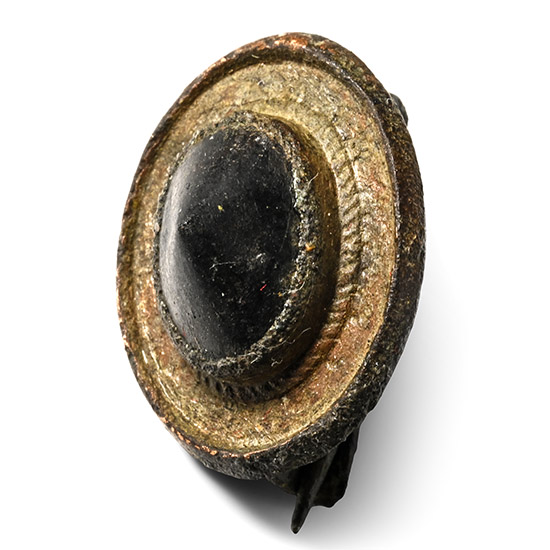
Roman Gilt Bronze Brooch with Conical Gem
Circa 2nd-4th century A.D.Estimate: £80 - 100 (+bp*)
Bids: 1 | Current Bid: £5
An oval brooch with raised rim and bezel with inserted conical black stone, pin and catchplate to the reverse. 7.04 grams, 23.1 mm
Acquired on the UK art market in the 1980s. From an East Anglian private collection. -
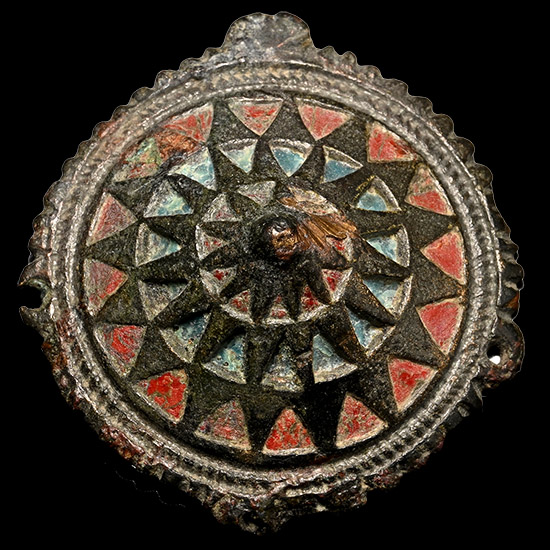
Roman Enamelled Bronze Umbonate Brooch
2nd century A.D.Estimate: £200 - 300 (+bp*)
Bids: 2 | Current Bid: £15
With domed body and central boss, lateral lugs to rim (two pierced); surface divided into cloisonné cells to accept enamel ornament; remains of catch to reverse. 24.13 grams, 39 mm
Acquired in the 1980s. Property of a Middlesex gentleman. -
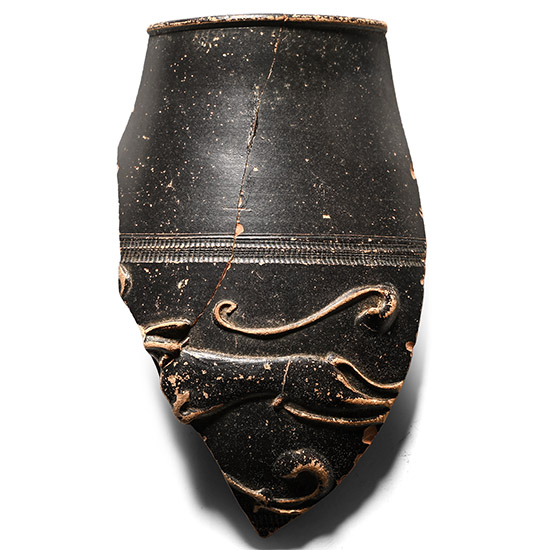
Roman Redware Vase Section with Raised Running Hound
3rd-4th century A.D.Estimate: £40 - 60 (+bp*)
Bids: 2 | Current Bid: £5
Vase fragment with everted rim and bands of rouletting, low-relief leaping hound between scrolled tendrils. 27.56 grams, 11.1 cm
Found Colchester, UK, in the late 1950s. From the private collection of Peter Clayton, FCILIP, Dip, Arch, FSA, FRNS, Hemel Hempstead, Hertfordshire, UK; formed since the late 1950s. -
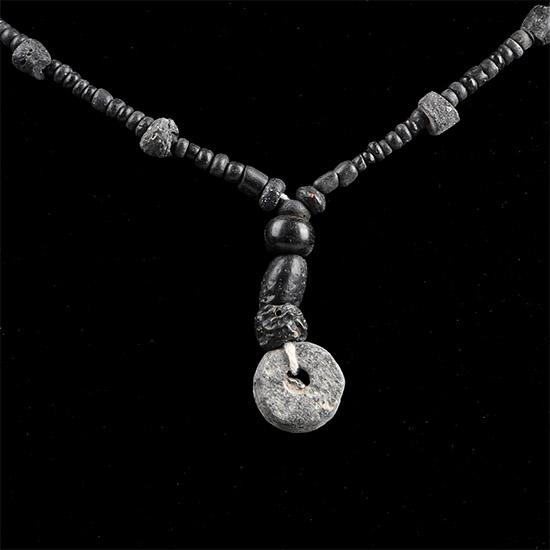
Roman and Other Black Glass Bead Necklace String
1st-4th century A.D. and laterEstimate: £50 - 70 (+bp*)
Opening Bid: £5
Composed of oblate, annular, barrel-shaped, and other beads with a discoid pendant bead, restrung. 9.75 grams, 33 cm
Ex London, UK, collection, 1990s.
