-
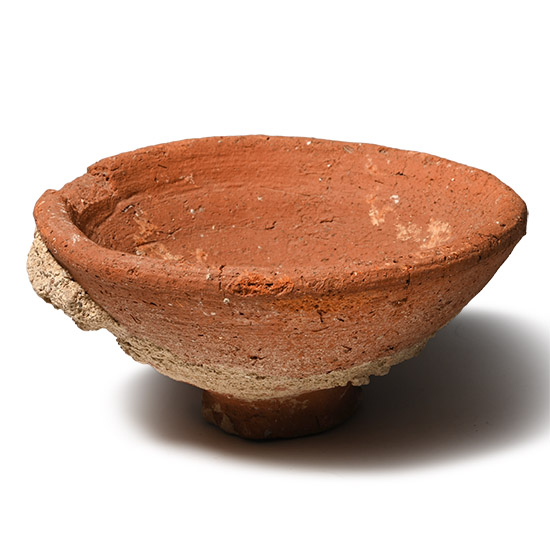
Roman Footed Pottery Bowl
1st-4th century A.D.Estimate: £30 - 40 (+bp*)
Opening Bid: £5
Conical in profile with rounded rim and small foot; marine accretion to outer face. 247 grams, 11.8 cm
Found at Blue House Hill, St Albans, 1955-1956. From the private collection of Peter Clayton, FCILIP, Dip, Arch, FSA, FRNS, Hemel Hempstead, Hertfordshire, UK; formed since the late 1950s. -
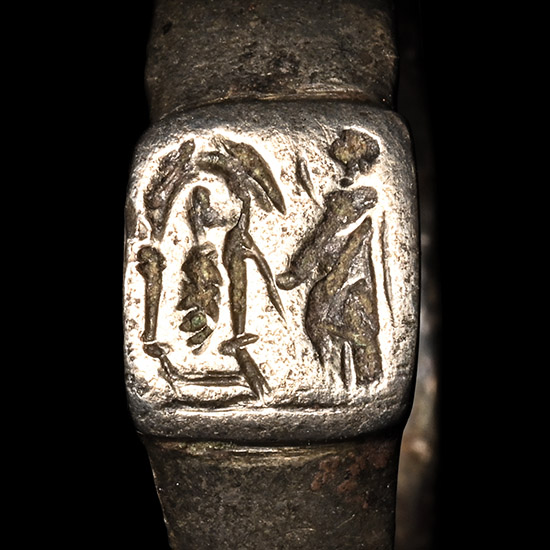
Roman Silver Ring with Priest in Temple
Circa 3rd century A.D.Estimate: £150 - 200 (‡+bp*)
Opening Bid: £75
Plain hoop with raised bezel, incuse image of a figure within an arch on steps and robed priest or supplicant to the side. 3.26 grams, 20.64 mm overall, 18.22 x 17.03 mm internal diameter (approximate size British P, USA 7 1/2, Europe 16.23, Japan 15)
Private collection of Kal Noselson, New York, acquired between 1976 and the late 1990s; thence by descent. -
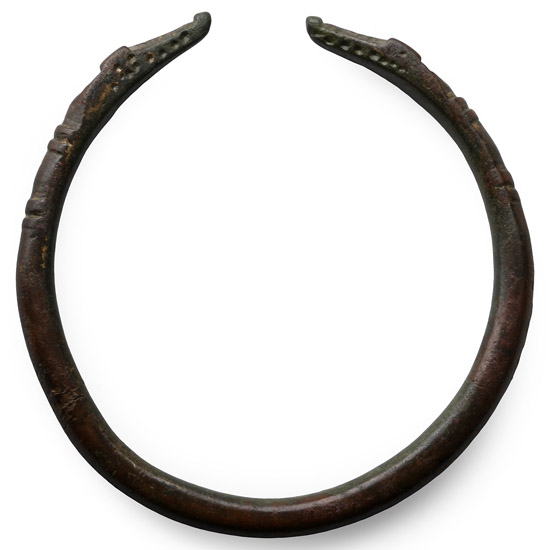
Roman Bronze Bracelet with Beast Head Terminals
Circa 4th-5th century A.D.Estimate: £60 - 80 (+bp*)
Bids: 1 | Current Bid: £5
Penannular, round-section bronze bracelet featuring dragon head terminals with punched dot decoration. 23.6 grams, 61 mm
Ex German art market, 2000s. Acquired from an EU collector living in London. From the collection of a Surrey, UK, gentleman. -
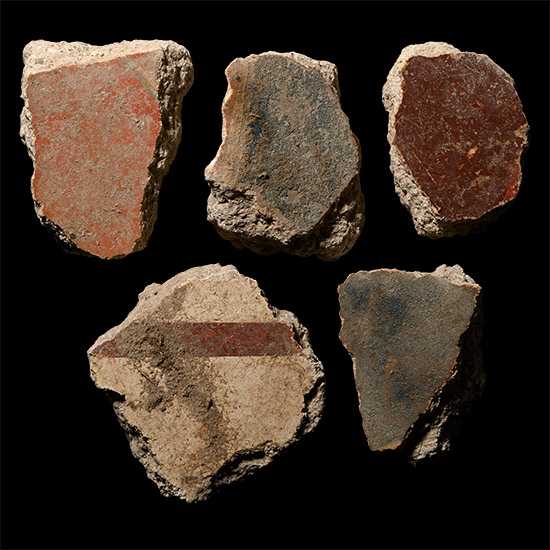
Roman Fresco Wall Plaster Collection
1st century A.D.Estimate: £50 - 70 (+bp*)
Opening Bid: £5
Fragments of wall plaster with rendered surface painted with mainly Pompeii red, pale blue, brown and white detailing; some with an impression of timber laths to the reverse. 1.03 kg total, 9-10.5 cm
Acquired in the 19th century. Ex Jeger collection, Switzerland. UK gallery, early 2000s.
These small fragments, by analogy with the fragments of Pompeii, seem to belong to the second style of Roman painting - red panels representing highlight and shadow, decorated with vegetal interlaces. A red grenade fillet probably framed some panels. A fragment shows alternate blue and red colours over a cream background, maybe pertinent to a socle. -
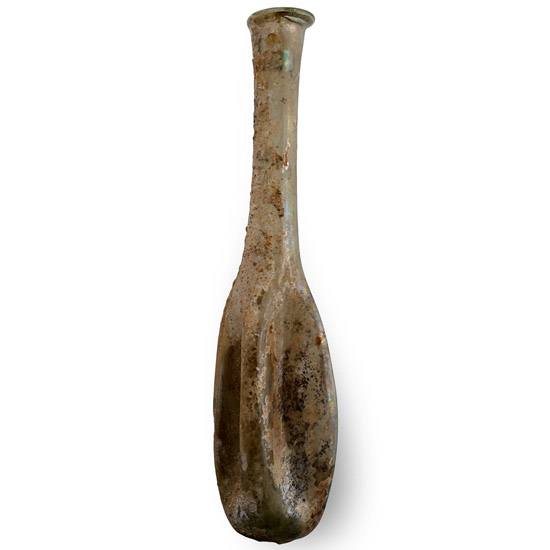
Roman Tall Pinched Glass Ungentarium
Circa 1st-2nd century A.D.Estimate: £80 - 100 (+bp*)
Opening Bid: £5
With slender tubular neck and rolled rim, ovoid body pinched to form a ribbed cross-section, rounded foot. 17.93 grams, 13.3 cm
From the collection of Dr Gerhard Muller-Afers, Speyer; thence by family descent. Private collection, Europe, acquired from the above. -
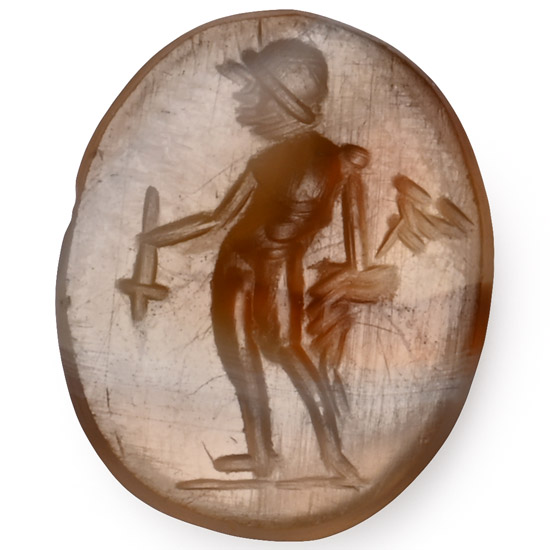
Roman Banded Agate Gemstone with Mercury
2nd-1st century B.C.Estimate: £200 - 300 (+bp*)
Bids: 2 | Current Bid: £15
Ellipsoid type with intaglio figure of Mercury standing on a baseline holding the caduceus; chipped; supplied with an impression. 0.54 grams, 11 mm
From the private collection of a European gentleman (1942-2024), formed since the 1970s. -
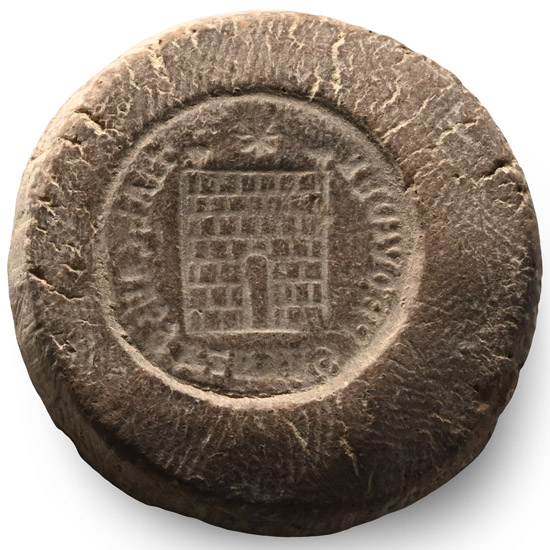
Roman Terracotta Forger's Coin Mould
Circa 3rd-4th century A.D.Estimate: £50 - 70 (+bp*)
Bids: 3 | Current Bid: £25
Discoid clay mould with an impressed design of a campgate on each face. 5.13 grams, 28 mm
London gentleman's collection, 1970-1990s, by descent. -
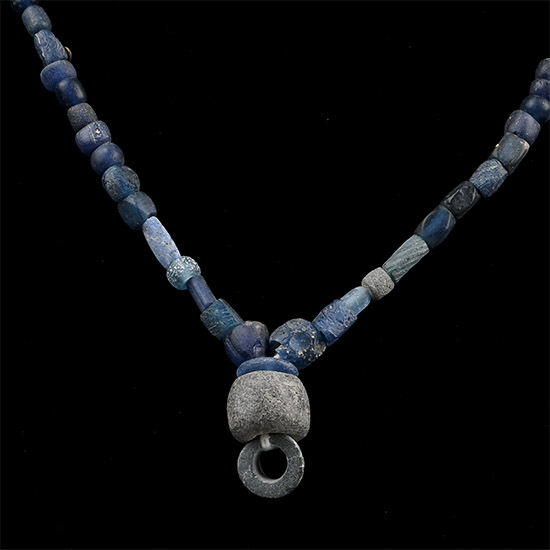
Roman and Other Dark Blue Glass Bead Necklace String
1st-4th century A.D. and laterEstimate: £50 - 70 (+bp*)
Opening Bid: £5
Composed of graduated oblate, annular, and other beads with larger beads as a central feature, restrung. 25 grams, 42 cm
Ex London, UK, collection, 1990s. -
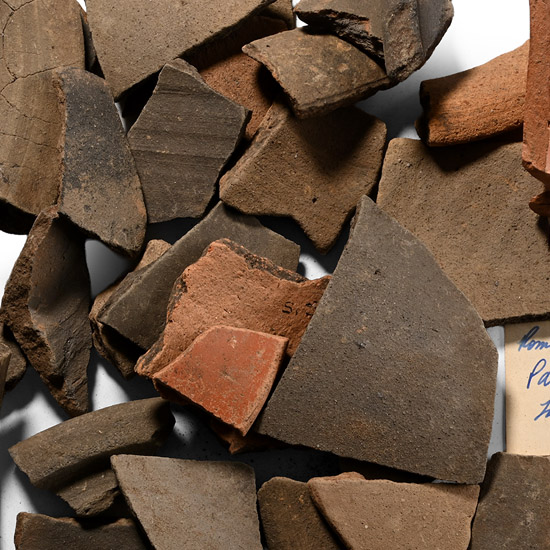
'Colchester' Roman Pottery Fragment Group
3rd-4th century A.D.Estimate: £20 - 30 (+bp*)
Opening Bid: £5
Mixed group of vessel and other fragments, including a large fragment from a footed conical bowl. 369 grams total, 2.4-10.1 cm
Found at Kiln Site, Park Road, Colchester, UK, in 1955. From the private collection of Peter Clayton, FCILIP, Dip, Arch, FSA, FRNS, Hemel Hempstead, Hertfordshire, UK; formed since the late 1950s. -
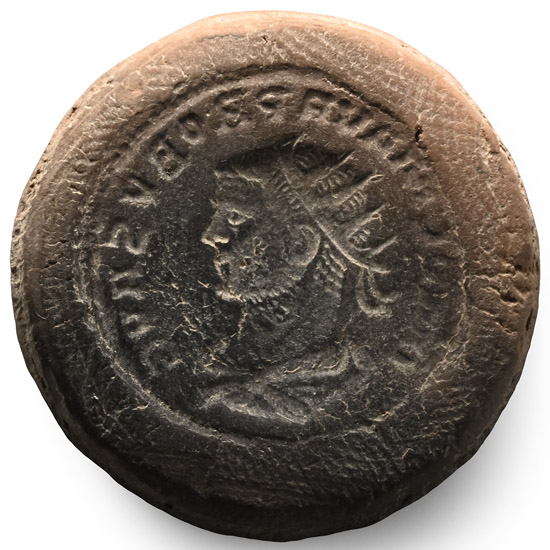
Roman Terracotta Coin Forger's Mould
Circa 3rd-4th century A.D.Estimate: £50 - 70 (+bp*)
Bids: 2 | Current Bid: £12
Discoid clay mould with an impressed design of a coin on each face. 3.63 grams, 27 mm
London gentleman's collection, 1970-1990s, by descent. -
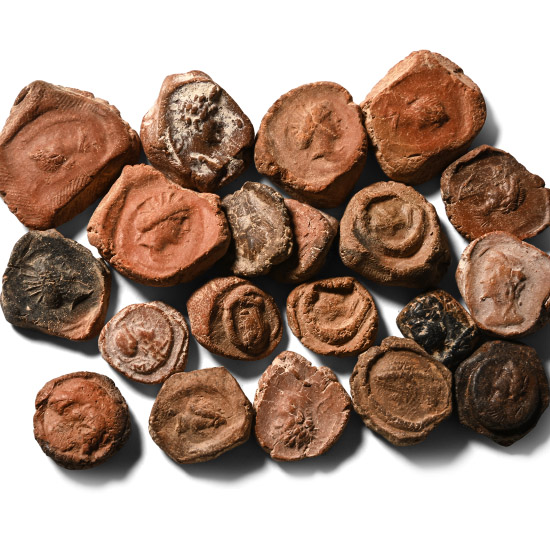
Roman Terracotta Bullae, Tesserae or Token Group
1st century B.C.-3rd century A.D.Estimate: £100 - 140 (+bp*)
Opening Bid: £5
A mixed group of ceramic bullae, tesserae or theatre tokens bearing low-relief motifs, mainly consisting of profile busts of deities. 26.6 grams total, 11-22 mm
From the private collection of a European gentleman (1942-2024), formed since the 1970s.
The term 'tessera' was used in Roman times to convey the Greek term σύμβολον (token). Small tiles are known as tokens, often shaped like coins, made of metal (copper, lead, iron), clay, bone, wood, or glass, stamped as well as engraved. The tokens, however, are not exclusively coin-shaped, as the Latin term 'tessera' suggests by etymologically referring to a square or at least a four-sided shape and confirmed in several cases by material remains of the past. Tokens and tesserae seem to have been used both in Athens and Rome for the distribution of goods. According to written sources, the term token is identified with credentials of the official authorities. They have also been interpreted as tokens of identity, as entrance tickets to theatre performances, tribunals or assemblies of citizens, archival material of seal engraving, as pawns in games, Charon’s obols and even as amulets. -
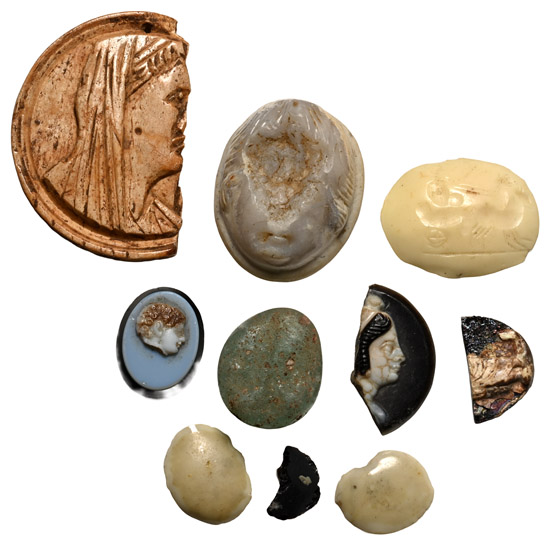
Roman Stone and Other Gem Collection
2nd-3rd century A.D. or laterEstimate: £80 - 100 (+bp*)
Opening Bid: £5
Including disc, ellipsoid and other types in bone, glass, shell and other materials. 9.03 grams total, 8-29 mm
From the private collection of a European gentleman (1942-2024), formed since the 1970s.

