
Ancient Art, Antiquities, Books, Natural History, Stamps & Coins

-
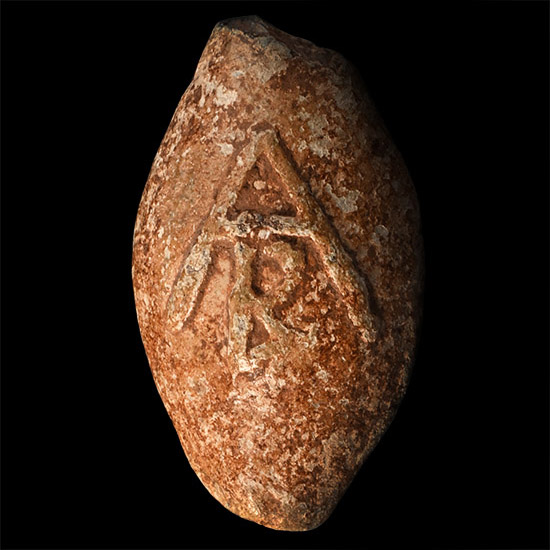
Greek Lead Slingshot of Alexander the Great, The Invincible
336-323 B.C.Estimate: £200 - 300 (+bp*)
Bids: 4 | Current Bid: £180
Biconical in profile with reserved monogram 'AB' for ΑΛΕΞΑΝΔΡΟΥ ΒΑΣΙΛΕΩΣ' (Αlexandrou Basileos) to the obverse and a laurel wreath to the reverse. 26.4 grams, 29 mm
Previously property of an Austrian collector, Vienna, Austria. From a German private collection, formed since the 1980s.
In the case of Alexander III, who never lost a battle, the laurel wreath began to be an important attribute already during his lifetime. This is best illustrated on coins, cf. a gold stater struck c. 330/325-320 (NAC auction 169, lot 74): Nike stands in the centre on the reverse holding a laurel wreath, with the name of Alexander behind the goddess on the right. -
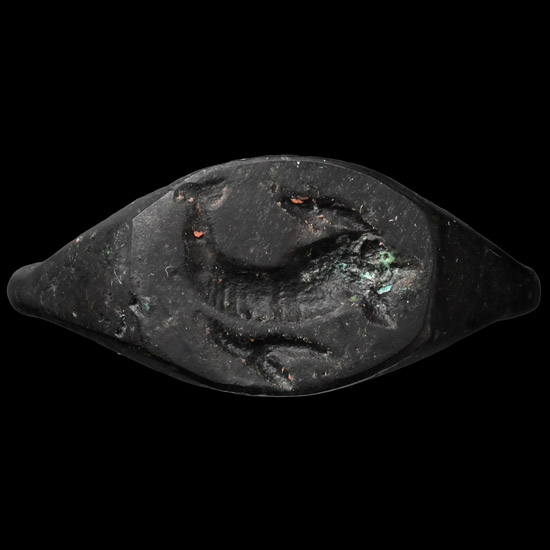
Greek Bronze Ring with Dolphin
Hellenistic, 2nd-1st century B.C.Estimate: £120 - 170 (+bp*)
Opening Bid: £60
D-section hoop with expanding shoulders, oval bezel with a swimming dolphin in profile. 4.18 grams, 23.74 mm overall, 19.72 mm internal diameter (approximate size British S 1/2, USA 9 1/4, Europe 20.63, Japan 19)
Ex German art market, 2000s. Acquired from an EU collector living in London. From the collection of a Surrey, UK, gentleman. -
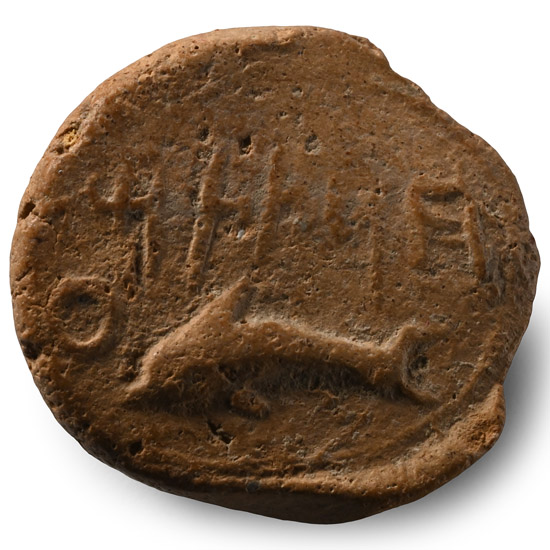
Phoenician Terracotta Bulla with a Dolphin
5th century B.C.Estimate: £100 - 140 (‡+bp*)
Opening Bid: £50
Plano-convex in profile with impressed dolphin and legend. 1.05 grams, 17.71 mm
Acquired in 1994. Private collection, Switzerland, thence by descent. Private collection, since the late 1990s.
This Phoenician terracotta bulla, decorated with a dolphin, reflects the strong maritime identity of the Phoenician world. Bullae were typically used to seal documents or goods, serving both a practical and symbolic function in trade and administration. The dolphin, a creature closely associated with the sea, would have held particular meaning for the Phoenicians, whose culture and prosperity were deeply tied to seafaring and commerce across the Mediterranean. Often seen as a symbol of protection, guidance, and safe passage, the dolphin adds an additional layer of meaning to the object, suggesting not only its use in everyday transactions but also a connection to the wider beliefs and environment of the ancient coastal world. -
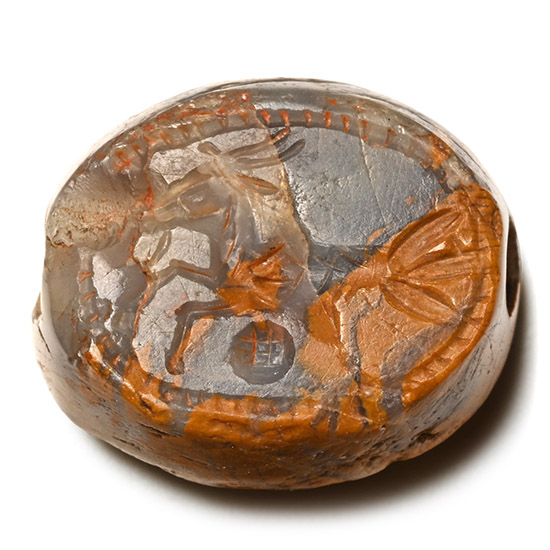
Graeco-Roman Variegated Agate Gemstone with Capricorn
1st century B.C.Estimate: £300 - 400 (+bp*)
Bids: 2 | Current Bid: £10
Scaraboid type with intaglio capricorn advancing within a border; chipped; supplied with a museum-quality impression. 2 grams, 14 mm
From the private collection of a European gentleman (1942-2024), formed since the 1970s. -
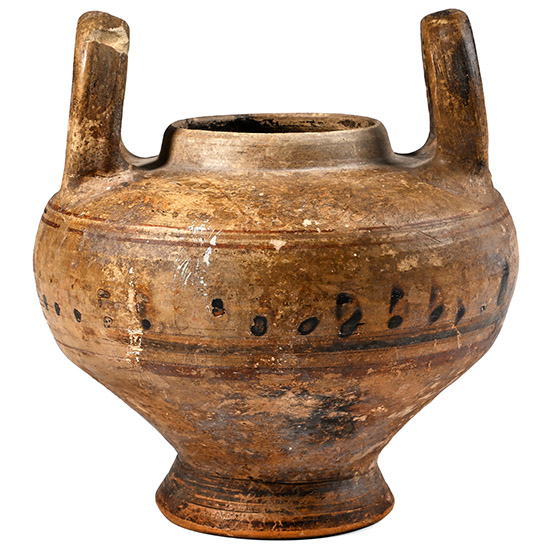
Greek Lebes Gamikos Vessel
Corinthian, 4th century B.C.Estimate: £100 - 140 (+bp*)
Bids: 2 | Current Bid: £15
Comprising a conical body with flared foot, broad shoulder and low raised rim to the mouth; two lateral loop handles to the shoulder; circumferential red and black painted bands to the equator enclosing a band of vertical black strokes; repaired. 530 grams, 16 cm high
Acquired by the vendor's father in London, circa 1960. Acquired Cheffins Auctions, UK. -
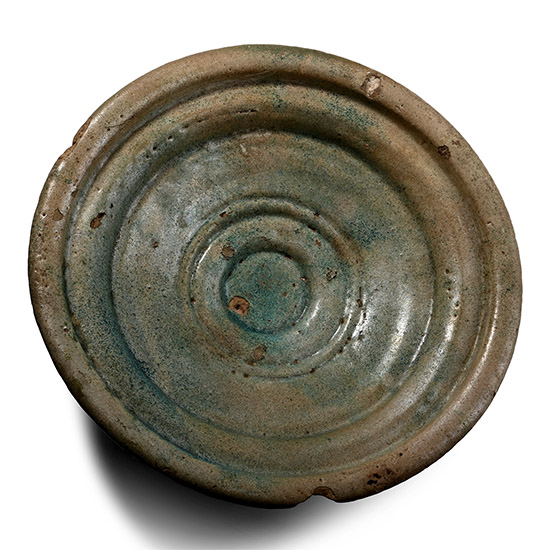
Large Parthian Blue Glazed Plate
1st century B.C.-1st century A.D.Estimate: £800 - 1,000 (+bp*)
Opening Bid: £400
With a shallow conical bowl on a basal ring, concentric raised circles to the inner side, fine glaze and minor chips to the rim. 705 grams, 23.2 cm wide
Ex London, UK gallery, 1971-early 2000s. Private collection, London, UK. -
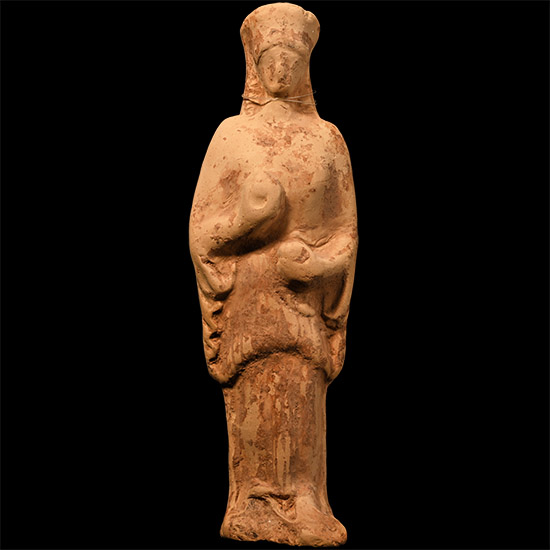
Greek Figure of Hera
Corinthian, late 6th century B.C.Estimate: £100 - 140 (+bp*)
Bids: 2 | Current Bid: £15
Moulded in the half-round standing wearing a tall headdress, draped mantle and ankle-length robe; holding an apple in each hand. 43.3 grams, 10.9 cm
Acquired from John L.Homan, Lincolnshire, UK, 1992. Accompanied by a copy of the original receipt dated 2nd March 1992.
In Greek mythology, Hera owned golden apples which were a wedding gift from Gaia. They grew in a sacred orchard at the western edge of the world, the 'Garden of the Hesperides'. -
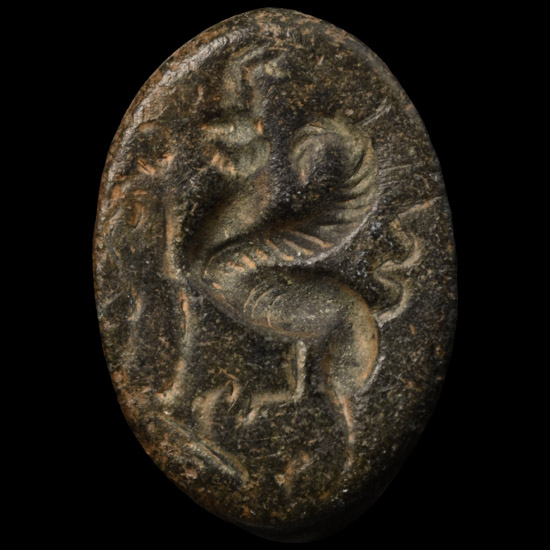
Large Greek Bronze Ring Bezel with Gryphon
6th-4th century B.C.Estimate: £40 - 60 (+bp*)
Bids: 4 | Current Bid: £25
Ellipsoid in plan with incuse three-headed gryphon in profile. 5.76 grams, 22 mm
From the private collection of a European gentleman (1942-2024), formed since the 1970s. -
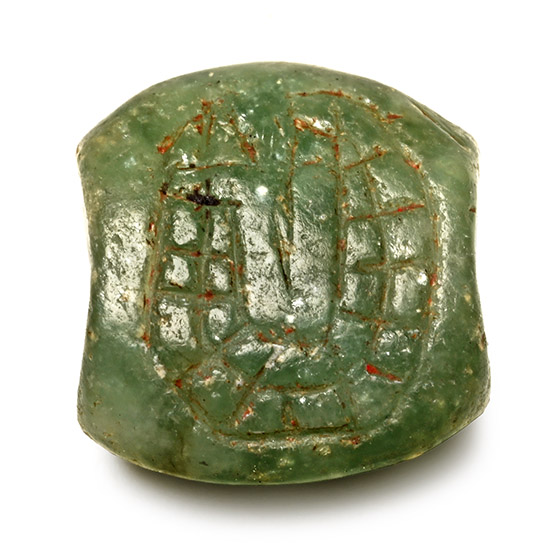
Post Minoan Bifacial Green Stone Stamp Seal with Segmented Snake
Early 1st millennium B.C.Estimate: £400 - 600 (+bp*)
Opening Bid: £5
Lentoid in section with reticulated arch to one face, sitting figure to the other; supplied with a museum-quality impression. 1.61 grams, 12 mm
From the private collection of a European gentleman (1942-2024), formed since the 1970s. -
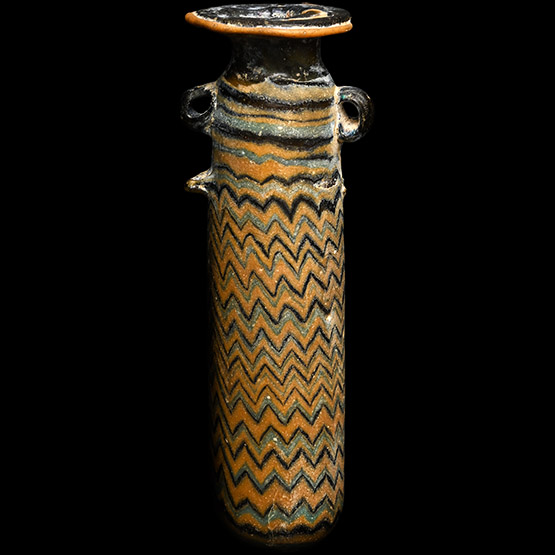
Greek Core-Formed Tall Glass Alabastron
6th-5th century B.C.Estimate: £3,500 - 4,500 (‡+bp*)
Opening Bid: £1,750
With a fusiform body, slender neck and broad flange rim, decorated with marvered feathering and spiralling trails; two lateral loop handles and a pinched lateral lug. 36.69 grams, 91 mm
Anonymous sale, Binoche & Giquello, Paris, 30th May 2012, no.124. Private collection, Switzerland. Accompanied by a copy of French passport no.0150269. This lot has been checked against the Interpol Database of stolen works of art and is accompanied by search certificate number no.13188-249220.
Alabastra of this typology, core-formed, trail-decorated and tooled, are typical of the Eastern Mediterranean. They were diminutive examples of a shape popularly produced for perfumed oils in the Greek world. Larger forms are known in both glass and ceramics. -
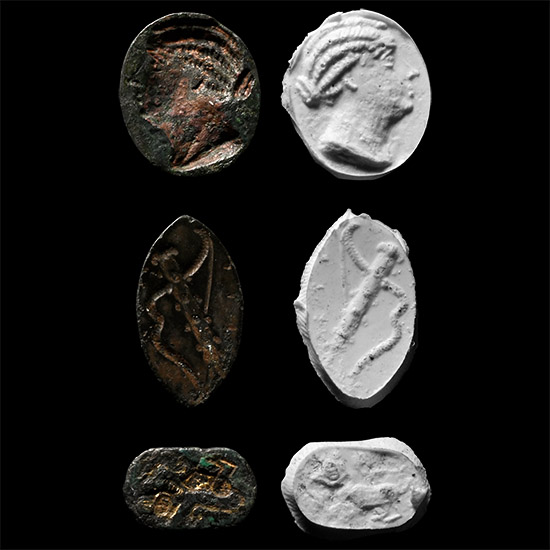
Greek Bronze Ring Bezel and Intaglio Group
Circa 2nd-1st century B.C.Estimate: £80 - 100 (+bp*)
Bids: 1 | Current Bid: £5
Comprising: scaphoid type with bow and quiver; discoid type with profile bust; rectangular type with advancing beast; each supplied with an impression. 8.41 grams total, 16-24 mm
From the private collection of a European gentleman (1942-2024), formed since the 1970s. -
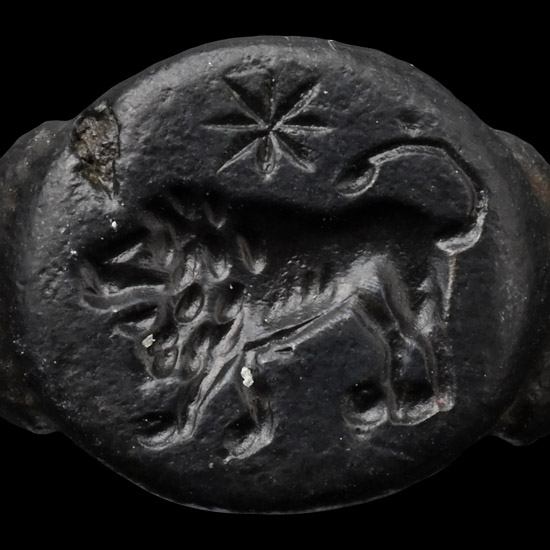
Greek Bronze Ring with Lion
5th-4th century B.C.Estimate: £200 - 300 (+bp*)
Bids: 2 | Current Bid: £180
Flat-section hoop with expanding shoulders and discoid bezel depicting a lion standing in profile with a star above. 5.98 grams, 22.80 mm overall, 19.14 x 18.86 mm internal diameter (approximate size British R 1/2, USA 8 3/4, Europe 19.38, Japan 18)
Ex German art market, 2000s. Acquired from an EU collector living in London. From the collection of a Surrey, UK, gentleman.
