
Ancient Art, Antiquities, Books, Natural History, Stamps & Coins

-
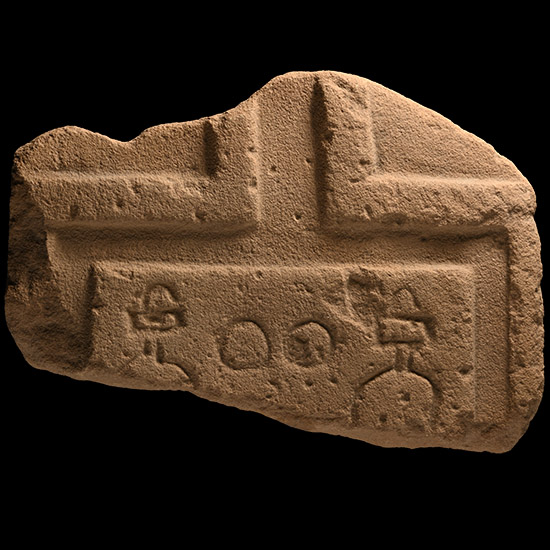
Egyptian Sandstone Offering Table Fragment
Late Period-Ptolemaic Period, 664-30 B.C.Estimate: £300 - 400 (+bp*)
Bids: 1 | Current Bid: £5
Fragment of a rectangular offering table with incised drainage channels forming a segmented surface, creating a spout at the top end and feeding channels around a central raised panel, bearing incised depictions of two circular loaves flanked by beer jugs; the underside dressed. 1.62 kg, 21.5 cm
Acquired in April 1963. From the private collection of Peter Clayton, FCILIP, Dip, Arch, FSA, FRNS, Hemel Hempstead, Hertfordshire, UK; formed since the late 1950s. Accompanied by an old handwritten identification card written by Peter Clayton.
Offering tables shaped like the hieroglyphic sign for a mat with a loaf of bread, meaning “offering,” were common throughout much of dynastic history and were essential to the funerary cult. They were usually placed near the deceased's tomb, in an offering niche or chapel. If the cult ceased to function, the carved images of food and drink on the table served as magical substitutes, ensuring the continued sustenance and survival of the deceased's ka, or spirit. -
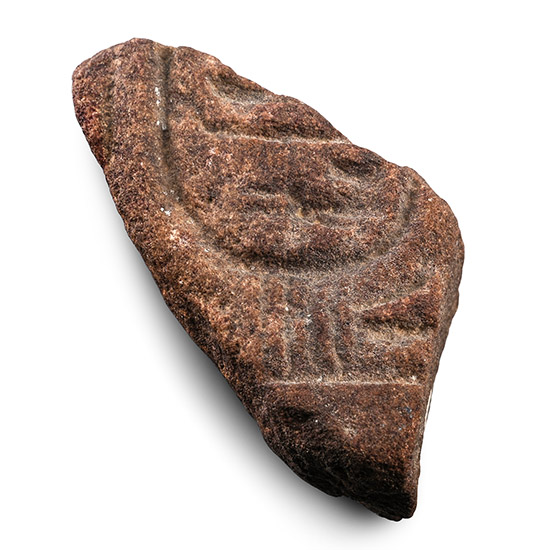
Egyptian Red Quartzite Granite Hieroglyphic Fragment with Remains of a Cartouche
New Kingdom, 18th Dynasty, Amarna Period, 1379-1362 B.C.Estimate: £60 - 80 (+bp*)
Opening Bid: £5
Dressed stone fragment preserving the lower part of an incised cartouche. 102 grams, 67 mm
Acquired in February 1978. From the private collection of Peter Clayton, FCILIP, Dip, Arch, FSA, FRNS, Hemel Hempstead, Hertfordshire, UK; formed since the late 1950s. Accompanied by an old handwritten information card by Peter Clayton, collection no.139.
The cartouche appears to contain two narrow horizontal hieroglyphs and the lower part of a circle, suggesting it is the throne name of Akhenaten, Neferkheperure. -
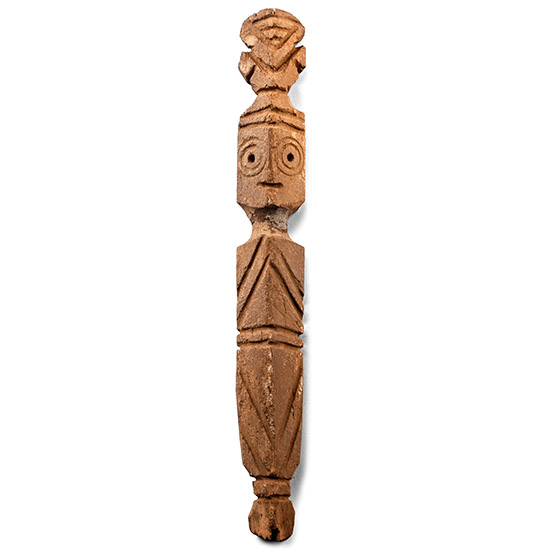
Egyptian Bone Doll
4th-6th century A.D.Estimate: £80 - 100 (+bp*)
Bids: 1 | Current Bid: £5
Highly stylised human figurine with cuts to indicate features. 9.03 grams, 11.6 cm
From the private collection of Peter Clayton, FCILIP, Dip, Arch, FSA, FRNS, Hemel Hempstead, Hertfordshire, UK; formed since the late 1950s. Accompanied by an old handwritten information slip by Peter Clayton. -
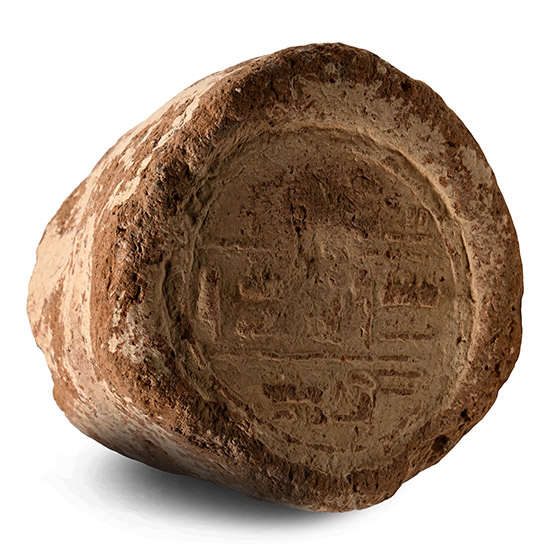
Egyptian Terracotta Funerary Cone of Amenhotep
New Kingdom, 18th Dynasty, 15th-14th century B.C.Estimate: £300 - 400 (+bp*)
Bids: 4 | Current Bid: £135
Conical, with three horizontal lines of hieroglyphic text to the end, reading: 'Scribe of reckoning barley of Amun, Amenhotep, true of voice'; tip absent. 350 grams, 78 mm wide
Acquired from Abdoul Rassoul on the West Bank at Luxor, 1974-1980 when a guest lecturer. From the private collection of Peter Clayton, FCILIP, Dip, Arch, FSA, FRNS, Hemel Hempstead, Hertfordshire, UK; formed since the late 1950s.
Although funerary cones of Amenhotep have been in circulation for a long time, his tomb was documented only in 1996 by Friederike Kampp-Seyfried, who assigned it the number 336. -
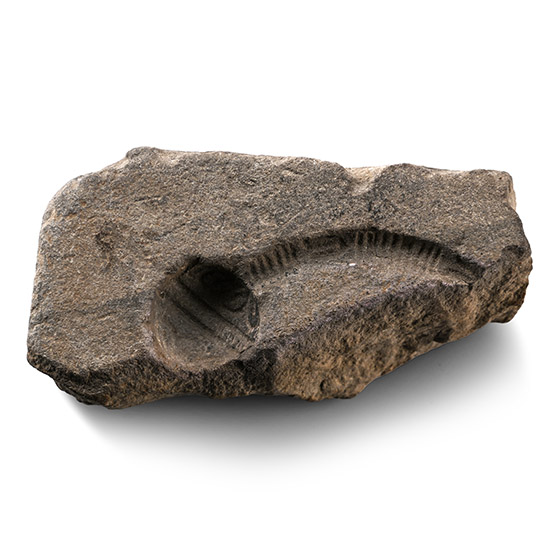
Egyptian Steatite Mould Fragment
New Kingdom, 18th Dynasty, Amarna Period, 1379-1362 B.C.Estimate: £80 - 100 (+bp*)
Opening Bid: £5
Irregular fragment with deep-cut design for an item of jewellery, ribbed shank ending in a sphere with rosette. 64 grams, 63 mm
Acquired in April 1980. From the private collection of Peter Clayton, FCILIP, Dip, Arch, FSA, FRNS, Hemel Hempstead, Hertfordshire, UK; formed since the late 1950s. Accompanied by an old handwritten information card by Peter Clayton, collection no.147. -
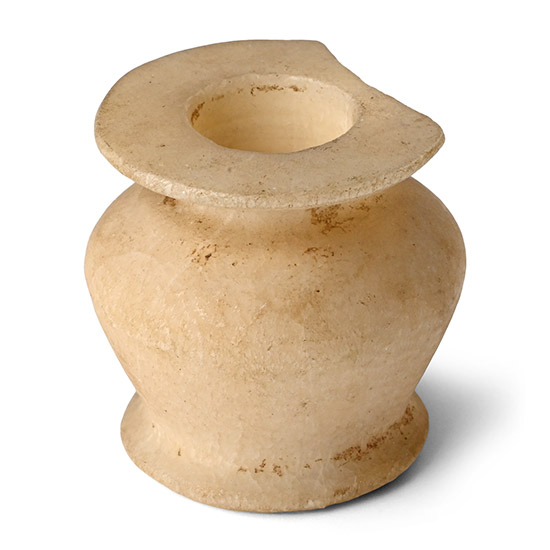
Egyptian Miniature Alabaster Vase
Middle Kingdom-Second Intermediate Period, circa 2000-1600 B.C.Estimate: £60 - 80 (+bp*)
Opening Bid: £5
With piriform body and flared rim; with an old collector's record card detailing place of purchase and other details. 32.1 grams, 30 mm wide
From the Puys-Aubert collection in Alexandria, acquired March 1963, for 10 shillings. From the private collection of Peter Clayton, FCILIP, Dip, Arch, FSA, FRNS, Hemel Hempstead, Hertfordshire, UK; formed since the late 1950s. Accompanied by an old handwritten information card by Peter Clayton, collection no.101. -
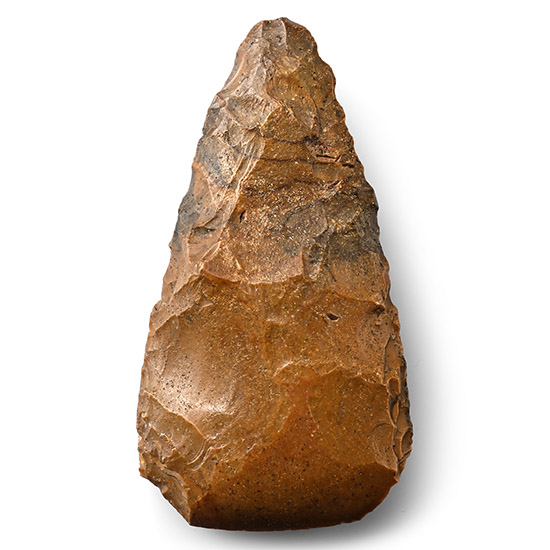
Egyptian Stone Age Polished Knapped Axehead
Neolithic Period, 11,000-5,200 B.P.Estimate: £100 - 140 (+bp*)
Bids: 3 | Current Bid: £15
Teardrop-shaped flint, featuring a classic, symmetrical lanceolate plan, tapering to a point at one end and a wider basal end. 58.3 grams, 86 mm
Found at Fayum North. From the collection of A.D. Passmore (1879-1958), his collection of flints from the area of Stonehenge was donated to the Ashmolean Museum in the 1950s. From the private collection of Peter Clayton, FCILIP, Dip, Arch, FSA, FRNS, Hemel Hempstead, Hertfordshire, UK; formed since the late 1950s. Accompanied by a copy of an old handwritten information card by Peter Clayton. -
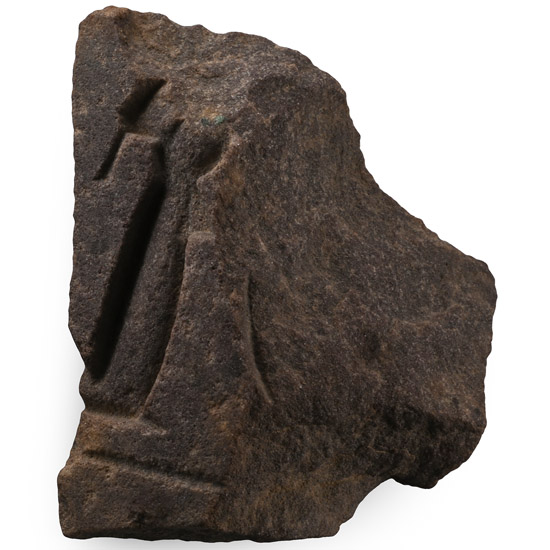
Egyptian Red Quartzite Granite Hieroglyphic Fragment
New Kingdom, 18th Dynasty, Amarna Period, 1353-1336 B.C.Estimate: £40 - 60 (+bp*)
Opening Bid: £5
Fragment featuring a single incised border line with the remains of a seated-figure hieroglyph above. 140 grams, 90 mm
Acquired circa February 1978. From the private collection of Peter Clayton, FCILIP, Dip, Arch, FSA, FRNS, Hemel Hempstead, Hertfordshire, UK; formed since the late 1950s. -
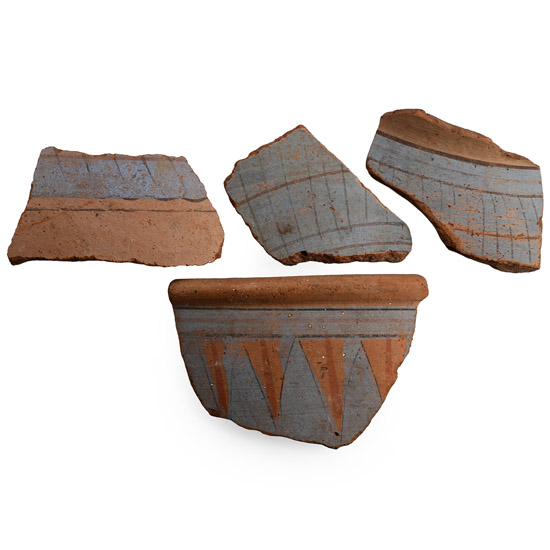
Large Egyptian Painted Bowl Fragments
New Kingdom, 18th Dynasty, Amarna Period, 1379-1362 B.C.Estimate: £80 - 100 (+bp*)
Bids: 1 | Current Bid: £5
Four highly decorated fragments, including one rim sherd. 175 grams total, 8.2-10.6 cm
Acquired circa 1979. From the private collection of Peter Clayton, FCILIP, Dip, Arch, FSA, FRNS, Hemel Hempstead, Hertfordshire, UK; formed since the late 1950s.
A wide variety of vessel forms with blue-painted decoration were found at Amarna, most featuring floral and geometric designs, while a smaller number bore figurative elements (The City of Akhenaten. Part I. Excavations of 1921 and 1922 at el-'Amarneh, London, 1923, pls. XLIV-XLV, for examples of blue-painted vessels and decorations). -
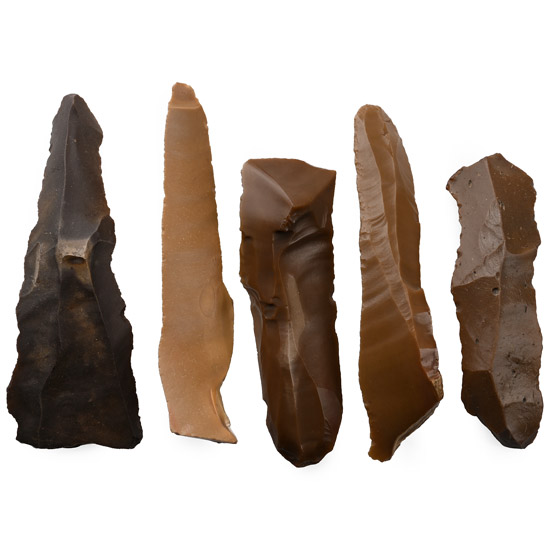
Egyptian Stone Age Knapped Knife Blade Group from Thebes
Neolithic Period, 11,000-5,200 B.P.Estimate: £60 - 80 (+bp*)
Bids: 1 | Current Bid: £5
Comprising five sender tongue-shaped in plan and triangular in section, each with an inked inscription reading 'W. Thebes 1912', 'West Themes 1912' or 'Thebes 1912'; with a handwritten label reading 'Scrapers on blades'. 81 grams total, 75-91 mm
Found Thebes, 1912 A.D. From the collection of A.D.Passmore (1879-1958), his collection of flints from the area of Stonehenge was donated to the Ashmolean Museum in the 1950s. From the private collection of Peter Clayton, FCILIP, Dip, Arch, FSA, FRNS, Hemel Hempstead, Hertfordshire, UK; formed since the late 1950s. Accompanied by a copy of an old handwritten information card by Peter Clayton. -
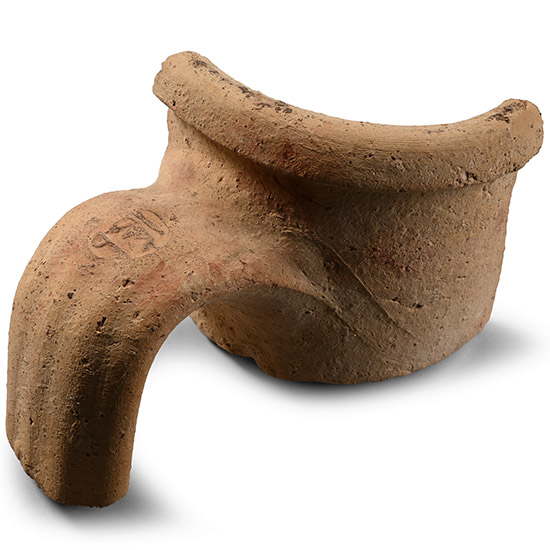
Romano-Egyptian Terracotta Amphora Handle with Stamp of Hermeros
Roman Period, 1st century A.D.Estimate: £50 - 70 (+bp*)
Bids: 1 | Current Bid: £5
Cream-coloured ceramic vessel fragment with rolled rim and ribbed strap handle; stamped at the apex with 'I EP' monogram, reading 'I EP[ΜΕΡΟΣ] = Hermeros. 272 grams, 14.2 cm
From the private collection of Peter Clayton, FCILIP, Dip, Arch, FSA, FRNS, Hemel Hempstead, Hertfordshire, UK; formed since the late 1950s.
The commercial stamp could report the name of an important Romano-Egyptian businessman, Hermeros, son of Athenion, attested at Koptos in A.D. 57. He describes himself as a merchant (εμπορος), originating from Adana (Arabia) and selling wine. -
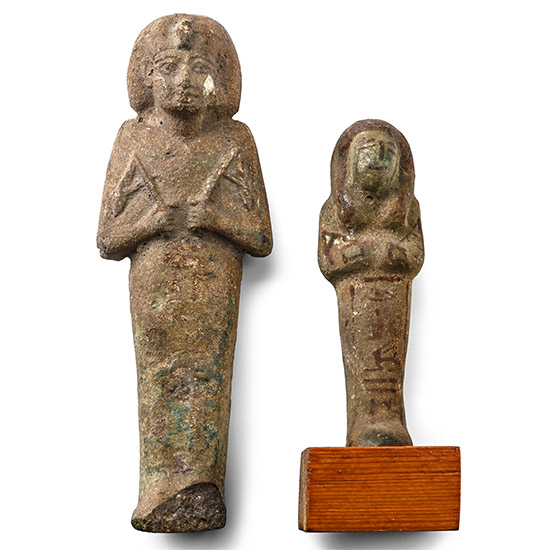
Egyptian Green Glazed Faience Ushabti of Karomama Meritmut
Third Intermediate Period, 22nd Dynasty, circa 900 B.C.Estimate: £500 - 700 (+bp*)
Bids: 13 | Current Bid: £110
Characteristic mummiform figure for the Divine Adoratrice Karomama Meritmut G, wearing a bag-like khat headcloth fronted by a uraeus, and a trailing flap at the back, with opposed hands each holding a hoe; faint traces of an inscription on the lower front are illegible; and another small blue-olive-green mummiform shabti of late New Kingdom date wearing a lappet wig with opposed (not crossed) hands holding agricultural implements, details in black; a partially preserved column of hieroglyphic text on the lower body, reading: 'The Osiris, Wenis...'; on a wooden display stand. 167 grams total, 10.9-13.7 cm
The smaller one acquired Caledonian Market, 16th March 1962 for 5 shillings. From the private collection of Peter Clayton, FCILIP, Dip, Arch, FSA, FRNS, Hemel Hempstead, Hertfordshire, UK; formed since the late 1950s. Accompanied by an old handwritten information card by Peter Clayton, collection no.94.
The tomb of Karomama Meritmut G was discovered in the 19th century within the mortuary temple complex of Ramesses II, known as the Ramesseum, at Thebes. She was buried with kilted overseer ushabtis and mummiform worker figurines such as this one. Although its inscription is illegible, other preserved examples (such as British Museum EA74324) suggest it almost certainly read: 'The Osiris, the Divine Adoratrice of Amun, Karomama, beloved of Mut'.
