
Ancient Art, Antiquities, Books, Natural History, Stamps & Coins

-
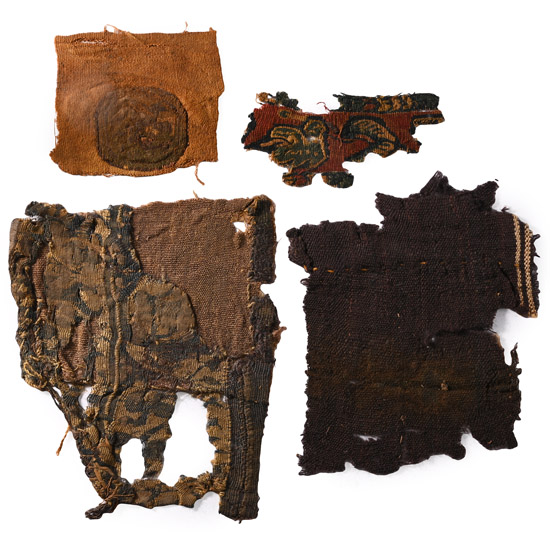
Egyptian Coptic Tunic Textile Fragments of Segmenta and Orbiculus with Geometric Decoration
Circa 4h-8th century A.D.Estimate: £60 - 80 (+bp*)
Opening Bid: £5
Comprising: a fragment of a tapestry or a fabric in brown linen; a small orbiculus, with vegetal decoration; fragment of a clavus, in red, yellow, green wool, s-torsion, with plant ornaments; a large fragment of cloak or tapestry, with slingers inside orbiculi, sewn edges and wide border with vegetal ornaments. 27 grams total, 9.8-19 cm
Acquired 1970s-1996. Property of a North American collector. London collection, 2016.
The fragments are decorative parts of tunics. These are fabrics of great decorative finesse, with some elements displaying an unusual and extremely well-preserved colour palette. Some designs recall Iranian motifs. -
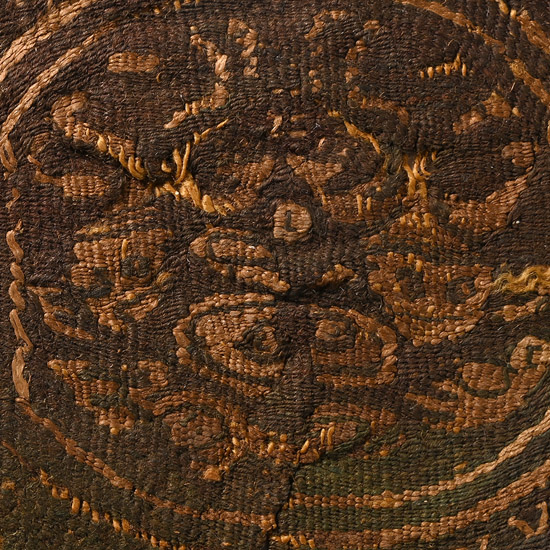
Egyptian Coptic Tunic Textile Fragment of an Orbiculus with Facing Military Horsemen
Circa 7th century A.D.Estimate: £70 - 90 (+bp*)
Bids: 1 | Current Bid: £5
Featuring a large central floral motif, divided into sections containing rhomboid patterns and bordered by meander designs, executed in a tapestry weave using raw wool in reddish-purple, yellow, and dark brown, with an S-twist. 4.15 grams, 10.7 cm
Acquired 1970s-1996. Property of a North American collector. London collection, 2016.
In the Late Roman Period, round orbiculi decorated the shoulders and the lower part of tunics and inner tunics. These fabrics were of great decorative finesse, displaying an unusual and extremely well-preserved colour palette. When the tunic came to the end of its life, these embroideries could be recycled and patched onto another garment. The motif of the opposed horsemen could be related to a military tunic. -
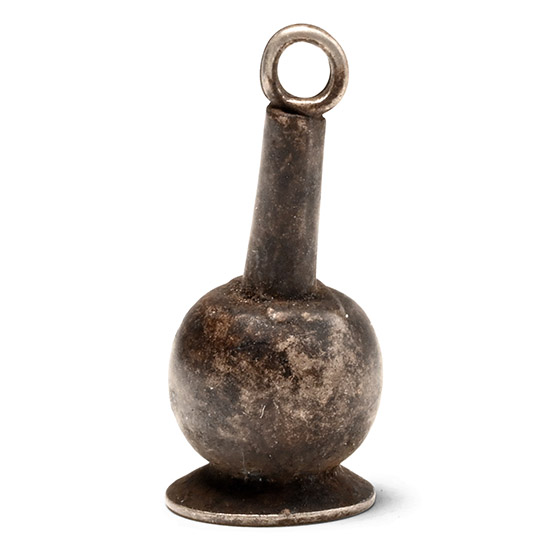
Egyptian Silver Poppy Amulet
Late Period, 664-332 B.C.Estimate: £50 - 70 (+bp*)
Bids: 1 | Current Bid: £5
Bulbous poppy-head with loop at the apex. 1.5 grams, 19 mm
Ex mid 19th century collection. -
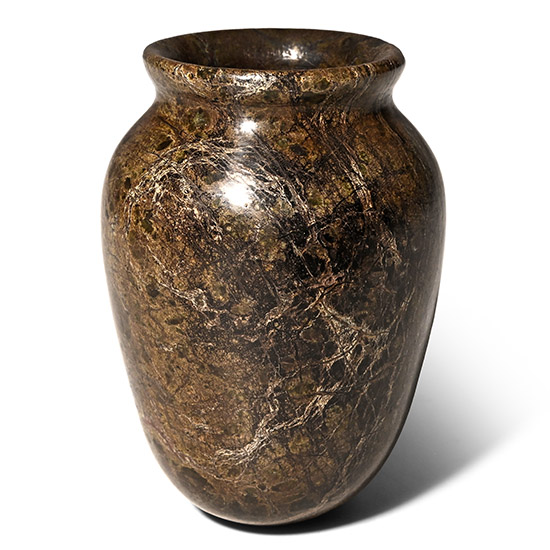
Egyptian Stone Round-Bottomed Kohl Jar
Naqada II-III Period, circa 3500-3000 B.C. or laterEstimate: £400 - 600 (+bp*)
Bids: 1 | Current Bid: £200
Ovoid in profile with flared rim to the mouth. 179 grams, 78 mm
Ex Belinda Elliston collection, a member of the Egyptian Exploration Society, 1940s onwards. -
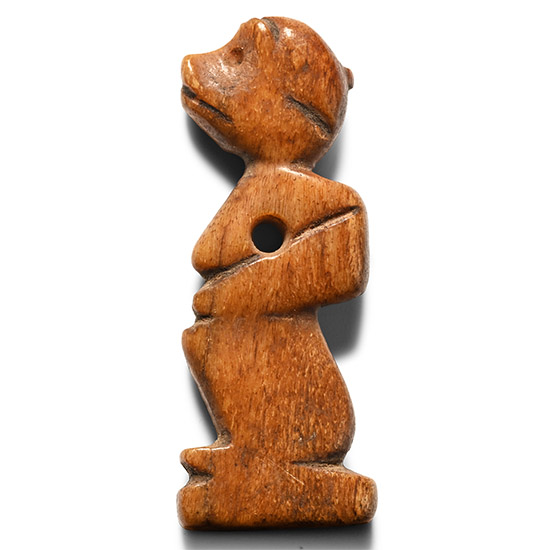
Egyptian Bone Monkey Amulet
New Kingdom, circa 1400-1292 B.C.Estimate: £120 - 170 (+bp*)
Bids: 2 | Current Bid: £15
Carved in profile as a kneeling monkey, pierced for suspension. 4.27 grams, 43 mm
London, UK, art market, 1980s. Private collection, London, UK. -
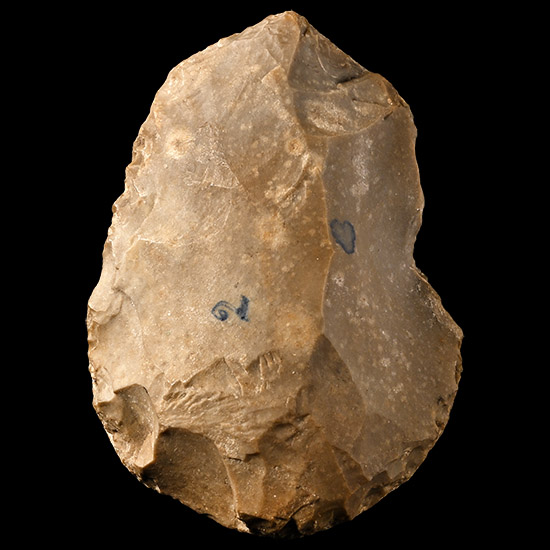
Fawcett Collection Egyptian Knapped Stone Axe with Fawcett Monogram
Neolithic Period, circa 6,000 B.P.Estimate: £60 - 80 (+bp*)
Opening Bid: £5
Ovate type with inked 'Egypt' legend beneath monogram, and '2' to obverse. 144 grams, 83 mm
Found Egypt. Ex Dr Hugh Alderson Fawcett (1891-1982), a general practitioner and antiquarian who built up an important collection of ancient implements, weapons and ornaments. The present part of the collection having been gifted to Haselmere Parish Priest, Charles Borelli (c.1914-2000) of Farnham; who was part of the Borelli family from Italy who emigrated from Lake Como in 1828 to set up the Borelli family watch and jewellery business; thence by family descent to his nephew. -
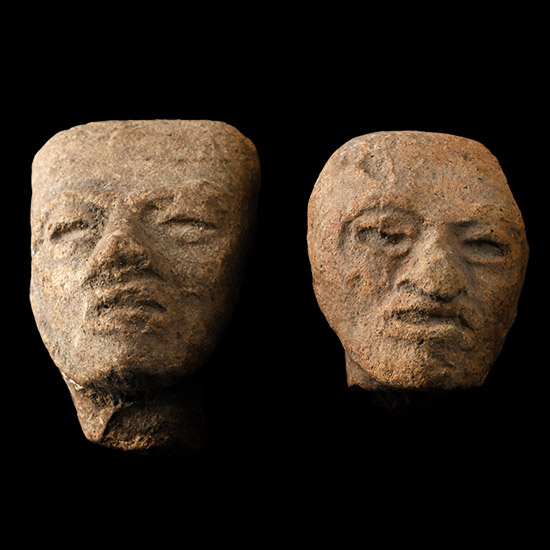
Phoenician Terracotta Head Group
Mid 1st millennium B.C.Estimate: £60 - 80 (+bp*)
Bids: 1 | Current Bid: £5
Comprising: head with moulded facial features, rectangular flange above the brow, stub neck; similar with domed brow. 20.7 grams total, 30-33 mm
From the private collection of a European gentleman (1942-2024), formed since the 1970s. -
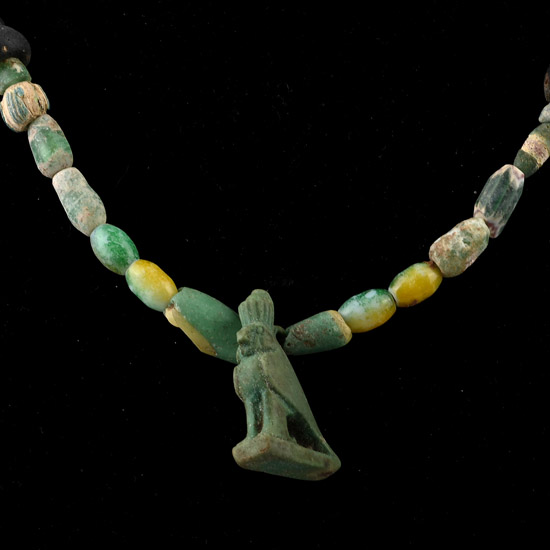
Egyptian Faience and Glass Bead Necklace String with Later Horus Amulet
Late Period-Roman Period, circa 664-323 A.D. and laterEstimate: £150 - 200 (+bp*)
Opening Bid: £75
Including melon, polyhedral, annular, and other bead types, with a crowned Horus falcon pendant; restrung. 43 grams, 38 cm
London gentleman's collection, 1970-1990s, by descent. -
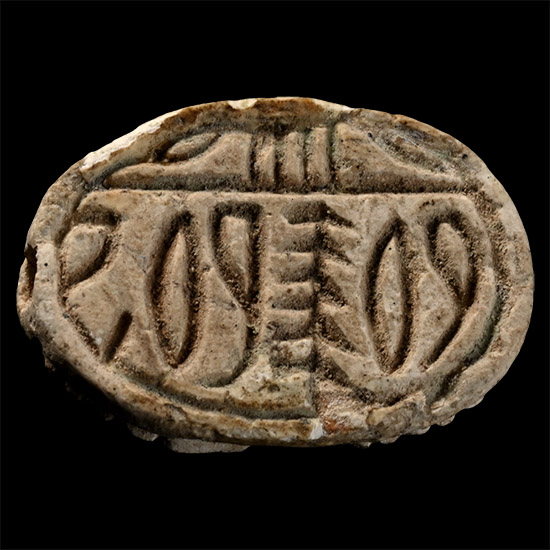
Egyptian Steatite Scarab with Hieroglyphs
Second Intermediate Period, circa 1782-1550 B.C.Estimate: £40 - 60 (+bp*)
Bids: 1 | Current Bid: £5
With incised anatomical detailing on the body, the underside bears the hieroglyphs rꜤ-n-rꜤ. 2.04 grams, 17 mm
Acquired from various London-based, UK, antiquity dealers. From a Derbyshire gentleman's private museum formed from the late 1970s-early 1980s. -
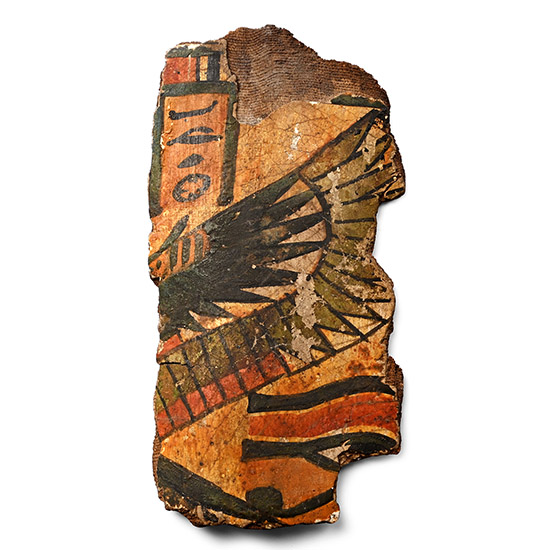
Egyptian Cartonnage Section with Eye and Wing
Third Intermediate Period, circa 1069-860 B.C.Estimate: £400 - 600 (+bp*)
Opening Bid: £150
Sub-rectangular in plan with irregular and fragmented edge; prepared plaster surface featuring a line-bordered column with four cursive hieroglyphs naming Behedet (bḥdt); a section of finely painted outstretched wing with feather detailing to lower edge in red and blue; below, a wedjat eye in black with red medial band; fabric back to reverse. 48 grams, 17 cm
Formerly from an old collection of a Wiltshire, UK, collector, acquired before 1980. Property of a private collector, West London, UK. This lot is accompanied by an illustrated lot declaration signed by the Head of the Antiquities Department, Dr Raffaele D'Amato.
This fragment most likely originates from the lower chest section of a so-called anthropoid 'yellow coffin' from the Third Intermediate Period. The wing belongs to a protective deity; as Behedet is a name given to several locations (Edfu, Tell el-Balamun, and Lepidotonpolis) associated with Horus, it seems probable that the wing belongs to the falcon form of this god. -
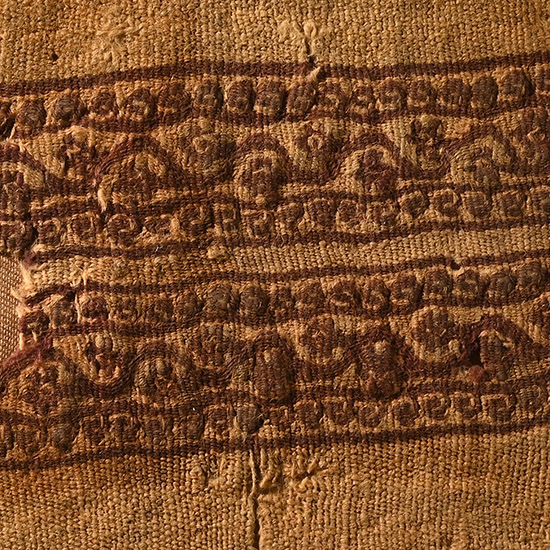
Egyptian Mounted Coptic Textile Fragment of a Pair of Segmenta
Circa 5th-6th century A.D.Estimate: £40 - 60 (+bp*)
Bids: 1 | Current Bid: £5
Comprising a double segmenta, in purple wool over linen, embroidered with interlaced vegetal motifs; mounted on linen backing. 82 grams total, fragment: 13 cm
Acquired 1970s-1996. Property of a North American collector. London collection, 2016.
Among the many fragments of wool tunics, there are several segmenta, made to embroider the cuffs of the tunics. They are patterned with a profusion of small figures or interlaced abstract designs, especially plants, with a contrasting border filled with geometric motifs. -
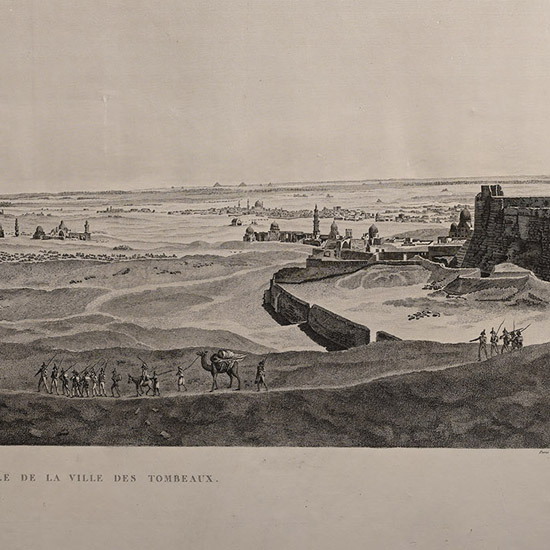
Very Large Egyptian Expedition Lithograph of Kaire
Early 19th century A.D.Estimate: £80 - 100 (+bp*)
Opening Bid: £40
Proof etching on laid paper of plate 61 from Vol .I of Description de l'Égypte : ou, Recueil des observations et des recherches qui ont été faites en Égypte pendant l'expédition de l'armée française. entitled Le Kaire. Vue générale de la ville des tombeaux. 259 grams, 104 x 67 cm
From the collection of a North American priest. Acquired between 1981-1996. Property of a North American collector.
Produced between February 1802 and 1830 on the orders of Napoleon Bonaparte; published between 1809 and 1828. Just 1,000 copies were distributed to various institutions, printed on laid paper with an 'Égypte ancienne et moderne' watermark. The book is subtitled Recueil des observations et des recherches qui ont été faites en Égypte pendant l’expédition de l’Armée française, publié par les ordres de Sa Majesté l’Empereur Napoléon le Grand (Gathering of observations and discoveries which were made in Egypt during the expedition of the French army, published on the orders of His Majesty the Emperor Napoleon the Great). It was the world's first encyclopedia devoted exclusively to the remains of ancient Egypt. The plates of this book are the first to present the archaeological sites of Thebes (Luxor).
