
Ancient Art, Antiquities, Books, Natural History, Stamps & Coins

-
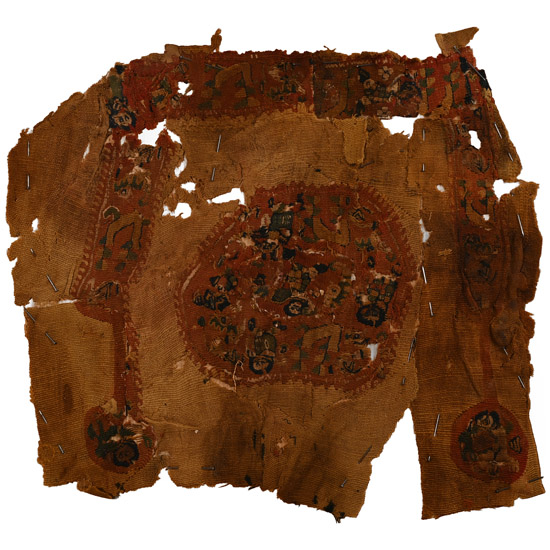
Large Egyptian Coptic Tunic Textile Fragment with Lateral Clavi and Central Orbiculus Representing Figures and Animals
Circa 6th century A.D.Estimate: £300 - 400 (+bp*)
Bids: 5 | Current Bid: £30
Larger portion of a tunic with decorative strips (clavi) ending with circular decorations (orbiculi), and central orbiculus in red, green and yellow wool, S-twist tapestry, decorated with Nilotic scenes including plants, animals, possibly human figures. 59 grams total including paper folder, 32.5 cm
Acquired 1970s-1996. Property of a North American collector. London collection, 2016.
Among the many fragments of wool tunics, there are several long strips that match to form nearly full-length central pectoral clavi and orbiculi. They are patterned with a profusion of small figures or interlaced abstract designs, birds, plants and animals, with a contrasting border filled with geometric motifs. -
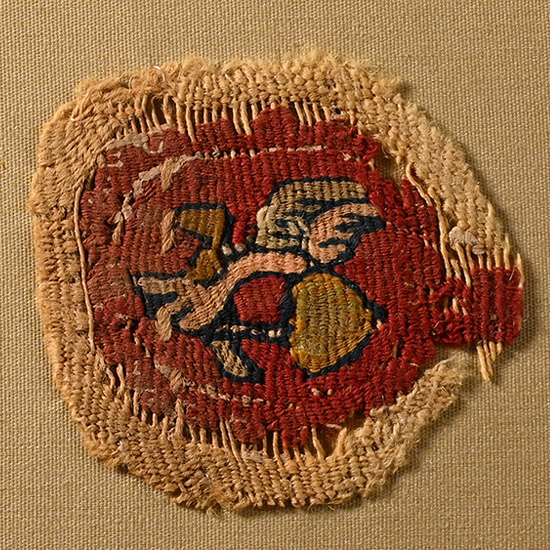
Egyptian Mounted Coptic Textile Terminal Fragment of a Clavus with Putto
Circa 6th century A.D.Estimate: £50 - 70 (+bp*)
Bids: 1 | Current Bid: £5
With a putto flying over a red woven surface, in red, green, and yellow wool, S-twist tapestry. 26 grams total, 52 mm
Acquired 1970s-1996. Property of a North American collector. London collection, 2016.
Among the many fragments of wool tunics, there are several long strips that match to form a nearly full-length central pectoral clavi. They were patterned with a profusion of small figures like this flying putto, kept in one orbiculus (round embroidery), forming the finial of a clavus. -
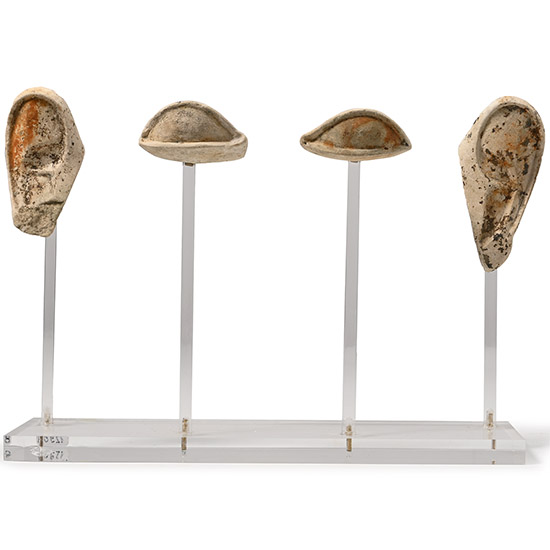
Egyptian Limestone Pair of Eyes and Ears
Late Period, 664-332 B.C.Estimate: £500 - 700 (‡+bp*)
Opening Bid: £250
A pair of narrow, almond-shaped eyes with elegantly curved, slightly set-off lids; the eyeballs are slightly convex; the reverse is smoothed; the tip and part of the surface of one earlobe are missing; traces of black paint and a reddish-yellow colour (paint or iron oxide deposits); originally served as inlays for a coffin mask. 234 grams total, 21.5 cm wide including stand
Israeli art market, 2015, from Mr I.H., a licensed art dealer from Jerusalem. -

Egypto-Phoenician Period Haematite Scarab with Winged Figure
700-500 B.C.Estimate: £500 - 700 (‡+bp*)
Opening Bid: £250
Schematic scarab body with a scene on the underside of an advancing winged figure. 6.52 grams, 17 mm
Acquired in the mid 1980s-1990s. Private collection, Switzerland, thence by descent. Private collection, since the late 1990s. -
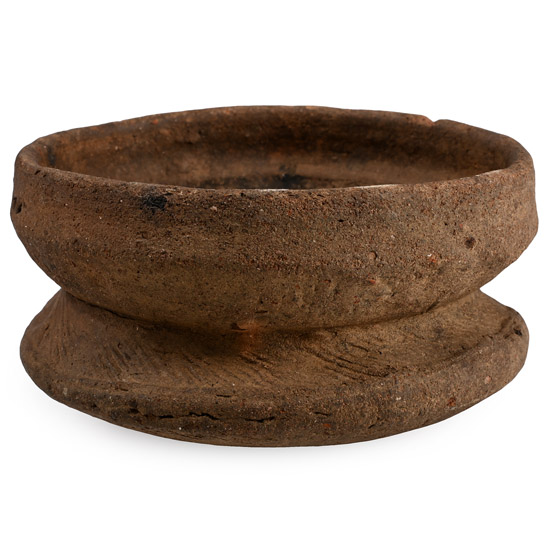
Egyptian Pinched Earthenware Bowl
Coptic, circa 4th-7th century A.D.Estimate: £80 - 100 (+bp*)
Bids: 1 | Current Bid: £5
With rounded underside, sharply waisted profile, vertical rim with inner rib. 410 grams, 13.7 cm
Acquired on the UK art market since the 1990s. From the property of a late Lincolnshire, UK, gentleman; thence by descent. -
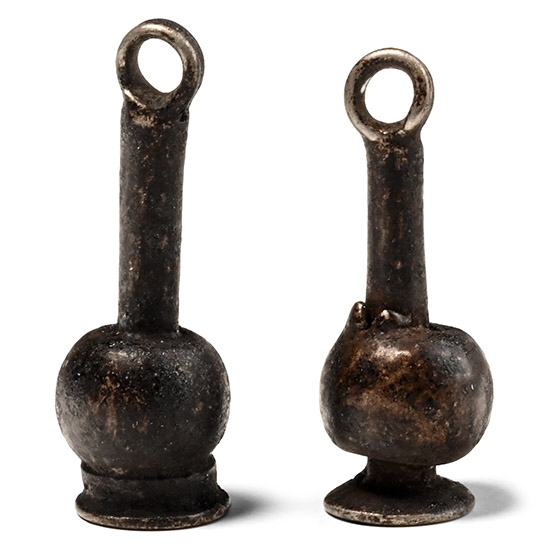
Egyptian Silver Poppy Amulet Pair
Late Period, 664-332 B.C.Estimate: £80 - 100 (+bp*)
Bids: 1 | Current Bid: £5
Each a bulbous poppy-head with a loop at the apex. 2.04 grams total, 17-18 mm
Ex mid 19th century collection. -
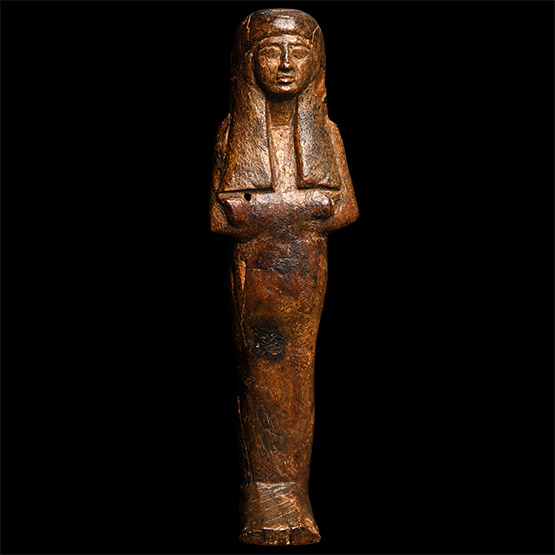
Egyptian Wooden Shabti
New Kingdom, 19th Dynasty, circa 1292-1185 B.C.Estimate: £5,000 - 7,000 (‡+bp*)
Opening Bid: £2,500
Carved in the round in a typical mummiform shape with hands crossed on the chest, wearing a tripartite wig with long, splayed lappets; collector's number to base 'E.803'. 140 grams, 21.5 cm
Ex R. Liechti (1934-2010) collection, Geneva, Switzerland. This lot has been checked against the Interpol Database of stolen works of art and is accompanied by a search certificate no.13228-249321.
A shabti (or ushabti) is a small funerary figurine from ancient Egyptian tombs, dating from around 2000 BCE to 30 BCE. Its main purpose was to assist the deceased in the afterlife by performing tasks like farming. Shabtis were often inscribed with a magical formula from the Book of the Dead to ensure they would come to life when needed. -
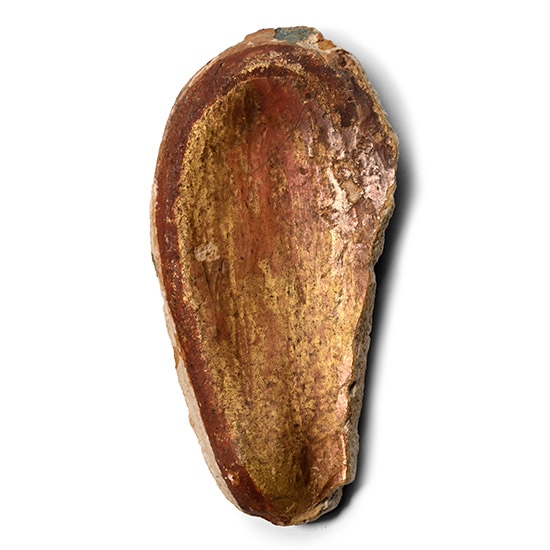
Gilded Ear from a High Status Egyptian Cartonnage Mask
Late New Kingdom-Third Intermediate Period, circa 1069-900 B.C.Estimate: £50 - 70 (+bp*)
Opening Bid: £5
Modelled in the round with red underglaze and gilt finish to the obverse; impressed fabric texture to reverse. 12.4 grams, 58 mm
with a privately curated collection, 1980s-early 2000s. From the private collection and estate of Christine Simons (1943-2025), West Midlands, UK. -
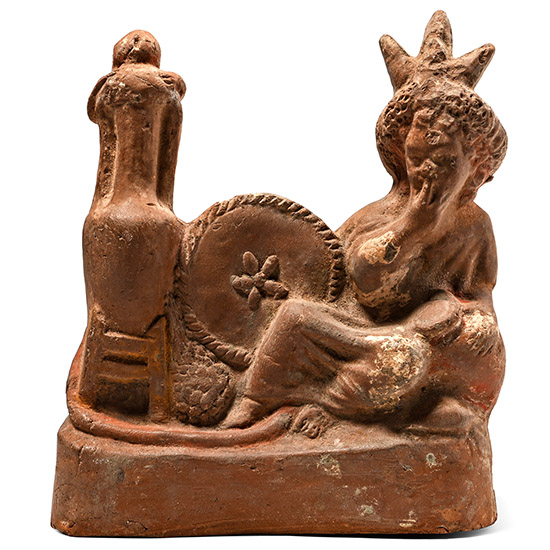
Romano-Egyptian Terracotta Figure of Seated Harpocrates
Alexandria, 1st century A.D.Estimate: £500 - 700 (‡+bp*)
Opening Bid: £275
Hollow-formed and moulded in the half-round, reclining figure with wreath and diadem, amphora and other items; hollow to the underside. 236 grams, 12.4 cm
The Erotica Collection of Christian von Faber-Castell, Küsnacht ZH, Switzerland; acquired in November 1997 or 1998 from Galerie Puhze, TEFAF Basel, no.137. with Jean-David Cahn Auktionen AG, Basel, 9 November 2013, no.66. -
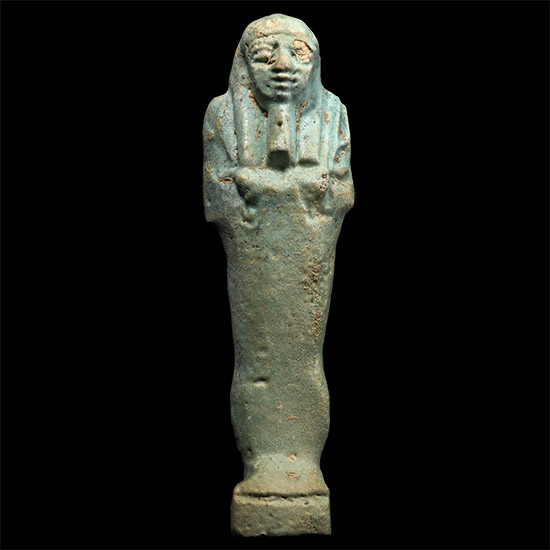
Egyptian Pale Blue Glazed Shabti
Late Period, circa 664-332 B.C.Estimate: £100 - 140 (+bp*)
Bids: 4 | Current Bid: £25
Typical mummiform figure with a square base and dorsal pillar; a detailed face; a long false beard; a lappet wig; and crossed hands holding a pick, a hoe, and the cord of a seed bag, shown over the left shoulder. 71 grams, 11.9 cm
with a privately curated collection, 1980s-early 2000s. From the private collection and estate of Christine Simons (1943-2025), West Midlands, UK. -
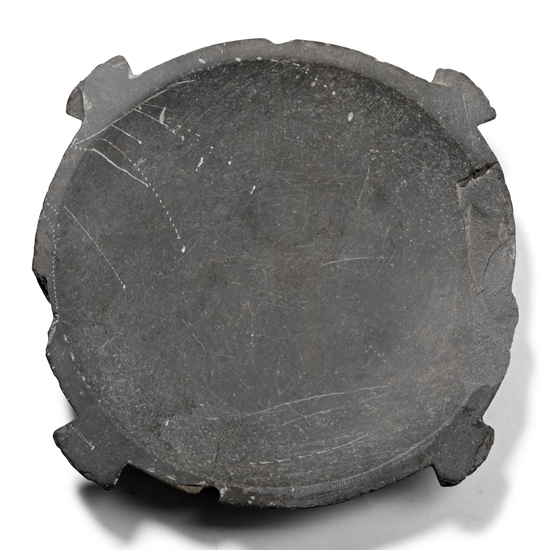
Egyptian Schist Cosmetic Mortar
Late Period, 25th-26th Dynasty, 754-525 B.C.Estimate: £600 - 800 (‡+bp*)
Opening Bid: £300
Discoid palette with rounded underside and flat base, dished central field, flat rim with four radiating trapezoidal projections. 450 grams, 16.4 cm
Acquired in the mid 1980s-1990s. Private collection, Switzerland, thence by descent. Private collection, since the late 1990s. Accompanied by a copy of an Art Loss Register certificate no.S00038135. -
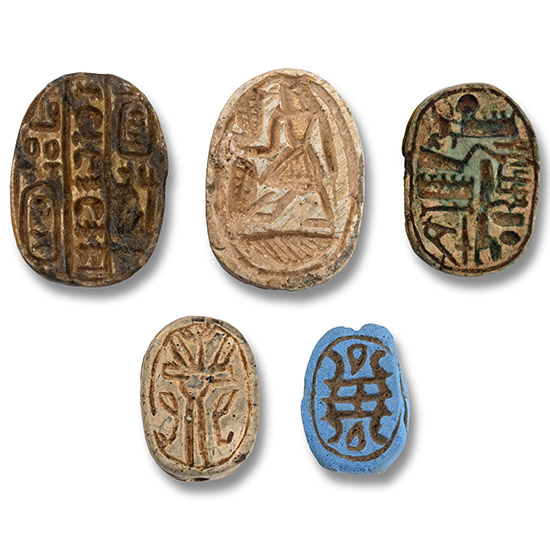
Egyptian Steatite and Faience Scarab Group
Mainly Second Intermediate Period–New Kingdom, circa 1660-1069 B.C.Estimate: £150 - 200 (‡+bp*)
Opening Bid: £75
Designs include: a tripartite design with ankh, water, nwb, and men signs, with indistinct cartouches possibly of Thutmose III, and signs spelling the phrase 'powerful is the justice of Re' (user-Maat-Re); a line border enclosing the stylised depiction of a striding figure grasping a crocodile, with a neb sign below; a line border enclosing a multitude of signs, including Thutmose III’s throne name (men-kheper-Re), and that of Amun; a line border enclosing central Hathoric sistrum; a line border enclosing a symmetrical motif in contrasting black glaze. 10.6 grams total, 13-19 mm
Acquired on the European art market in the early 2000s. With Galerie Rhéa, Zurich, Switzerland.
