
Ancient Art, Antiquities, Books, Natural History, Stamps & Coins

-
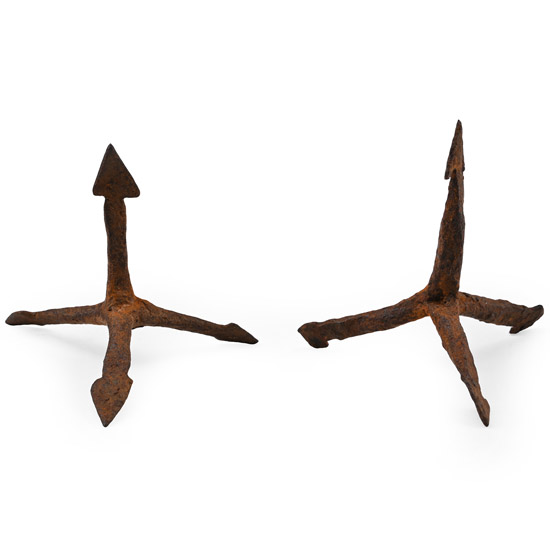
Medieval Iron Anti-Cavalry Caltrop Pair
11th-14th century A.D.Estimate: £100 - 140 (+bp*)
Opening Bid: £50
Each with four arms tipped with triangular spikes. 30 grams total, 60-62 mm
Acquired on the German art market before 2000. Property of a Surrey, UK, collector.
Caltrops were scattered on battlefields in an effort to stop or slow advancing enemy cavalry or foot soldiers; regardless of how a caltrop lands, one spike is always facing upwards. Caesar used them widely at Alesia (Caes., BG 7.73; 82): 'Stakes a foot long, with iron hooks attached to them, were entirely sunk in the ground before these, and were planted in every place at small intervals; these they called spurs'. -
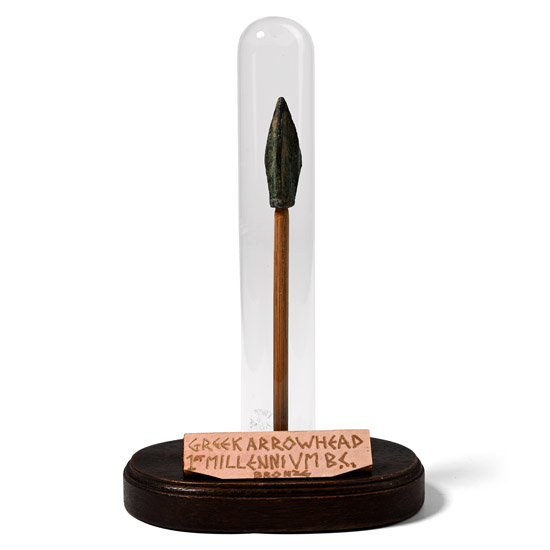
Greek Bronze Arrowhead
Circa 5th-3rd century B.C.Estimate: £30 - 40 (+bp*)
Bids: 1 | Current Bid: £5
A triangular bronze arrowhead on a display stand with a glass cover. 113 grams total, 16.6 cm including stand
Purchased on the European art market. Property of a Norfolk, UK, collector. -
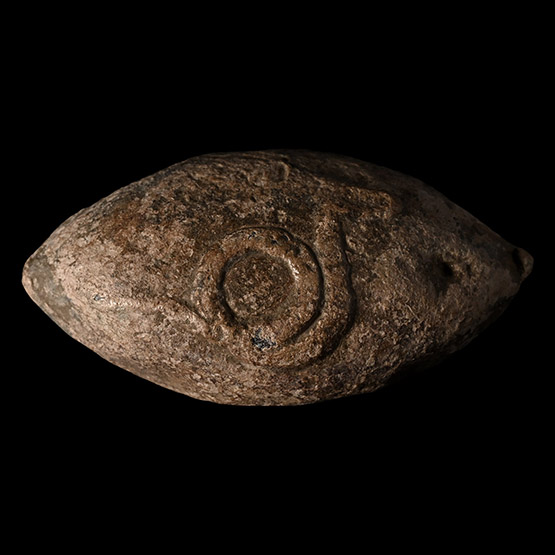
Greek Slingshot with Snake
4th-1st century B.C.Estimate: £200 - 300 (‡+bp*)
Opening Bid: £100
Lentoid in form with raised figure of a coiled snake to one face, possible legend to reverse. 31.2 grams, 31 mm
Private collection, Austria. Private collection, Europe. -
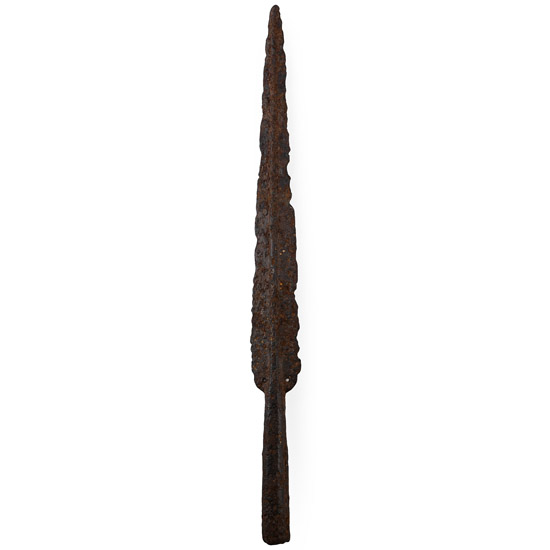
Large Viking Age Iron Pierced Socketted Spearhead
Circa 9th-11th century A.D.Estimate: £120 - 170 (+bp*)
Bids: 4 | Current Bid: £120
Slender, triangular blade with rounded, pierced shoulders, a raised triangular midrib extending to a tubular socket. 310 grams, 40 cm
Acquired on the UK art market since the 1960s. From the private collection of Mr J.P.H., a Woolwich, UK, collector, his collection formed since the 1960s. -
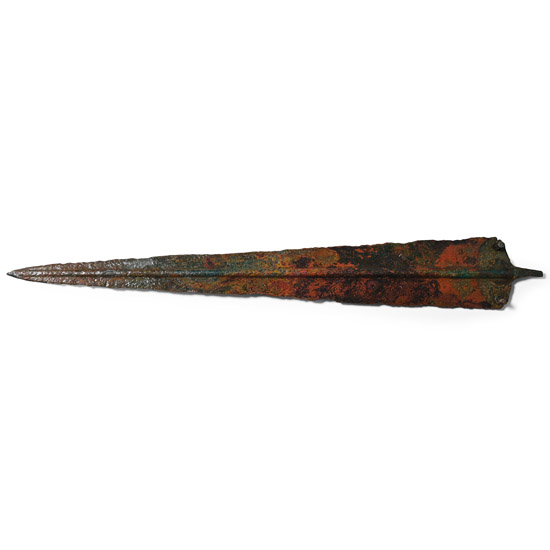
Luristan Bronze Tanged and Rivetted Spearhead
1st millennium B.C.Estimate: £150 - 200 (+bp*)
Opening Bid: £80
Comprising a triangular blade with a narrow midrib, a short tang with two attachment studs in situ. 184 grams, 32 cm
Ex Abelita family collection, 1980s-2000s. -
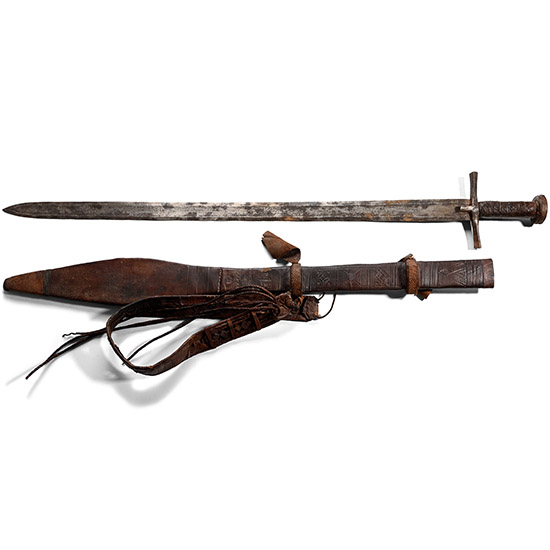
Sudanese Kaskara Sword with Scabbard
Late 19th-early 20th century A.D.Estimate: £150 - 200 (+bp*)
Opening Bid: £5
Comprising a two-edged straight-sided blade with shallow point, square-section crossguard with two vertical clips to grip the scabbard, columnar leather-bound grip and disc pommel; the wooden scabbard covered with leather decorated with heavily tooled bands, crocodile-skin panels to the chape and attachment collars, flared leaf-shaped lower body; broad tooled leather belt with securing laces. 1.25 kg, 10.5.5 cm
From the private collection of Peter Clayton, FCILIP, Dip, Arch, FSA, FRNS, Hemel Hempstead, Hertfordshire, UK; formed since the late 1950s. -
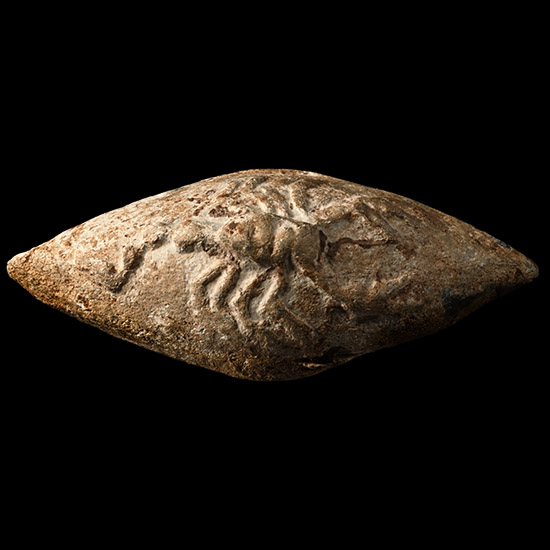
Greek Lead Slingshot with Scorpion and Thunderbolt of Zeus
3rd-2nd century B.C.Estimate: £100 - 140 (+bp*)
Bids: 1 | Current Bid: £50
Biconical in profile with a scorpion in raised relief on one side, and a bundle of thunderbolts on the other side. 35.2 grams, 36 mm
Previously property of an Austrian collector, Vienna, Austria. From a German private collection, formed since the 1980s. -
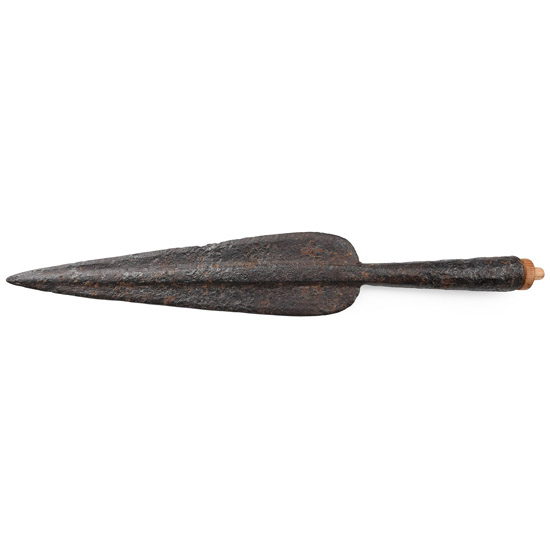
Large Celtic Period Iron Spearhead
Iron Age, circa 1st century B.C.-1st century A.D. or laterEstimate: £100 - 140 (+bp*)
Opening Bid: £5
Featuring a leaf-shaped blade with rounded shoulders, wide midrib extending to a tubular socket. 236 grams, 35.5 cm
Acquired on the UK art market since the 1960s. From the private collection of Mr J.P.H., a Woolwich, UK, collector, his collection formed since the 1960s. -
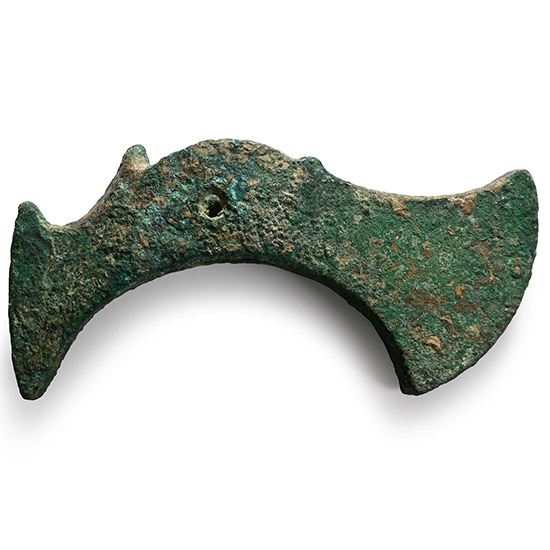
Bactrian Bronze Axehead
3rd-2nd millennium B.C.Estimate: £250 - 350 (‡+bp*)
Opening Bid: £138
With curved flaring cutting edge, characteristic curving shape and narrow socket, blade end squaring off, shaft hole pierced on both sides. 227 grams, 10.6 cm
Acquired in the mid 1980s-1990s. Private collection, Switzerland, thence by descent. Private collection, since the late 1990s.
These collared axes have the specific feature of being equipped with variously shaped rear extensions. The provenance of this typology is clearer than others: these axes came from Margiana and southern Bactria. Gonur Depe and Susa yielded a rather atypical and probably imported example. P. Amiet suggests that they were an adoption of Elamite material, from conceptual and institutional models. They would have developed from the end of the 3rd and the beginning of the 2nd millennium B.C. -
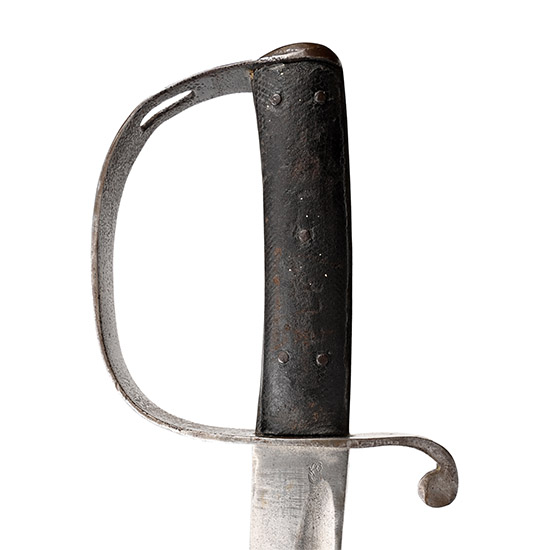
British Victorian Naval Boarding Cutlass
Mid-late 19th century A.D.Estimate: £300 - 400 (+bp*)
Opening Bid: £5
Royal Navy 1845 Pattern cutlass with short single-edged blade with fuller and sturdy back, swept guard and leather-covered scales to the grip; stamped to one face at the ricasso [crown] over '13' and heraldic (?) stamp to the other side; old collector's label 'British Naval Boarding Cutlass, Victorian, crown above 13 mark, and unidentified mark other side'. 791 grams, 70 cm
From the private collection of Peter Clayton, FCILIP, Dip, Arch, FSA, FRNS, Hemel Hempstead, Hertfordshire, UK; formed since the late 1950s. -
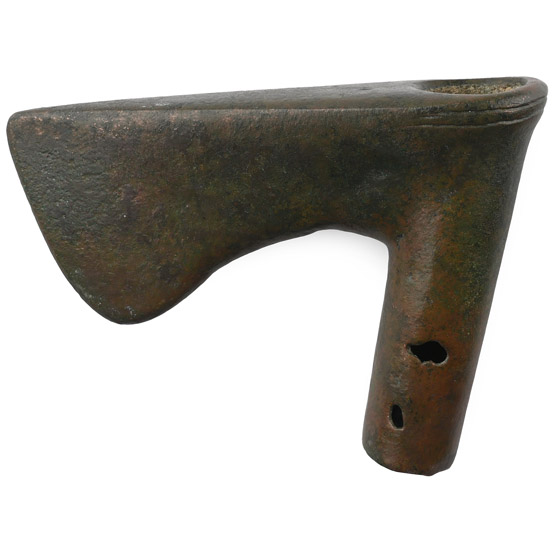
Western Asiatic Bronze Axehead
Late 3rd-early 2nd millennium B.C.Estimate: £150 - 200 (+bp*)
Opening Bid: £80
With a short socketted shaft, the plain rectangular blade broadening towards the cutting edge; side holes on the shaft. 446 grams, 11.4 cm
Ex Abelita family collection, 1980s-2000s.
Unadorned weapons, especially axes, adzes, and picks, were made by Luristan craftsmen using simple clay or stone bivalve moulds, into which a core was inserted to form the socket for the shaft. Typically, the metallic composition consisted of a combination of arsenical bronze and copper, together with a small percentage of lead. -
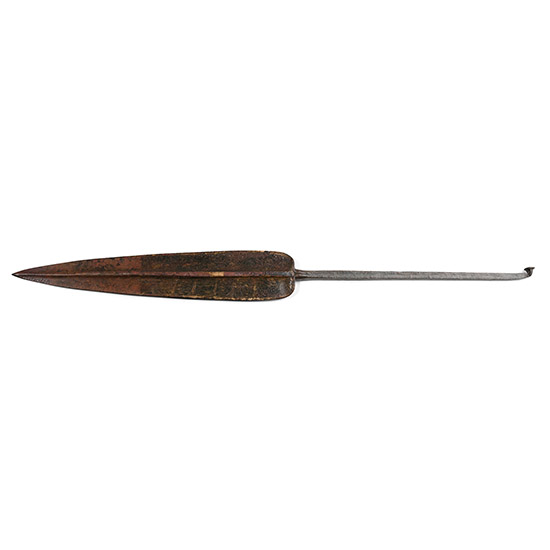
Greek Bronze Hoplite Spearhead
Circa 7th-5th century B.C.Estimate: £300 - 400 (+bp*)
Opening Bid: £150
Comprising a square-section tapering shank developing to the midrib of a leaf-shaped two-edged blade with flange to each shoulder, tang with hooked end and button finial. 295 grams, 50.3 cm
Ex Abelita collection, 1980s-2010.
