-
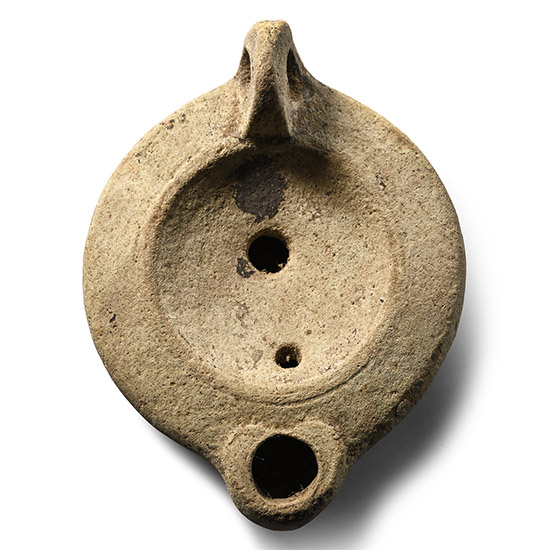
Large Roman Buffware Oil Lamp
Circa 2nd century A.D.Estimate: £40 - 60 (+bp*)
Opening Bid: £5
Squat in profile with broad body, small stub nozzle, loop handle; rounded discus with filler holes. 125 grams, 98 mm
Ex old English collection. From the estate of a late Bristol, South West England, collector. -
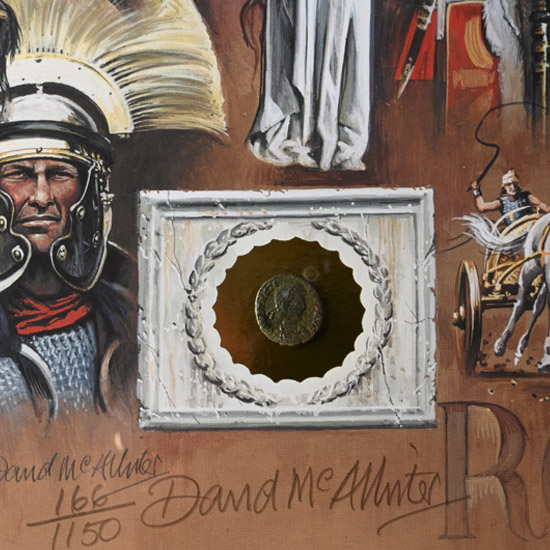
Bronze Roman Coin and Framed Limited Edition Print
3rd century A.D. and laterEstimate: £30 - 40 (+bp*)
Bids: 1 | Current Bid: £5
The coin from the House of Constantine mounted on 22 carat gold foil, framed with an art print signed by the artist David McAllister, depicting scenes of Roman military activity; limited edition number 166/1150. 1.26 kg, 49.5 x 37.5 cm
UK gallery, early 2000s. Accompanied by a previous numbered certificate of authenticity.
David McAllister's exciting design is a 'one of a kind' work that portrays the might and riches of the Roman civilisation. This limited edition print is a celebration of the award-winning artist's lifetime dedication to historical paintings of the ancient world. To enhance appreciation of this rare and historic work, each print is signed and numbered by the artist. -
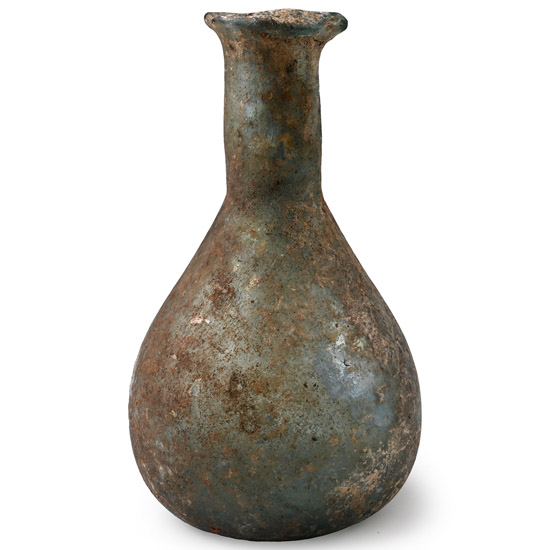
Roman Green Glass Vessel
Circa 1st-2nd century A.D.Estimate: £120 - 170 (+bp*)
Opening Bid: £60
Bulbous body and a short tubular neck with an everted rim. 105 grams, 12.2 cm
Roman glass from an important London collection, acquired from the early 1980s. -
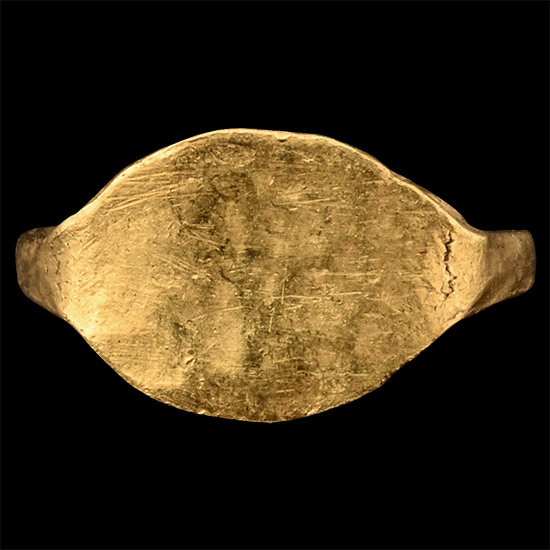
Roman Gold Child's Ring
1st-2nd century A.D.Estimate: £300 - 400 (‡+bp*)
Opening Bid: £160
Formed as a flat-section hoop with a tapering ovaloid bezel. 0.83 grams, 12.37 mm overall, 11.07 mm internal diameter
Ex Herbert A. Cahn, Basel, 1990s. -
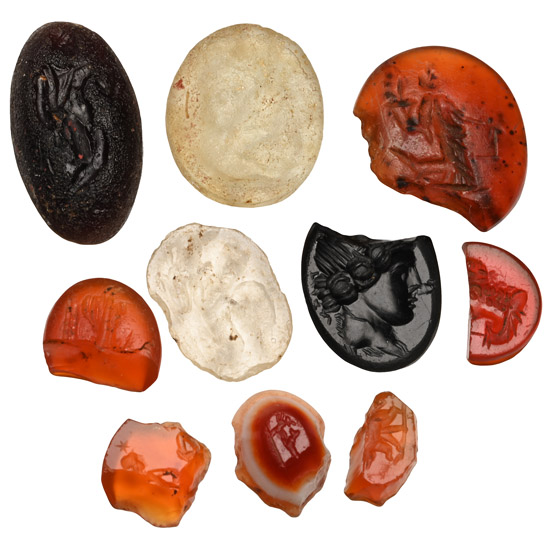
Roman Stone and Glass Gem Collection
2nd-3rd century A.D. or laterEstimate: £120 - 170 (+bp*)
Opening Bid: £5
Including advancing bear, Fortuna with a cornucopia, winged gryphon and other types; some supplied with a museum-quality impression. 5.4 grams total, 8-19 mm
From the private collection of a European gentleman (1942-2024), formed since the 1970s. -
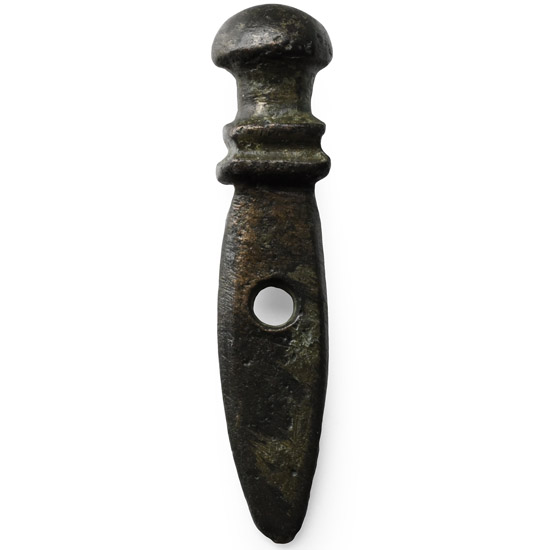
Roman Miniature Gladius Sword Pendant
Circa 1st-4th century A.D.Estimate: £40 - 60 (+bp*)
Opening Bid: £5
Formed as a gladius sword with tongue-shaped blade pierced for suspension, square-section handle and knob finial. 2.14 grams, 27 mm
Ex German art market, 2000s. Acquired from an EU collector living in London. From the collection of a Surrey, UK, gentleman. -
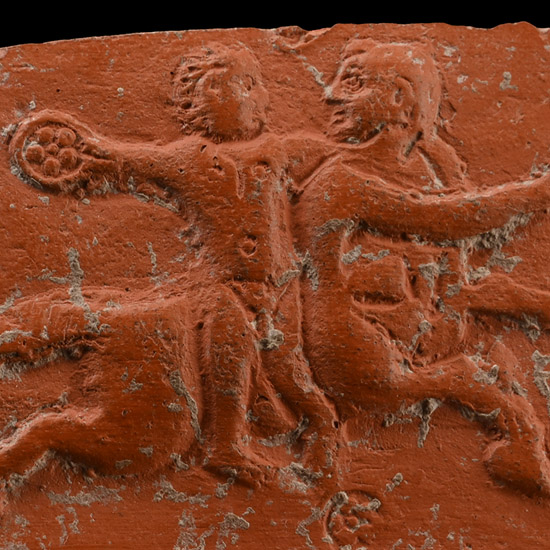
Roman Redware Vessel Sherd with Achilles Riding a Centaur
Circa 4th century A.D.Estimate: £60 - 80 (+bp*)
Opening Bid: £5
Fragment from a rim with stepped and everted edge; low-relief profile image of a centaur galloping, ridden by a naked youth (Achilles) holding a rosette in his extended hand; behind, the hand of another figure reaching towards the rosette and in front, the hindlegs of a panther; old collector's label to reverse. 34 grams, 59 mm
From the private collection of Peter Clayton, FCILIP, Dip, Arch, FSA, FRNS, Hemel Hempstead, Hertfordshire, UK; formed since the late 1950s. -
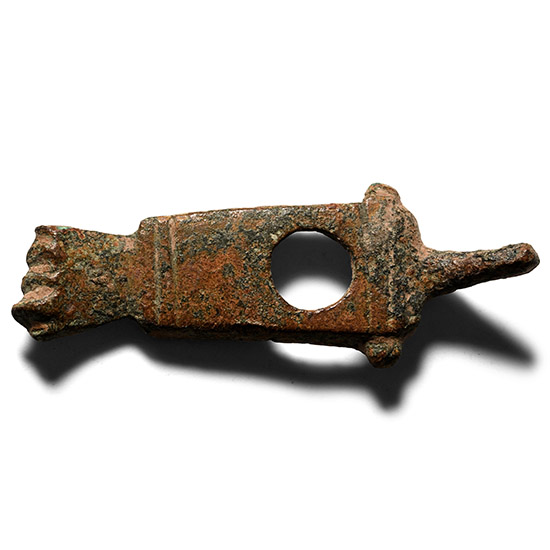
Roman Bronze Phallic and Fist Dagger Quillon
Circa 2nd century A.D.Estimate: £80 - 100 (+bp*)
Opening Bid: £5
Rectangular quillon with one end formed as a fist making the fica gesture and the other end formed as an erect phallus. 8.71 grams, 52 mm
From the collection of the late Mr S.M., London, UK, 1969-1999, thence by descent. -
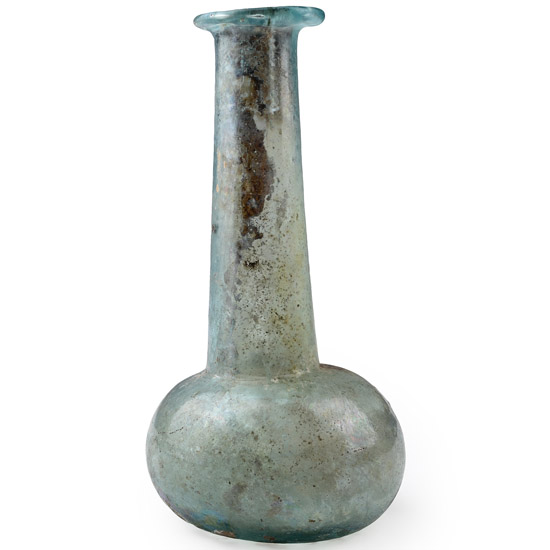
Large Roman Blue Glass Ampulla
Circa 2nd-3rd century A.D.Estimate: £120 - 170 (+bp*)
Opening Bid: £60
Bulbous body with a flat base, tall tubular neck with a rolled rim. 135 grams, 14.4 cm
Roman glass from an important London collection, acquired from the early 1980s. -
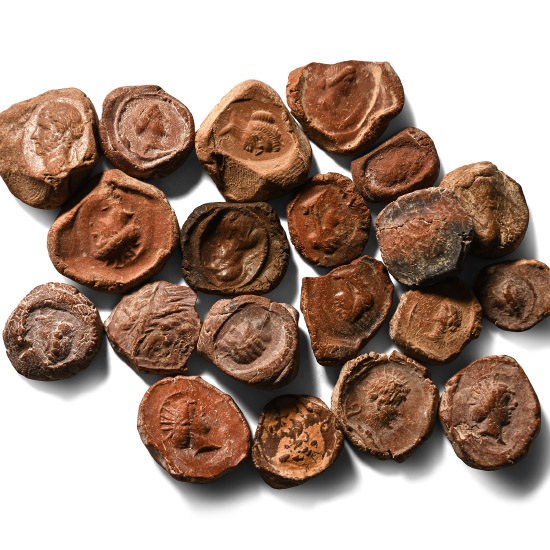
Roman Terracotta Bullae, Tesserae or Token Group
1st century B.C.-3rd century A.D.Estimate: £100 - 140 (+bp*)
Opening Bid: £5
A mixed group of ceramic bullae, tesserae or theatre tokens bearing low-relief motifs, mainly consisting of profile busts of deities. 28.4 grams total, 13-21 mm
From the private collection of a European gentleman (1942-2024), formed since the 1970s.
The term 'tessera' was used in Roman times to convey the Greek term σύμβολον (token). Small tiles are known as tokens, often shaped like coins, made of metal (copper, lead, iron), clay, bone, wood, or glass, stamped as well as engraved. The tokens, however, are not exclusively coin-shaped, as the Latin term 'tessera' suggests by etymologically referring to a square or at least a four-sided shape and confirmed in several cases by material remains of the past. Tokens and tesserae seem to have been used both in Athens and Rome for the distribution of goods. According to written sources, the term token is identified with credentials of the official authorities. They have also been interpreted as tokens of identity, as entrance tickets to theatre performances, tribunals or assemblies of citizens, archival material of seal engraving, as pawns in games, Charon’s obols and even as amulets. -
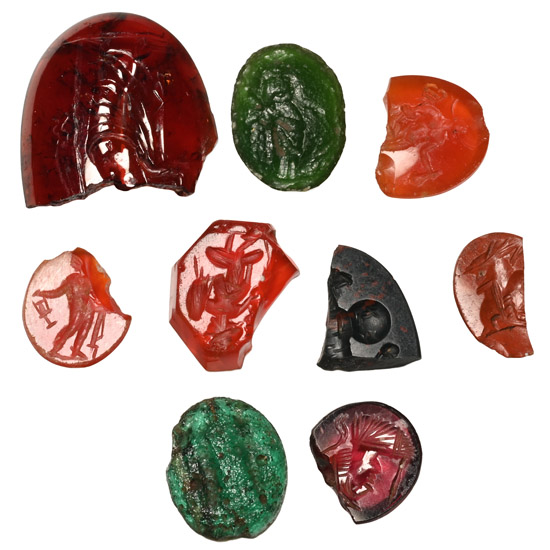
Roman Stone and Glass Gem Collection
2nd-3rd century A.D. or laterEstimate: £100 - 140 (+bp*)
Bids: 1 | Current Bid: £5
Including a standing figure of Mars with a spear, Venus in chiton, Mercury wearing a petasos and other types; each supplied with a museum-quality impression. 4.68 grams total, 9-17 mm
From the private collection of a European gentleman (1942-2024), formed since the 1970s. -
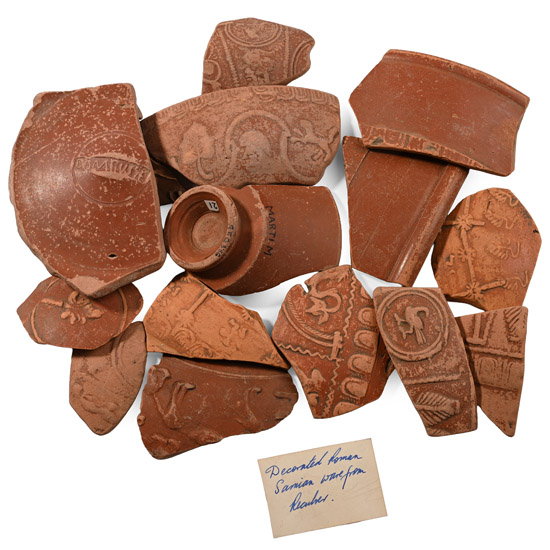
'Reculver Fort' Roman Redware Bowl Fragment Group
3rd-4th century A.D.Estimate: £30 - 40 (+bp*)
Bids: 3 | Current Bid: £10
Large group of decorated fragments, including two with maker's marks, one for 'MARTI M' and the other for 'DOMITVS', one with dolphins within medallions, one with a bird facing back, two showing hounds, one with a kneeling Erotes, and the other with various vegetal and geometric decorations; most with inked collector's notes. 530 grams total, 4.1-11.3 cm
Found at Reculver, Kent, UK, and elsewhere in the late 1950s. From the private collection of Peter Clayton, FCILIP, Dip, Arch, FSA, FRNS, Hemel Hempstead, Hertfordshire, UK; formed since the late 1950s.

