
Ancient Art, Antiquities, Books, Natural History, Stamps & Coins

-
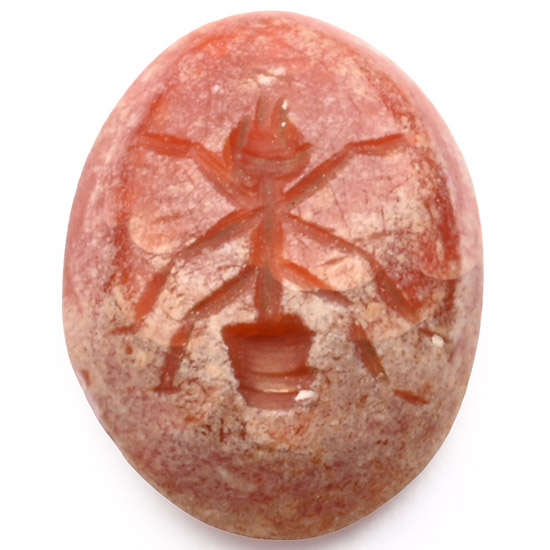
Roman Carnelian Gemstone with Ant
2nd-3rd century A.D.Estimate: £150 - 200 (+bp*)
Bids: 1 | Current Bid: £5
With intaglio ant; supplied with a museum-quality impression. 0.10 grams, 7.08 mm.
From the private collection of a European gentleman (1942-2024), formed since the 1970s. -
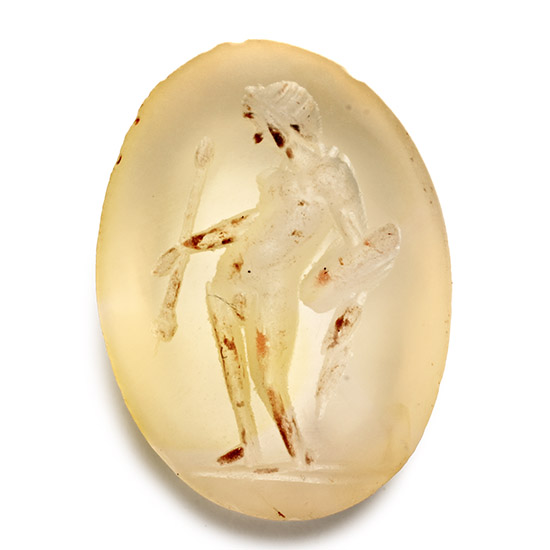
Roman Chalcedony Gemstone with Nude Male
2nd century A.D.Estimate: £400 - 600 (‡+bp*)
Bids: 1 | Current Bid: £180
Oval with an engraved standing nude god in contrapposto facing left, holding a short sceptre and a shield. 0.88 grams, 15 mm
Ex London, UK, art dealer, 1985-1990. with Bonhams, 1 May 2008, no.309 (part). -
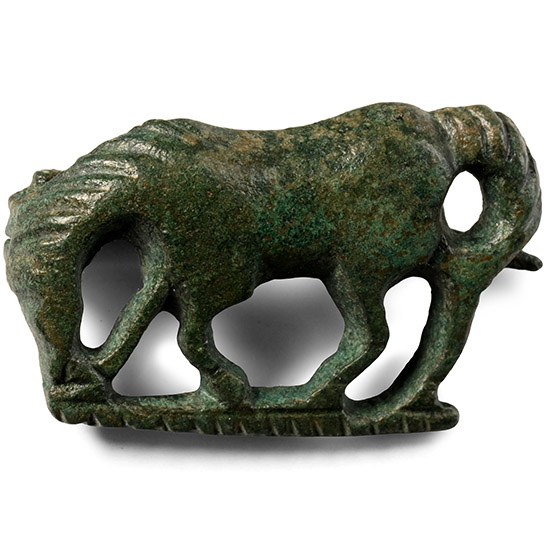
Roman Bronze Horse Plate Brooch
Circa 1st-2nd century A.D.Estimate: £80 - 100 (+bp*)
Opening Bid: £5
Formed as a grazing horse standing on a groundline, catchplate and pin to the reverse. 9.79 grams, 31 mm
Ex German art market, 2000s. Acquired from an EU collector living in London. From the collection of a Surrey, UK, gentleman. -
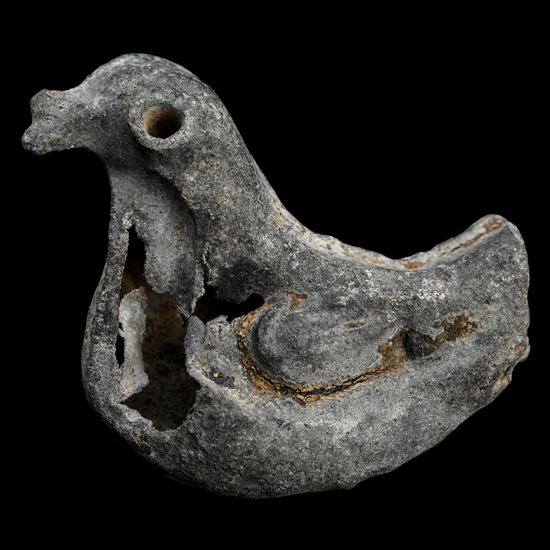
Late Roman Lead Child's Toy Bird
4th-6th century A.D.Estimate: £30 - 40 (+bp*)
Bids: 2 | Current Bid: £5
A hollow-form figurine of a dove, with annular eyes, small wings and an open beak. 22 grams, 42.5 mm
From the private collection of a European gentleman (1942-2024), formed since the 1970s. -
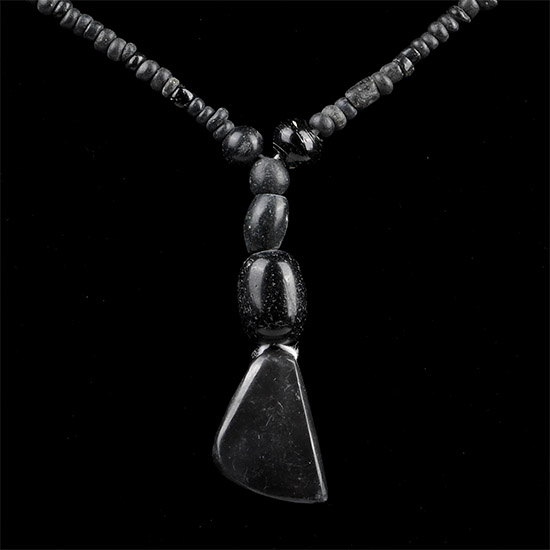
Roman and Other Black Glass Bead Necklace String
1st-4th century A.D. and laterEstimate: £50 - 70 (+bp*)
Opening Bid: £5
Composed of oblate, annular, spherical and barrel-shaped beads with a larger triangular-shaped pendant, restrung. 13.76 grams, 31 cm
Ex London, UK, collection, 1990s. -
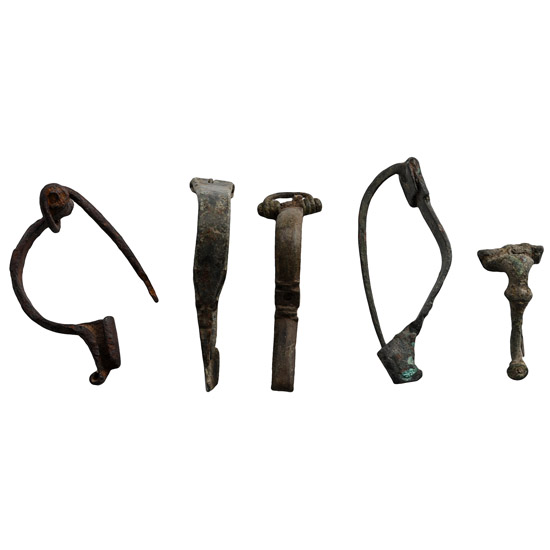
Roman and Earlier Bronze Bow and Trumpet Brooch Collection
4th century B.C.-2nd century A.D.Estimate: £40 - 60 (+bp*)
Opening Bid: £5
Including P-shaped bow brooch, La Tène Type I fibula and other types. 53 grams total, 63 - 40 mm
Acquired on the UK art market since the 1990s. From the property of a late Lincolnshire, UK, gentleman; thence by descent. -
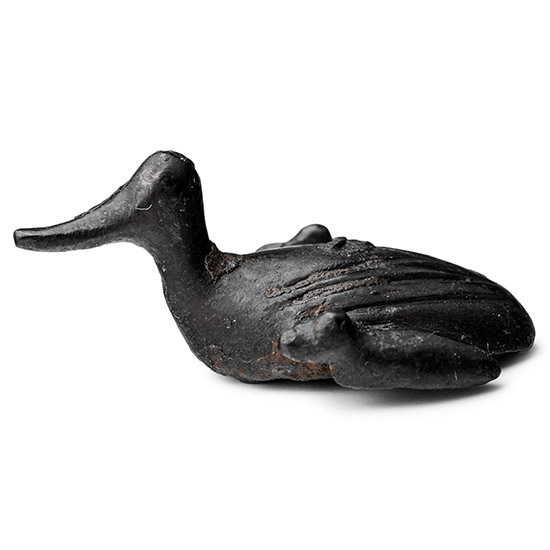
Roman Bronze Duck with Ducklings Mount
Circa 2nd-3rd century A.D.Estimate: £150 - 200 (+bp*)
Opening Bid: £75
Modelled in high relief with hollow underside and fixing peg; wing detailing and duckling to each side. 9.03 grams, 34 mm
Acquired on the UK art market in the 1980s. From an East Anglian private collection. -
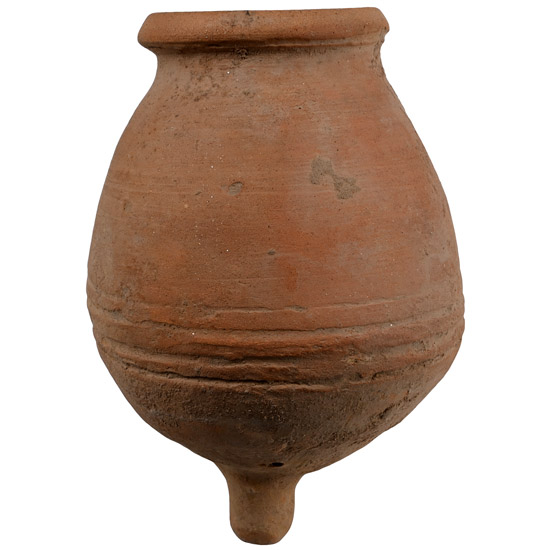
Roman Ribbed Terracotta Vessel
North Africa, circa 2nd-3rd century A.D.Estimate: £50 - 70 (+bp*)
Opening Bid: £5
Ovoid in profile with ribbed band and knop finial; carinated rim to the mouth. 248 grams, 12.7 cm
Acquired on the UK art market since the 1990s. From the property of a late Lincolnshire, UK, gentleman; thence by descent. -
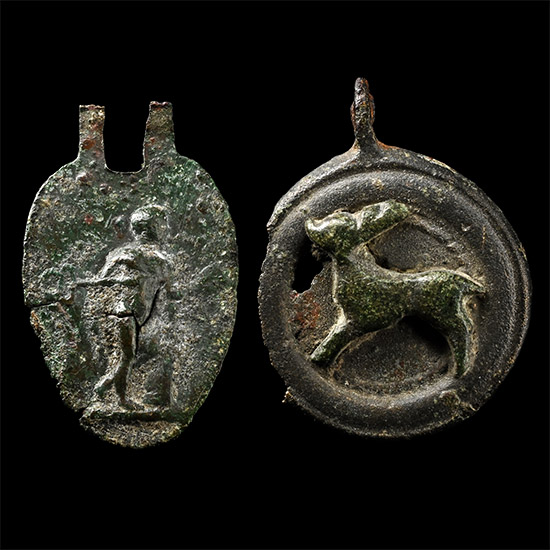
Roman Bronze Seal Box Lip Group
Circa 2nd century A.D.Estimate: £60 - 80 (+bp*)
Bids: 1 | Current Bid: £5
Comprising a discoid type with high-relief hare in profile; ovoid type with standing figure. 2.72 grams total, 23-24 mm
From the private collection of a European gentleman (1942-2024), formed since the 1970s. -
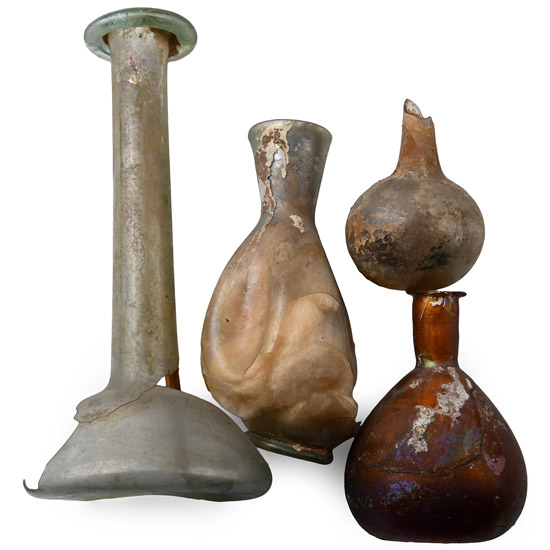
Roman Broken Glass Vessel Group
Circa 1st-4th century A.D.Estimate: £20 - 30 (+bp*)
Bids: 1 | Current Bid: £5
Comprising: large fragment of a bell-shaped bottle with a tall neck, a large fragment of a bottle with a dimpled body, and two bulbous bottle fragments. 149 grams total, 5.1-16.2 cm
From the private collection of Peter Clayton, FCILIP, Dip, Arch, FSA, FRNS, Hemel Hempstead, Hertfordshire, UK; formed since the late 1950s. -
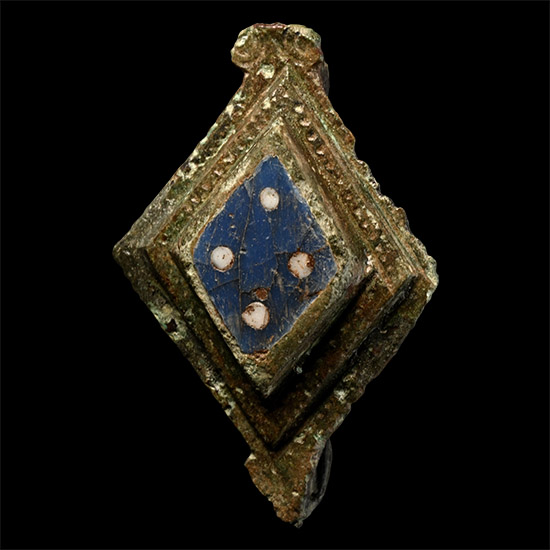
Roman Enamelled Bronze Lozenge-Shaped Brooch
Circa 2nd century A.D.Estimate: £100 - 140 (+bp*)
Opening Bid: £50
A bronze lozengiform raised plate with blue and white enamel, pin and catchplate to the reverse. 4.83 grams, 32 mm
Ex German art market, 2000s. Acquired from an EU collector living in London. From the collection of a Surrey, UK, gentleman. -
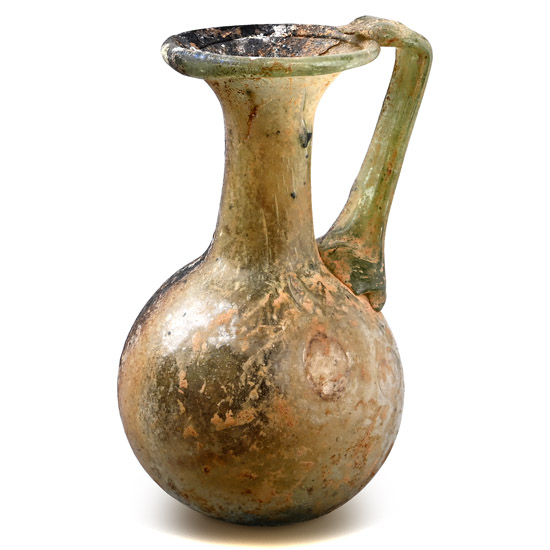
Roman Blown Glass Jug
2nd-4th century A.D.Estimate: £200 - 300 (‡+bp*)
Opening Bid: £110
Bulbous body and rounded underside, long neck, trumpet-shaped mouth with applied rim, applied strap handle with ribbing. 40 grams, 96 mm
Acquired in the 1992. Private collection, Switzerland, thence by descent. Private collection, since the late 1990s.
Roman glass from the 2nd to 4th century A.D. gives a fascinating insight into everyday life in the Roman Empire. By this time, glassmaking had become highly skilled, and glass vessels were being produced on a much larger scale than before. Thanks to the development of glassblowing, makers were able to create practical as well as attractive objects such as bottles, flasks, jars, and drinking vessels. Much of the glass from this period has a soft blue-green tint, caused by natural elements in the raw materials. Although some pieces were finely decorated, many were made for ordinary daily use, showing how glass had become far more common and accessible across Roman society.
