
Ancient Art, Antiquities, Books, Natural History, Stamps & Coins

-
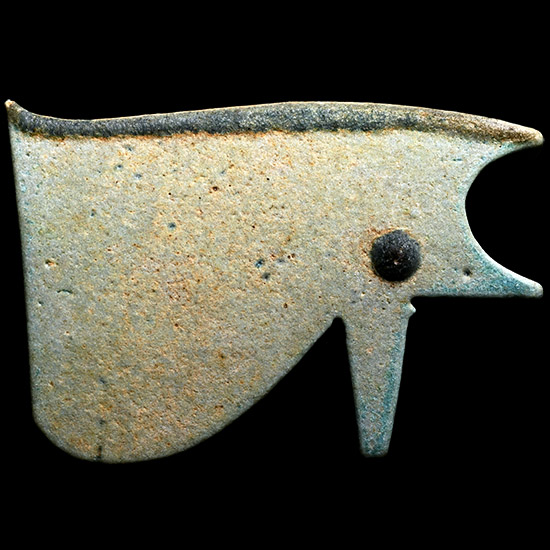
Large Egyptian Faience Eye of Horus Amulet
Third Intermediate Period, circa 1069-664 B.C.Estimate: £300 - 400 (+bp*)
Opening Bid: £150
The outline displays the characteristic wedjat-eye motif: a fusion of a human eye and eyebrow, combined with specific falcon markings: a tear-like drop extending down from the front of the lower lid and a stylised curl trailing from the base; longitudinally pierced for suspension. 7.15 grams, 41 mm
From a mid 20th century collection.
The wedjat-eye amulet depicts Horus’s healed eye, blending human and falconine features. Its ancient Egyptian name means ‘the one that is sound’. Myth holds that Seth wounded or took the eye, and Thoth later restored it. Believed to offer protection, healing, and regeneration, the popular amulet was worn by the living and the dead. -
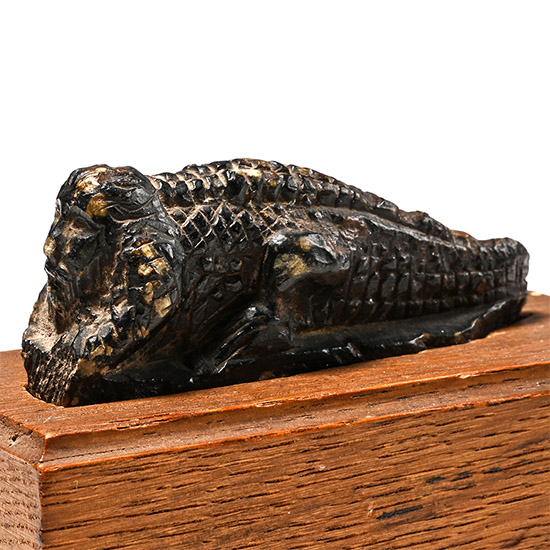
Romano-Egyptian Stone Crocodile Figure
Late Period, 664-332 B.C.Estimate: £400 - 600 (+bp*)
Opening Bid: £200
Carved in high relief with a flat underside, reptilian body with finely rendered scales, and a small human head, mounted on a custom-made wooden stand. 40.79 grams, 68 mm wide (116 grams total, 93 mmm wide including stand)
Private collection. with Mallams, Oxford, Library Sale, 2025. Acquired by the current owner from the above.
The earliest representation of a human-headed crocodile appears in a vignette from Spell 88 of the Book of the Dead dating to the reign of Ramesses II (13th century B.C.) and identifies the deceased as Sobek. Stylistically, this example appears to be from the Late Period, when amulets representing Sobek-Osiris or Sobek-Re are known. -
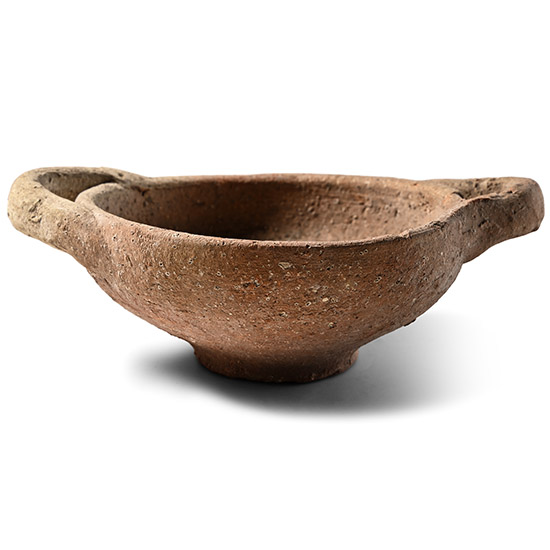
Egyptian Two-Handled Pottery Bowl
Late Period, 26th Dynasty, circa 664-525 B.C.Estimate: £60 - 80 (+bp*)
Bids: 1 | Current Bid: £5
Squat in profile with inturned rim, loop handles, old collector's ticket 'Nile Silt. Pottery bowl 26th Dynasty (664-525 BC)'. 99 grams, 12.2 cm wide
Acquired from various London-based, UK, antiquity dealers. From a Derbyshire gentleman's private museum formed from the late 1970s-early 1980s. -
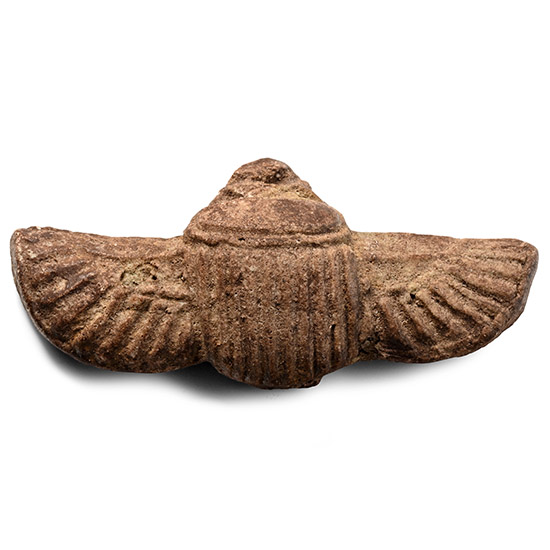
Egyptian Faience Winged Scarab
Late Period, 26th-30th Dynasty, circa 664-332 B.C.Estimate: £100 - 140 (+bp*)
Bids: 1 | Current Bid: £5
Comprising a winged scarab modelled with a ribbed carapace and two extended wings with feather detailing; a suspension hole runs transversely through the head. 10.98 grams, 60 mm
with a privately curated collection, 1980s-early 2000s. From the private collection and estate of Christine Simons (1943-2025), West Midlands, UK.
Winged scarabs were often used as funerary amulets and were believed to symbolise the deceased's rebirth and regeneration. -
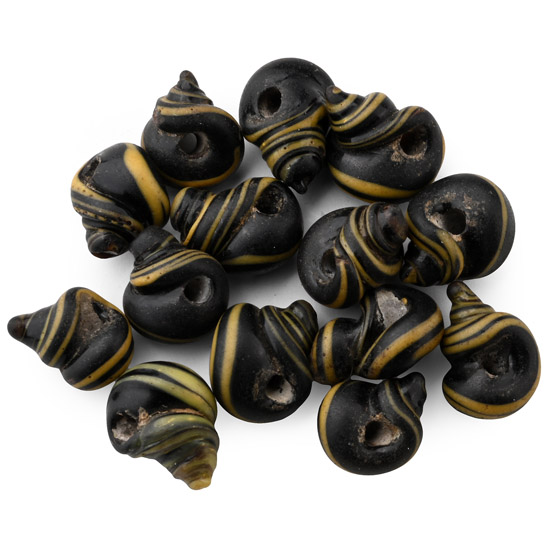
Egyptian Snail-Shaped Ribbon Mosaic Glass Bead Group
Roman Period, 30 B.C.-323 A.D.Estimate: £100 - 140 (+bp*)
Bids: 2 | Current Bid: £10
Comprising black-and-yellow mosaic glass beads shaped like snails. 10.4 grams total, 10-11 mm
Excavated from Egypt in 1914. From the private collection of Mr David Sams and his wife Elizabeth Kate Sams, gentry and amateur archaeologists who travelled to Egypt in 1914 with their daughter Ethel. Mr Sams and his wife led digging expeditions from which these items come from the family estate of Mr and Mrs Sams, by direct descent to their granddaughter. -
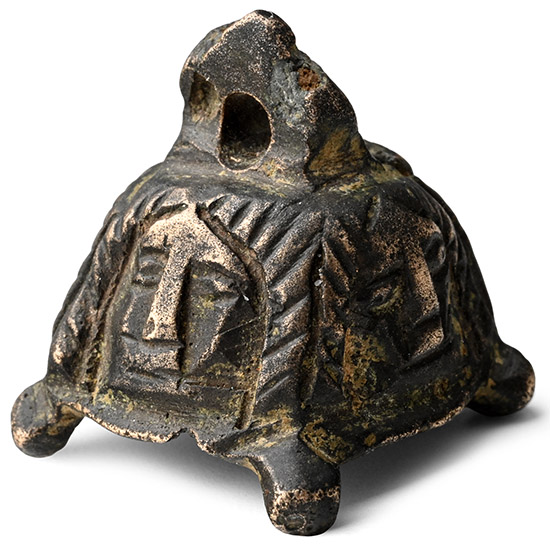
Egyptian Bronze Bell with Faces
Late-Ptolemaic Period, 664-30 B.C.Estimate: £100 - 140 (+bp*)
Opening Bid: £50
Hollow-formed miniature bell with integral loop handle, four radiating female faces to the sidewall - possibly depicting the goddess Hathor. 14 grams, 20 mm
London gentleman's collection, 1970-1990s, by descent.
The bell may have been part of a musical instrument. Many musical rituals centred on Hathor, often accompanied by musicians playing sistrums. -
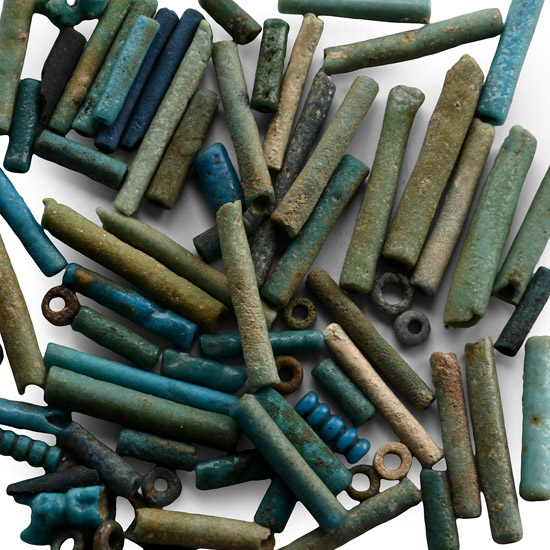
Egyptian Faience Mummy Beads and Cat Amulet
Late Period-Ptolemaic Period, circa 664-30 B.C.Estimate: £80 - 100 (+bp*)
Opening Bid: £5
Comprising tubular, ribbed and annular beads, offered with the top part of a cat amulet. 8.4 grams total, 3-24 mm
From a mid 20th century London, UK, collection. -
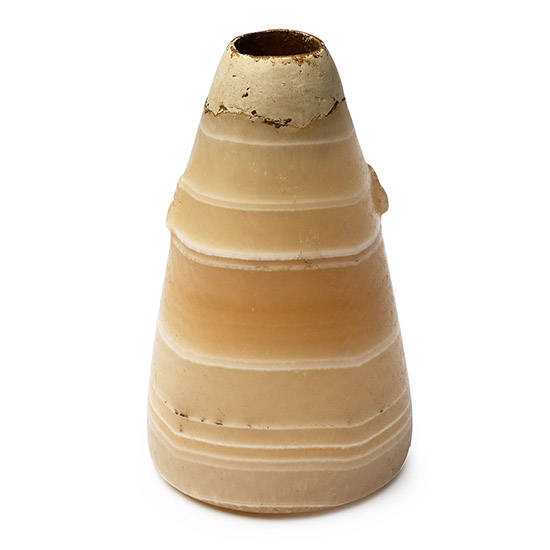
Egyptian Banded Agate Kohl Pot
Late Period, 664-332 B.C.Estimate: £400 - 600 (+bp*)
Opening Bid: £5
Cone-shaped body with traces of lug handles on the upper third; narrow opening at the top with a thin, flattened rim. 94 grams, 75 mm
UK private collection before 2000. Acquired on the UK art market. Private collection, London, UK.
This vessel's unusual triangular shape is thought to be limited to the Late Period; other comparable examples are known (e.g. Barbotin, C., Collection égyptienne: Musée Granet - Aix-en-Provence, Aix-en-Provence, 1995, p. 166, no. 97). -
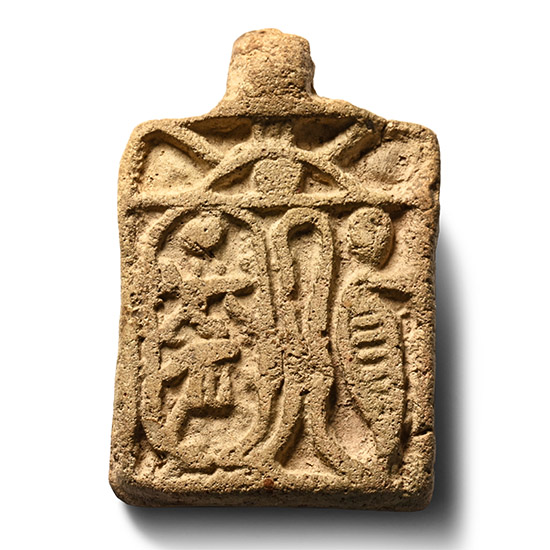
Egyptian Faience Amuletic Plaque with Cartouche of Pharaoh Thutmose III
New Kingdom, circa 1400-1292 B.C.Estimate: £200 - 300 (+bp*)
Bids: 1 | Current Bid: £5
Formed as a rectangular plaque with the cartouche of Thutmosis III and a uraeus; attachment loop to the top. 4.68 grams, 33 mm
London, UK, art market, 1980s. Private collection, London, UK. -
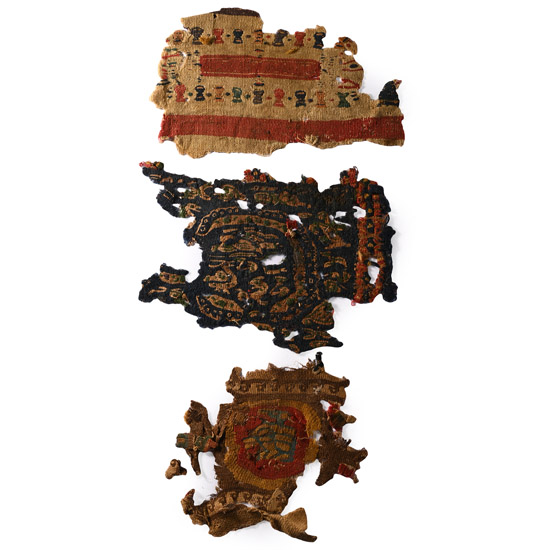
Egyptian Coptic Tunic and Tapestry Textile Fragments with Animals and Geometric Ornamets
Circa 7th-8th century A.D.Estimate: £80 - 100 (+bp*)
Opening Bid: £5
Comprising: a tapestry fragment (part of a pillow?) decorated with red bands and alternating figures of cups in green, red, blue, purple and yellow wool on linen; a large fragment of a segmentum from a tunic in coarse wool, consisting of a central medallion with a bird in red, yellow, light blue and yellow colour, with the borders decorate with meanders, tapestry, S-swift; a large portion of a tapestry with a central medallion ornamented with animals (lion, fish, birds) surrounded on the outside by dancing human figures and birds, one side circumscribed by a red stripe with vegetal ornaments, in red, blue-purple and yellow wool. 27 grams total, 15-22 cm
Acquired 1970s-1996. Property of a North American collector. London collection, 2016.
Large fragments of Coptic textiles display figures associated with the Dionysian retinue (lions, birds); however, they may date to the early period of the Islamic conquest, when tunic ornamentation began to take on an increasingly abstract and geometric character, preserving only stylised traces of the ancient Pagan symbology. -
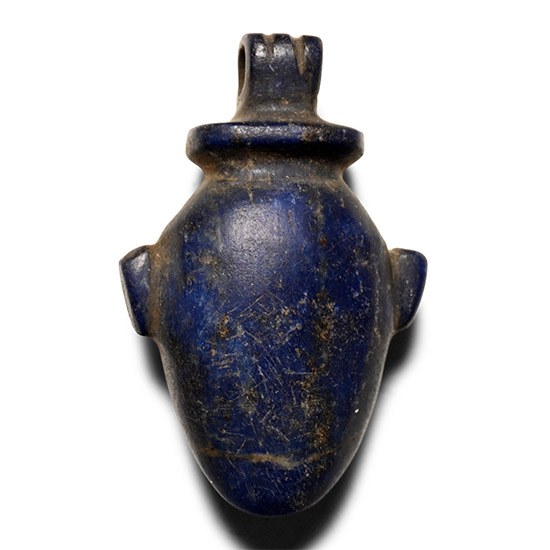
Egyptian Lapis Lazuli Heart Amulet
Late Period-Ptolemaic Period, circa 664-30 B.C.Estimate: £150 - 200 (+bp*)
Bids: 2 | Current Bid: £90
Carved with lateral lugs, a pronounced rim surmounted by a ribbed suspension loop. 2.14 grams, 21 mm
Property of a London, UK, gentleman, 1970-2000. -
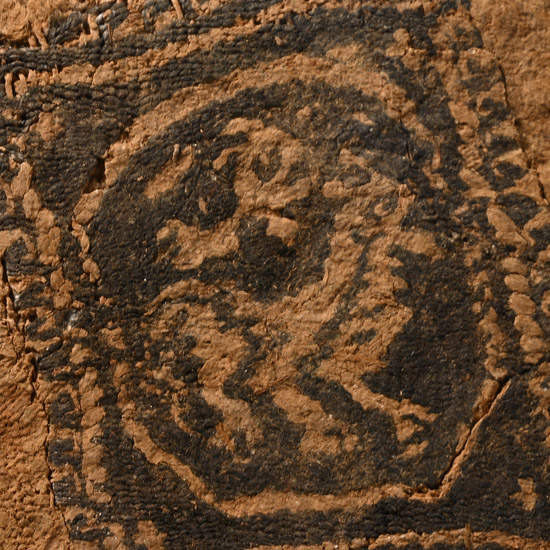
Egyptian Coptic Textile Fragments from a Tunic Tablion with Putto and Horse
Circa 5th-6th century A.D.Estimate: £50 - 70 (+bp*)
Opening Bid: £5
In white linen and blue wool, tapestry work (S-twist), showing a flying putto with a horse, borders with meander decorations. 3.84 grams total, 67-74 mm
Acquired 1970s-1996. Property of a North American collector. London collection, 2016.
The tabula, or tablion, was a square embroidery used to decorate tunics or mantles.
