-
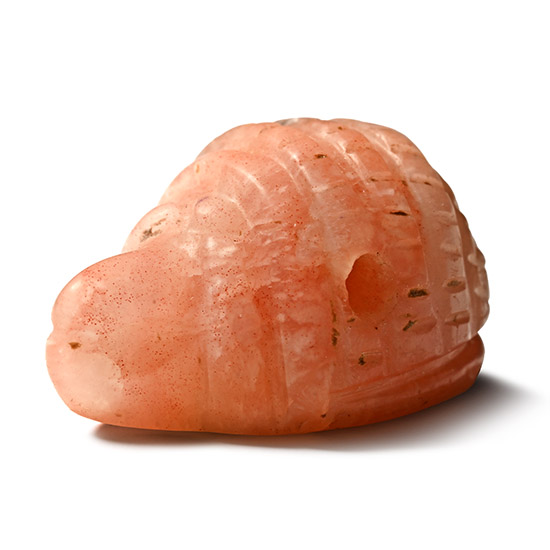
Egyptian Rose Quartz Amulet of a Hedgehog
Roman Period, 30 B.C.-323 A.D.Estimate: £100 - 140 (+bp*)
Bids: 2 | Current Bid: £10
Modelled in the round as a hedgehog with a square hatched body, almond-shaped eyes and a short snout; drilled for suspension. 3.79 grams, 20 mm
London, UK, art market, 1980s. Private collection, London, UK. -
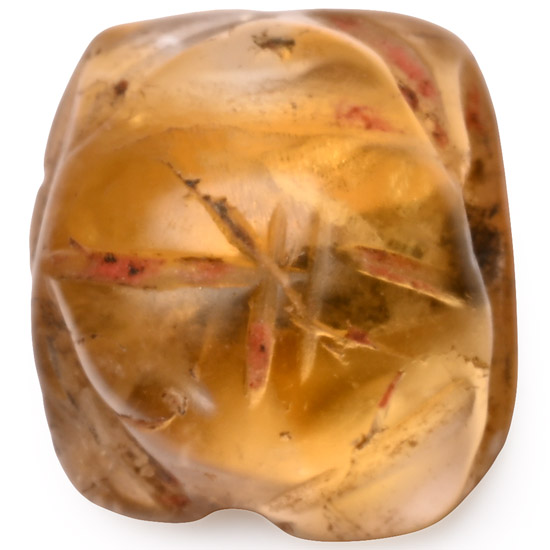
Phoenician Citrine Scarab Amulet
1st millennium B.C.Estimate: £100 - 140 (+bp*)
Bids: 1 | Current Bid: £5
Modelled in the round with a segmented upper face, plain underside and a transverse suspension hole through the body. 0.93 grams, 10 mm
From the private collection of a European gentleman (1942-2024), formed since the 1970s. -
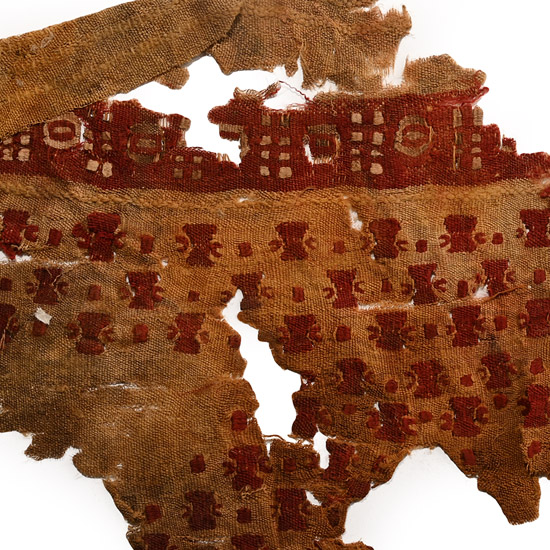
Egyptian Coptic Wall Tapestry Textile Fragment with Geometric Ornament
Circa 6th century A.D.Estimate: £50 - 70 (+bp*)
Opening Bid: £5
Striped linen fabric, embellished with red wool and linen tapestry featuring butterfly-like motifs; side clavus decorated with alternating dots and geometric bands; S-twist. 24 grams total including paper folder, 36.5 cm
Acquired 1970s-1996. Property of a North American collector. London collection, 2016.
The fragment might have belonged to a wall hanging, but its resemblance to the fabric from Antinoe and its lightness do not rule out the possibility that it was part of a scarf. -
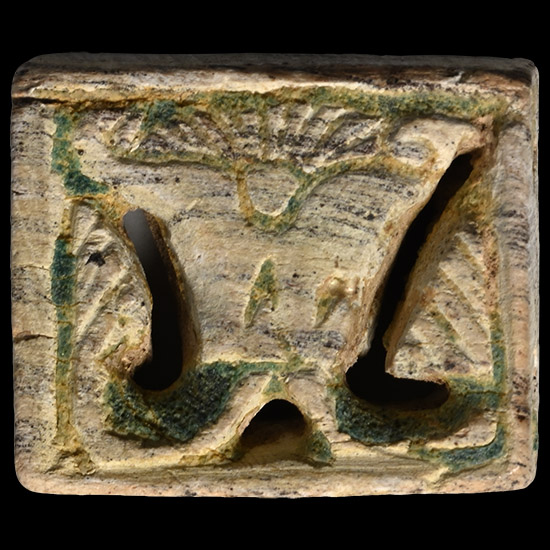
Egyptian Steatite Plaque Amulet with Lotus
Late Period, 664-332 B.C.Estimate: £100 - 140 (+bp*)
Opening Bid: £50
Rectangular openwork plaque with two blooming lotus flowers, one on each side, pierced twice for suspension. 1.77 grams, 14 mm
From an early 20th century UK collection. Accompanied by a previously illustrated catalogue card with provenance. -
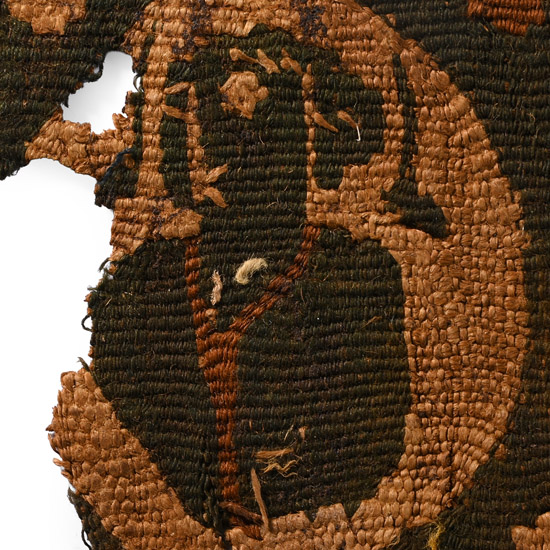
Egyptian Coptic Tunic Textile Fragment with Bust of a Man
Circa 6th century A.D.Estimate: £40 - 60 (+bp*)
Opening Bid: £5
A tablion in purple and red wool on linen, showing a male figure inside a medallion, four circlets on the corners. 3.41 grams, 82 mm
Acquired 1970s-1996. Property of a North American collector. London collection, 2016.
The tabula, or tablion, was a square embroidery used to decorate tunics or mantles. Such images, depicting black warriors or hunters, are possibly related to the Dionysiac cortege or to Nilotic iconography. -
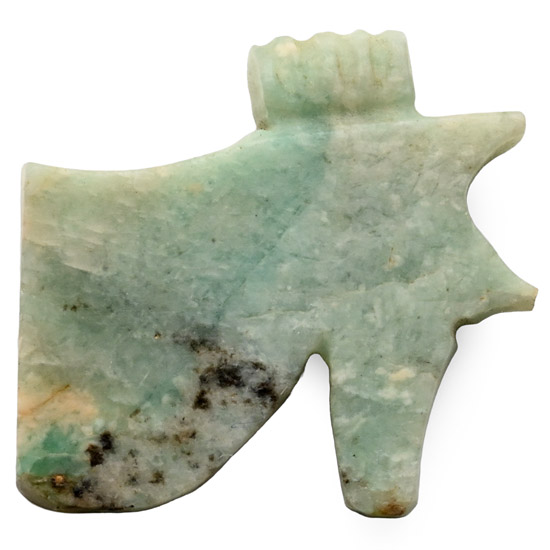
Egyptian Feldspar Eye of Horus Amulet
Late Period, 664-332 B.C.Estimate: £100 - 140 (+bp*)
Bids: 1 | Current Bid: £5
Carved from light-green feldspar, with a ribbed suspension loop above. 1.78 grams, 17 mm
London, UK, art market, 1980s. Private collection, London, UK. -
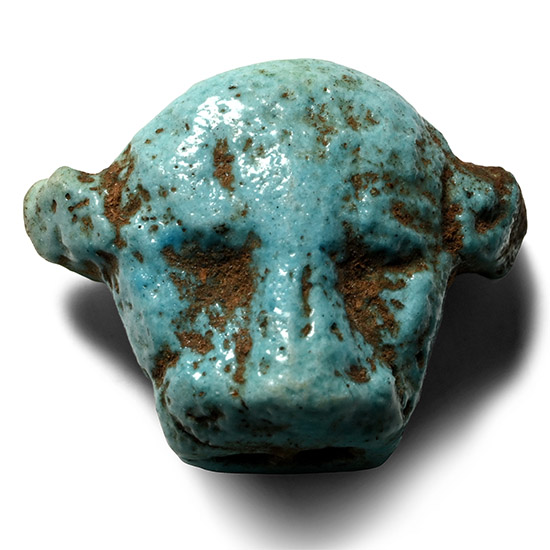
Large Egyptian Faience Lioness Head Amuletic Bead
New Kingdom, 1550-1069 B.C.Estimate: £150 - 200 (+bp*)
Bids: 1 | Current Bid: £75
Blue-glazed faience amuletic bead modelled as a lioness's head, pierced vertically through the nostrils with two holes. 2.5 grams, 21 mm
From a mid 20th century collection. -
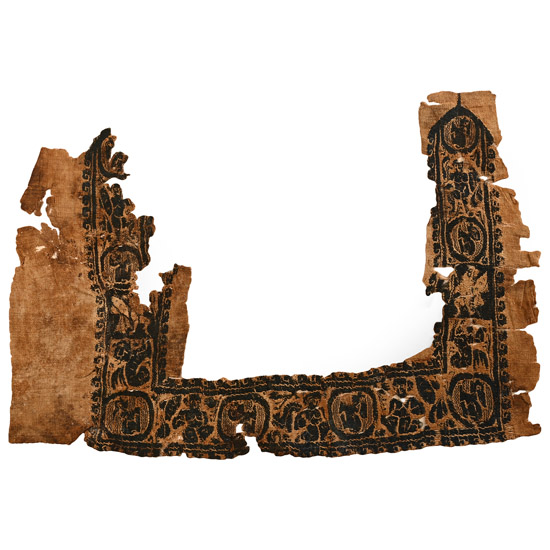
Large Egyptian Coptic Textile Fragment of a Tunic Embroidered with Putto Warriors and Hares
Circa 5th-6th century A.D.Estimate: £120 - 170 (+bp*)
Bids: 2 | Current Bid: £20
Decoration from the lower part of a tunic, featuring segmenta and clavi adorned with oval medallions (orbiculi) enclosing running hares and two nude, striding warrior figures facing in opposite directions, each holding a shield; white linen ground with tapestry-woven decoration, S-twist. 51 grams total including paper folder, 49.5 cm
Acquired 1970s-1996. Property of a North American collector. London collection, 2016.
The theme of rabbits or hares, in association with other characters and animals of the Dionysian thiasos in a hunting setting, has notable parallels. Such representations are linked to narratives of the Dionysian cycle. -
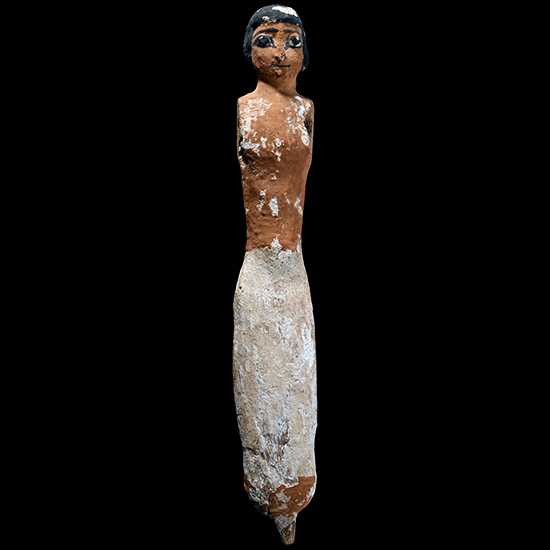
Large Egyptian Wooden Figure
Middle Kingdom, circa 2050-1786 B.C.Estimate: £500 - 700 (+bp*)
Opening Bid: £250
Funerary figure with sockets for separate pivoting arms, ankle-length kilt with peg base; painted facial details and hair; mounted on a custom-made stand. 107 grams, 32.2 cm (179 grams total, 36 cm including stand)
Previously with Bonhams in the early 2000s. with Lyon & Turnbull, 17 November 2022, no.545. Property of a West Sussex, UK, gentleman. Accompanied by a copy of the Lyon & Turnbull catalogue listing. -
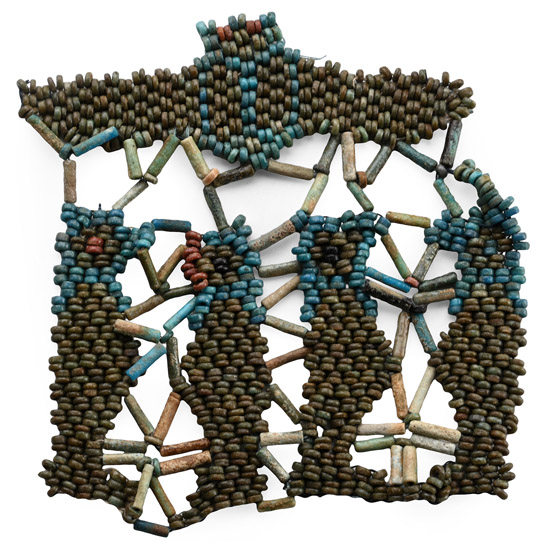
Egyptian Mummy Bead Winged Scarab and Four Sons of Horus
Late Period-Ptolemaic Period, circa 664-30 B.C.Estimate: £100 - 140 (+bp*)
Opening Bid: £50
Comprising a beaded winged scarab with the Four Sons of Horus beneath. 24.2 grams, 10.5 cm
Ex Art Shop Windsor, 1990s. From a private UK collection.
Winged scarabs were often used as funerary amulets and were believed to symbolise the deceased's rebirth and regeneration. The Four Sons of Horus were deities who safeguarded the deceased's internal organs. The human-headed Imsety protected the liver, the baboon-headed Hapy the lungs, the jackal-headed Duamutef the stomach, and the falcon-headed Qebehsenuef the intestines. -
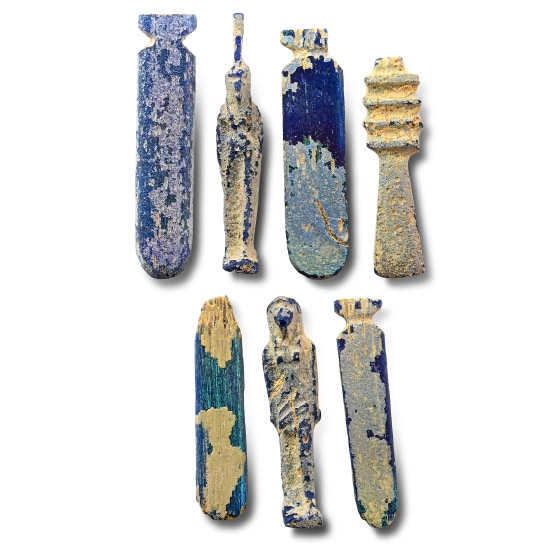
Egyptian Blue Glass Inlay Collection
Late Period-Ptolemaic Period, circa 664-30 B.C.Estimate: £250 - 350 (+bp*)
Bids: 1 | Current Bid: £140
Comprising: three cartouche-shaped inlays, a djed pillar, two standing deities (possibly Isis and Horus), and a narrow, fragmentary inlay (possibly another cartouche). 8.98 grma total, 31-37 mm
From a 20th century UK collection. -
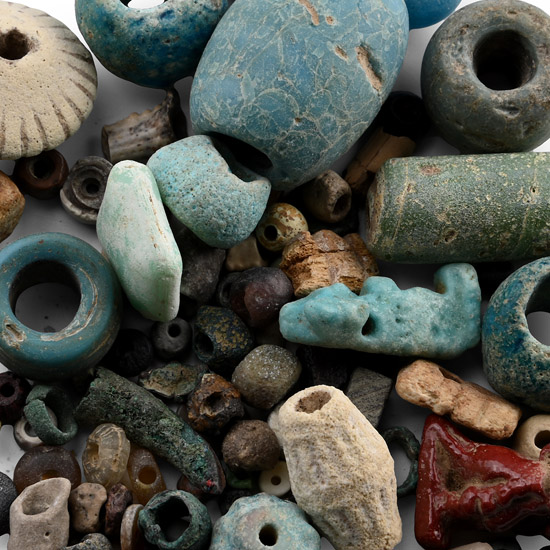
Egyptian Faience Beads and Amulets
Late Period-Roman Period, 664 B.C.-323 A.D.Estimate: £100 - 140 (+bp*)
Opening Bid: £5
Mixed group of beads, including two cat-shaped amulets, a hybrid dwarf with a ram's head, bird wings and tail, wearing a lunar crescent-and-disc headdress, large barrel-shaped bead, and others. 47 grams total, 1-23 mm
Ex 1990s collection.

