-
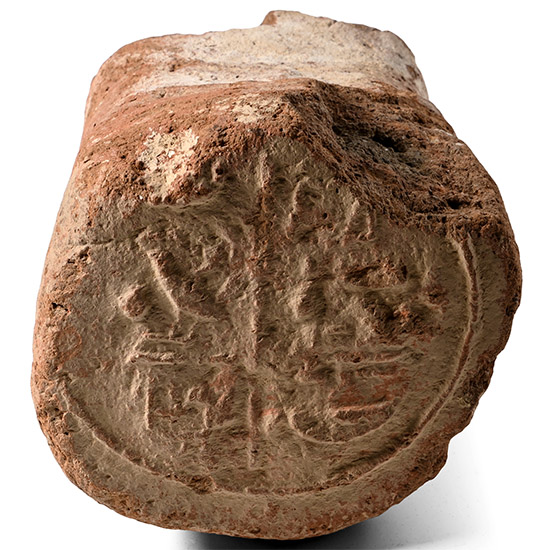
Egyptian Terracotta Funerary Cone of Amenemheb.
New Kingdom, 18th Dynasty, circa 1444-1400 B.C.Estimate: £200 - 300 (+bp*)
Bids: 4 | Current Bid: £80
Part of a tapering cone, with the circular flat end impressed with two columns of hieroglyphic text reading: 'Deputy of the great army, Amenemheb'. 333 grams, 90 mm
Acquired from Abdoul Rassoul on the West Bank at Luxor, 1974-1980 when a guest lecturer. From the private collection of Peter Clayton, FCILIP, Dip, Arch, FSA, FRNS, Hemel Hempstead, Hertfordshire, UK; formed since the late 1950s.
Amenemheb's tomb in the Theban necropolis at Sheikh Abd el-Qurna is numbered TT 85. Amenemhab (also known as Mahu), was an important military official who served under pharaohs Thutmose III and Amenhotep II. -
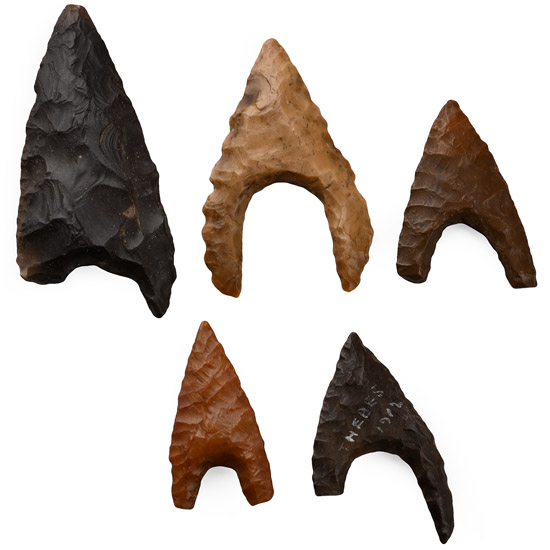
Egyptian Stone Age Knapped Arrowhead Group from Thebes
Neolithic Period, 11,000-5,200 B.P.Estimate: £150 - 200 (+bp*)
Bids: 2 | Current Bid: £25
Comprising five barbed types, two with chipped barbs; accompanied with a handwritten tag reading 'Neolithic hollow-based arrowheads. Fayuum type. c.5000 BC'. 24.8 grams total, 33-58 mm
Found Thebes. From the collection of A.D. Passmore (1879-1958), his collection of flints from the area of Stonehenge was donated to the Ashmolean Museum in the 1950s. From the private collection of Peter Clayton, FCILIP, Dip, Arch, FSA, FRNS, Hemel Hempstead, Hertfordshire, UK; formed since the late 1950s. Accompanied by a copy of an old handwritten information card by Peter Clayton. -
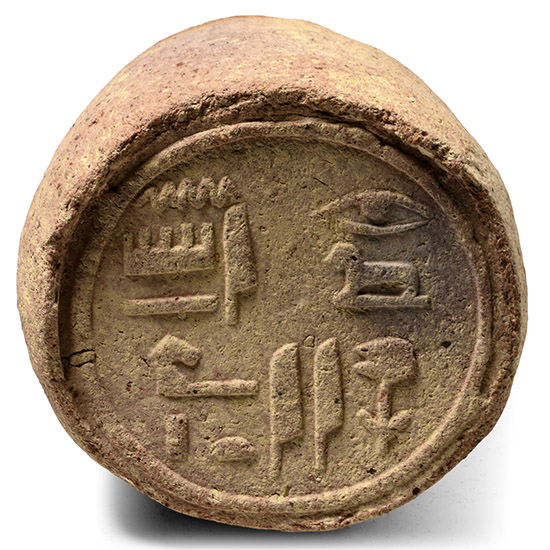
Egyptian Terracotta Funerary Cone for Hat
New Kingdom, 18th Dynasty, circa 15th-14th century B.C.Estimate: £400 - 600 (+bp*)
Bids: 4 | Current Bid: £135
Almost complete funerary cone of typical tapering form, with the circular flat end impressed with two unbordered horizontal lines of hieroglyphic text, reading: "The Osiris, corn measurer of Amun, Hat". 246 grams, 70 mm
Acquired from Abdoul Rassoul on the West Bank at Luxor, 1974-1980 when a guest lecturer. From the private collection of Peter Clayton, FCILIP, Dip, Arch, FSA, FRNS, Hemel Hempstead, Hertfordshire, UK; formed since the late 1950s.
This individual's tomb remains unknown. Interestingly, this cone is a variant of Hat's known type, which is not unusual, as variant cones for other tomb owners are also known. -
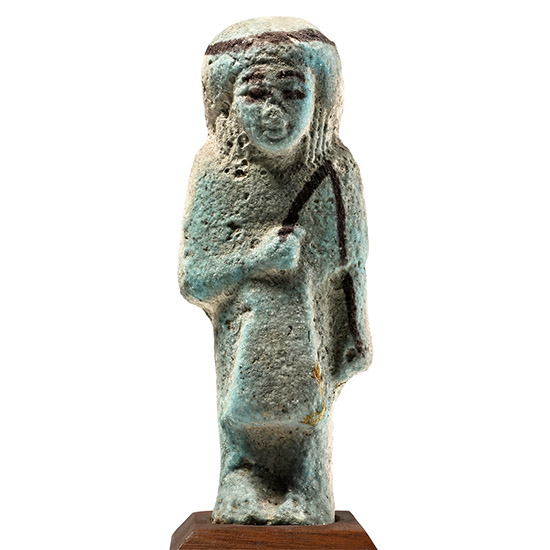
Egyptian Blue Glazed Faience Overseer Shabti
Third Intermediate Period, 21st Dynasty, circa 980-935 B.C.Estimate: £400 - 600 (+bp*)
Bids: 1 | Current Bid: £5
Overseer shabti type wearing a duplex wig with a fringed lower portion and the characteristic overseer's apron, with the right hand across the chest holding a whip; mounted on a display stand. 131 grams total, 13.1 cm including stand
Acquired from Richardson, February 1965, for £2.00. From the private collection of Peter Clayton, FCILIP, Dip, Arch, FSA, FRNS, Hemel Hempstead, Hertfordshire, UK; formed since the late 1950s. Accompanied by an old handwritten information card by Peter Clayton, collection no.111.
Although uninscribed, this robust figure with a distinctive fringed wig compares to other examples in museum collections (e.g. Janes, G., The Shabti Collections 5: A Selection from the Manchester Museum, Lymm, 2012, 324, nos 184a-b). -
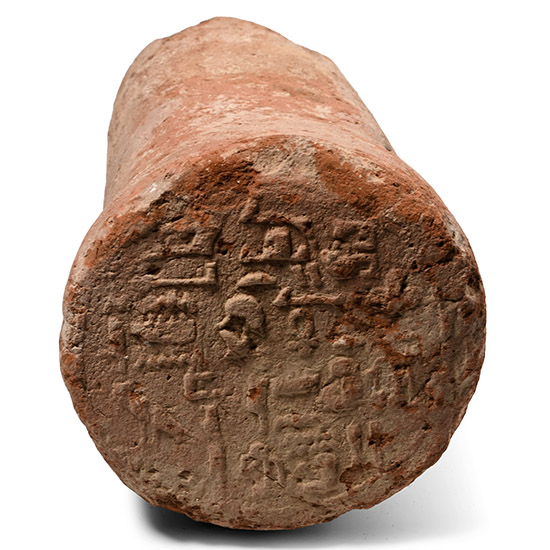
Egyptian Terracotta Funerary Cone of Ineni
New Kingdom, 18th Dynasty, circa 1514-1458 B.C.Estimate: £400 - 600 (+bp*)
Bids: 5 | Current Bid: £165
Large portion of a tapering cone with the circular flat end impressed with four horizontal lines of hieroglyphic text reading: 'Count, overseer of the (double) granary of Amun, overseer of all the sealed things in the domain of Amun, scribe, Inen(i), true of voice'. 755 grams, 13.8 cm
Acquired from Abdoul Rassoul on the West Bank at Luxor, 1974-1980 when a guest lecturer. From the private collection of Peter Clayton, FCILIP, Dip, Arch, FSA, FRNS, Hemel Hempstead, Hertfordshire, UK; formed since the late 1950s.
Ineni enjoyed a long and highly successful career, serving under five pharaohs (Amenhotep I, Thutmosis I, Thutmosis II, Hatshepsut, and Thutmosis III). His large rock-cut tomb (TT 81) is at Sheikh Abd el-Qurna, Thebes. -
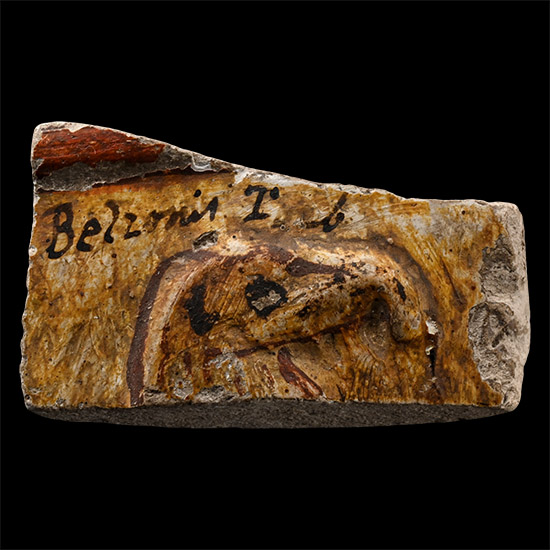
Egyptian Painted Limestone Fragment from the Tomb of Pharaoh Seti I
New Kingdom, 19th Dynasty, 1290-1279 B.C.Estimate: £100 - 140 (+bp*)
Bids: 2 | Current Bid: £20
Colourful, almost rectangular section of a wall fragment, with a slightly dished face, low-relief moulding with pigment, and 'Belzonis T[om]b' written at the top; accompanied by an old collector's label suggesting the likely findspot and other details. 15.3 grams, 44 mm
With a late 19th-early 20th century handwritten ticket attached. From the private collection of Peter Clayton, FCILIP, Dip, Arch, FSA, FRNS, Hemel Hempstead, Hertfordshire, UK; formed since the late 1950s.
The Italian explorer and antiquarian Giovanni Battista Belzoni uncovered the tomb of Seti I (KV 17) on October 16, 1817. This monumental tomb, with beautifully decorated walls, extended almost 140 metres underground through a series of descending corridors and chambers. In 1821, Belzoni opened a groundbreaking exhibition at the Egyptian Hall in Piccadilly, London, presenting a full-scale replica of the tomb. The paid public exhibition sparked massive 19th-century "Egyptomania" and introduced European audiences to ancient Egyptian art. Such was the renown of his discovery that it was often referred to as 'Belzoni's Tomb'. -
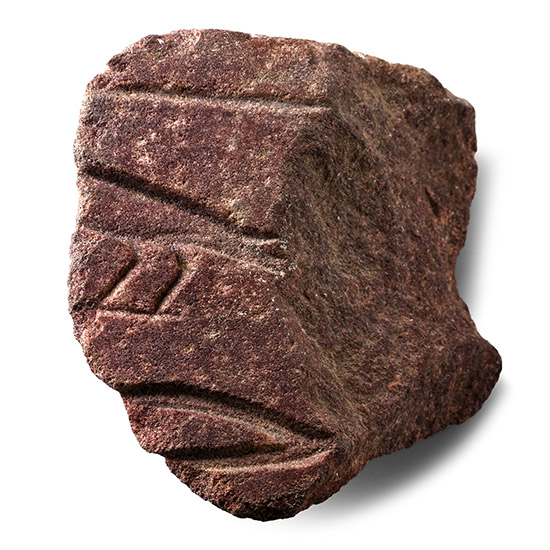
Egyptian Red Quartzite Granite Hieroglyphic Fragment
New Kingdom, 18th Dynasty, Amarna Period, 1379-1362 B.C.Estimate: £100 - 140 (+bp*)
Opening Bid: £5
Irregular fragment preserving two partial hieroglyphs: the swallow and the mouth signs, possibly writing the word wr, meaning 'great'. 150 grams, 81 mm
Acquired in April 1980. From the private collection of Peter Clayton, FCILIP, Dip, Arch, FSA, FRNS, Hemel Hempstead, Hertfordshire, UK; formed since the late 1950s. Accompanied by an old handwritten information card by Peter Clayton, collection no.145. -
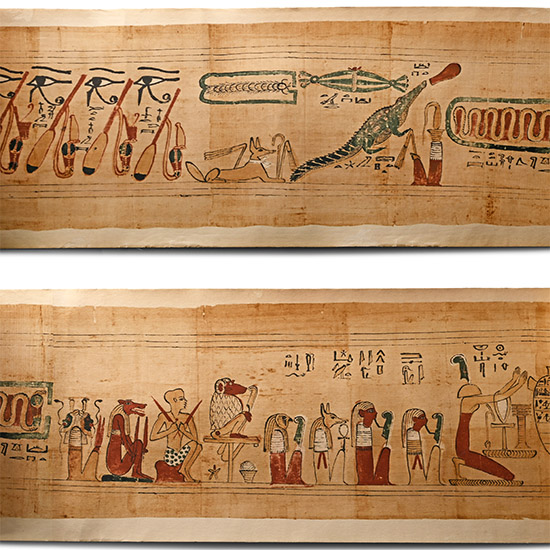
Egyptian Papyrus Museum Reproduction of Berlin 3127 in Tube
20th century A.D.Estimate: £60 - 80 (+bp*)
Bids: 1 | Current Bid: £5
Colour reproduction of Berlin Papyrus 3127 belonging to Amun-em-wia, who lived during the 21st Dynasty (Third Intermediate Period). 312 grams total, tube: 27.5 cm high
From the private collection of Peter Clayton, FCILIP, Dip, Arch, FSA, FRNS, Hemel Hempstead, Hertfordshire, UK; formed since the late 1950s. -
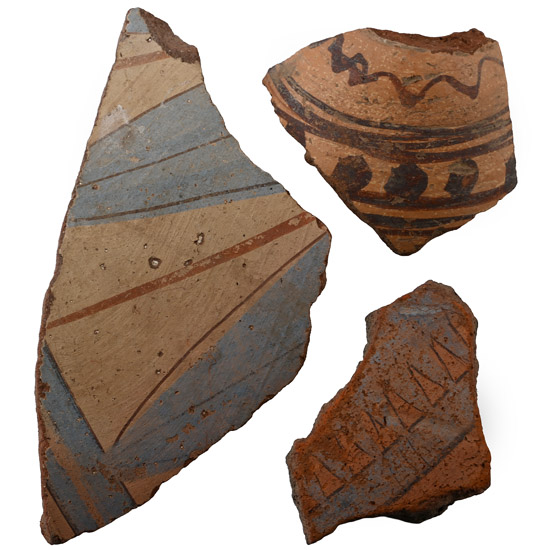
Large Egyptian Painted Bowl Fragments
New Kingdom, 18th Dynasty, Amarna Period, 1379-1362 B.C.Estimate: £80 - 100 (+bp*)
Opening Bid: £5
Two fragments of distinctive blue-painted pottery and one from a Mycenaean vessel. 221 grams total, 7.2-16.5 cm
Acquired in March 1979. From the private collection of Peter Clayton, FCILIP, Dip, Arch, FSA, FRNS, Hemel Hempstead, Hertfordshire, UK; formed since the late 1950s. Accompanied by an old handwritten information card by Peter Clayton, collection no.143.
The largest blue-painted fragment likely comes from the neck, and the smaller from the body, of a large storage vessel; intact examples of these vessels have been found at Amarna (cf. Seyfried, F. (ed.), In the Light of Amarna: 100 Years of the Nefertiti Discovery, Berlin, 2012, pp. 288-289, Cat. no. 68, for a near-complete example). Amarna has yielded the largest quantity of Late Helladic (LH IIIA2) Mycenaean pottery in Egypt. Analysis has revealed that several Mycenaean sherds excavated at Amarna in Egypt come from a production site in the northern Argolid, probably in the Mycenae-Berbati region. -
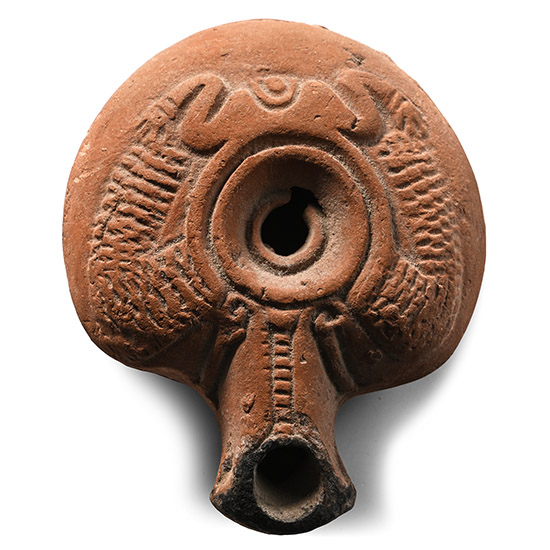
Romano-Egyptian Terracotta Frog Oil Lamp
Roman Period, 3rd-4th century A.D.Estimate: £80 - 100 (+bp*)
Bids: 1 | Current Bid: £5
Cordate in plan and biconvex in section, with a short volute nozzle and low-relief stylised frog detailing on the discus; basal ring enclosing 'B' mark; old collector's ticket: 'Buff terracotta lamp in form of a frog with nozzle standing out from front of lamp. Frog is very stereotyped, beneath B. 3-4th century A.D. Found in Alexandria. From Puys-Aubert collection in Alexandria. March 1963.' 102 grams, 92 mm
From the private collection of Peter Clayton, FCILIP, Dip, Arch, FSA, FRNS, Hemel Hempstead, Hertfordshire, UK; formed since the late 1950s. Accompanied by an old handwritten identification card written by Peter Clayton. -
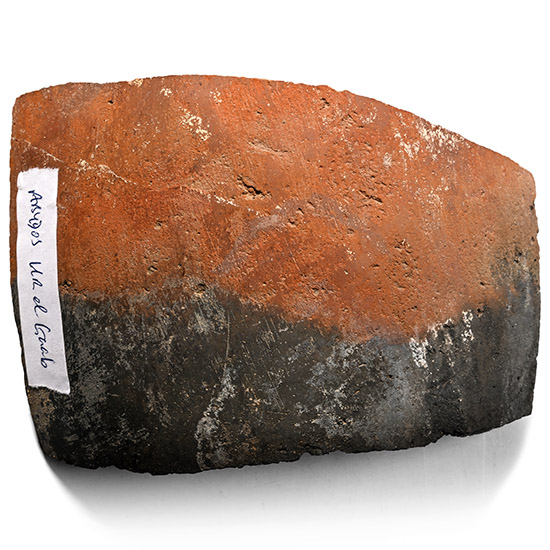
Large Egyptian Black-Topped Vase Fragment
Predynastic Period, Naqada II, circa 3900–3400 B.C.Estimate: £20 - 30 (+bp*)
Bids: 4 | Current Bid: £15
Curved in section with applied findspot label 'Abydos Ur(sic) el Gaab'. 166 grams, 13.6 cm
Found at Umm el-Ga'ab, Abydos, Egypt. From the private collection of Peter Clayton, FCILIP, Dip, Arch, FSA, FRNS, Hemel Hempstead, Hertfordshire, UK; formed since the late 1950s.
Umm el-Qa'ab is Arabic for 'mother of pots', referring to the mounds of Predynastic and later pottery left by ancient pilgrims and more recent excavators. -
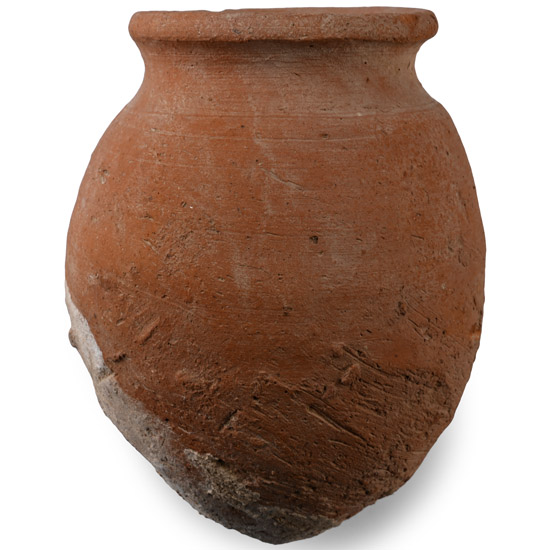
Egyptian Terracotta Jar
New Kingdom, circa 16th-13th century B.C.Estimate: £300 - 400 (+bp*)
Bids: 1 | Current Bid: £5
With pointed foot, bulbous body, carinated shoulder and everted rim. 770 grams, 15.4 cm
Acquired Sunday 11th October 1992. From the private collection of Peter Clayton, FCILIP, Dip, Arch, FSA, FRNS, Hemel Hempstead, Hertfordshire, UK; formed since the late 1950s. Accompanied by an old handwritten information ticket.
Various forms of this vessel were produced during the New Kingdom (see Guidotti, M.C., Vasi dall’epoca protodinastica al Nuovo Regno, Museo Egizio di Firenze, Rome, 1991, pp. 218, nos. 339-340, and p. 227, no. 361).

