-
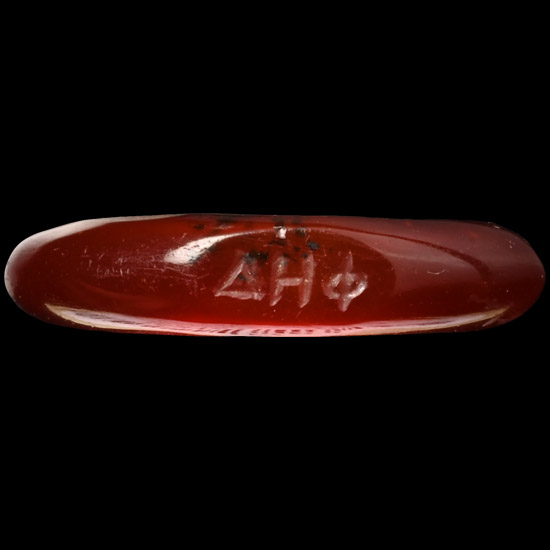
Roman Carnelian Ring with Greek Inscription
1st century B.C.-1st century A.D. or laterEstimate: £40 - 60 (+bp*)
Bids: 2 | Current Bid: £10
Ellipsoid-shaped with lentoid-section hoop and flat plaque, inscribed legend 'ΔΗΦ'. 0.96 grams, 18.62 mm overall, 11.80 mm internal diameter
From the private collection of a European gentleman (1942-2024), formed since the 1970s. -
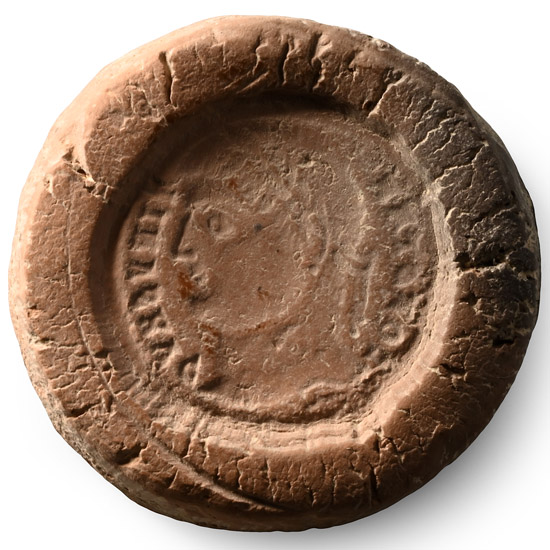
Roman Terracotta Coin Forger's Mould
Circa 3rd-4th century A.D.Estimate: £50 - 70 (+bp*)
Bids: 1 | Current Bid: £5
Discoid clay mould with an impressed design of a coin on each face. 4.45 grams, 26 mm
London gentleman's collection, 1970-1990s, by descent. -
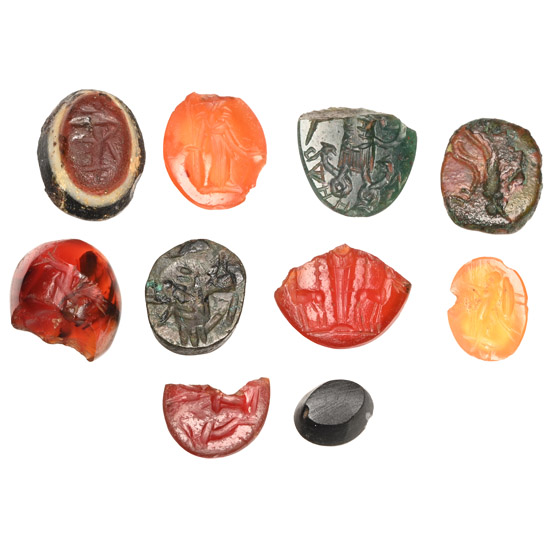
Roman Gemstone Collection
2nd-3rd century A.D. or laterEstimate: £100 - 140 (+bp*)
Bids: 1 | Current Bid: £5
Including Abraxas as an anguiped figure, tower with flanking deer, standing figure and other designs; each supplied with a museum-quality impression. 4.84 grams total, 6-12 mm
From the private collection of a European gentleman (1942-2024), formed since the 1970s. -
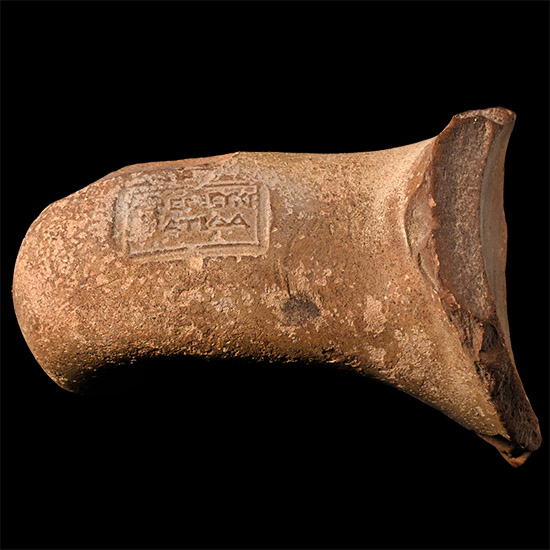
Roman Terracotta Amphora Handle with Stamp
Circa 1st century A.D.Estimate: £50 - 70 (+bp*)
Bids: 1 | Current Bid: £5
Sturdy handle fragment with a rectangular stamp on the upper face with legend 'E[I]C EYKPATIΔA (to Eukratides)'. 229 grams, 10.8 cm
From the private collection of Peter Clayton, FCILIP, Dip, Arch, FSA, FRNS, Hemel Hempstead, Hertfordshire, UK; formed since the late 1950s.
The commercial stamp seems to be linked to the name Eukratides, referring to a Graeco-Roman trade mark impressed onto the clay handles of ceramic transport amphorae. Eukratides could have been a merchant at the destination or the owner of the commercial business. -
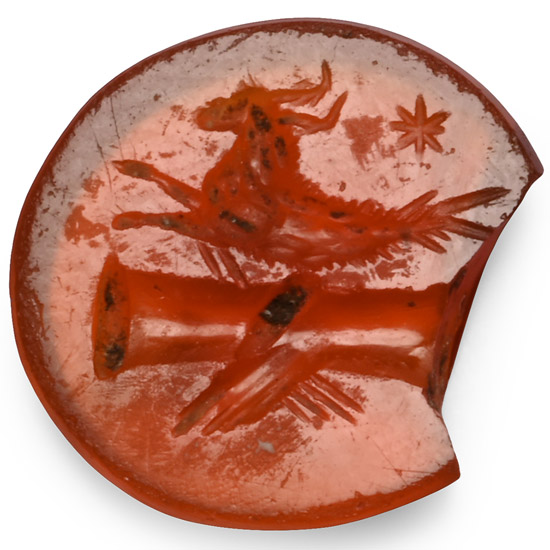
Roman Carnelian Legionary Gemstone with Capricorn for Legio Fourteen Gemina
1st century B.C.-1st century A.D.Estimate: £150 - 200 (+bp*)
Opening Bid: £5
Discoid type with clasped hands beneath a capricorn, symbol of Legio XIV Gemina; chipped; supplied with an impression. 0.45 grams, 11 mm
From the private collection of a European gentleman (1942-2024), formed since the 1970s. -
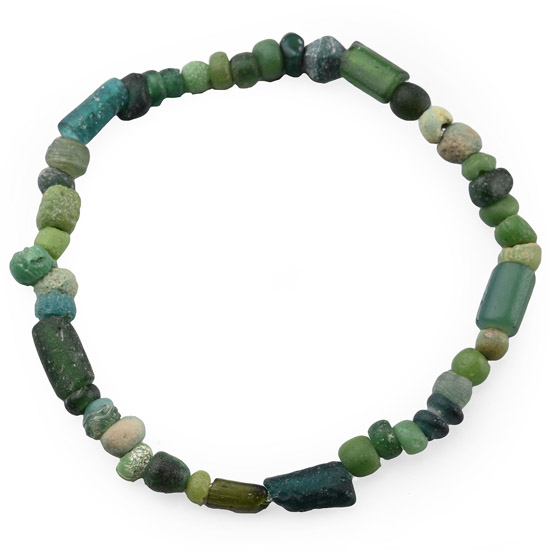
Roman Green Glass Bead Bracelet
Circa 1st-4th century A.D.Estimate: £50 - 70 (+bp*)
Bids: 1 | Current Bid: £5
Composed of oblate and tubular beads, restrung with an elasticated string. 7.76 grams, 17.6 cm
Ex Ancient Art Shop, Windsor, UK, 1990s. Ex private collection. -
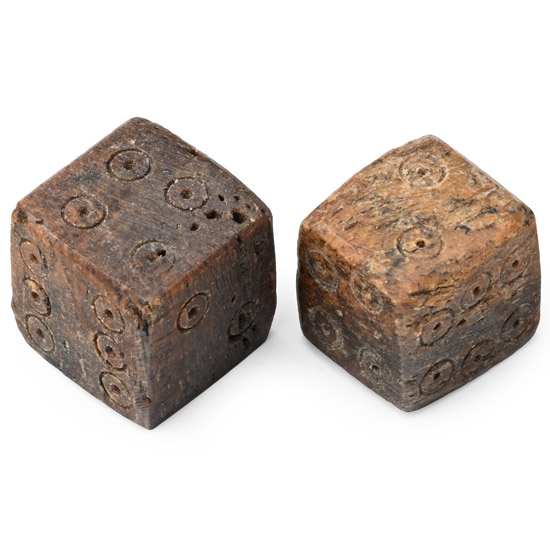
Roman Bone Gaming Dice Pair
Circa 1st-4th century A.D.Estimate: £60 - 80 (+bp*)
Opening Bid: £5
Comprising two cuboid dice with ring-and-dot markings disposed 1:6, 2:5, 3:4. 3.19 grams total, 9 mm each
Ex German art market, 2000s. Acquired from an EU collector living in London. From the collection of a Surrey, UK, gentleman. -
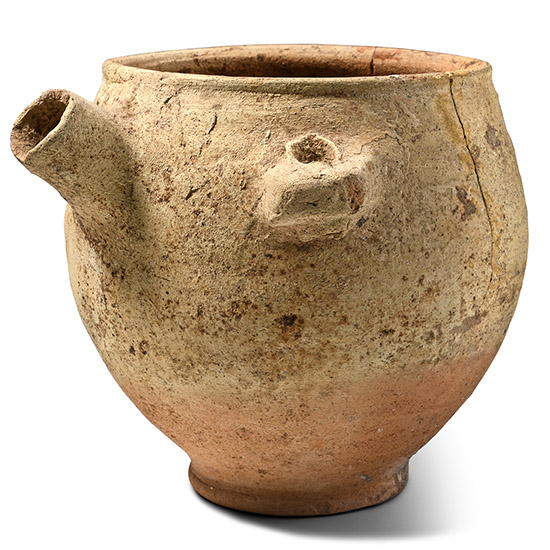
Roman Terracotta Three-Handled Spouted Jar
Circa 2nd-3rd century A.D.Estimate: £100 - 140 (+bp*)
Opening Bid: £5
Globular in profile with rolled rim and flared foot, short spout to the shoulder and three radiating pierced lugs. 390 grams, 15.5 cm
Ex old English collection. From the estate of a late Bristol, South West England, collector. -
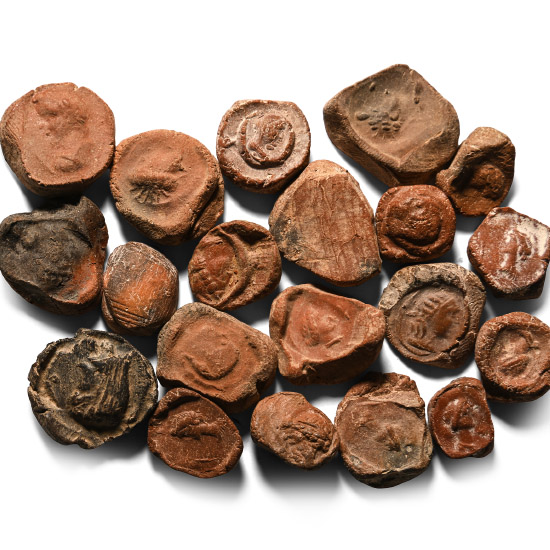
Roman Terracotta Bullae, Tesserae or Token Group
3rd century B.C.-1st century A.D.Estimate: £100 - 140 (+bp*)
Opening Bid: £5
A mixed group of ceramic bullae, tesserae or theatre tokens bearing low-relief motifs, mainly consisting of profile busts of deities. 30 grams total, 13-22 mm
From the private collection of a European gentleman (1942-2024), formed since the 1970s.
The term 'tessera' was used in Roman times to convey the Greek term σύμβολον (token). Small tiles are known as tokens, often shaped like coins, made of metal (copper, lead, iron), clay, bone, wood, or glass, stamped as well as engraved. The tokens, however, are not exclusively coin-shaped, as the Latin term 'tessera' suggests by etymologically referring to a square or at least a four-sided shape and confirmed in several cases by material remains of the past. Tokens and tesserae seem to have been used both in Athens and Rome for the distribution of goods. According to written sources, the term token is identified with credentials of the official authorities. They have also been interpreted as tokens of identity, as entrance tickets to theatre performances, tribunals or assemblies of citizens, archival material of seal engraving, as pawns in games, Charon’s obols and even as amulets. -
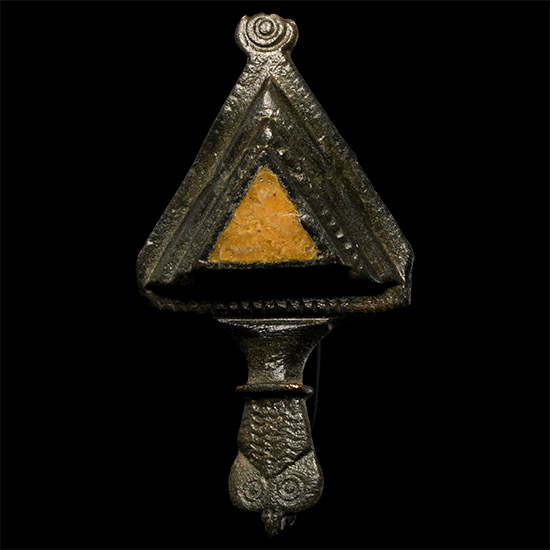
Roman Enamelled Bronze Tortoise-Headed Triangular Brooch
Circa 2nd century A.D.Estimate: £100 - 140 (+bp*)
Opening Bid: £50
Comprising raised triangular plate with yellow enamel, a stylised zoomorphic head finial to the top, round-section pin and catchplate to the reverse. 3.51 grams, 35 mm
Ex German art market, 2000s. Acquired from an EU collector living in London. From the collection of a Surrey, UK, gentleman. -
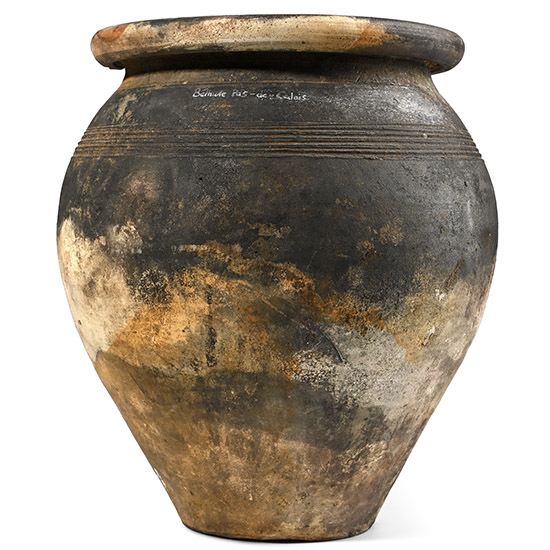
Large Gaulish Roman Terracotta Vase
Calais, 2nd-3rd century A.D.Estimate: £250 - 350 (+bp*)
Opening Bid: £125
Piriform in profile with broad everted rim, band of rouletting to the shoulder and old collector's inked notation 'Béthune Pas-de-Calais'. 1.79 kg, 24 cm high
Found Béthune in Pas-de-Calais, Northern France. Ex Wiltshire, UK, private collection, 1980s. -
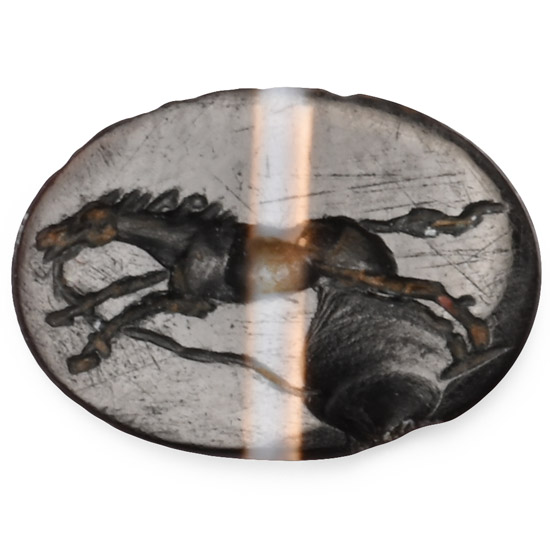
Roman Banded Sardonyx Gemstone with Fleeing Horse
Roman Republic, 1st century B.C.Estimate: £200 - 300 (+bp*)
Opening Bid: £5
Ellipsoid type with intaglio scene of a horse in full gallop with reins trailing; supplied with a museum-quality impression. 0.17 grams, 11 mm
From the private collection of a European gentleman (1942-2024), formed since the 1970s.

