-
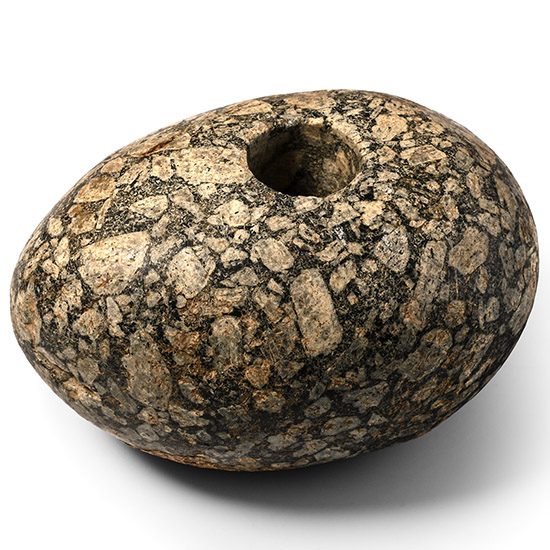
Western Asiatic Stone Macehead
4th millennium B.C.Estimate: £400 - 600 (‡+bp*)
Opening Bid: £200
Oval in plan with a tapering drilled central socket. 360 grams, 81 mm
Ex private collection, Contessa L.G., since the 1980s. Private collection, acquired in 1999.
The mace was a close-combat weapon consisting of a short handle and a massive striking element—the head, a striking weapon capable of inflicting severe contusions and internal fractures. Although a very archaic and rather primitive weapon, the mace was nevertheless widely used in the ancient East. Its sacred and representative role was particularly significant. Due to its shape, it symbolised the owner's masculinity and was therefore one of the primary insignia of power, symbolising the inseparability of its civil, military, and sacred-magical essences—ensuring the functioning and reproduction of the collective and the conditions for its existence. This is why we so often encounter ‘ceremonial’ maces, especially those made of stone—in this case, undoubtedly a ritual material. However, it must be said that stone, as a material for a mace head, was in no way inferior to metal in terms of combat qualities, while being much more labour-intensive to manufacture, which was precisely what appealed to the ritual, symbolic role of this weapon. -
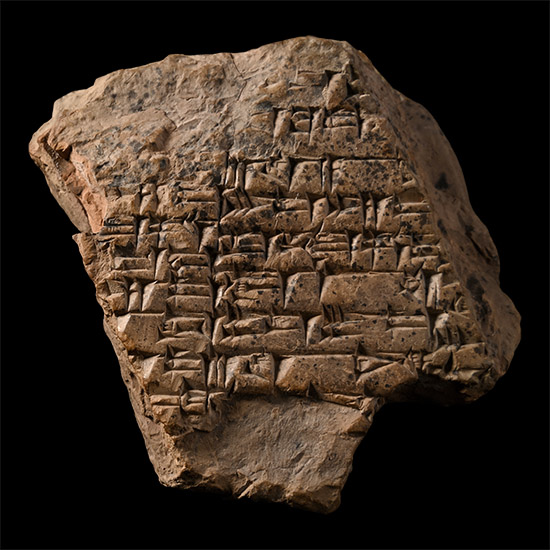
Ur III Terracotta Cuneiform Tablet Fragment
Circa 21st century B.C.Estimate: £70 - 90 (+bp*)
Bids: 15 | Current Bid: £120
Polygonal fragment with densely arranged impressed cuneiform text on one side. 67 grams, 74 mm
London, UK, art market, 1980s. Private collection, London, UK. -
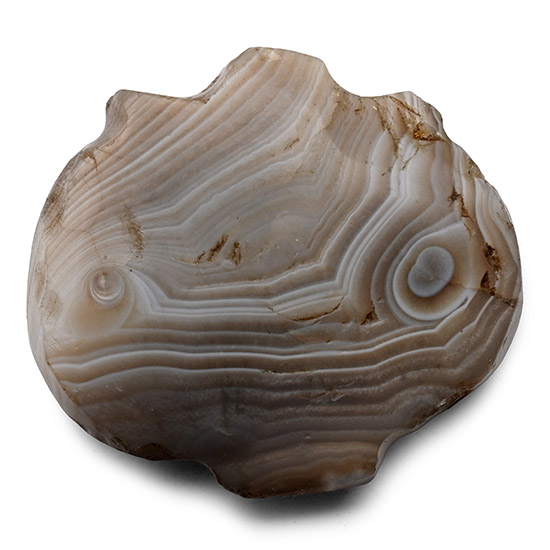
Bactrian Banded Agate Talismanic Pendant
2nd millennium B.C.Estimate: £300 - 400 (+bp*)
Opening Bid: £150
Discoid pendant with slightly domed faces carved from banded agate, rectangular tab above and below, the upper one pierced for suspension. 7.95 grams, 30 mm
Ex French collection of Mr C, prior 2000. UK private collection, acquired from the above, 2000s. -
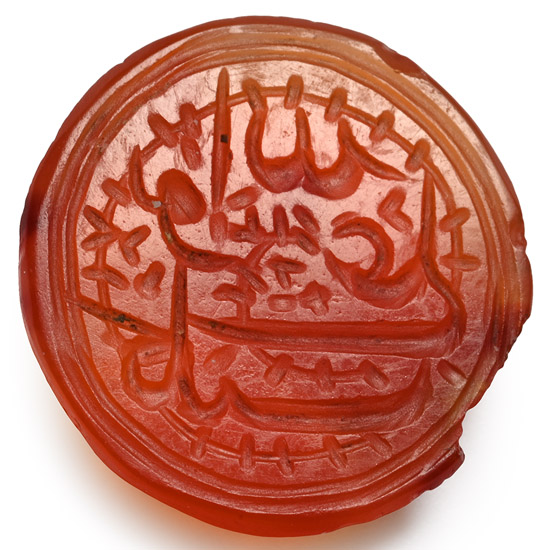
Western Asiatic Engraved Carnelian Calligraphic Intaglio
Late 19th-20th century A.D.Estimate: £100 - 140 (+bp*)
Opening Bid: £5
A circular intaglio with an inscription within a border; supplied with a museum-quality impression. 1.41 grams, 15 mm
Acquired in the late 1980s-early 1990s. Private collection, London. -
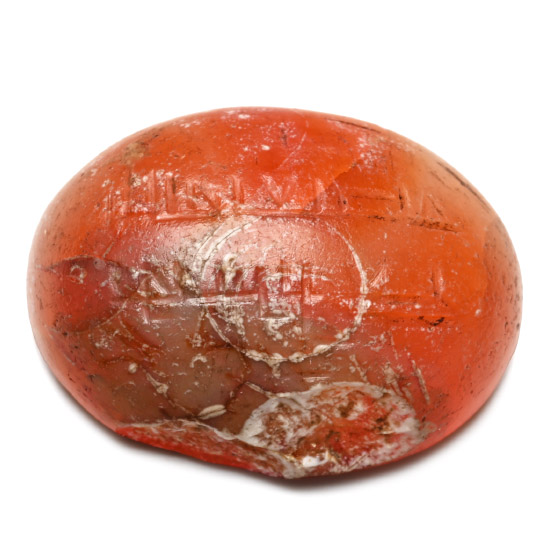
Western Asiatic Carnelian Gemstone with Calligraphic Text
Circa 12th-14th century A.D.Estimate: £120 - 170 (+bp*)
Bids: 1 | Current Bid: £5
Domed type with incuse legend to the upper face in two lines of Naskh script; supplied with a museum-quality impression. 1.25 grams, 15 mm
From the private collection of a European gentleman (1942-2024), formed since the 1970s. -
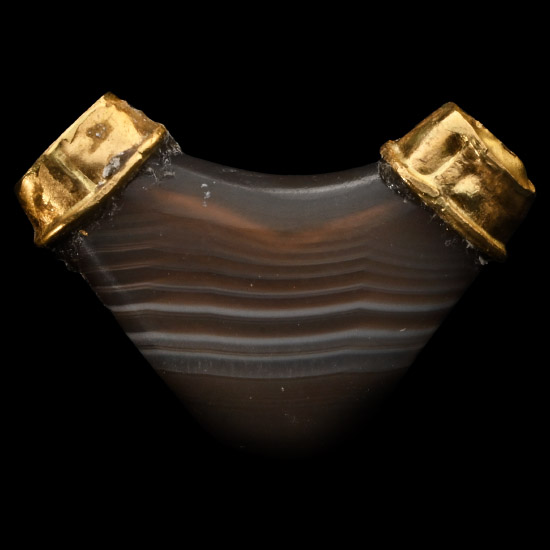
Achaemenid Banded Agate Elbow Bead
6th-4th century B.C.Estimate: £200 - 300 (+bp*)
Bids: 1 | Current Bid: £200
Carved from agate with horizontal contrasting banding, with a later ellipsoid gold cap to each finial. 1.26 grams, 19 mm
From the collection of a late Japanese gentleman, 1970s onwards. -
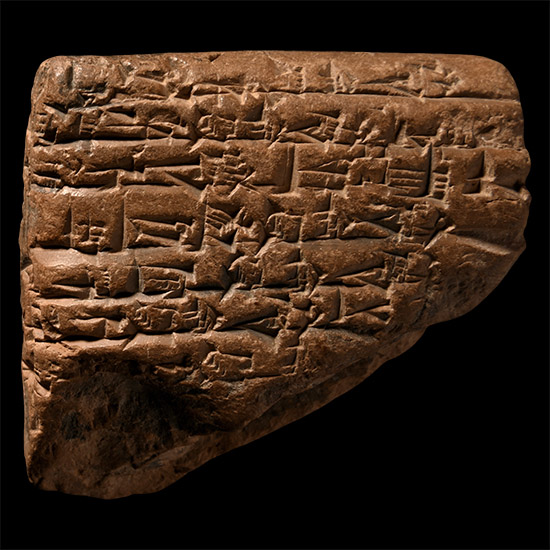
Ur III Terracotta Cuneiform Tablet Fragment with Accounts of Barley
Circa 21st century B.C.Estimate: £50 - 70 (+bp*)
Bids: 10 | Current Bid: £105
Corner section of a cuneiform tablet with impressed cuneiform text on three sides. 34.7 grams, 42 mm
London, UK, art market, 1980s. Private collection, London, UK. -
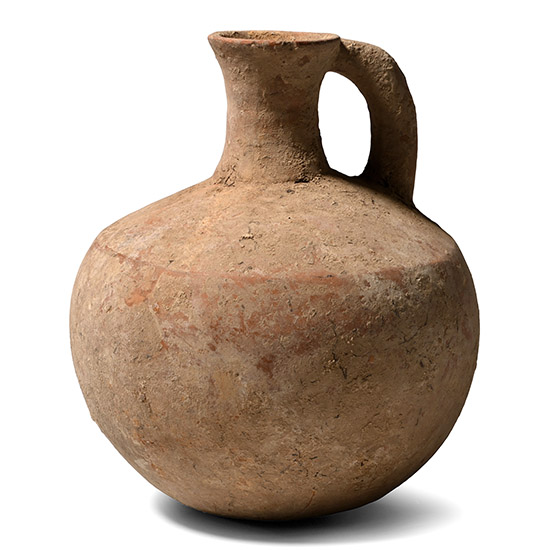
Western Asiatic Pottery Vessel with Handle
1st millennium B.C.Estimate: £100 - 140 (+bp*)
Opening Bid: £50
Comprising a squat bulbous body with a flattened base, a short neck with an everted rim and a handle to the rear. 413 grams, 15.1 cm
From an important specialist collection, London, UK, 1990s. -
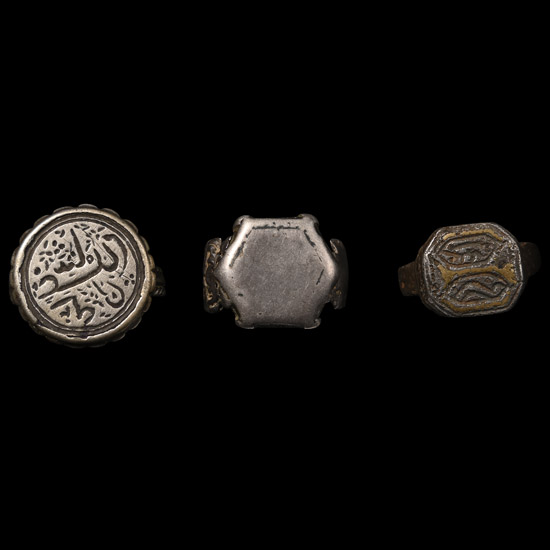
Western Asiatic Silver-Coloured Metal Ring Group
Circa 12th-18th century A.D.Estimate: £60 - 80 (+bp*)
Bids: 3 | Current Bid: £10
A mixed group of rings from the Seljuk and Ottoman periods, comprising three rings: one with a calligraphic inscription, one with a hexagonal bezel with remains of niello, and one with the bezel divided into two fields. 24.9 grams total, 21-27 mm
Acquired in the late 1980s-early 1990s. Private collection, London, UK -
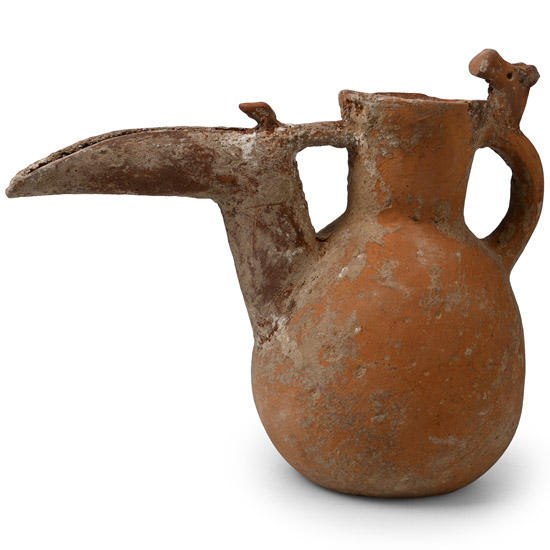
Amlash Zoomorphic Terracotta Pouring Vessel
1st millennium B.C.Estimate: £120 - 170 (+bp*)
Bids: 1 | Current Bid: £51
Bulbous body with a funicular neck and a round-section handle with an animal-head thumbpad, the spout resembling a bird's head with a small curving projection above. 475 grams, 22.2 cm
Ex Abelita collection, 1990s. -
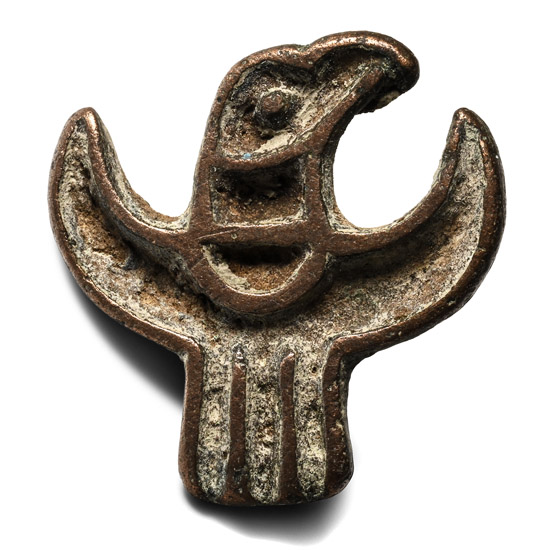
West Central Asian Bronze Eagle-Shaped Seal Matrix
Circa 2300-2000 B.C.Estimate: £100 - 140 (+bp*)
Bids: 2 | Current Bid: £90
An eagle-shaped stamp seal with a loop on the reverse, accompanied by an old scholarly note, typed and signed by W.G. Lambert, late Professor of Assyriology, University of Birmingham, 1970-1993, which states: 'Stamp Seal of Bronze, 27 x 26.5 x 10.5mm. This has the shape of the thing depicted, with a flat face, convex back rising to the middle where a handle of inverted U-shape with three grooves over it is mounted. The design, which is compartmented, shows an eagle in heraldic pose: head sideways at the top with beak raised, spread wings below, and spread tail-feathers at the bottom. This comes from west central Asia and dates to c. 2300-2000 B.C. It is a most attractive piece and in very good condition -- the metal has been conserved -- save for slight damage to the beak of the bird.' 10.2 grams, 26 mm
Acquired in the late 1980s-early 1990s. Ex property of a West London businessman. Academically researched and catalogued by the late Professor Lambert in the early 1990s. Accompanied by a copy of a scholarly report, numbered R-774, typed and signed by Professor Wilfrid George Lambert. -
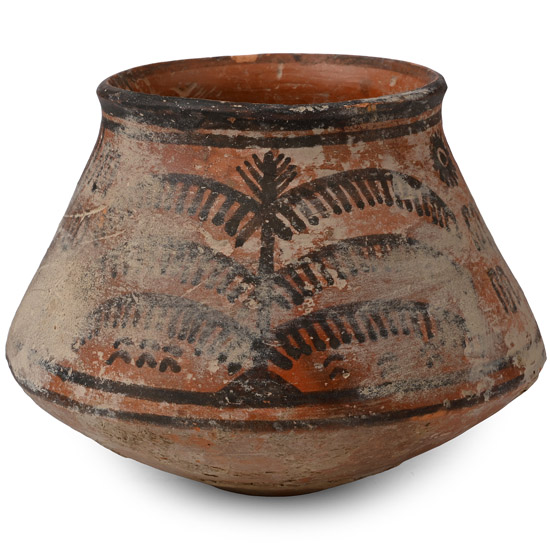
Indus Valley Terracotta Vessel with Zebu and Palm
3rd millennium B.C.Estimate: £100 - 140 (+bp*)
Bids: 1 | Current Bid: £51
Biconical vessel with a narrow foot, painted zebu before a small tree on one side and the other side with a large palm tree. 376 grams, 13.5 cm
Ex Abelita collection, 1990s.

