-
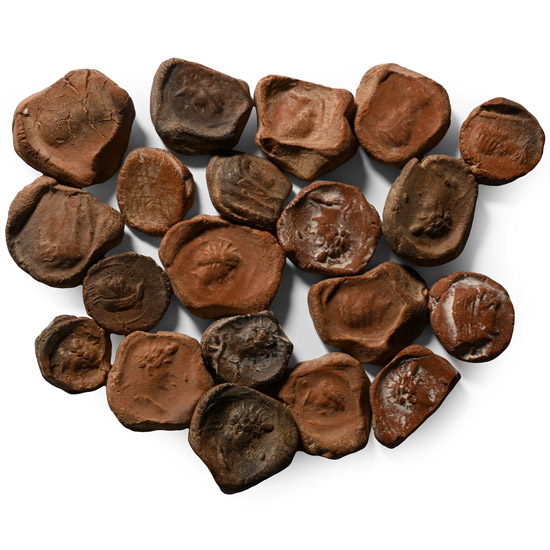
Roman Terracotta Bullae, Tesserae or Token Group
3rd century B.C.-1st century A.D.Estimate: £100 - 140 (+bp*)
Bids: 1 | Current Bid: £5
A mixed group of ceramic bullae, tesserae or theatre tokens bearing low-relief motifs, mainly consisting of profile busts of deities. 35.6 grams total, 14-22 mm
From the private collection of a European gentleman (1942-2024), formed since the 1970s.
The term 'tessera' was used in Roman times to convey the Greek term σύμβολον (token). Small tiles are known as tokens, often shaped like coins, made of metal (copper, lead, iron), clay, bone, wood, or glass, stamped as well as engraved. The tokens, however, are not exclusively coin-shaped, as the Latin term 'tessera' refers to a four-sided shape. Tokens and tesserae seem to have been used both in Athens and Rome for the distribution of goods. According to written sources, the term ‘token’ is identified with credentials of the official authorities. They have also been interpreted as tokens of identity, as entrance tickets to theatre performances, tribunals or assemblies of citizens, archival material of seal engraving, as pawns in games, Charon’s obols and even as amulets. -
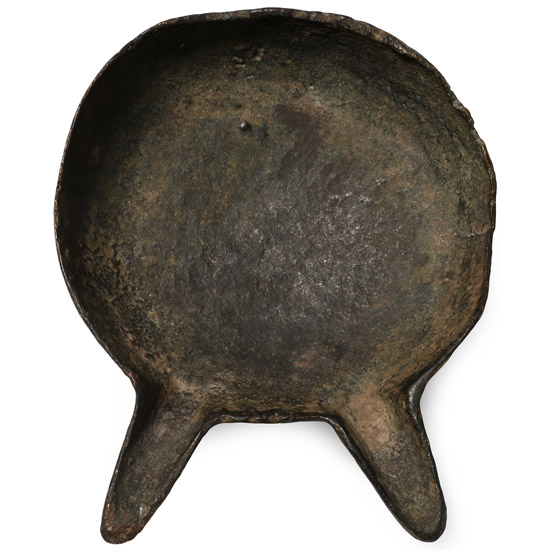
Late Roman Bronze Open Oil Lamp
Circa 6th century A.D.Estimate: £100 - 140 (+bp*)
Bids: 3 | Current Bid: £90
Circular oil lamp with low walls and two projecting nozzles, a low basal ring, and an inked collector's note 'AR2' on the base. 106 grams, 85 mm
From an important collection of lamps, Germany, 1970s. -
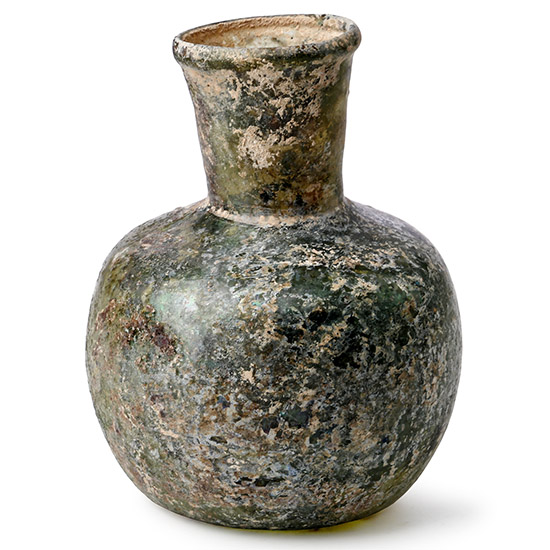
Roman Green Glass Bottle
Circa 3rd-4th century A.D.Estimate: £100 - 140 (+bp*)
Bids: 1 | Current Bid: £5
Bulbous body with dimple base and tubular neck with thickened rim. 80.4 grams, 10.2 cm
From the collection of a late Norfolk, UK gentleman's collection, formed from the late 1960s-1970s. -
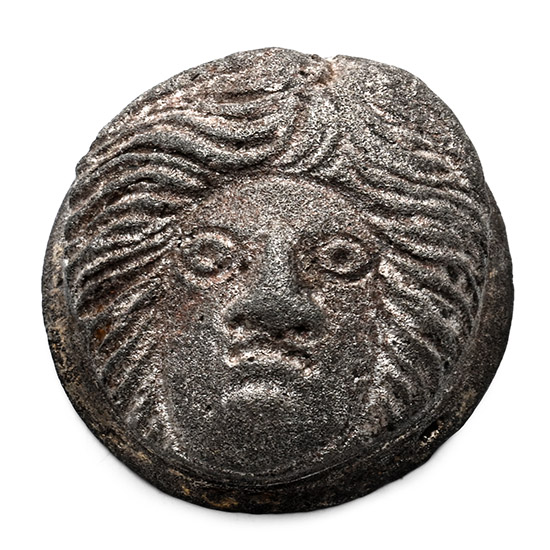
Roman Silver Appliqué with Head of Medusa
2nd-3rd century A.D.Estimate: £200 - 300 (+bp*)
Bids: 2 | Current Bid: £15
Discoid in plan with a gorgoneion motif; hollow to reverse. 9.03 grams, 19 mM
Property of a European gentleman, acquired from the estate of a London collector (formed before 2000). -
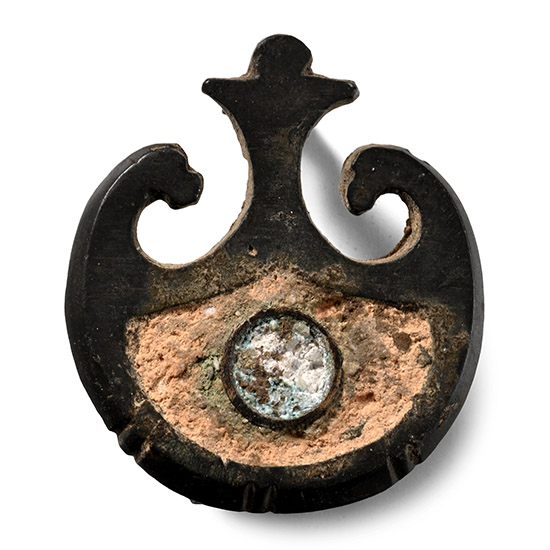
Roman Enamelled Bronze Plate Brooch
2nd-3rd century A.D.Estimate: £80 - 100 (+bp*)
Opening Bid: £5
Pelta-shaped with trefoil finial to the vertical lobe, recessed D-shaped cell with enamel fill, central roundel with enamel fill; integral box fitting to reverse housing the chord and pin, catch to lower end. 24 grams, 40 mm
Ex German art market, 2000s. Acquired from an EU collector living in London. From the collection of a Surrey, UK, gentleman. -
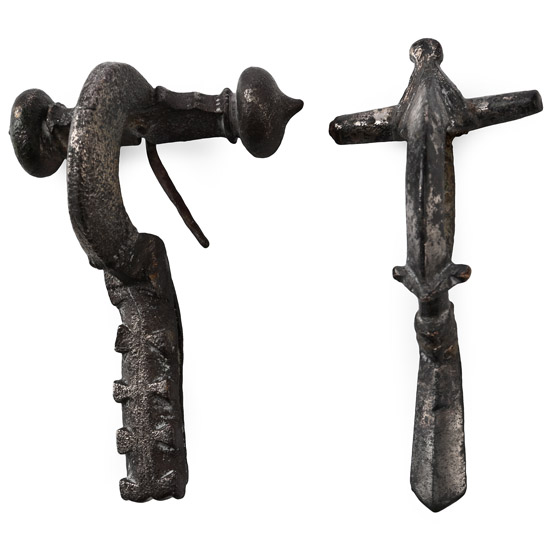
Roman Silvered Bronze Crossbow Brooch Group
4th century A.D.Estimate: £100 - 140 (+bp*)
Opening Bid: £50
Comprising two crossbow brooches, each with a keeled bow and flaring foot, both with a partial pin and integral catch beneath the footplate. 64.9 grams total, 62-66 mm
From an Essex collection. Private collection, Suffolk. -
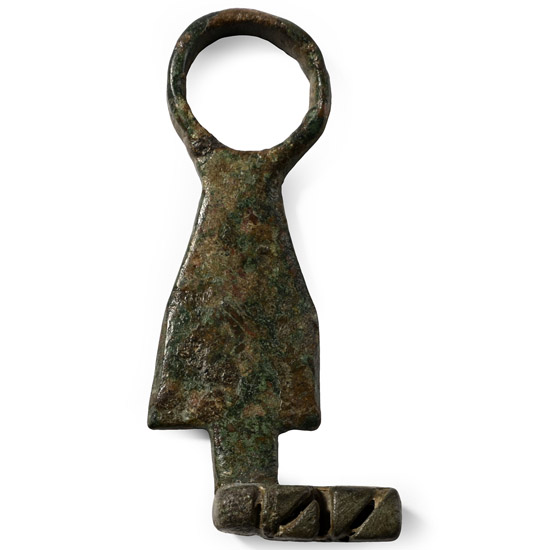
Large Roman Bronze Key
1st-3rd century A.D.Estimate: £40 - 60 (+bp*)
Bids: 1 | Current Bid: £5
Latchlifter-type comprising a broad shank and thick suspension ring, cut wards to the perpendicular bit. 40.9 grams, 75 mm
From the private collection of Mr Brian Edwards, New Malden, Surrey, UK, formed from the late 1970s-early 1980s; thence by descent. Accompanied by the original collector's data sheet(s) with reference no.A79. -
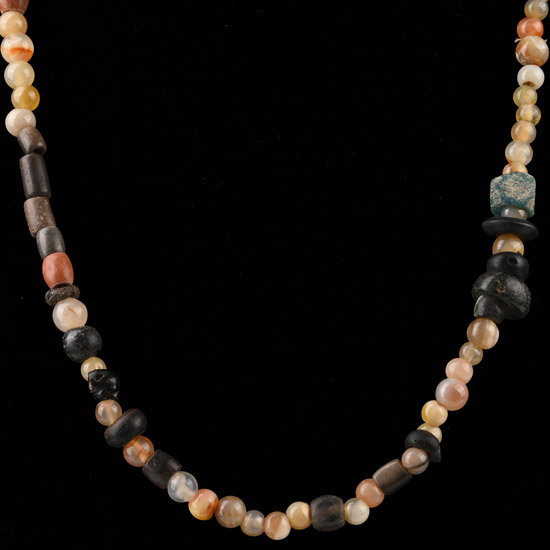
Roman Glass and Polished Stone Bead Necklace String
1st-4th century A.D. and laterEstimate: £80 - 100 (+bp*)
Bids: 1 | Current Bid: £5
Restrung group of mainly glass beads of oblate, spherical, cylindrical, polyhedral and other types. 72.9 grams, 66 cm
From the private collection of Mr Brian Edwards, New Malden, Surrey, UK, formed from the late 1970s-early 1980s; thence by descent. Accompanied by the original collector's data sheet(s) with reference no.A101. -
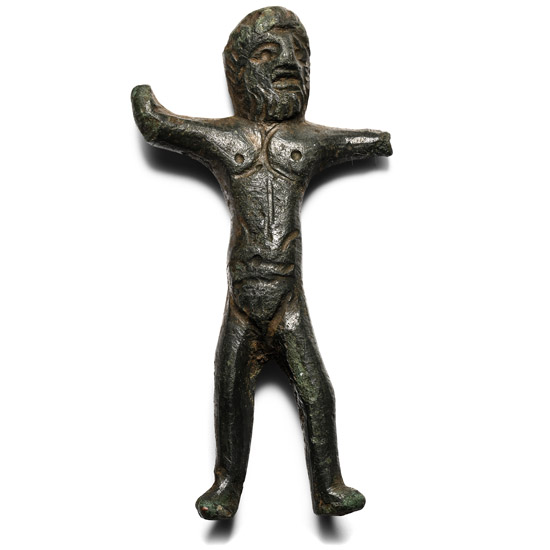
Romano-Celtic Bronze Statuette of God Sucellos
2nd-4th century A.D.Estimate: £150 - 200 (+bp*)
Bids: 3 | Current Bid: £45
Modelled in the round with luxuriant hair and beard, bare-chested with a short kilt and belt; left arm extended straight and right arm bent upwards. 36.7 grams, 69 mm
From the private collection of a European gentleman (1942-2024), formed since the 1970s.
Sucellos was the Gaulish strong-man deity, usually shown with a hammer in his raised hand and a pot in the other. -
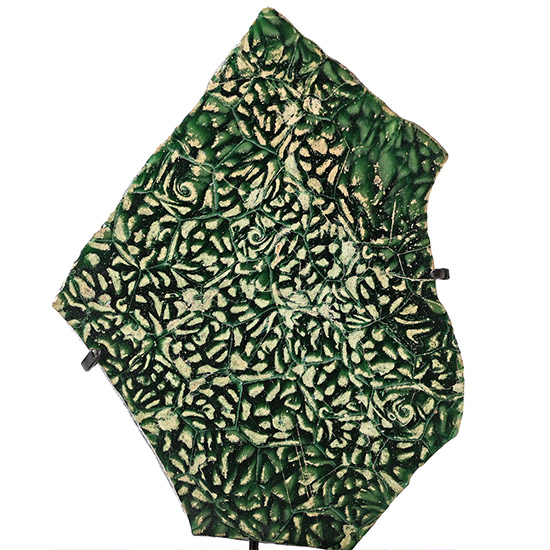
Large Roman Green Mosaic Glass Fragment
Late 1st century B.C.-early 1st century A.D.Estimate: £2,000 - 3,000 (+bp*)
Opening Bid: £1,000
Green glass with white swirls and petals, accompanied by a custom-made display stand. 208 grams, 16 cm (465 gram total including stand)
Dr Jutaro Kawabe, Nagoya, Japan, assembled during the 1960s-1980s. with Hoshigaoka Gallery until the late 1990s. This lot has been checked against the Interpol Database of stolen works of art and is accompanied by search certificate number no.13093-248078.
The decoration is well documented in the Eastern Roman Empire, especially the Syro-Palestinian coast. The most frequently occurring colour in these glass mosaics is opaque red, but green and blue tints are not uncommon. -
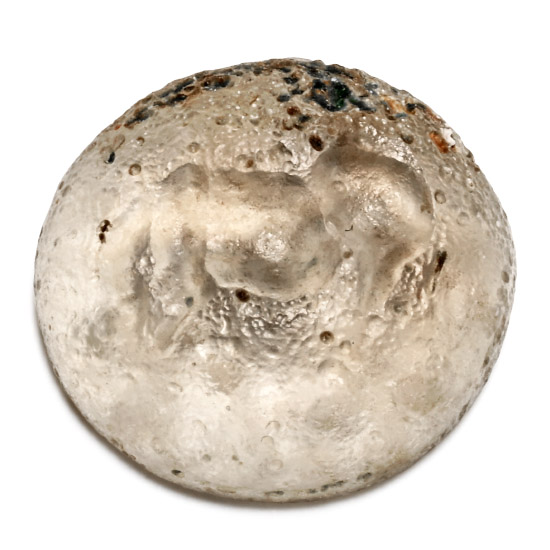
Roman Glass Gem with Horse
2nd-3rd century A.D.Estimate: £50 - 70 (+bp*)
Bids: 1 | Current Bid: £5
Plano-convex type with incuse design to the underside of horse with its legs folded beneath the body; supplied with a museum-quality impression. 0.66 grams, 12 mm
From the private collection of a European gentleman (1942-2024), formed since the 1970s. -
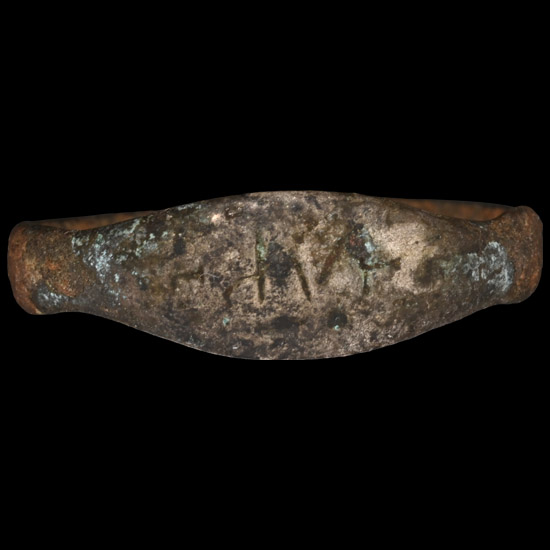
Roman Bronze Ring with Inscription
3rd-4th century A.D.Estimate: £40 - 60 (+bp*)
Bids: 1 | Current Bid: £5
With slender hoop and ellipsoid bezel, three incised characters; with old collector's ticket. 1.34 grams, 19.80 mm overall, 17.25 mm internal diameter (approximate size British L 1/2, USA 6, Europe 11.87, Japan 11)
From the private collection of a European gentleman (1942-2024), formed since the 1970s.

