-
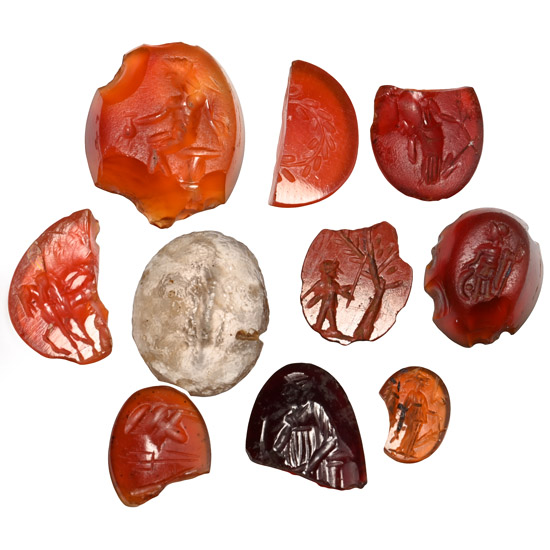
Roman Gemstone Group
2nd-3rd century A.D.Estimate: £100 - 140 (+bp*)
Bids: 2 | Current Bid: £16
Including Mercury seated with marsupium, a robed female figure, a boy beating a tree to dislodge fruit, Neptune with trident and other types; each supplied with a museum-quality impression. 5.46 grams total, 8-17 mm
From the private collection of a European gentleman (1942-2024), formed since the 1970s. -
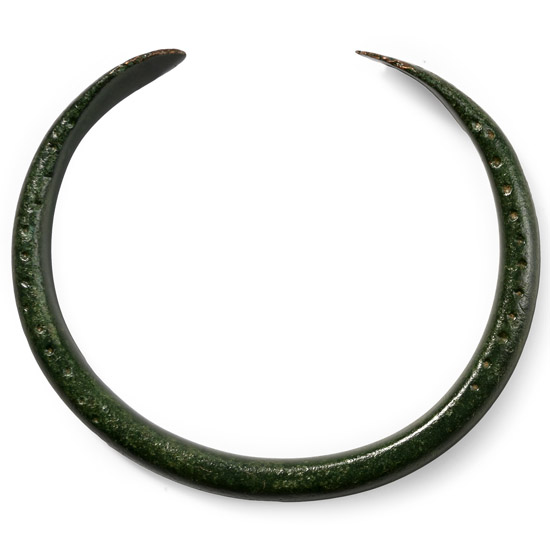
Late Roman Bronze Bracelet with Punched Decoration
5th-6th century A.D.Estimate: £60 - 80 (+bp*)
Bids: 2 | Current Bid: £20
Penannular body with flared finials, pointillé decoration on the sides and terminals. 36.2 grams, 65 mm
Ex German art market, 2000s. Acquired from an EU collector living in London. From the collection of a Surrey, UK, gentleman. -
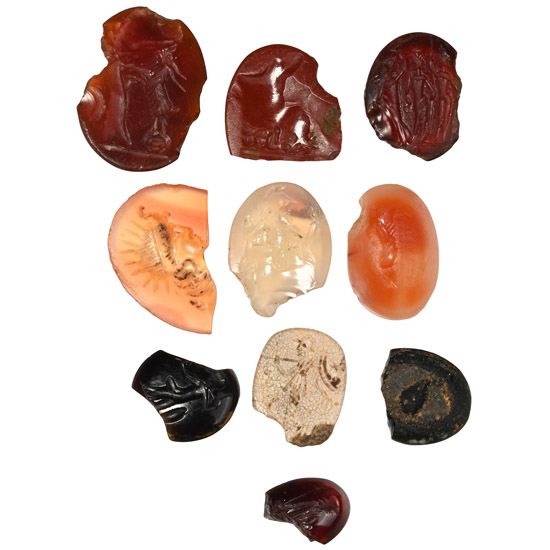
Roman Gemstone Group
2nd-3rd century A.D.Estimate: £150 - 200 (+bp*)
Bids: 2 | Current Bid: £15
Including Venus with mirror, bust of Sol with radiate crown, the Three Graces, profile bust and other types; each supplied with a museum-quality impression. 5.37 grams total, 8-17 mm
From the private collection of a European gentleman (1942-2024), formed since the 1970s. -
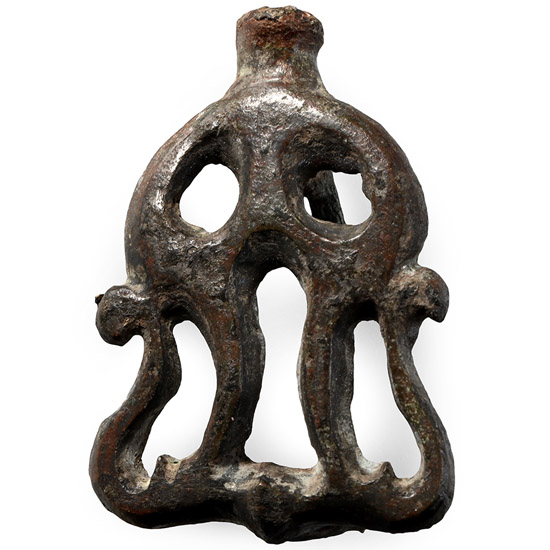
Roman Bronze Openwork Plate Brooch
2nd-3rd century A.D.Estimate: £30 - 40 (+bp*)
Bids: 1 | Current Bid: £5
Openwork brooch with scroll motifs, remains of a pin and catchplate on the reverse. 16.1 grams, 40 mm
From the private coin collection of a West London, UK, gentleman, formed since the mid 1980s. -
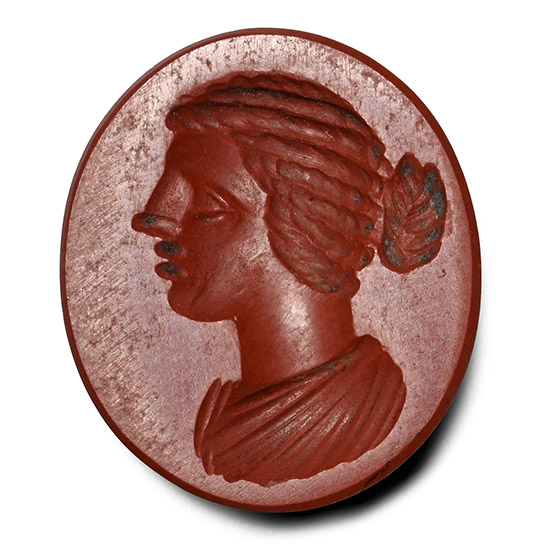
Roman Red Jasper Female Bust Intaglio
1st-2nd century A.D.Estimate: £80 - 100 (+bp*)
Bids: 2 | Current Bid: £10
Oval intaglio with an incuse draped profile bust of a young female with her hair pulled into a chignon. 0.6 grams, 12 mm
Acquired on the UK art market. Private collection, Suffolk. -
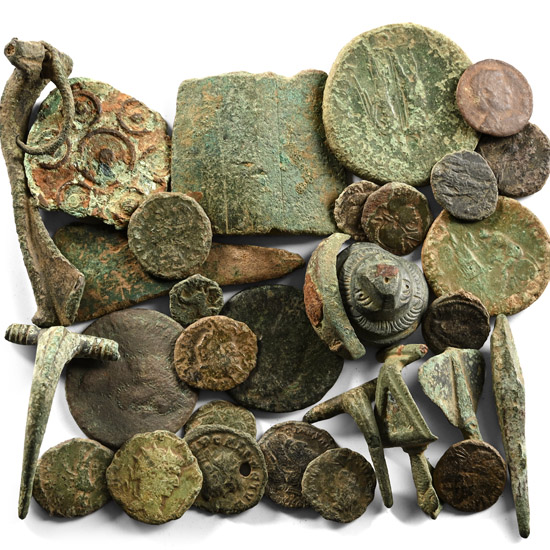
Bronze Age and Roman Artefacts and Coins
1st-4th century A.D.Estimate: £40 - 60 (+bp*)
Bids: 4 | Current Bid: £26
Mixed group of items including a sestertius, brooch fragments, a large plate brooch fragment, a lion face mount, coins, and others. 183 grams total, 10-57 mm
Found Suffolk, UK. N.B. This lot is for UK buyers only. -
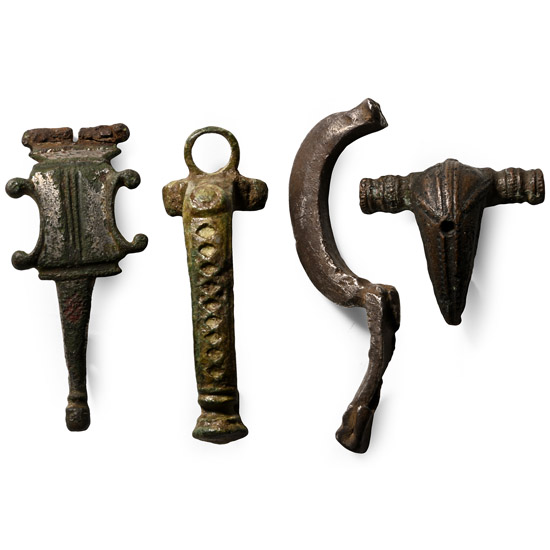
Roman Bronze and Silver Bow Brooch Group
Circa 2nd-4th century A.D.Estimate: £40 - 60 (+bp*)
Bids: 1 | Current Bid: £5
Including a P-shaped bow brooch, Hod Hil type with lateral lugs and other types. 37.4 grams total, 28-54 mm
From the private collection of Mr Brian Edwards, New Malden, Surrey, UK, formed from the late 1970s-early 1980s; thence by descent. Accompanied by the original collector's data sheet(s) with reference no.A6, A49, A50 & A59. -
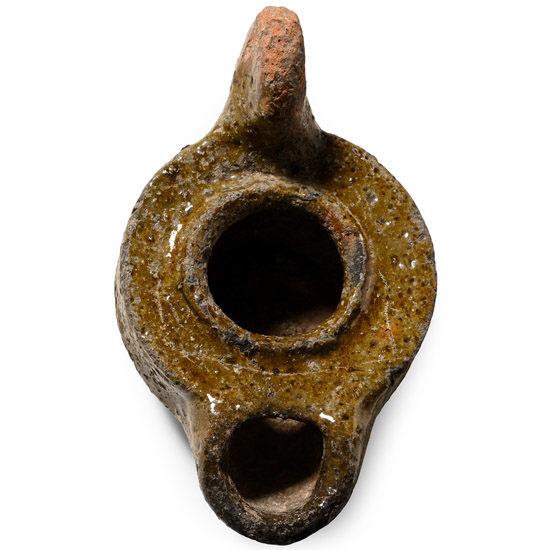
Roman Lead Glazed Oil Lamp
4th century A.D.Estimate: £100 - 140 (+bp*)
Opening Bid: £50
Tall circular body with squat nozzle and a lug handle to the rear, an inked collector's note '521' on the base; rare. 90 grams, 93 mm
From an important collection of lamps, Germany, 1970s. -
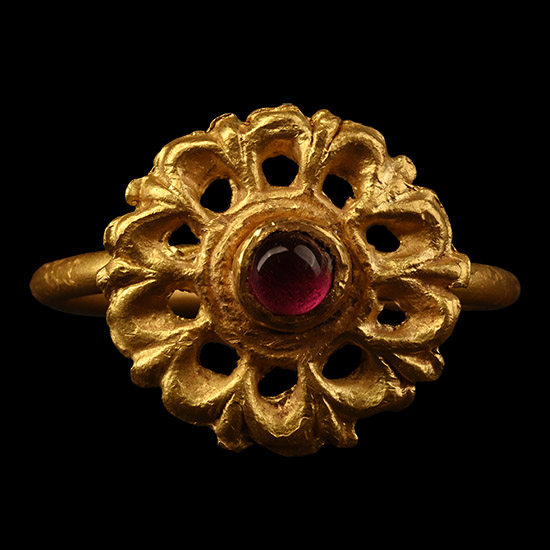
Roman Gold Ring with Garnet Cabochon
3rd-4th century A.D.Estimate: £600 - 800 (+bp*)
Opening Bid: £300
Comprising an openwork rosette bezel with interstitial pellets between the petals, central cell with inset garnet cabochon. 2.55 grams, 22.48 mm overall, 17.72 mm internal diameter (approximate size British M 1/2, USA 6 1/4, Europe 13.09, Japan 12)
Ex German art market, 2000s. Acquired from an EU collector living in London. From the collection of a Surrey, UK, gentleman. -
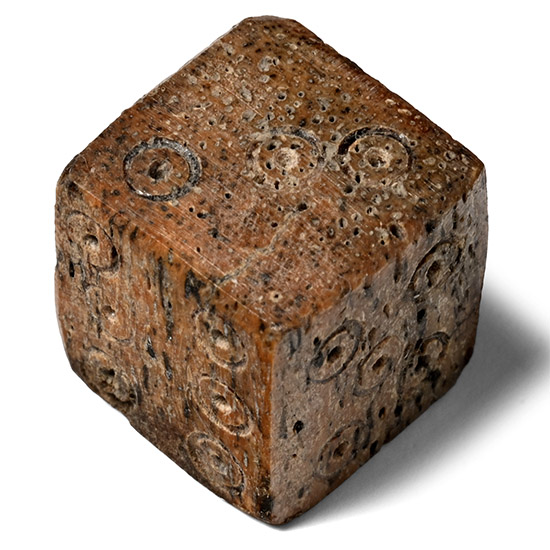
Roman Bone Gaming Die
Circa 1st-4th century A.D.Estimate: £70 - 90 (+bp*)
Bids: 1 | Current Bid: £5
Cuboid with ring-and-dot markings disposed 1:6, 2:5, 3:4. 2.82 grams, 11 mm
Ex Cambridgeshire, UK, collection, 1990s. -
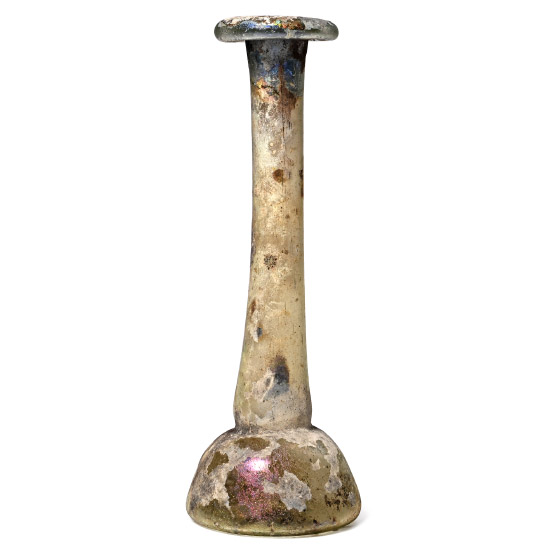
Roman Glass Candlestick Vial
1st-3rd century A.D.Estimate: £100 - 140 (+bp*)
Opening Bid: £50
With a low conical body and slightly convex wall, dimple base; tall cylindrical neck flaring to a thick everted rim. 24 grams, 14 cm
Acquired in the 1990s from London dealerships and auction houses. From the Lonson collection. -
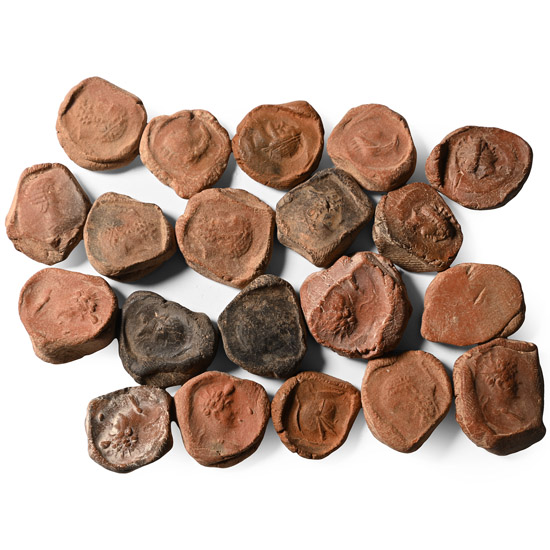
Roman Terracotta Bullae, Tesserae or Token Group
3rd century B.C.-1st century A.D.Estimate: £100 - 140 (+bp*)
Bids: 1 | Current Bid: £5
A mixed group of ceramic bullae, tesserae or theatre tokens bearing low-relief motifs, mainly consisting of profile busts of deities. 41.2 grams total, 17-22 mm
From the private collection of a European gentleman (1942-2024), formed since the 1970s.
The term 'tessera' was used in Roman times to convey the Greek term σύμβολον (token). Small tiles are known as tokens, often shaped like coins, made of metal (copper, lead, iron), clay, bone, wood, or glass, stamped as well as engraved. The tokens, however, are not exclusively coin-shaped, as the Latin term 'tessera' refers to a four-sided shape. Tokens and tesserae seem to have been used both in Athens and Rome for the distribution of goods. According to written sources, the term ‘token’ is identified with credentials of the official authorities. They have also been interpreted as tokens of identity, as entrance tickets to theatre performances, tribunals or assemblies of citizens, archival material of seal engraving, as pawns in games, Charon’s obols and even as amulets.

