-
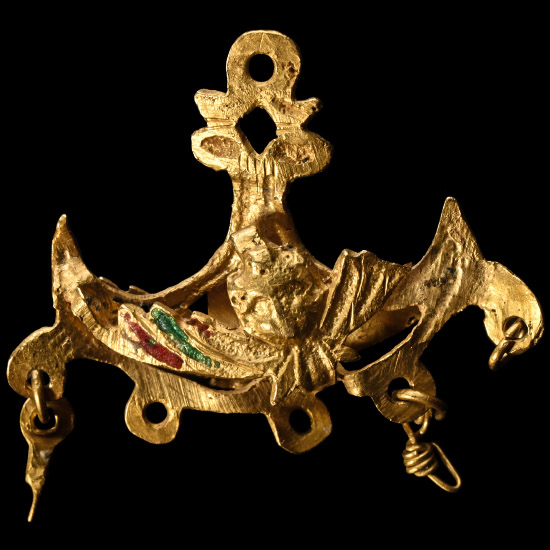
Elizabethan Period Enamelled Gold Ship Pendant
16th century A.D.Estimate: £800 - 1,000 (+bp*)
Bids: 1 | Current Bid: £40
Crescentic bifacial pendant with winged putti on each side with traces of original polychrome enamel on the wings, five loops on the underside and a decorated suspension loop above. 2.78 grams, 27 mm
From a Cambridgeshire, UK, collection, 1990s. -
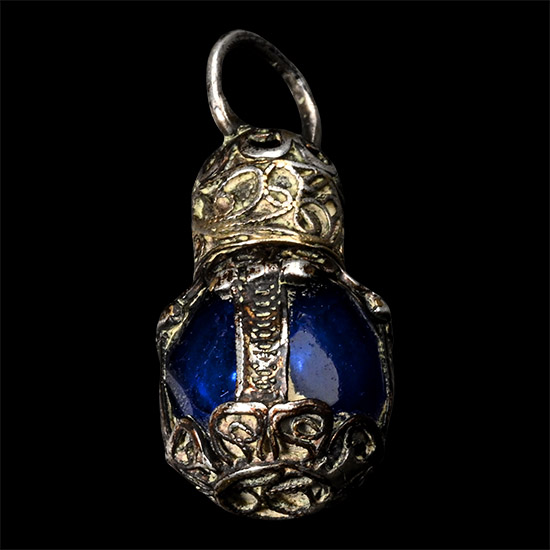
Miniature Blue Glass Scent Bottle with Silver Filigree Mounts
England, 17th century A.D.Estimate: £400 - 600 (+bp*)
Opening Bid: £200
Of facetted deep blue glass, enclosed within an elegant silver filigree cage mount retaining traces of its original gilding; the domed screw-cap similarly decorated with scrolling filigree ornament and fitted with a suspension loop, indicating that it was intended to be worn on a chain or ribbon, with an original clear glass stopper. 4.62 grams, 28 mm
Acquired on the European art market.
Delicate in scale yet refined in execution, the bottle is a characteristic example of late 17th-century English personal luxury wares. -
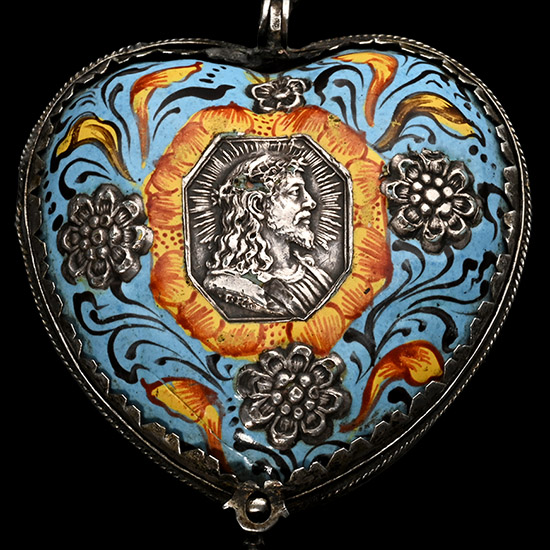
Enamelled Pendant in the form of a Heart with Silver Decorations
Germany, 17th century A.D.Estimate: £2,000 - 3,000 (+bp*)
Bids: 1 | Current Bid: £1,000
Hinged pendant decorated in blue, yellow and red enamel with silver floral decoration, one side with a silver profile of the Virgin, and the other side with the profile of Christ; inside decorated with light blue enamel; possibly used to carry a relic or the host as a portable pyx. 29.8 grams, 67 mm
Acquired on the European art market. This lot has been checked against the Interpol Database of stolen works of art and is accompanied by search certificate number no.13405-257980. -
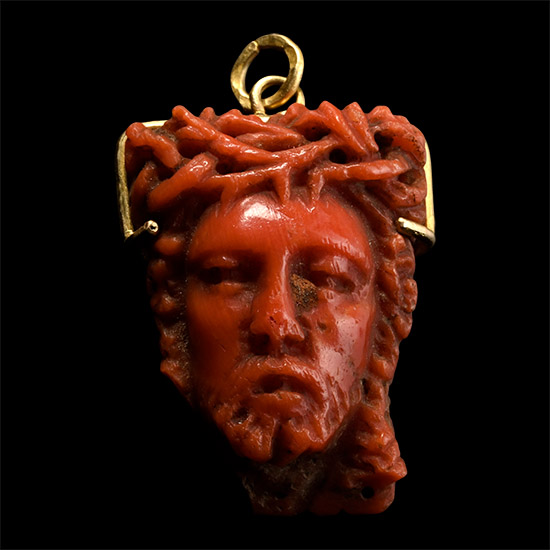
Post Medieval Coral Memento Mori Janus Chaplet Bead with Head of Christ and Skull
17th-18th century A.D.Estimate: £1,500 - 2,000 (+bp*)
Opening Bid: £700
Devotional prayer bead featuring a grimacing skull on one side and the other with the face of Jesus wearing the crown of thorns; set in a simple gold frame with suspension loop. 13.31 grams, 39 mm
Acquired on the European art market. -
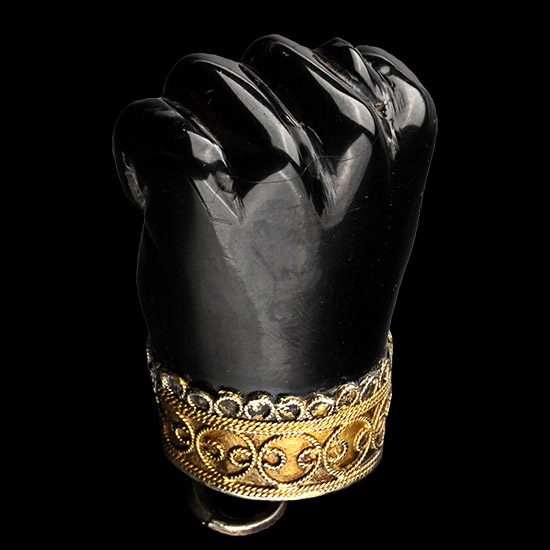
Silver-Gilt Mounted Jet 'Figa' Amulet
Spain, 17th century A.D.Estimate: £600 - 800 (+bp*)
Opening Bid: £300
Formed as a hand showing figa gesture, silver mount with applied twisted wires; attachment loop and ring to the top. 19.6 grams, 56 mm
Private collection, Europe. Acquired on the English art market.
Mano Fico, as protective amulets, have been used since antiquity. It was believed to protect from the evil eye and other dark and magical forces and to promote fertility. In ancient Rome, the fig sign, or mano fico, was made by the pater familias (father of the family) to ward off the evil spirits of the dead as a part of the Lemuria ritual. The ancient Greeks wore amulets of the gesture around the neck to protect from the evil eye, and also used the gesture in artwork. What they considered an overtly sexual gesture was expected to distract evil spirits from causing harm. The pendant would have been worn from a belt or from a chatelaine containing other protective talismans. This carving would have served as a token representing a person's pilgrimage to Santiago de Compostela, one of the very few places in which jet can be found and mined since at least the Middle Ages. -
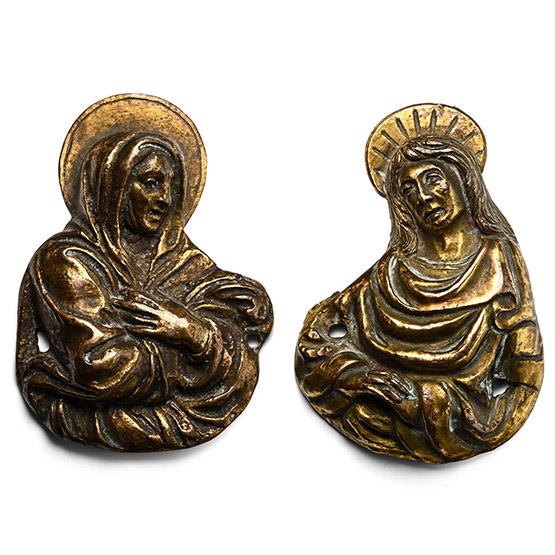
Post Medieval Gilt Bronze Plaques of Mary Magdalene and Saint John the Evangelist
Italy, 16th century A.D.Estimate: £180 - 240 (+bp*)
Opening Bid: £90
Comprising: a nimbate figure of Mary, dressed in voluminous robes, arms crossed at the chest and pierced through the edges; a nimble figure of John wearing voluminous robes, gazing down with a solemn expression on his face, hands clasped at the waist, pierced through the edges. 57.2 grams total, 61 mm each
Private collection, UK. -
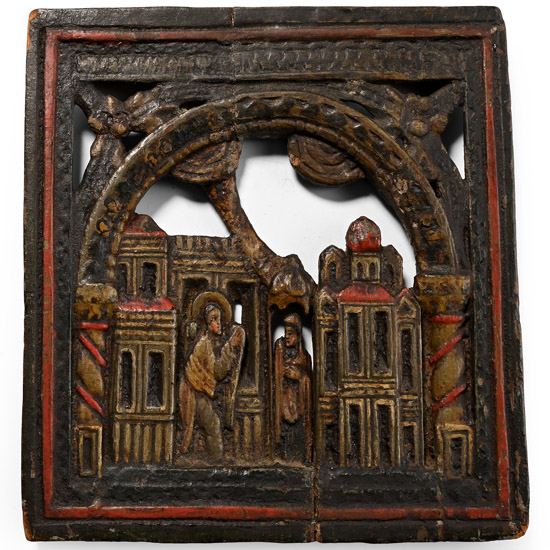
Greek Wooden Polychrome Mount Athos Annunciation Plaque
19th century A.D.Estimate: £200 - 300 (+bp*)
Opening Bid: £100
Rectangular openwork plaque showing the Archangel Gabriel appearing to the Virgin Mary within an architectural arch. 44.2 grams, 11.7 cm
Acquired on the European art market. -

Melody Maker Magazine Original Advertising Poster
1950s A.D.Estimate: £80 - 100 (+bp*)
Opening Bid: £5
Off-white ground with dark blue masthead 'Meldoy Maker / World's Largest Net Sale ' red blocked text and dark blue footer 'Every Friday - 6d'; footnote 'Printed and issued by Odhams Press, Long Acre, London WC2'. 22 grams, 76.2 x 50.6 cm
Acquired on the UK art market. Property of a Harwich, UK, collector.
'Melody Maker' was an important music-industry weekly magazine which was founded in 1926 by the publisher Lawrence Wright, aimed at dance band musicians under the title 'The Melody Maker and British Metronome'. The footnote reference is to the Odhams publishing venture which folded in 1968. -
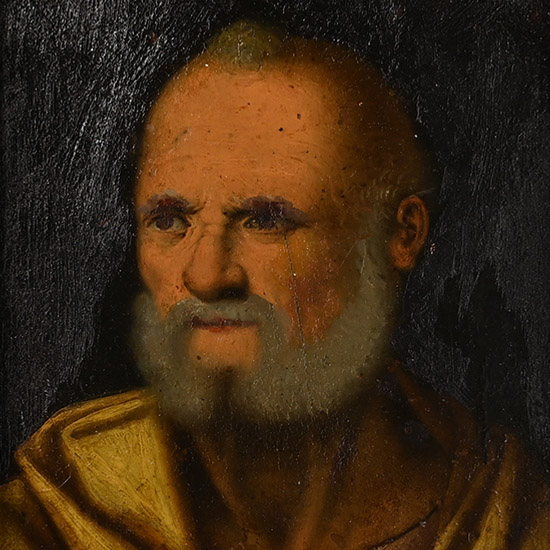
Painting of a Saint by a Follower of Giovanni Bellini
Italy, 1430-1516 A.D.Estimate: £300 - 400 (+bp*)
Bids: 1 | Current Bid: £200
Depicting a bust of a bearded mature man, probably a saint, wearing a yellow cloak and a lighter undergarment, looking to the side with a pensive expression, with a small tuft of grey hair on top of his head; oil on copper panel and set in a moulded frame, an old label on the reverse 'Italian School: 'Study of a Man with a Grey Beard' oil on copper, 7 x 5ins.' 1.26 kg total, 32 x 27.5 cm
Private collection, London, UK. -
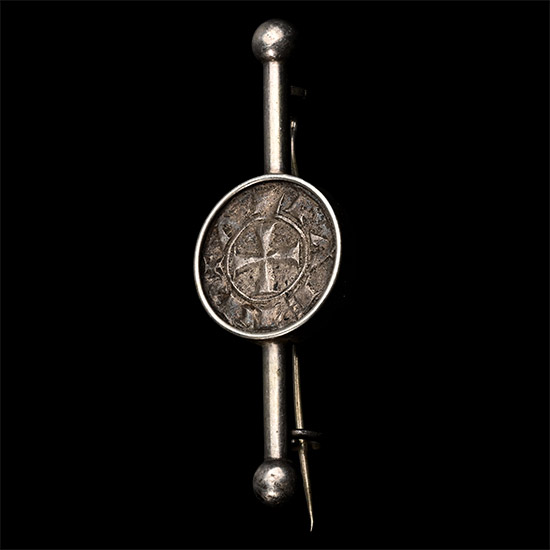
Italia. Siena (Republic) AR Grosso Set into a Later Silver Brooch.
Before 1250.Estimate: £80 - 100 (+bp*)
Bids: 6 | Current Bid: £72
[✠ SENAVETVS, large S flanked by four pellets] / ✠ ALFA ET CIƆ, cross pattée. CNI 26; Biaggi 2536. 6.83 grams, 61 mm.
Condition as seen. Set in a later bar brooch with bulbous finials and a hinged pin.
Acquired on the European art market. -
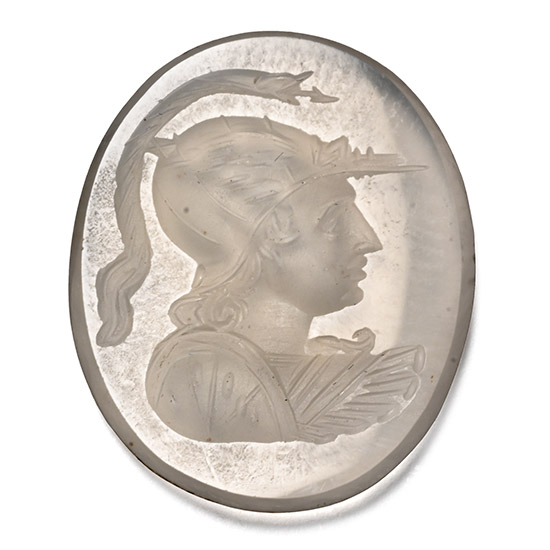
Chalcedony Gemstone with Helmeted Bust
18th century A.D.Estimate: £50 - 70 (+bp*)
Bids: 2 | Current Bid: £10
Translucent intaglio showing a bust facing right with a corner of a round shield covering the shoulder, wearing a crested helmet with a snake-head finial. 1.04 grams, 19 mm
UK private collection, acquired on the English art market in the 2000s. -
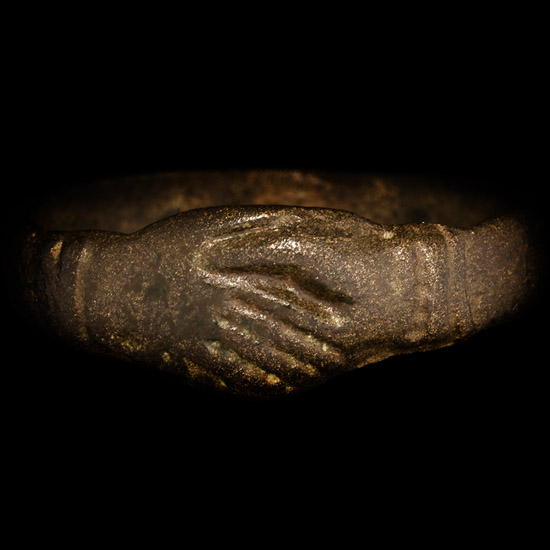
Stuart Period Clasped Hands Ring
Circa 17th century A.D.Estimate: £40 - 60 (+bp*)
Opening Bid: £5
Comprising a rectangular-section hoop and the bezel formed as clasped hands with ribbed cuffs. 3.37 grams, 22.97 mm overall, 18.85 x 19.07 mm internal diameter (approximate size British R, USA 8 1/2, Europe 18 3/4, Japan 18)
Ex German art market, 2000s. Acquired from an EU collector living in London. From the collection of a Surrey, UK, gentleman.

