-
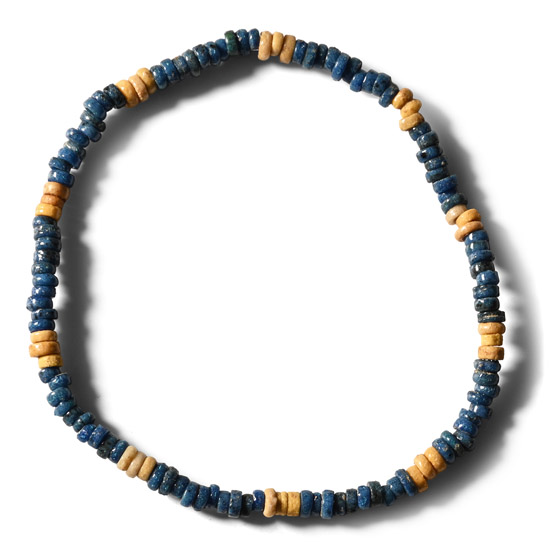
Egyptian Faience Mummy Bead Bracelet
Late Period, 664-332 B.C.Estimate: £50 - 70 (+bp*)
Bids: 3 | Current Bid: £25
Composed of alternating blue and cream annular beads, restrung with an elasticated string. 2.18 grams, 18 cm
Ex Ancient Art Shop, Windsor, UK, 1990s. Ex private collection. -
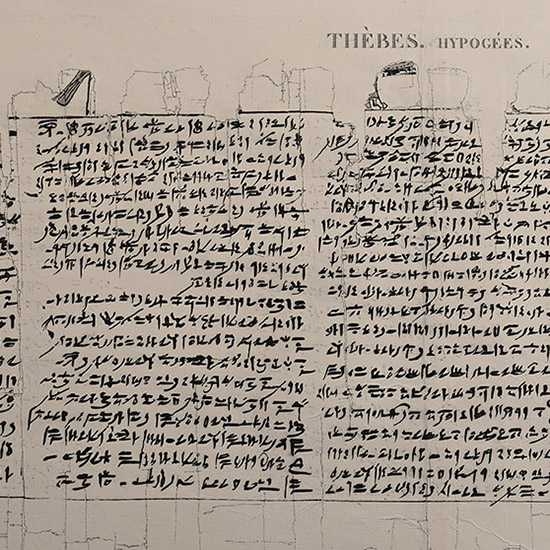
Very Large Egyptian Expedition Lithograph of the Hypogees Papyrus Manuscript from Thebes
Early 19th century A.D.Estimate: £80 - 100 (+bp*)
Opening Bid: £40
Proof etching on laid paper of plate 66 from Vol.II of Description de l'Égypte : ou, Recueil des observations et des recherches qui ont été faites en Égypte pendant l'expédition de l'armée française entitled Thèbes. Hypogées. Manuscrit sur papyrus. 230 grams, 102 x 69 cm
From the collection of a North American priest. Acquired between 1981-1996. Property of a North American collector.
Produced between February 1802 and 1830 on the orders of Napoleon Bonaparte; published between 1809 and 1828. Just 1,000 copies were distributed to various institutions, printed on laid paper with an 'Égypte ancienne et moderne' watermark. The book is subtitled Recueil des observations et des recherches qui ont été faites en Égypte pendant l’expédition de l’Armée française, publié par les ordres de Sa Majesté l’Empereur Napoléon le Grand (Gathering of observations and discoveries which were made in Egypt during the expedition of the French army, published on the orders of His Majesty the Emperor Napoleon the Great). It was the world's first encyclopedia devoted exclusively to the remains of ancient Egypt. The plates of this book are the first to present the archaeological sites of Thebes (Luxor). The papyrus manuscript was recovered from an underground tomb chamber (hypogeum). The text is written in hieratic, a cursive form of hieroglyphs, often used for religious papyrus documents. -
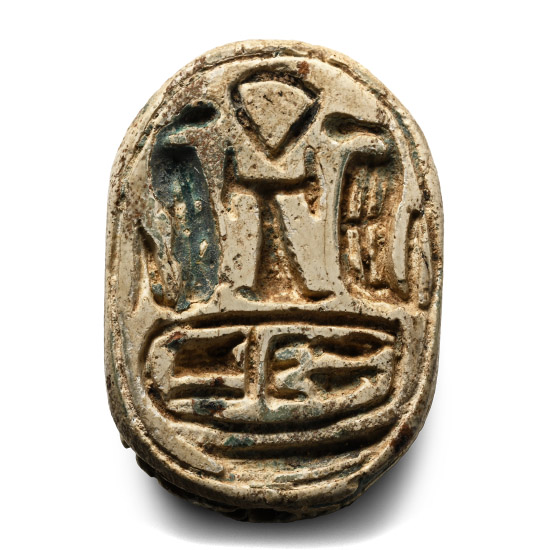
Egyptian Steatite Scarab with Cartouche
Late Period, 664-332 B.C.Estimate: £60 - 80 (+bp*)
Bids: 4 | Current Bid: £20
With detailing to the carapace, mouth and legs, underside with cartouche, ankh and other symbols. 2.98 grams, 18 mm
From the private collection of a European gentleman (1942-2024), formed since the 1970s. -
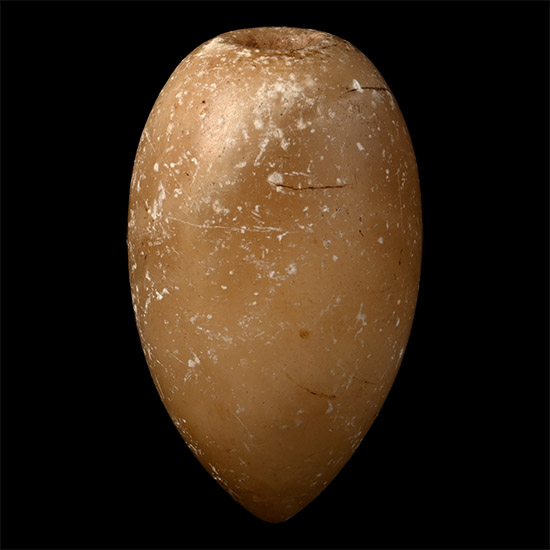
Egyptian Alabaster Miniature 'Torpedo' Flask
Middle Kingdom, 2nd millennium B.C.Estimate: £100 - 140 (+bp*)
Bids: 2 | Current Bid: £42
Ovoid in profile with a pointed base, narrow opening, and hollowed interior. 62.6 grams, 57 mm
From a UK private collection since at least 1946. Property of a West London, UK, gentleman.
Ancient Egyptian cosmetics included volatile essential oils, animal fats, or scented plant resins. The ‘torpedo’ shape of the vessel required it to be positioned horizontally, ensuring the fluid remained in contact with the stopper or seal to prevent it from drying out or leaking. -
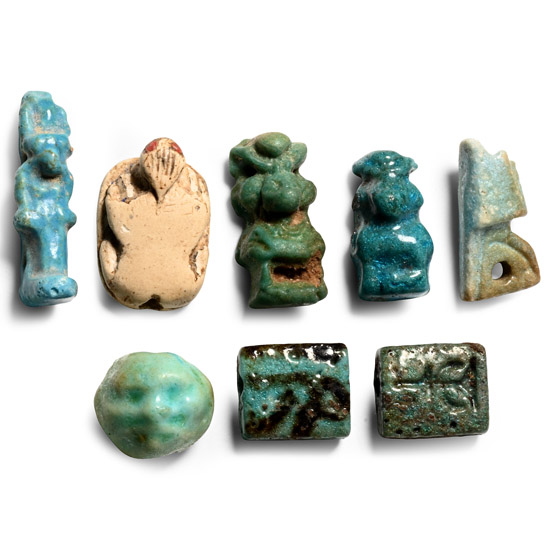
Egyptian Mixed Faience Amulet Collection
Late Period-Ptolemaic Period, circa 664-30 B.C.Estimate: £200 - 300 (+bp*)
Bids: 2 | Current Bid: £110
Comprising: a face bead; two rectangular wedjat-eye beads with black detailing; an amulet depicting the Deshret crown of Lower Egypt; two seated baboon amulets; an amulet of a standing figure, possibly Sekhmet; a scaraboid with a small raised head. 4.93 grams total, 10-20 mm
From a 20th century UK collection. -
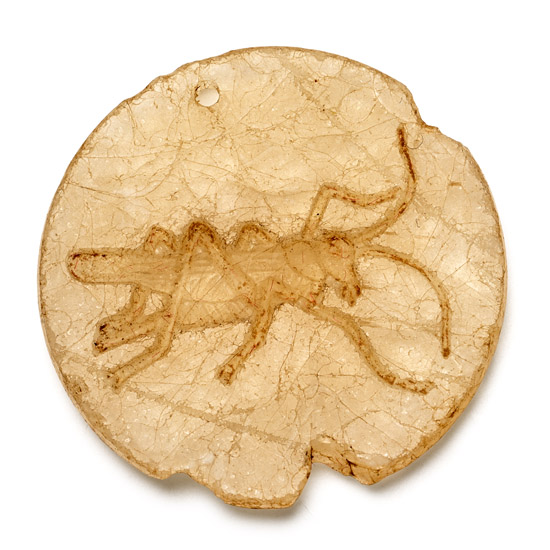
Egyptian Ptolemaic Alabaster Amulet with Locust
1st century B.C.Estimate: £150 - 200 (+bp*)
Bids: 1 | Current Bid: £5
Translucent disc with an engraved locust with anatomical detailing, pierced through the upper edge. 4.45 grams, 30 mm
From the private collection of a European gentleman (1942-2024), formed since the 1970s. -
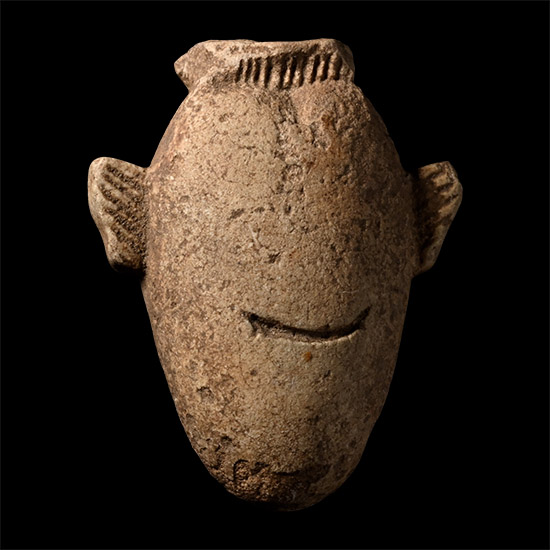
Large Egyptian Faience Heart Amulet
Late Period, 664-332 B.C.Estimate: £100 - 140 (+bp*)
Opening Bid: £5
Modelled in the round with a piriform body and two lateral projections with striations. 7.66 grams, 30 mm
Ex N. Thomas private collection, UK, 1980s-1990s. Accompanied by a previous dealer's sales ticket. -
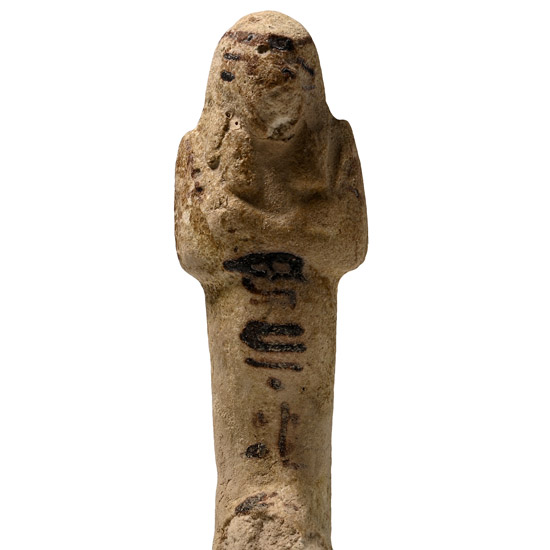
Egyptian Faience Shabti of Tent-Aset
Third Intermediate Period, 22nd Dynasty, circa 945-715 B.C.Estimate: £100 - 140 (+bp*)
Bids: 4 | Current Bid: £30
Mummiform figure depicted with a tripartite wig and holding two hoes in crossed hands, with a painted seed-bag on the reverse and a headband, and a hieroglyphic legend on the lower body naming “The Osiris, Tent-Aset, justified”; repaired; mounted on a perspex base. 90 grams total, 11.7 cm including stand
From the collection of David Donlan (1947-2025), a dedicated and lifelong collector with a passion for the ancient world and the natural sciences, forming his collection from 1960s onwards, using many reputable dealers across the United Kingdom, including the well-regarded Coincraft and The Parthenon Gallery. -
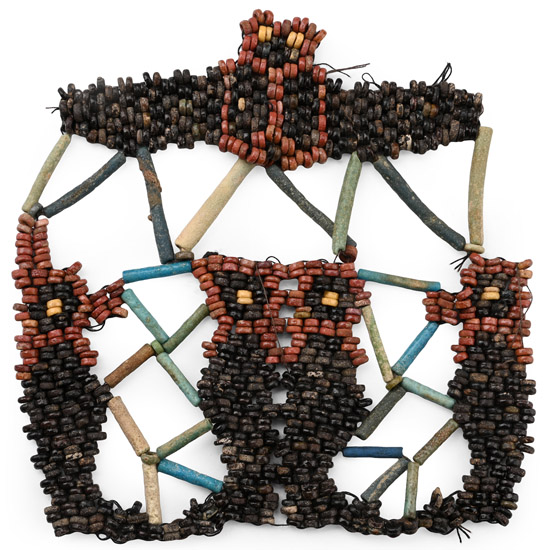
Egyptian Faience Mummy Bead Panel with Four Sons of Horus
Ptolemaic Period, circa 332-30 B.C.Estimate: £100 - 140 (+bp*)
Opening Bid: £50
Openwork beaded panel depicting a winged scarab with the Four Sons of Horus, Hapy, Imsety, Qebehsenuef, and Duamutef below; restrung. 22.9 grams, 11.3 cm wide
Ex Mariaud de Serres collection, Paris, France, 1980s-1990s. Accompanied by a previously illustrated catalogue card with provenance.
Winged scarabs were often used as funerary amulets and believed to symbolise the deceased's rebirth and regeneration. The Four Sons of Horus were deities responsible for protecting the deceased's internal organs. Here, on the left, is the baboon-headed Hapy, protector of the lungs, then the human-headed Imsety, protector of the liver, followed by the falcon-headed Qebehsenuef, who protected the intestines and, finally, the erect-eared jackal-headed Duamutef on the right, who protected the stomach. -
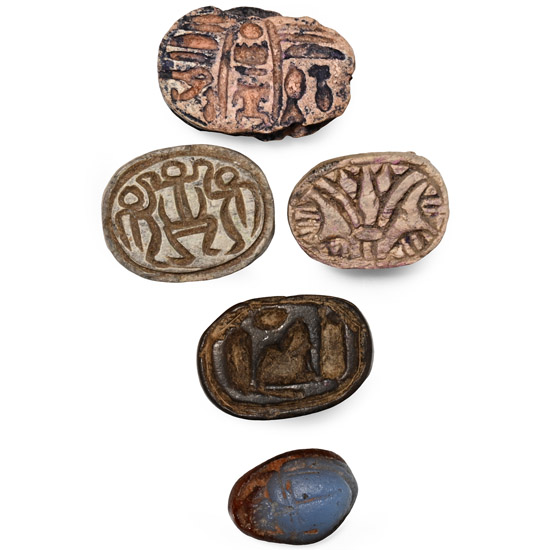
Egyptian Stone and Faience Scarab Group
2nd-1st millennium B.C.Estimate: £120 - 170 (+bp*)
Bids: 4 | Current Bid: £30
Comprising: a blue glazed scarab with the cartouche of Thutmosis III (Men-kheper-Ra) on the underside flanked by other signs; a scarab with three schematic human figures; a scarab with an open lotus flower; another with motifs on the underside; and a blue and black glass scarab with a plain underside. 6.02 grams total, 10-16 mm
From the private collection of a European gentleman (1942-2024), formed since the 1970s. -
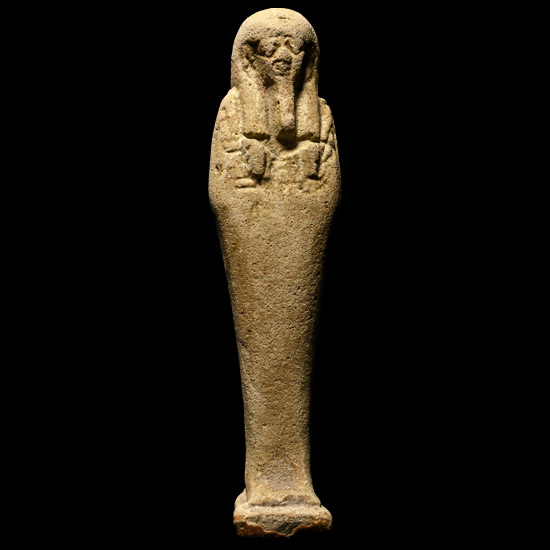
Egyptian Faience Hieroglyphic Shabti
Late Period-Ptolemaic Period, 525-30 B.C.Estimate: £80 - 100 (+bp*)
Bids: 5 | Current Bid: £75
Slender in profile with tripartite wig and incised tools in the crossed hands, net to the left shoulder; dorsal pillar with impressed hieroglyphic legend. 23.6 grams, 89 mm
Ex Alexander Crawford Collection. From the collection of David Donlan (1947-2025), a dedicated and lifelong collector with a passion for the ancient world and the natural sciences, forming his collection from 1960s onwards, using many reputable dealers across the United Kingdom, including the well-regarded Coincraft and The Parthenon Gallery.
Alexander Crawford Lamb (1843-1897) was a Scottish hotelier, art collector, antiquarian and collector of paintings, literary works, china, furniture, antiquities and other ephemera and memorabilia. His most notable literary achievement was the publication of a massive volume entitled Dundee: Its Quaint and Historic Buildings, 1895. -
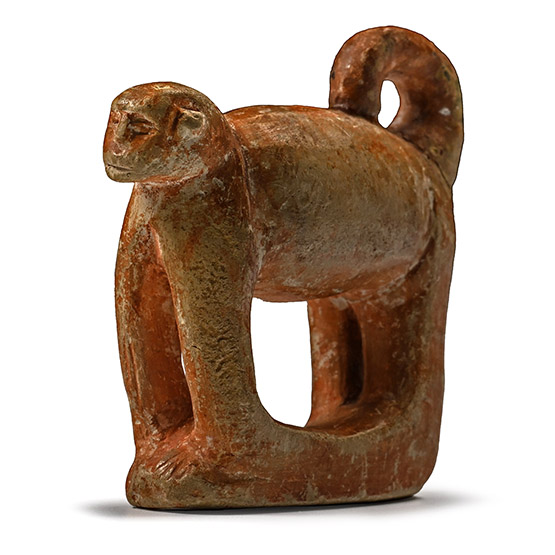
Egyptian Statuette of a Monkey
Ptolemaic Period, 4th-1st century B.C.Estimate: £600 - 800 (‡+bp*)
Opening Bid: £315
Standing on a rectangular plinth with head raised and tail curled above the hindquarters, barrel-shaped body with incised detailing at the shoulders and hips, traces of a white and reddish brown coating; partially restored; old collector's labels to underside '51' and 'N13234'. 42.8 grams, 60 mm
Ex Baden-Württemberg, Germany, formed since ca.1930. Private collection, Saarland, Germany. Thereafter, Michael Schrôder, Germany. Consigned to DAWO Auktion, 18 February 2017, no.824. Accompanied by a copy of an Art Loss Register certificate no.S00123279.
The ancient Egyptians kept pet monkeys (baboons as well as the more slender guenons) for amusement and as status symbols. These animals played around the house and accompanied the master on outings.

