-
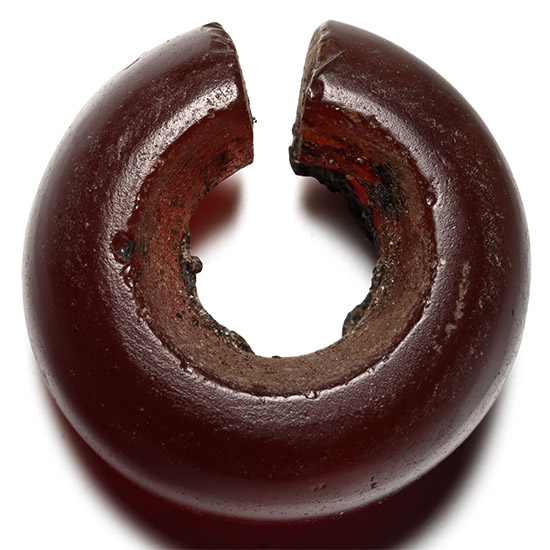
Egyptian Hardstone Hair Ring
New Kingdom, 1550-1070 B.C.Estimate: £100 - 140 (+bp*)
Opening Bid: £50
Circular with a semi-circular profile and an opening on one side. 3.57 grams, 17 mm
From a 20th century UK collection. Accompanied by a previously illustrated catalogue card with provenance. -
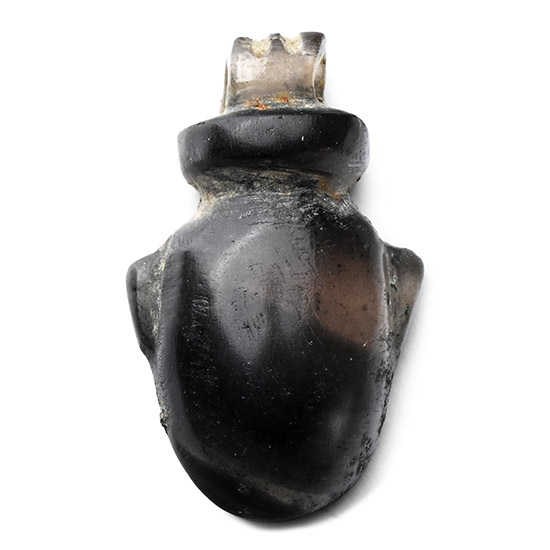
Egyptian Smoky Quartz Heart Amulet
Late Period, 664-332 B.C.Estimate: £100 - 140 (+bp*)
Opening Bid: £50
Carved with lateral triangular lugs, a pronounced rim surmounted by a ribbed suspension loop. 0.76 grams, 16 mm
From a 20th century UK collection. -
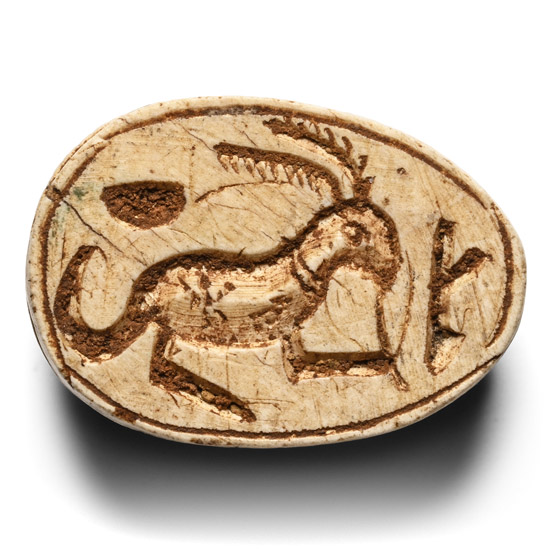
Egyptian Steatite Scarab with Hare
Late Period-Ptolemaic Period, 664-30 B.C.Estimate: £60 - 80 (+bp*)
Bids: 4 | Current Bid: £20
Anatomical detailing on the carapace and pierced longitudinally; underside with a reclining hare and two hieroglyphs. 3.07 grams, 19 mm
From the private collection of a European gentleman (1942-2024), formed since the 1970s.
The Egyptian hare, Cape Hare, was associated with the goddess Wenut, whose name means the 'swift one'. -
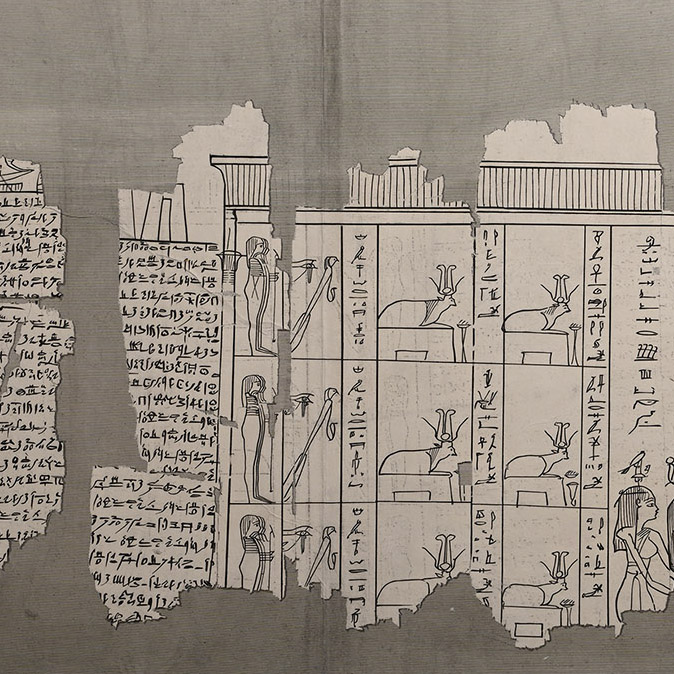
Very Large Egyptian Expedition Lithograph of the Hypogees Papyrus Manuscript from Thebes
Early 19th century A.D.Estimate: £80 - 100 (+bp*)
Opening Bid: £40
Proof etching on laid paper of plate 65 from Vol.II of Description de l'Égypte : ou, Recueil des observations et des recherches qui ont été faites en Égypte pendant l'expédition de l'armée française. entitled Thèbes. Hypogées. Manuscrit sur papyrus. 5eme partie. 244 grams, 103.5 x 69.5 cm
From the collection of a North American priest. Acquired between 1981-1996. Property of a North American collector.
Produced between February 1802 and 1830 on the orders of Napoleon Bonaparte; published between 1809 and 1828. Just 1,000 copies were distributed to various institutions, printed on laid paper with an 'Égypte ancienne et moderne' watermark. The book is subtitled Recueil des observations et des recherches qui ont été faites en Égypte pendant l’expédition de l’Armée française, publié par les ordres de Sa Majesté l’Empereur Napoléon le Grand (Gathering of observations and discoveries which were made in Egypt during the expedition of the French army, published on the orders of His Majesty the Emperor Napoleon the Great). It was the world's first encyclopedia devoted exclusively to the remains of ancient Egypt. The plates of this book are the first to present the archaeological sites of Thebes (Luxor). The papyrus manuscript was recovered from an underground tomb chamber (hypogeum). -
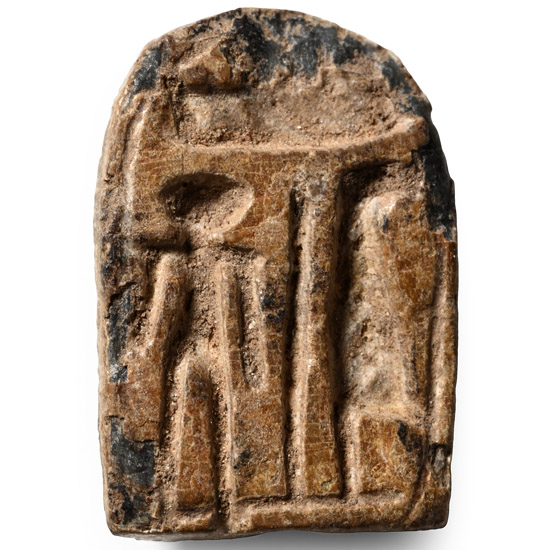
Egyptian Steatite Tilapia Fish Plaque Amulet
Late Period, 664-332 B.C.Estimate: £100 - 140 (+bp*)
Opening Bid: £50
The domed upper face shaped as a fish with scale detailing, the underside has three hieroglyphs consisting of a men (draughtboard) sign, with a figure of a standing deity wearing a sun-disc crown next to a large Maat feather to the right, pierced longitudinally. 1.72 grams, 16 mm
Ex Mustaki collection, early 20th century, UK. Accompanied by a previously illustrated catalogue card with provenance.
Fish amulets symbolised regeneration. -
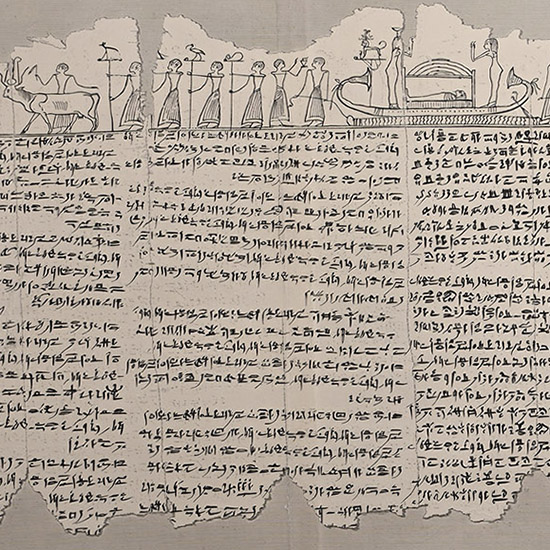
Very Large Egyptian Expedition Lithograph of the Hypogees Papyrus Manuscript from Thebes
Early 19th century A.D.Estimate: £80 - 100 (+bp*)
Opening Bid: £40
Proof etching on laid paper of plate 61 from Vol.II of Description de l'Égypte : ou, Recueil des observations et des recherches qui ont été faites en Égypte pendant l'expédition de l'armée française. entitled Thèbes. Hypogées. Manuscrit sur papyrus. 1ere partie. 207 grams,103 x 68 cm
From the collection of a North American priest. Acquired between 1981-1996. Property of a North American collector.
Produced between February 1802 and 1830 on the orders of Napoleon Bonaparte; published between 1809 and 1828. Just 1,000 copies were distributed to various institutions, printed on laid paper with an 'Égypte ancienne et moderne' watermark. The book is subtitled Recueil des observations et des recherches qui ont été faites en Égypte pendant l’expédition de l’Armée française, publié par les ordres de Sa Majesté l’Empereur Napoléon le Grand (Gathering of observations and discoveries which were made in Egypt during the expedition of the French army, published on the orders of His Majesty the Emperor Napoleon the Great). It was the world's first encyclopedia devoted exclusively to the remains of ancient Egypt. The plates of this book are the first to present the archaeological sites of Thebes (Luxor). The papyrus manuscript was recovered from an underground tomb chamber (hypogeum). The text is written in hieratic, a cursive form of hieroglyphic script often used for religious papyrus documents. The scene in the upper register depicts the funerary procession with lamenting men and women on the right, following the deceased's funerary assemblage, including his mummy on a bark. -
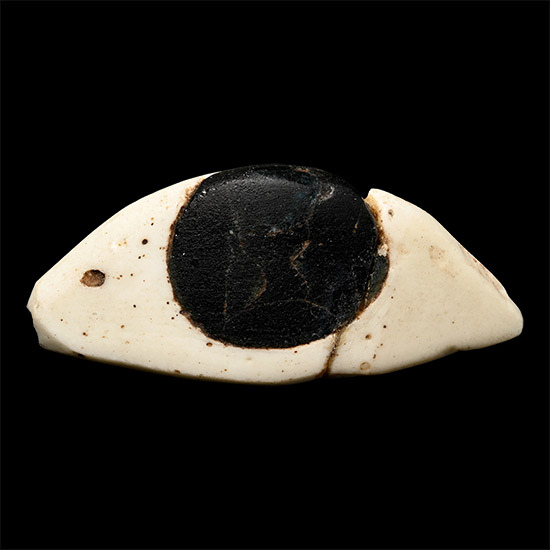
Egyptian Glass Mummy Eye
Ptolemaic Period, circa 332-30 B.C.Estimate: £80 - 100 (+bp*)
Bids: 7 | Current Bid: £65
White sclera with inset black glass iris; old dealer's ticket with legend; repaired. 5 grams, 36 mm
Ex John Cummings Ltd., Lincolnshire, UK. From the private collection of a Canadian gentleman living in Essex, UK, formed since the 1920s-circa 1990. Property of an Essex lady until the late 1990s; thence by descent. From the private collection of an Essex gentleman since the late 1990s. Accompanied by an old information card. -
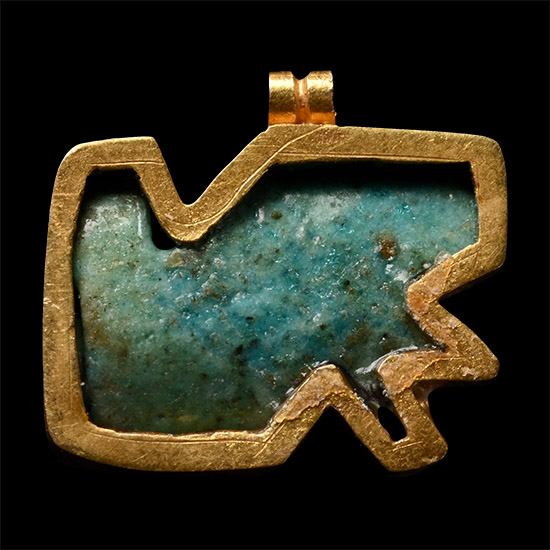
Egyptian Faience Eye of Horus in Gold Pendant
Late Period, 664-332 B.C. and laterEstimate: £100 - 140 (+bp*)
Opening Bid: £50
Comprising a turquoise-glazed wedjat amulet set in a 14-carat gold pendant mount. 1.09 grams, 14 mm
Ex important German collection, 1960-1990.
The wedjat-eye amulet (also called the Eye of Horus) became one of the most recognisable symbols in ancient Egyptian culture. It signifies protection, healing, and restoration. In myth, Horus lost his eye during his battle with Seth, and it was later magically restored, symbolising healing and the return to wholeness. The Eye of Horus came to embody divine power and protection, and was often used in amulets to safeguard and promote well-being. -
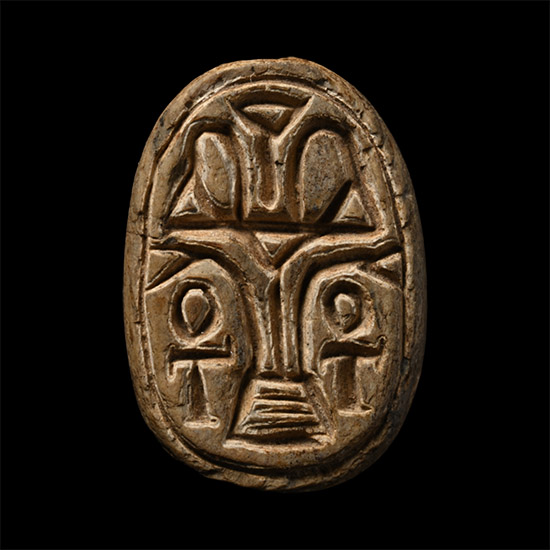
Egyptian Steatite Scarab
Middle Kingdom-Second Intermediate Period, circa 1900-1560 B.C.Estimate: £60 - 80 (+bp*)
Bids: 5 | Current Bid: £30
Plano-convex in section with segmented carapace and mouth parts; to the underside, the 'Sema-Tawy' central motif and two flanking ankh glyphs. 5.2 grams, 22 mm
From the collection of David Donlan (1947-2025), a dedicated and lifelong collector with a passion for the ancient world and the natural sciences, forming his collection from the 1960s onwards, using many reputable dealers across the United Kingdom, including the well-regarded Coincraft and The Parthenon Gallery.
The 'sema- tawy' is a powerful symbol representing the unification of Upper and Lower Egypt. It traditionally consists of a windpipe entwined with lotus and papyrus plants. The ankh signs are the Egyptian hieroglyphs for 'life'. -
.jpg)
Egyptian Mixed Scarab Collection
2nd-1st millennium B.C. and laterEstimate: £550 - 750 (+bp*)
Opening Bid: £285
Stone plaque with raised relief depictions of the Apis bull and a falcon deity beneath; a mixed group of scarabs and scaraboids, most bearing text or motifs on the underside, including: a rope border enclosing the head of a lion wearing a sun disc and uraeus; a plain copper-alloy scaraboid; a line border enclosing the throne name of Amenhotep III (neb-maat-Re); an indeterminate standing figure; a central hes- vase flanked by rearing cobras; a group of hieroglyphs, perhaps a slightly incorrect spelling of the throne name of Amenhotep II (akheperu-Re); and a group of four hieroglyphs. 36.9 grams total, 14-35 mm
From the collection of a gentleman, acquired on the London art market in the 1990s. -
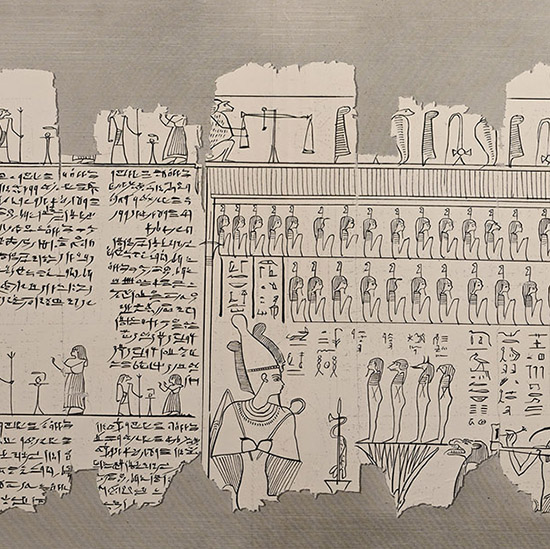
Very Large Egyptian Expedition Lithograph of the Hypogees Papyrus Manuscript from Thebes
Early 19th century A.D.Estimate: £80 - 100 (+bp*)
Opening Bid: £40
Proof etching on laid paper of plate 64 from Vol.II of Description de l'Égypte : ou, Recueil des observations et des recherches qui ont été faites en Égypte pendant l'expédition de l'armée française. entitled Thèbes. Hypogées. Manuscrit sur papyrus. 4eme partie. 235 grams, 105 x 69.5 cm
From the collection of a North American priest. Acquired between 1981-1996. Property of a North American collector.
Produced between February 1802 and 1830 on the orders of Napoleon Bonaparte; published between 1809 and 1828. Just 1,000 copies were distributed to various institutions, printed on laid paper with an 'Égypte ancienne et moderne' watermark. The book is subtitled Recueil des observations et des recherches qui ont été faites en Égypte pendant l’expédition de l’Armée française, publié par les ordres de Sa Majesté l’Empereur Napoléon le Grand (Gathering of observations and discoveries which were made in Egypt during the expedition of the French army, published on the orders of His Majesty the Emperor Napoleon the Great). It was the world's first encyclopedia devoted exclusively to the remains of ancient Egypt. The plates of this book are the first to present the archaeological sites of Thebes (Luxor). The papyrus manuscript was recovered from an underground tomb chamber (hypogeum). This includes a scene (bottom right) depicting the weighing of the deceased's heart before Osiris's divine tribunal. The heart is balanced against the feather of Maat, and the ibis-headed Thoth records the verdict. If the heart fails to balance, it is devoured by a fearsome creature called Ammut, and the deceased would cease to exist. -
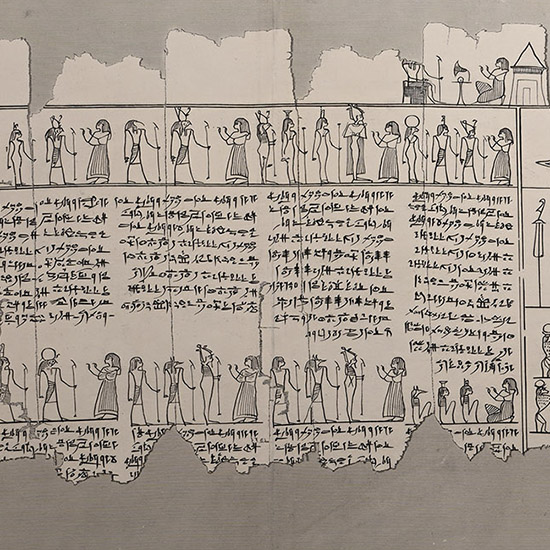
Very Large Egyptian Expedition Lithograph of the Hypogees Papyrus Manuscript from Thebes
Early 19th century A.D.Estimate: £80 - 100 (+bp*)
Opening Bid: £40
Proof etching on laid paper of plate 62 from Vol.II of Description de l'Égypte : ou, Recueil des observations et des recherches qui ont été faites en Égypte pendant l'expédition de l'armée française. entitled Thèbes. Hypogées. Manuscrit sur papyrus. 2eme partie. 231 grams, 103 x 69.5 cm
From the collection of a North American priest. Acquired between 1981-1996. Property of a North American collector.
Produced between February 1802 and 1830 on the orders of Napoleon Bonaparte; published between 1809 and 1828. Just 1,000 copies were distributed to various institutions, printed on laid paper with an 'Égypte ancienne et moderne' watermark. The book is subtitled Recueil des observations et des recherches qui ont été faites en Égypte pendant l’expédition de l’Armée française, publié par les ordres de Sa Majesté l’Empereur Napoléon le Grand (Gathering of observations and discoveries which were made in Egypt during the expedition of the French army, published on the orders of His Majesty the Emperor Napoleon the Great). It was the world's first encyclopedia devoted exclusively to the remains of ancient Egypt. The plates of this book are the first to present the archaeological sites of Thebes (Luxor). The papyrus manuscript was recovered from an underground tomb chamber (hypogeum). The text is written in hieratic, a cursive form of hieroglyphic writing often used for religious papyrus documents.

