-
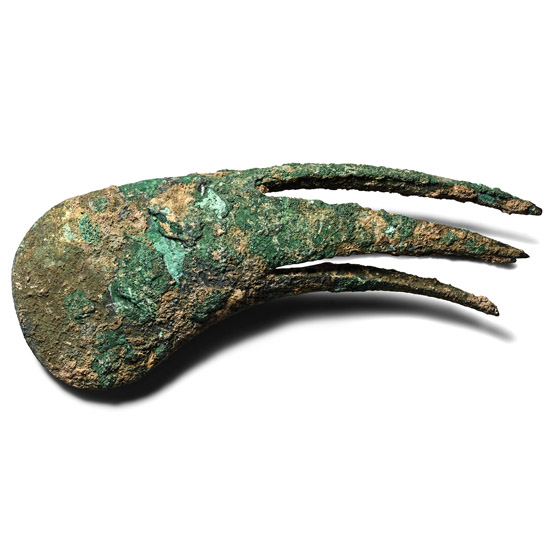
Bactrian Bronze Claw Axehead
3rd millennium B.C.Estimate: £120 - 170 (+bp*)
Opening Bid: £60
Egg-shaped with spiked prongs to the socket, narrow, rounded cutting edge. 165 grams, 11.9 cm
From a UK collection formed in the 1980s. Property of an Essex, UK, gentleman.
The 'claw mace' was an enigmatic ancient bronze weapon from the Bronze Age Near East. The hollow bulbous head was trailed by tines of varying lengths. It is believed that it was affixed over a wooden shaft and used like a club in combat, and not necessarily used as a ceremonial weapon. The knife-edge bulb end could have broken bones and proven to be a formidable striking weapon requiring no skill to wield. The tines would have not only been decorative, but would have served to add strength below the striking end to prevent breakage. In battle, maces were often used by commanders to display rank when giving orders in battle and leading soldiers, inspiring leadership and power. Egg-shaped with spiked sleeves or prongs, the top of the weapon has a narrow edge, and the sleeves have small internal tangs for mounting. -
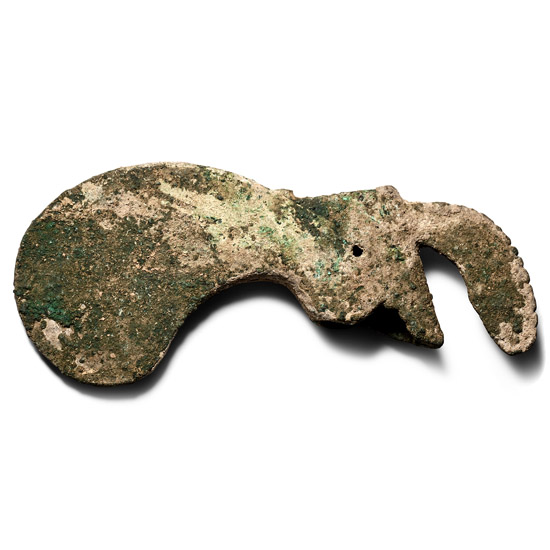
Western Asiatic Paddle-Shaped Axehead
3rd millennium B.C.Estimate: £120 - 170 (+bp*)
Opening Bid: £60
With a paddle-shaped, curving blade, a short neck, and an oval-shaped socket with a comma-shaped extension on the rear. 250 grams, 15.3 cm
From a UK collection formed in the 1980s. Property of an Essex, UK, gentleman. -
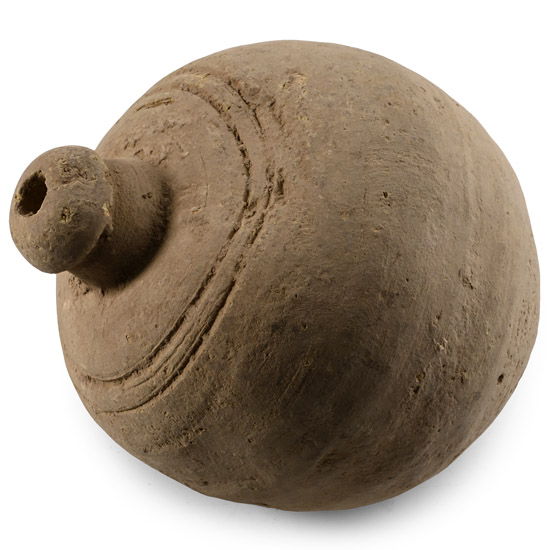
Byzantine 'Greek Fire' Ceramic Fire Bomb or Hand Grenade
9th-11th century A.D.Estimate: £80 - 100 (+bp*)
Bids: 2 | Current Bid: £10
Large bulbous body and a domed filler-hole, two circumferential bands above the shoulder; intended to be filled with explosive liquid and a wick, and used as a hand grenade. 743 grams, 13.4 cm
From an important specialist collection, London, UK, 1990s. Accompanied by an academic paper by military specialist Dr Raffaele D'Amato, dated 15 July 2019 and titled 'Eastern Roman Empire - Greek Fire Bomb or Hand Grenade (μεσαίον kακάβιον) 9th-11th century AD'.
Apart from the use of siphons or manual flame-throwers called cheirosiphona, special corps of Roman soldiers employed terracotta grenades, in the form of small jars, abundantly evidenced in archaeological excavations. They were called μεσαία kακαβιά or κυτροκακάβια, where the former had a bulbous shape and the latter a more cylindrical form. -
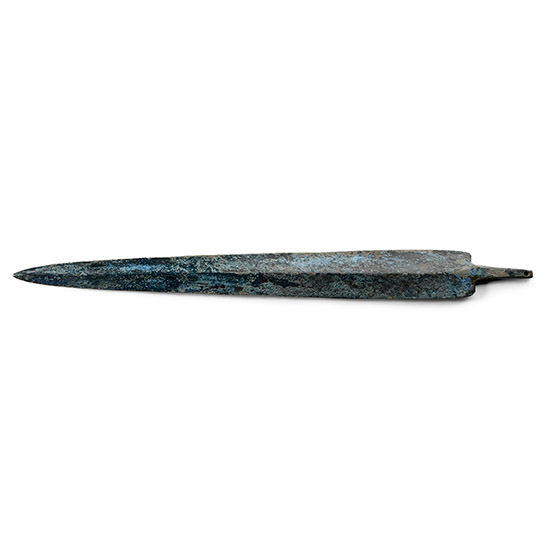
Large Amlash Bronze Spear-Head
14th-10th century B.C.Estimate: £150 - 200 (+bp*)
Bids: 1 | Current Bid: £76
Slender blade with raised midrib and a short, pierced tang; Amlash or Marlik. 300 grams, 39 cm
Ex Abelita family collection, 1990s. -
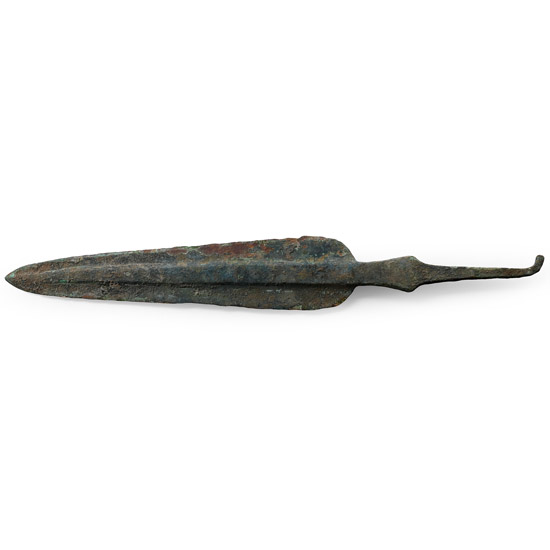
Luristan Bronze Tanged Spearhead
12th-11th century B.C.Estimate: £100 - 140 (+bp*)
Bids: 1 | Current Bid: £51
Leaf-shaped blade with a wide midrib extending towards the flaring shaft, a rectangular-section tang with bent finial. 319 grams, 35.6 cm
Ex Abelita collection, 1990s. -
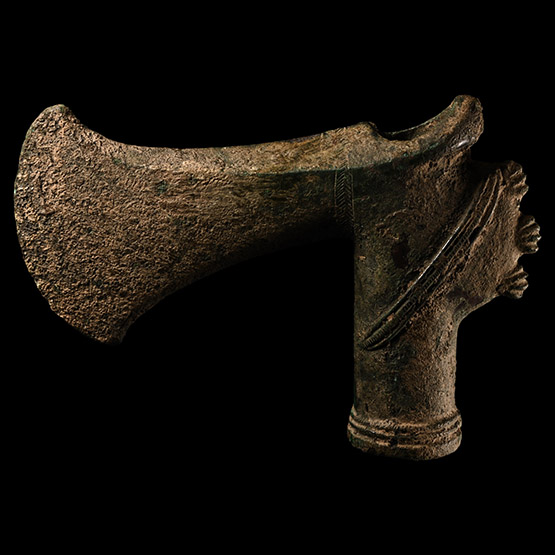
Luristan Socketted Bronze Axe Head Sar-e Tabar
Circa 2200-1600 B.C.Estimate: £500 - 700 (‡+bp*)
Opening Bid: £250
Comprising a wide curving blade and long neck with a band of herringbone decoration at the base, tubular neck with claw-like extension to the rear and a decorative diagonal band to both sides. 308 grams, 10.6 cm
Acquired on the Swiss art market, 1997. Private collection, Europe.
Similar examples of axeheads were produced in Luristan, and early parallels date back to 2200 B.C. They have moulding bands at the base, and the shaft is often crosshatched, showing different lozenge-shaped figures. -
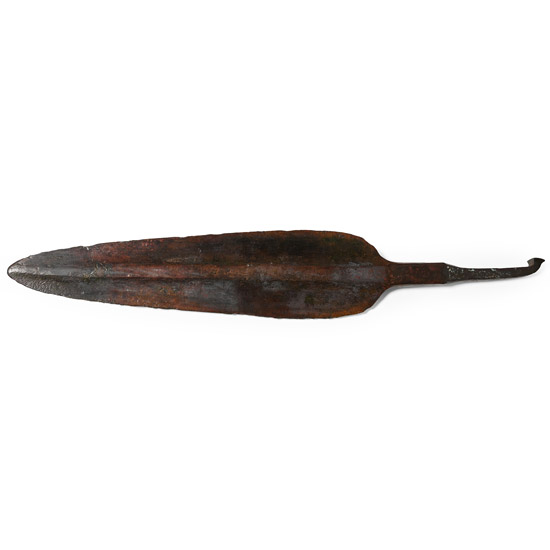
Western Asiatic Bronze Spear Blade
2nd-1st millennium B.C.Estimate: £180 - 240 (+bp*)
Bids: 1 | Current Bid: £90
Comprising a triangular blade with a broad midrib, a short neck and a square-section tang with a bent finial. 309 grams, 32.6 cm
Ex Abelita family collection, 1980s-2000s. -
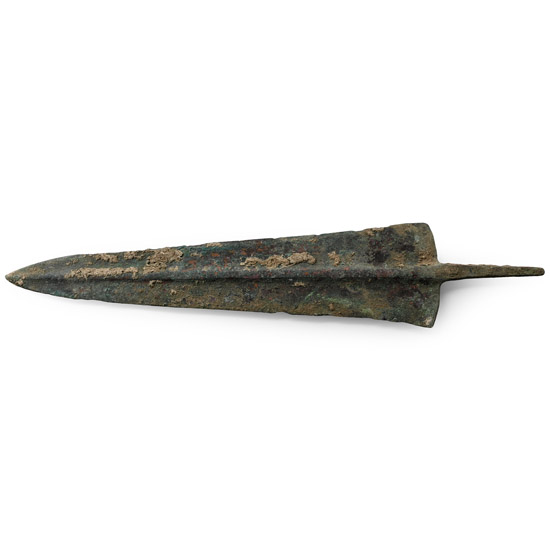
Luristan Bronze Dagger
Early 1st millennium B.C.Estimate: £100 - 140 (+bp*)
Bids: 1 | Current Bid: £51
Large triangular blade with raised midrib and a short, tapering tang. 241 grams, 34.4 cm
Ex Abelita collection, 1990s. -
.jpg)
Western Asiatic Polished Stone Macehead
3rd-2nd millennium B.C.Estimate: £100 - 140 (+bp*)
Opening Bid: £50
With slightly carinated equator to the globular body and tubular shaft. 377 grams, 91 mm
From the collection of North West London, UK, gentleman, early 2000s. -
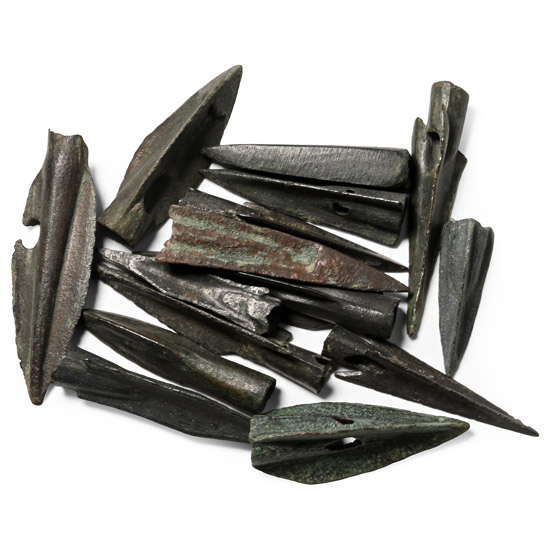
Greek Socketted Arrowhead Collection
Circa 5th-3rd century B.C.Estimate: £100 - 140 (+bp*)
Bids: 6 | Current Bid: £70
Comprising fifteen triangular-type socketed arrowheads. 31 grams total, 20-35 mm
Ex German art market, 2000s. Acquired from an EU collector living in London. From the collection of a Surrey, UK, gentleman. -
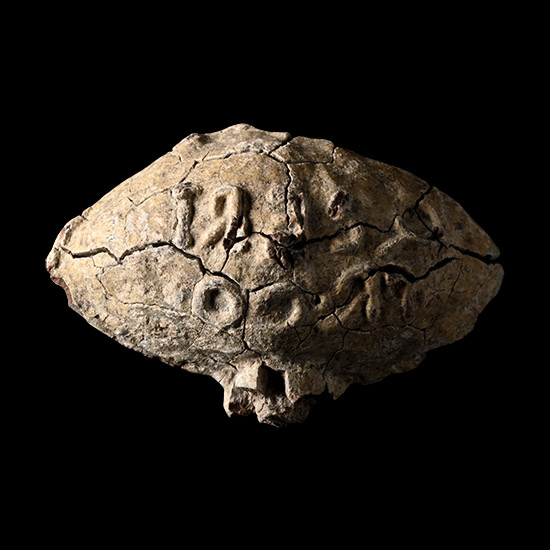
Roman Lead Slingshot of Quintus Sertorius
Circa 82-72 B.C.Estimate: £300 - 400 (+bp*)
Bids: 3 | Current Bid: £20
Lentoid in form with raised legend to reverse 'Q.SERT / PRO C'; casting seam and flange. 59.6 grams, 37 mm
Acquired on the UK art market, early 2000s. Property of a London, UK, antiquarian.
The inscription may refer to Quintus Sertorius, the Roman statesman and general (123-72 BC). In late 82 BC, Sertorius, linked to the party of populares of Gaius Marius, was proscribed by Sulla and forced from his province in Hispania. However, he soon returned in early 80 BC, representing himself as a Roman proconsul resisting the Sullan regime at Rome. Being Proconsul in this Hispania from 82 to 73 B.C., the slingshots of his army were bearing the inscription 'Q.SERT / PRO C' (Quintus Sertorius Proconsul). -
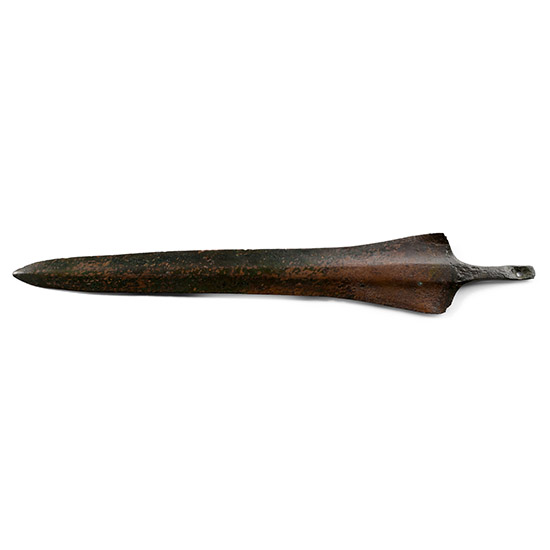
Western Asiatic Bronze Dagger
1800-1600 B.C.Estimate: £200 - 300 (+bp*)
Bids: 1 | Current Bid: £100
The blade expanding towards the shoulders, a pierced rectangular-section tang. 174 grams, 29.2 cm
Ex Abelita family collection, 1990s.

