
Ancient Art, Antiquities, Books, Natural History, Stamps & Coins
Last Weekend to Leave Absentee Bids

-
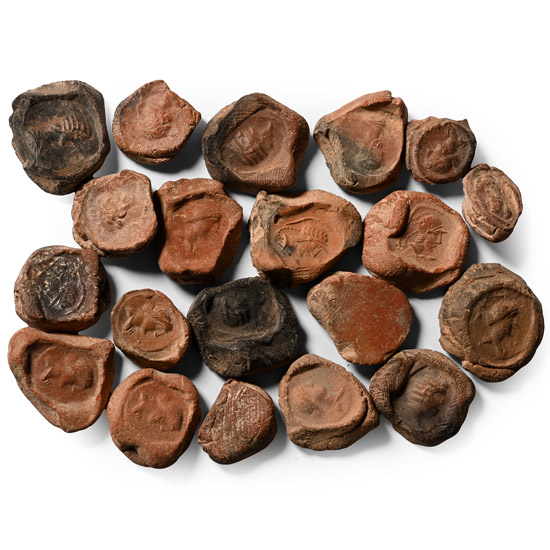
Roman Terracotta Bullae, Tesserae or Token Group
3rd century B.C.-1st century A.D.Estimate: £100 - 140 (+bp*)
Bids: 1 | Current Bid: £5
A mixed group of ceramic bullae, tesserae or theatre tokens bearing low-relief motifs, mainly consisting of profile busts of deities. 34.4 grams total, 14-21 mm
From the private collection of a European gentleman (1942-2024), formed since the 1970s.
The term 'tessera' was used in Roman times to convey the Greek term σύμβολον (token). Small tiles are known as tokens, often shaped like coins, made of metal (copper, lead, iron), clay, bone, wood, or glass, stamped as well as engraved. The tokens, however, are not exclusively coin-shaped, as the Latin term 'tessera' refers to a four-sided shape. Tokens and tesserae seem to have been used both in Athens and Rome for the distribution of goods. According to written sources, the term ‘token’ is identified with credentials of the official authorities. They have also been interpreted as tokens of identity, as entrance tickets to theatre performances, tribunals or assemblies of citizens, archival material of seal engraving, as pawns in games, Charon’s obols and even as amulets. -
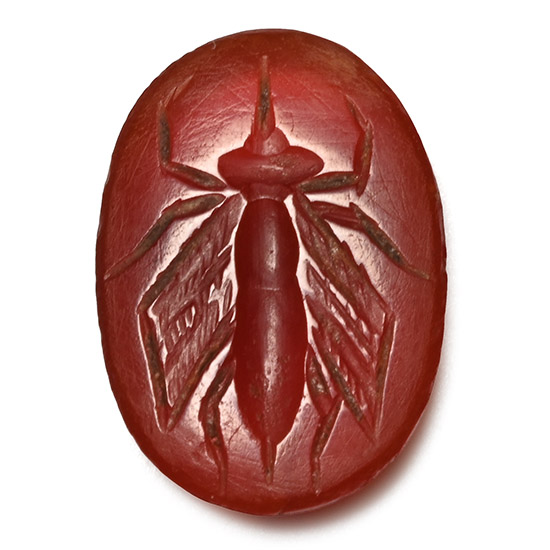
Roman Carnelian Gemstone with Insect
2nd-3rd century A.D.Estimate: £150 - 200 (+bp*)
Opening Bid: £75
Red carnelian intaglio with an incuse image of a flying insect with a stinger and a long needle extending from the head; accompanied by a museum-quality impression. 0.53 grams, 12 mm
UK private collection before 2000. London collection, acquired on the UK art market. -
.jpg)
Roman Bronze Mount with Phallus
2nd-3rd century A.D.Estimate: £40 - 60 (+bp*)
Bids: 1 | Current Bid: £5
With discoid base, angled stem and ridged finial. 26.9 grams, 37 mm
Ex German art market, 2000s. Acquired from an EU collector living in London. From the collection of a Surrey, UK, gentleman. -
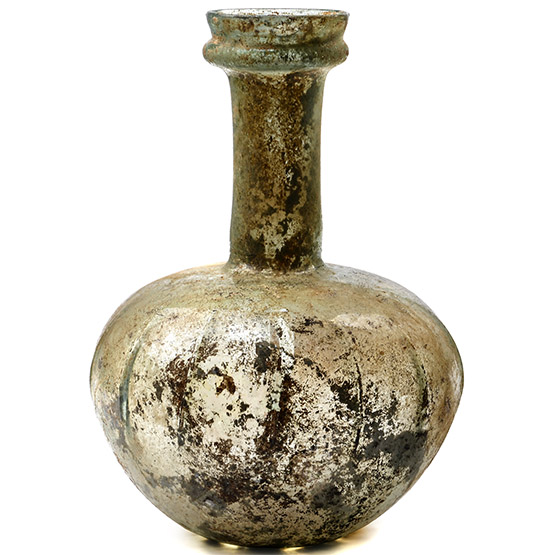
Roman Ribbed Glass Bottle
4th-5th century A.D.Estimate: £400 - 600 (‡+bp*)
Opening Bid: £200
With globular body, dimple foot, slight vertical ribbing to body, broad funicular mouth with folded rim. 174 grams, 19 cm
Acquired in the late 1980s. Private collection, thence by descent. Private collection, since the late 1990s.
Similar vessels (bottles) were found in 4th-5th century tombs at Beit Ras, Jordan, and from Samaria-Sebaste, Israel. The most recognisable characteristic of these bottles was the faint ribs on the body. The type survived until the Arab conquest in the 7th century A.D. -
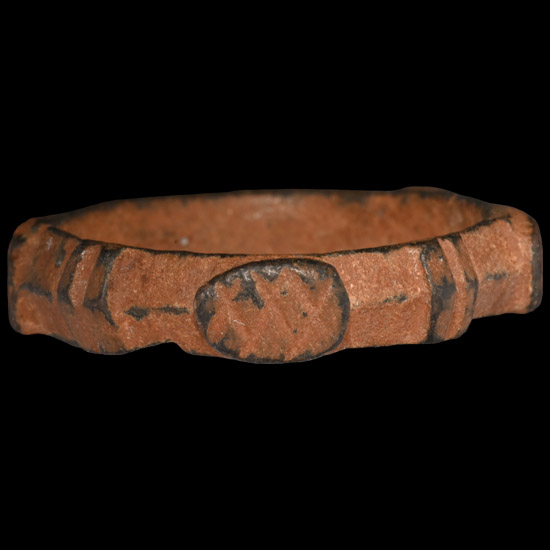
Roman Bronze Military Glove Ring with Four Bezels
3rd-4th century A.D.Estimate: £50 - 70 (+bp*)
Bids: 1 | Current Bid: £5
A substantial ring with a keeled hoop with four bezels decorated with hatching and separated by raised banding. 7.91 grams, 29.88 mm overall, 23.37 mm internal diameter (approximate size British Z+2 1/2, USA 13 3/4, Europe 32.01, Japan 30)
From the private collection of a European gentleman (1942-2024), formed since the 1970s. -
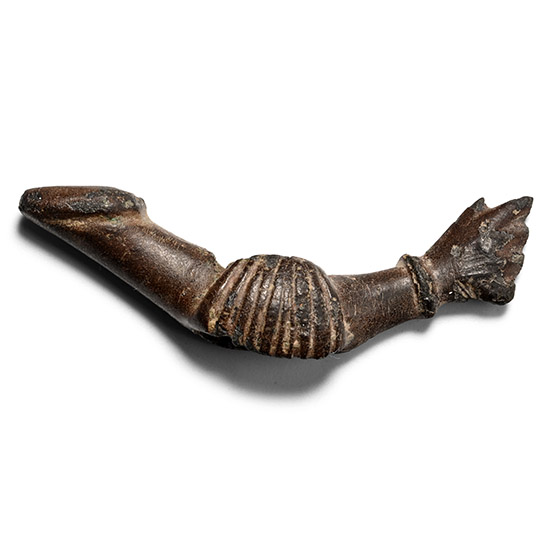
Roman Bronze Phallic Knife Guard
1st-4th century A.D.Estimate: £30 - 40 (+bp*)
Bids: 1 | Current Bid: £5
Curving guard with an oval socket, one side formed as an erect phallus and the other as a hand making the fica gesture. 4.91 grams, 39 mm
Found near Lincoln, Lincolnshire, UK. Acquired on the UK art market. Property of a Lancashire, UK, collector. -
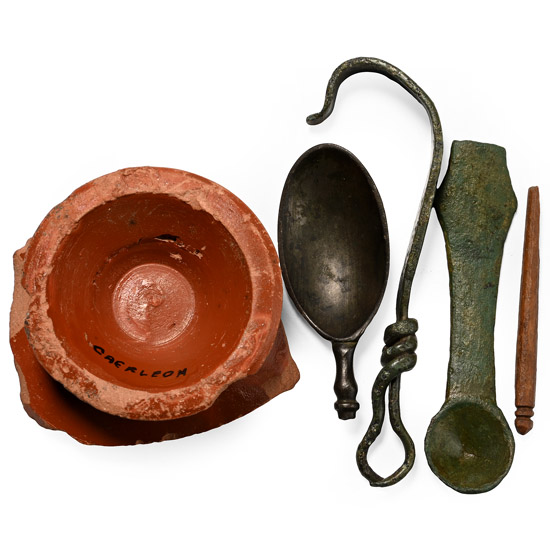
Roman Bronze and Ceramic Artefact Collection
1st-4th century A.D.Estimate: £40 - 60 (+bp*)
Bids: 2 | Current Bid: £10
Including spoon-bowl with baluster, vessel foot with impressed 'ROTT[..]IM' stamp and other items. 50 grams total, 43-72 mm
From the private collection of Mr Brian Edwards, New Malden, Surrey, UK, formed from the late 1970s-early 1980s; thence by descent. Accompanied by the original collector's data sheet(s) with reference no.A5, A14, A30, A41 & A98. -
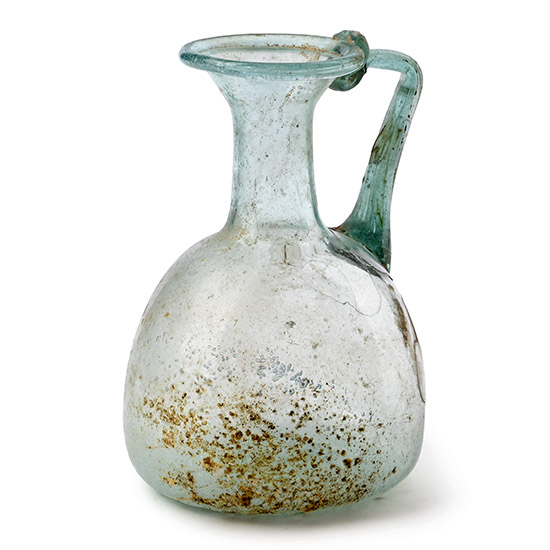
Roman Pale Green Glass Juglet
Circa 4th century A.D.Estimate: £120 - 170 (+bp*)
Bids: 4 | Current Bid: £35
Bulbous body with dimple base, trumpet-shaped neck with rolled rim and a strap handle to the rear. 43.2 grams, 94 mm
From the collection of a late Norfolk, UK gentleman's collection, formed from the late 1960s-1970s. -
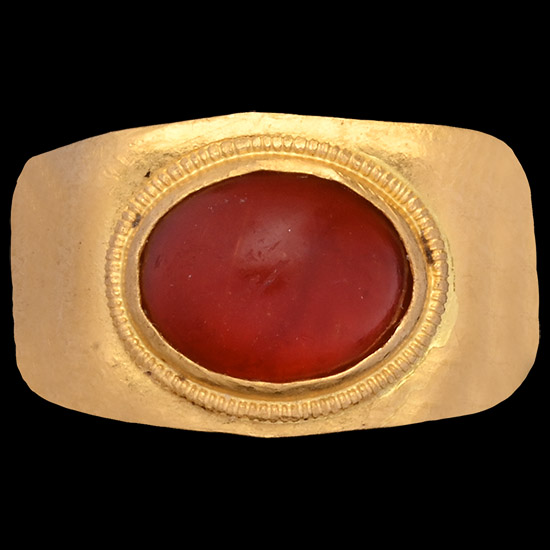
Roman Gold Ring with Carnelian Cabochon
2nd-4th century A.D. or laterEstimate: £500 - 700 (+bp*)
Opening Bid: £250
Flat-section shank flaring at the shoulders, filigree border around the bezel set with a replaced carnelian cabochon. 3.87 grams, 21.70 mm overall, 17.49 x 16.43 mm internal diameter (approximate size British L, USA 5 3/4, Europe 11.24, Japan 10)
Private collection, Suffolk, UK. -
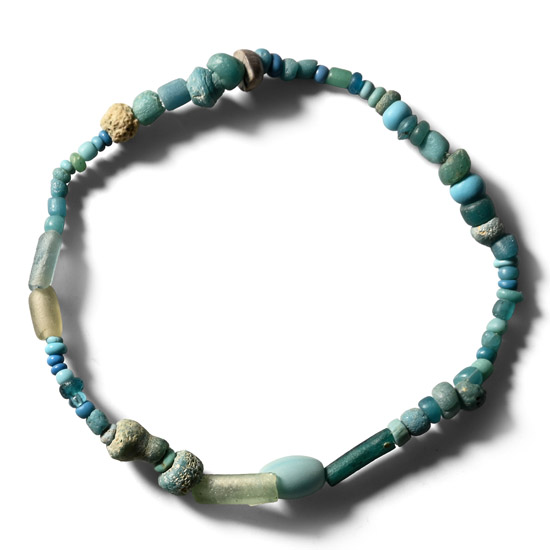
Roman Pale Blue Glass Bead Bracelet
1st-4th century A.D. and laterEstimate: £50 - 70 (+bp*)
Bids: 2 | Current Bid: £10
Composed mainly of pale blue and pale green beads with some larger feature beads, restrung with an elasticated string. 3.53 grams, 17 cm
Ex Ancient Art Shop, Windsor, UK, 1990s. Ex private collection. -
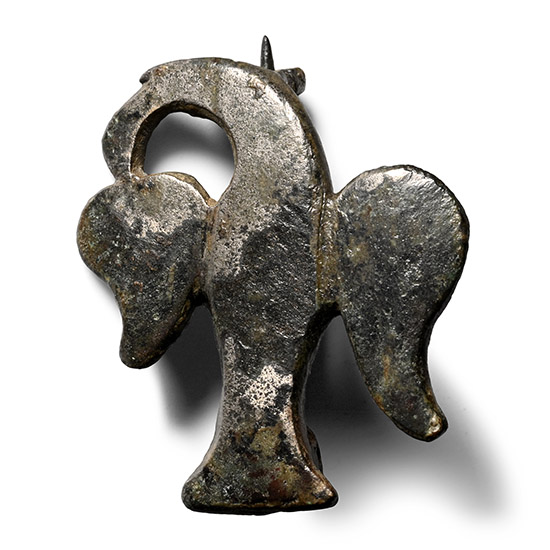
Roman Bronze Eagle Plate Brooch
2nd-3rd century A.D.Estimate: £80 - 100 (+bp*)
Bids: 1 | Current Bid: £5
Formed as an eagle with its head turned to the side, spread wings and tail, pin and catchplate on the reverse. 8.43 grams, 32 mm
Ex German art market, 2000s. Acquired from an EU collector living in London. From the collection of a Surrey, UK, gentleman. -
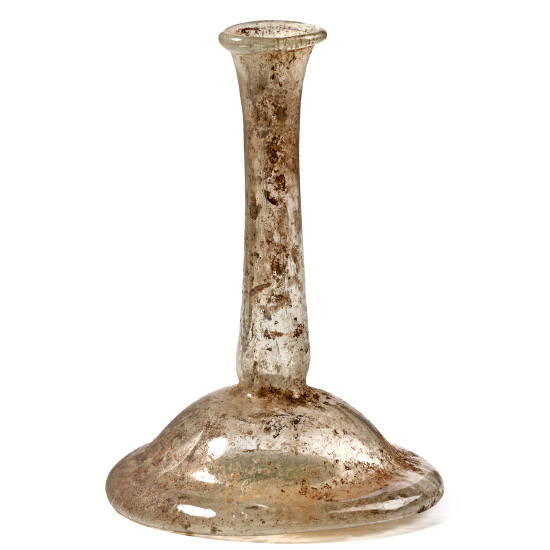
Roman Glass Candlestick Vial
3rd century A.D.Estimate: £120 - 170 (+bp*)
Opening Bid: £50
With a low flaring body and a tall tubular neck with a rolled rim. 36 grams, 11.2 cm
Acquired in the 1990s from London dealerships and auction houses. From the Lonson collection.
